Specialty printing demands precision. Every ink, substrate, and application presents unique challenges. Meeting these requires more than off-the-shelf solutions. This is where customized LED UV curing systems truly shine. They offer unparalleled control, boosting efficiency and print quality for a wide array of niche applications.
The Evolving Landscape of Specialty Printing
Specialty printing encompasses a vast field. Think about intricate labels for pharmaceuticals, vibrant packaging for consumer goods, or durable graphics for industrial use. Each of these requires specific material properties and performance characteristics. Traditional curing methods often struggle to keep pace. They can be slow, energy-intensive, and limited in their substrate compatibility.
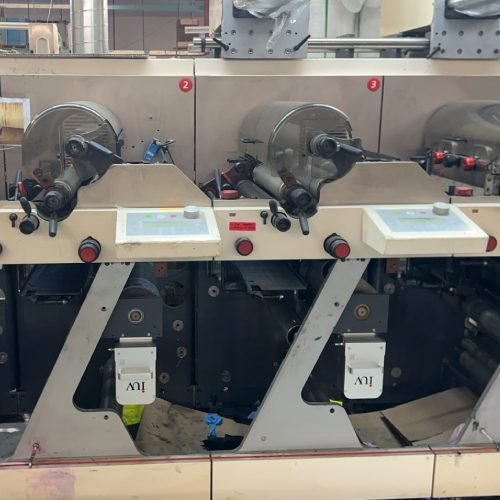
Narrow web printing, for instance, is a cornerstone of label production. Whether it’s for food, beverage, or health and beauty products, the demand for high-quality, durable prints is constant. Flexographic printing and offset printing both play significant roles here. They offer versatility but depend heavily on effective ink curing to achieve desired results.
Understanding LED UV Curing Technology
LED UV curing technology has revolutionized the printing industry. Unlike traditional mercury vapor lamps, LEDs offer a more focused and controllable UV spectrum. This leads to several key advantages. They emit less heat, protecting sensitive substrates. Their energy efficiency is significantly higher, reducing operational costs. Furthermore, LEDs have a much longer lifespan, minimizing downtime and replacement expenses.
The spectrum emitted by LEDs can be precisely tuned. This is critical for specialty inks. Different pigments and photoinitiators require specific wavelengths for optimal curing. A one-size-fits-all approach simply won’t cut it.
Why Customization is Key for Specialty Lines
Generic UV curing systems may work for some standard applications. However, specialty printing lines often encounter unique requirements. These can include:
- Substrate Variety: Printing on plastics, foils, textiles, or even textured papers demands tailored curing. Some materials are heat-sensitive, while others require specific surface adhesion.
- Ink Chemistry: Specialty inks, such as those for metallic effects, high-opacity whites, or low-migration applications, have distinct curing needs. Precise wavelength control ensures full cure and proper ink performance.
- Print Speed and Throughput: High-speed presses require rapid and consistent curing. Customized systems can be designed to match the exact speed of the press, preventing bottlenecks.
- Application Requirements: The end-use of the printed product dictates performance. For example, food packaging requires low-migration inks, which necessitate specific UV curing parameters to ensure safety. Durable outdoor graphics need excellent scratch and weather resistance, achieved through thorough curing.
- Web Handling and Space Constraints: Integrating curing units into existing or new press lines requires careful consideration of physical space. Customization allows for units that fit perfectly, optimizing workflow and ergonomics.
Tailoring LED UV Systems: A Deeper Dive
Customizing an LED UV curing system involves several critical elements. It’s a collaborative process between the printer and the equipment provider.
Wavelength Selection
This is perhaps the most crucial aspect. Different UV wavelengths are absorbed differently by inks and coatings.
- UVA (315-400 nm): Commonly used for general-purpose curing and overprint varnishes.
- UVB (280-315 nm): Less common in standard UV curing but can be important for specific photoinitiators.
- UVC (100-280 nm): Primarily used for disinfection, not typical for ink curing.
For specialty applications, a precise mix of wavelengths might be needed. For instance, certain high-performance coatings might benefit from a system that combines UVA and UVB, or a specific peak within the UVA spectrum. This ensures complete polymerization of the ink or coating, leading to superior mechanical and chemical resistance.
Irradiance and Dose Control
Irradiance refers to the power density of the UV light delivered to the substrate (measured in W/cm²). Dose is the total amount of UV energy delivered over time (irradiance x exposure time).
- High Irradiance: Allows for faster curing speeds, essential for high-volume production on narrow web presses.
- Precise Dose Control: Ensures that the ink or coating receives the correct amount of energy. Too little, and it won’t cure properly, leading to defects like poor adhesion or rub resistance. Too much, and it can degrade the substrate or ink, or lead to excessive heat.
Customization allows for selecting LED arrays that provide the required irradiance at the specific working distance of the printing press. It also enables fine-tuning of power output to achieve the precise UV dose needed for each job.
Cooling Systems
While LEDs are more energy-efficient and produce less heat than traditional lamps, high-power LED systems can still generate significant heat, especially in confined spaces on a press. Effective cooling is vital to:
- Maintain LED Performance: Overheating can reduce the lifespan and efficiency of LEDs.
- Protect the Substrate: Prevent heat-induced distortion or damage to delicate materials.
- Ensure Consistent Curing: Temperature fluctuations can affect curing speed and quality.
Custom cooling solutions, such as integrated air or liquid cooling, can be designed to match the heat load of the specific LED system and the operating environment of the printing line.
Lamp Head Design and Integration
The physical design of the LED UV lamp head is critical for seamless integration into a printing press. Customization considers:
- Form Factor: Whether it’s a compact spot curing unit for a specific station or a long, narrow head for a full web width.
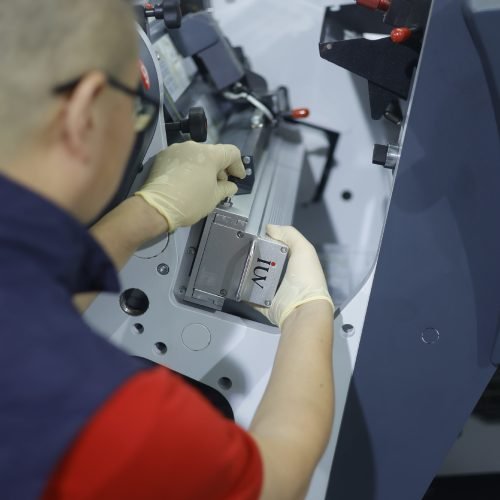
- Mounting: How the unit will attach to the press, ensuring stability and proper positioning relative to the substrate.
- Ventilation and Access: Designing for easy maintenance and optimal airflow.
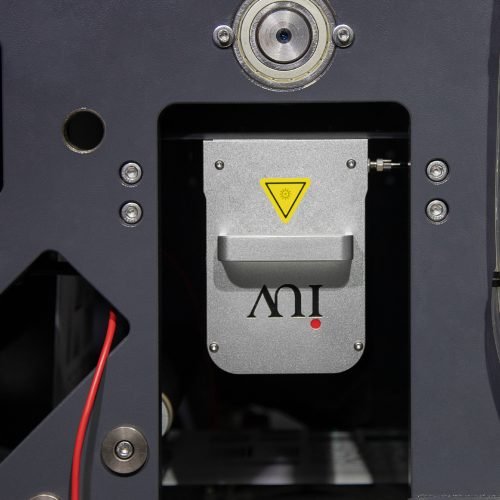
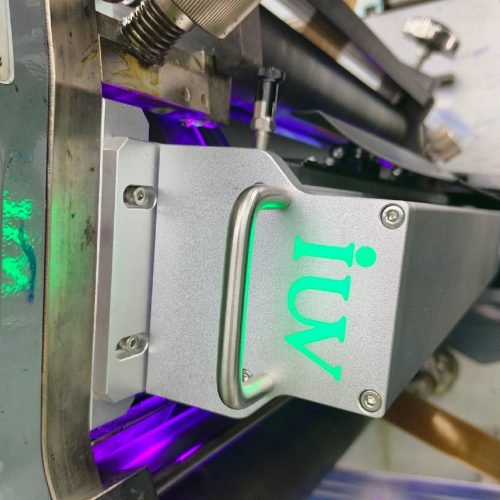
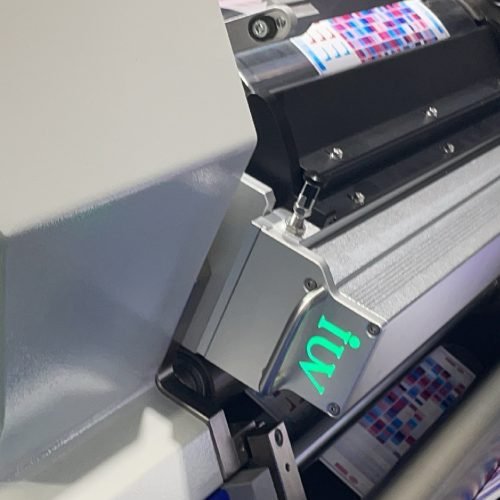
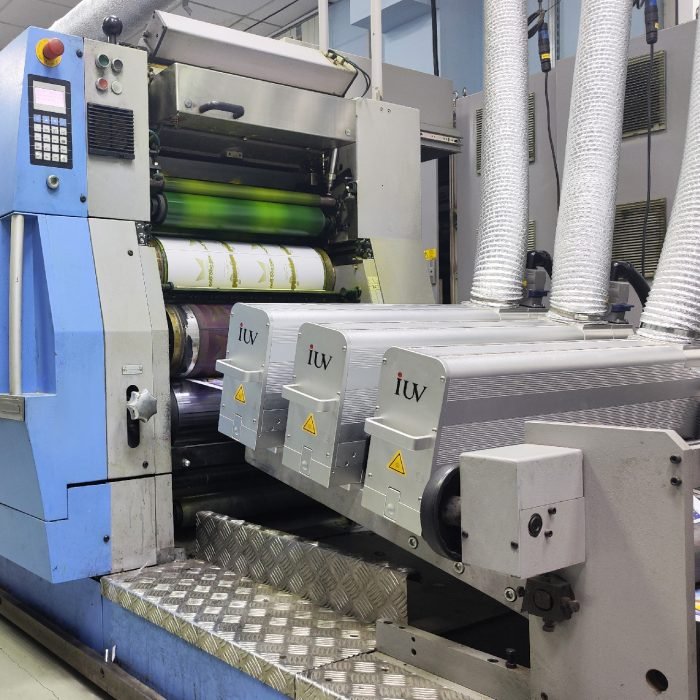
For flexographic and offset printing on narrow web presses, space is often at a premium. Custom-designed heads can maximize UV coverage while minimizing the press footprint.
Benefits for Specific Printing Technologies
Narrow Web Flexography
Flexo printing is a workhorse for labels and flexible packaging. Custom LED UV curing offers significant advantages:
- Improved Ink Adhesion: Especially on challenging substrates like films and foils.
- Vibrant Color and High Gloss: Achieved with fully cured inks and varnishes.
- Reduced VOCs: Water-based or UV-curable inks can replace solvent-based options, improving environmental impact and operator safety.
- Higher Production Speeds: Enabling printers to meet demanding turnaround times.
- Low Migration for Food Packaging: Specific LED wavelengths and control ensure inks cure completely, minimizing the risk of contaminants migrating into food.
Narrow Web Offset (Sheetfed and Web Offset)
Offset printing on narrow web presses is used for high-volume, high-quality applications. Custom LED UV curing enhances:
- Instant Curing: Allowing for immediate downstream processing, such as slitting or rewinding.
- Superior Rub and Scratch Resistance: For durable labels and packaging.
- Printing on Non-Absorbent Materials: Enables offset on plastics and foils where traditional inks would struggle.
- Reduced Ink Set-off: Eliminates the need for interleaving paper.
The Future of Specialty Printing with Custom LED UV
As printing demands become more sophisticated, the need for tailored solutions will only grow. Customizing LED UV curing systems is not just about upgrading equipment; it’s about empowering specialty printers to achieve new levels of quality, efficiency, and innovation. By precisely matching the curing technology to the specific requirements of inks, substrates, and printing processes, businesses can unlock their full production potential.
The ability to fine-tune wavelength, irradiance, and dose means printers can confidently tackle complex jobs. This includes everything from high-security labels requiring special inks to decorative packaging with unique tactile effects. The future of specialty printing is one of precision, and customized LED UV curing systems are at the forefront of this exciting evolution.