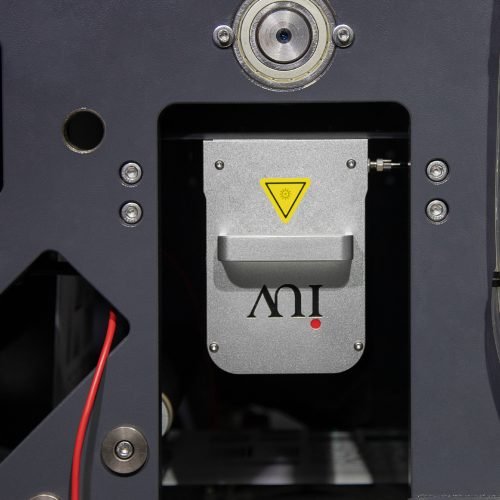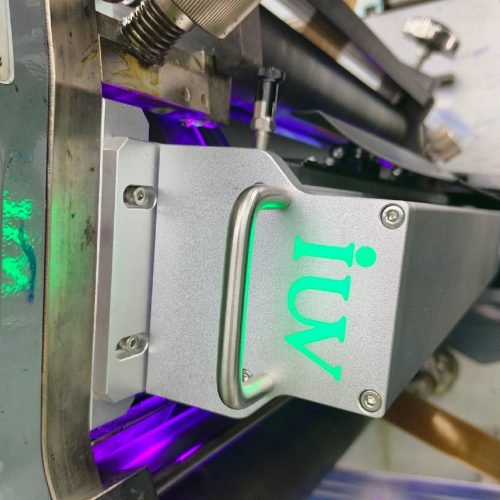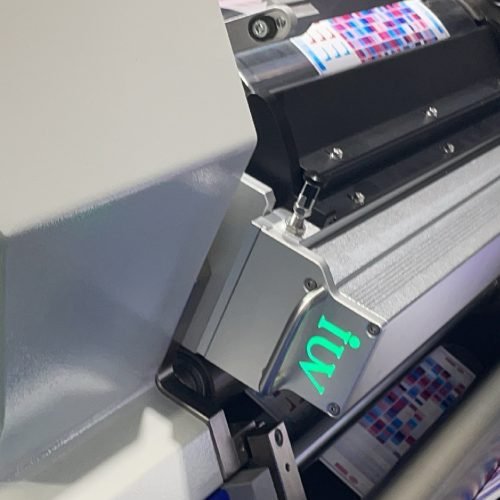

The demands on label printers are constantly escalating. Brand owners seek vibrant colors, crisp details, and packaging that truly stands out on the shelf. For narrow-web flexo printers, achieving these goals hinges on mastering the interplay of inks, varnishes, and the printing process itself. Among the most critical elements for impactful label design are high-opacity white inks and performance varnishes, especially when utilizing the speed and efficiency of LED UV curing.
The Power of Opacity: Why White Matters in Flexo
In the realm of narrow-web flexo printing, a high-opacity white ink is far more than just a base color. It’s the foundation upon which vibrant hues are built, particularly on colored or transparent substrates. Without sufficient opacity, underlying substrate colors can bleed through, dulling the intended print colors and diminishing the overall visual appeal. This is where advanced white formulations shine.
For LED UV flexo, achieving superior opacity requires careful consideration of pigment loading and particle size. The white pigment, typically titanium dioxide (TiO2), needs to be densely packed yet dispersed effectively within the ink vehicle. The UV curing process, especially with LED lamps, introduces specific challenges. The light spectrum and intensity of LED lamps can affect how pigments absorb and reflect light, influencing ink curing speed and, consequently, opacity development. Printers need inks specifically engineered to leverage the LED UV spectrum for optimal pigment scattering and light blocking.
Narrow-Web Flexo and the LED UV Advantage
Narrow-web flexo printing, by its nature, is a high-volume, high-speed process ideal for producing labels and flexible packaging. The integration of LED UV curing technology has revolutionized this sector. Unlike traditional mercury vapor lamps, LED UV systems offer instant on/off capabilities, longer lamp life, lower heat generation, and reduced energy consumption. This translates to greater operational efficiency and a more consistent printing environment.
However, this efficiency comes with its own set of technical considerations. The narrower wavelength output of LED lamps requires inks and varnishes formulated to cure effectively within these specific light bands. This is particularly true for white inks and varnishes, which contain higher concentrations of pigments and photoinitiators that can absorb or scatter UV light, potentially hindering complete curing. Achieving high opacity without compromising cure depth or surface properties is a balancing act.
High-Opacity White: Formulation and Performance
Formulating high-opacity white inks for LED UV flexo involves selecting the right combination of pigments, binders, photoinitiators, and additives.
- Pigment Selection: High-quality titanium dioxide with optimized particle size distribution is paramount. The goal is maximum light scattering to block the substrate color. However, TiO2 can also absorb UV light, so the formulation must account for this.
- Binder System: The resin system needs to be carefully chosen to allow for efficient curing under LED lamps, provide good adhesion to various substrates, and deliver the desired film properties. Compatibility with the pigment and photoinitiators is critical.
- Photoinitiators: These molecules absorb UV light and initiate the polymerization process. For LED curing, photoinitiators that are sensitive to the specific wavelengths emitted by the LED lamps (e.g., 395 nm) are essential. A balanced package of photoinitiators ensures both surface and through-cure, vital for opacity and ink durability.
- Additives: Rheology modifiers, wetting agents, and defoamers play a role in ink flow, transfer, and preventing defects. For opacity, specific additives might be used to enhance pigment dispersion and stability.
The performance of a high-opacity white ink is judged by several factors: its ability to achieve dense, uniform coverage; its color neutrality; its cure speed; and its resistance properties (e.g., to scuffing, chemicals, and fading). In LED UV flexo, printers often look for whites that cure quickly enough to keep pace with the press speed without requiring excessively high lamp power, which can lead to substrate overheating or premature curing of ink in the anilox roll.
The Role of Performance Varnishes
While white ink provides the opaque foundation, performance varnishes add the finishing touches that elevate a label from ordinary to exceptional. In narrow-web LED UV flexo, varnishes are used not just for protection but also for aesthetic enhancement.
- Protective Functions: Varnishes shield the printed image from abrasion, chemicals, moisture, and UV light, extending the label’s lifespan and maintaining its visual integrity in demanding environments.
- Aesthetic Enhancements: Varnishes can impart a range of finishes, from high gloss to matte. Special effect varnishes, such as soft-touch, textured, or metallic effects, can create unique tactile and visual experiences. For high-opacity white, a clear varnish can enhance contrast and depth, making the colors pop even further.
When working with high-opacity whites, the choice of varnish is important. A varnish that cures too slowly or interacts negatively with the white ink can lead to ink tack issues, smudging, or a dull appearance. LED UV curable varnishes, like the inks, must be specifically formulated for the LED spectrum to ensure rapid and complete curing.
Optimizing White and Varnish Performance in LED UV Flexo
Achieving optimal results with high-opacity white and performance varnishes in narrow-web LED UV flexo printing requires a holistic approach, considering several key variables:
- Substrate Compatibility: The ink and varnish must adhere well to the chosen substrate (e.g., film, paper, foil). Surface tension and the presence of release coatings on the substrate can significantly impact adhesion.
- Anilox Roll Selection: The volume and cell count of the anilox roll directly influence ink laydown. For high-opacity whites, a higher ink volume might be necessary to achieve full coverage, but this must be balanced with cure capabilities.
- Plate and Impression: The flexographic plate material, thickness, and the printing impression pressure affect ink transfer and dot gain. Precise control is needed to ensure a uniform ink film.
- LED UV Curing Setup: This is arguably the most critical factor.
- Irradiance: The power density of the UV light delivered to the ink film. Higher irradiance generally leads to faster curing.
- Wavelength: Ensuring the LED lamps’ output matches the photoinitiators’ absorption spectrum is vital.
- Exposure Time/Line Speed: The time the ink film is exposed to UV light. This is directly linked to press speed.
- Cooling: While LED UV systems generate less heat than traditional lamps, some heat is still generated. Effective substrate cooling can prevent stretching or distortion, and also helps in controlling ink viscosity.
- Lamp Positioning and Number: The placement and number of UV lamp units (or banks) influence the total energy delivered.
Printers often need to conduct trials to fine-tune these parameters. For instance, a printer might find that a particular high-opacity white ink performs best with a specific anilox volume and a carefully calibrated LED UV curing station set at a particular power level and line speed. Similarly, the varnish choice might depend on the desired finish and its compatibility with the underlying ink system.
Overcoming Challenges and Embracing Innovation
The pursuit of perfect opacity and flawless varnish performance in narrow-web LED UV flexo is an ongoing journey. Challenges such as achieving consistent color across long print runs, managing ink viscosity at high speeds, and ensuring complete cure in dense ink laydowns are common.
However, advancements in ink chemistry and LED UV technology continue to push the boundaries. New photoinitiator packages, improved pigment dispersion techniques, and more sophisticated LED lamp designs are enabling printers to achieve higher levels of opacity, faster cure speeds, and enhanced performance properties. The ability to print vibrant colors over rich whites and protect them with durable, aesthetically pleasing varnishes is a key differentiator in today’s competitive label market. By understanding the intricate relationship between substrate, ink, varnish, and the nuances of LED UV flexo, printers can unlock the full potential of their equipment and deliver labels that truly capture attention.