Sure, I can certainly help you craft a compelling and informative piece on how LED UV curing reduces ink migration in food packaging printing. Here’s a draft designed to be engaging, SEO-friendly, and packed with relevant information for your target audience.
LED UV Curing: A Game Changer for Food Packaging Ink Migration
Food packaging plays a critical role in protecting products and informing consumers. The inks used in printing this packaging must be safe and prevent unwanted chemical transfer. Ink migration, the movement of ink components into food, is a significant concern. This is where LED UV curing technology emerges as a powerful solution, offering enhanced safety and performance for food packaging printing.
Understanding Ink Migration in Food Packaging
Ink migration refers to the unintentional transfer of substances from the printed ink layer to the foodstuff it contains. This can happen through direct contact or indirect transfer via the air or packaging material. Certain ink components, such as photoinitiators, plasticizers, and oligomers, are of particular concern. If these substances migrate in sufficient quantities, they can pose health risks and affect the taste and aroma of the food. Regulatory bodies worldwide set strict limits on the levels of such migrants.
Traditional Curing Methods and Their Limitations
Historically, heat-set and UV curing technologies have been employed for printing food packaging. Heat-set inks rely on heat to evaporate solvents, while traditional UV curing uses mercury vapor lamps to cure inks. However, these methods can have drawbacks.
Traditional UV curing, while faster than heat-set, often uses broad-spectrum mercury lamps. These lamps emit significant heat, which can lead to increased ink migration by causing components to become more mobile within the ink film. The curing process itself may not always be complete, leaving uncured or partially cured ink components susceptible to migration. Furthermore, mercury lamps have environmental implications and require more frequent replacement.
The Science Behind LED UV Curing
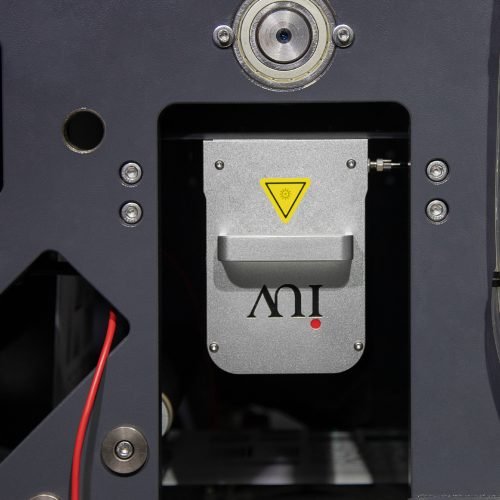
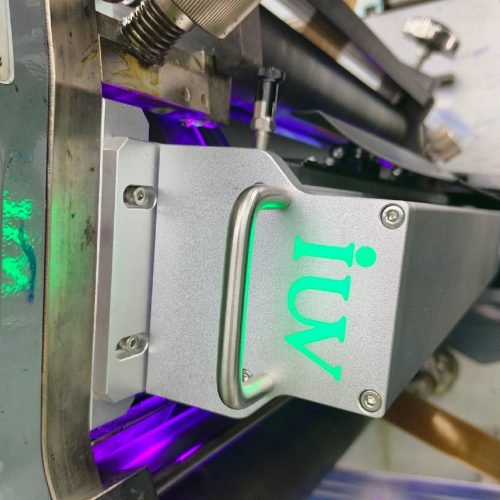
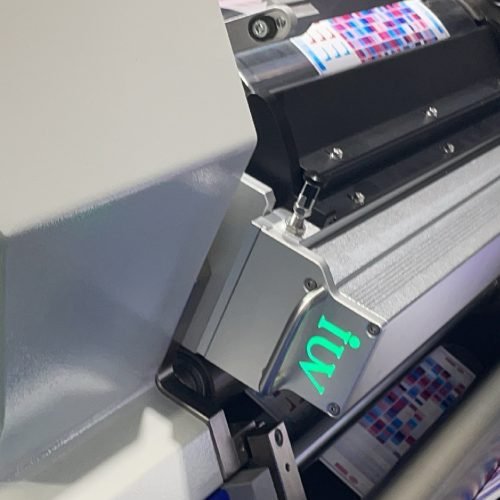
LED UV curing utilizes Light Emitting Diodes (LEDs) to emit UV light at specific wavelengths. This targeted wavelength emission is key to its efficiency. Unlike mercury lamps, LEDs emit a narrower spectrum of UV light, precisely tuned to activate the photoinitiators within the ink formulation. This leads to a more efficient and complete polymerization of the ink.
The curing process with LEDs is initiated when the photoinitiators absorb the specific UV wavelengths. This absorption triggers a chain reaction, rapidly converting the liquid ink into a solid, cross-linked polymer film. This rapid and thorough curing is paramount in preventing ink migration.
How LED UV Curing Minimizes Ink Migration
The benefits of LED UV curing in reducing ink migration are multifaceted:
- Efficient and Complete Curing: LED UV light, with its precise wavelength, ensures that photoinitiators are activated thoroughly. This leads to a more complete and robust cross-linking of the ink film. A fully cured ink film acts as a better barrier, significantly reducing the likelihood of components migrating into the food. The rapid polymerization locks down ink components effectively.
- Reduced Heat Generation: A significant advantage of LED UV curing is its low heat emission. Traditional mercury lamps generate considerable heat, which can soften the ink film and make its components more mobile, thus increasing migration potential. LEDs, conversely, generate very little heat. This cooler curing process helps maintain the integrity of the ink film and minimizes the driving force for migration.
- Lower Migration Potential of LED-Specific Inks: Formulators have developed specialized inks for LED UV curing. These inks often contain photoinitiators and oligomers with lower migration potential. The efficient curing provided by LEDs allows for the use of these advanced ink formulations, further enhancing food safety.
- Elimination of Mercury: LED UV systems do not use mercury. This eliminates concerns about potential mercury contamination from lamps, which is a critical consideration in food-safe printing.
Applications in Different Printing Processes
LED UV curing is highly adaptable and finds application across various printing methods used for food packaging:
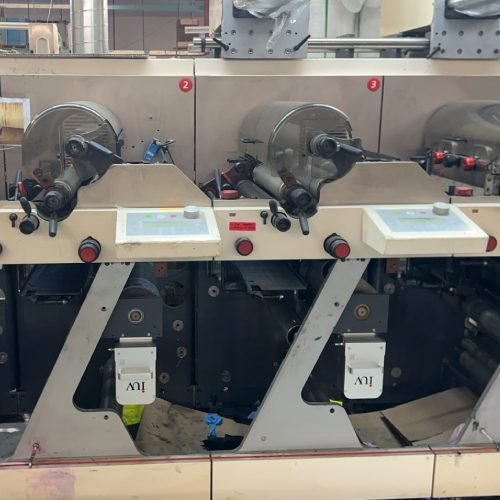
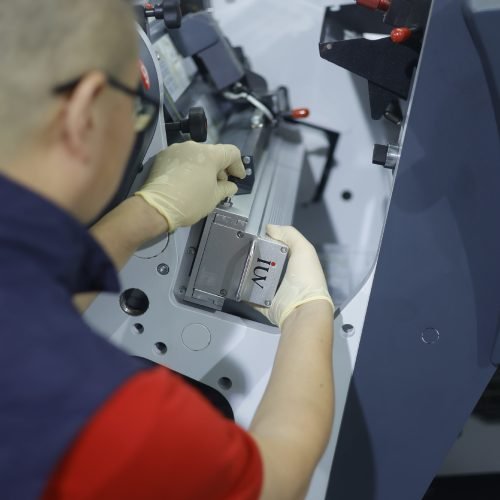
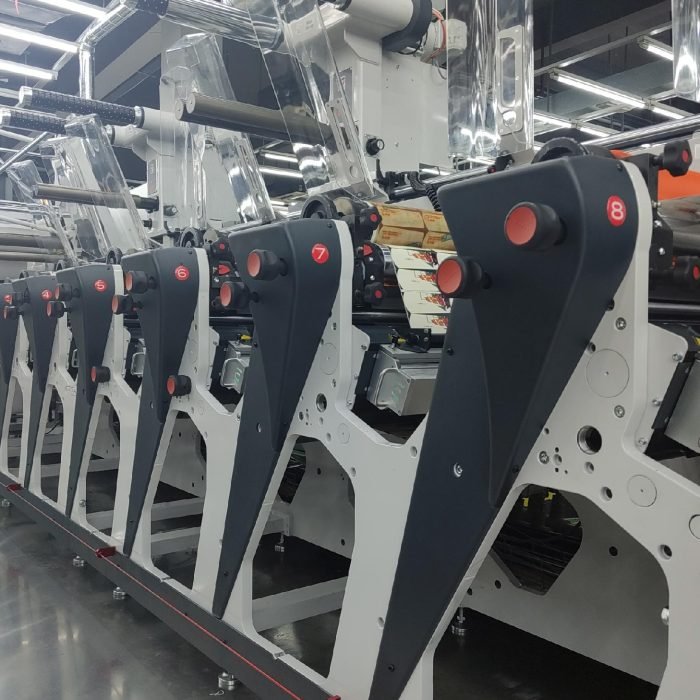
- Narrow Web Flexographic Printing: This is a dominant technology for labels and flexible packaging. Narrow web presses are ideal for the precise and high-speed application of LED UV inks. The narrow web format benefits from the energy efficiency and precise control offered by LED UV curing units. This is crucial for producing compliant and safe food labels.
- Offset (Sheetfed and Web) Printing: While traditionally more challenging for UV curing, advancements in LED UV technology have made it increasingly viable for offset printing of food packaging. For sheetfed applications, LED UV units can be integrated into the press delivery, providing instant curing. In web offset, dedicated LED UV drying sections are employed.
- Digital Printing (Inkjet): LED UV curing is the standard for many industrial inkjet applications, including food-grade labels and direct-to-shape printing. The precise placement of ink droplets by inkjet heads is complemented by the rapid, localized curing offered by LED UV lamps.
Regulatory Compliance and Consumer Confidence
With increasing consumer awareness and stringent regulations concerning food contact materials, ensuring the safety of printed packaging is paramount. Ink migration is a key focus of regulatory bodies like the FDA and EFSA. By adopting LED UV curing, packaging printers can more reliably meet these demanding standards.
The ability to achieve a highly cross-linked ink film with minimal heat significantly reduces the risk of migrant substances reaching the food. This not only ensures regulatory compliance but also builds consumer confidence in the safety and quality of the packaged food products.
The Future of Food Packaging Printing
LED UV curing represents a significant advancement in printing technology, particularly for the demanding requirements of food packaging. Its ability to deliver efficient, low-heat curing leads directly to reduced ink migration. This translates into safer products, enhanced brand reputation, and a more sustainable printing process. As the technology continues to evolve, we can expect even greater adoption and further innovation in food packaging printing.