Achieving consistent and uniform ink drying on metallic films presents a unique set of challenges within the printing industry. Metallic substrates, with their reflective surfaces and varying thermal properties, can react unpredictably to traditional drying methods. This often leads to issues like uneven ink adhesion, ghosting, and a compromised final print quality, particularly in demanding sectors like label, flexographic, offset, and narrow web printing. The advent of LED UV curing technology, however, has provided a transformative solution, offering unprecedented control and efficiency in drying ink on these specialized materials.
The inherent reflective nature of metallic films means they can absorb and dissipate heat differently than conventional paper or plastic substrates. When traditional heat-set or air-drying methods are employed, hot spots can develop, causing the ink to dry too quickly in some areas and too slowly in others. This disparity results in inconsistent film formation of the ink layer. For printers focused on vibrant, high-definition graphics and critical brand messaging, this lack of uniformity is unacceptable. It directly impacts the visual appeal and durability of the printed product, leading to costly reprints and customer dissatisfaction.
The Limitations of Conventional Drying on Metallic Surfaces
Historically, printers have relied on various methods to dry inks. For heat-set printing, this involved high-temperature ovens that forced solvents to evaporate. Air drying, common in some flexographic applications, relies on airflow to achieve the same result. While effective for many substrates, these methods often struggle with metallic films. The rapid, uneven absorption of heat can cause shimmering effects or color shifts in the metallic layer itself, degrading its inherent aesthetic appeal. Furthermore, the longer drying times associated with these methods can slow down production, hindering the throughput necessary for competitive narrow web and label printing operations.
In offset printing, particularly for high-volume label production, achieving sharp dots and solid coverage is paramount. When ink dries unevenly on a metallic film, these critical details can blur. The reflective surface can also interfere with the curing process of certain ink types, leading to inks that remain tacky or smear easily. This is especially problematic for multi-layer applications where subsequent printing or finishing processes are involved.
Understanding LED UV Curing Technology
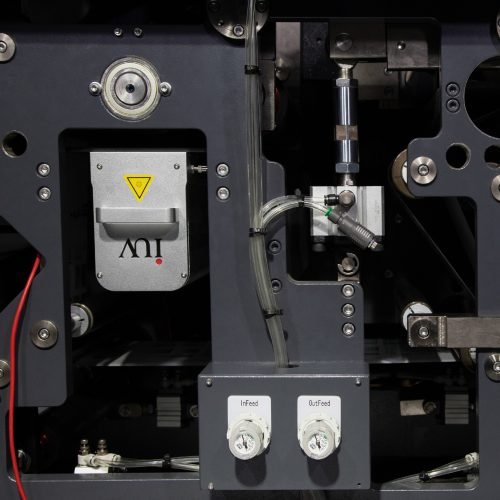
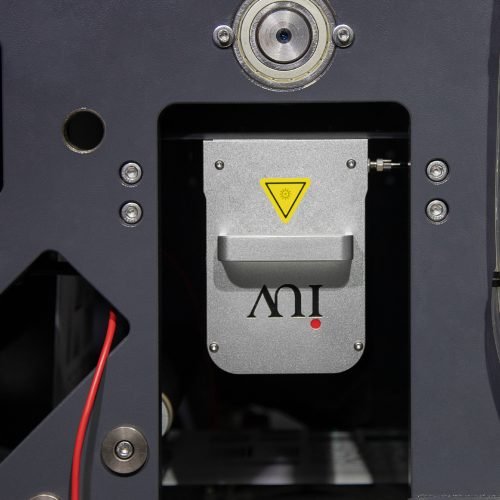
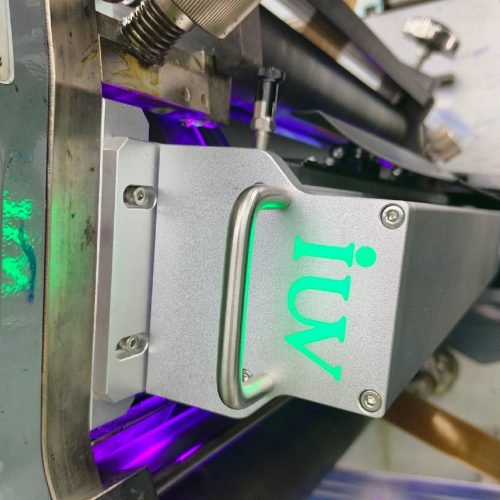
LED UV curing systems operate on a fundamentally different principle. Instead of relying on broad-spectrum heat from mercury lamps, LED systems utilize specific wavelengths of ultraviolet light emitted by light-emitting diodes. These wavelengths are precisely tuned to initiate a rapid photochemical reaction within UV-curable inks and coatings. This process, known as polymerization, transforms the liquid ink into a solid, durable film almost instantaneously.
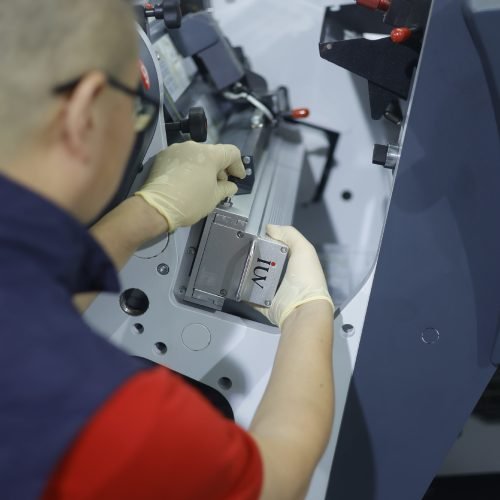
The key advantages of LED UV curing for metallic films lie in its efficiency and control. Firstly, LED systems generate very little heat compared to traditional UV lamps. This is crucial for heat-sensitive metallic substrates, minimizing the risk of thermal damage or unwanted visual alterations to the film. The focused nature of the light also means that energy is directed precisely at the ink layer, promoting efficient curing without excessive substrate interaction.
Precision and Uniformity: The LED Advantage
The uniformity of the light output from LED arrays is a significant factor in achieving consistent ink drying. Unlike traditional mercury lamps, which can have variations in intensity across their surface, modern LED systems offer a highly uniform energy distribution. This consistent light intensity across the entire web width ensures that the UV-curable ink is exposed to the same curing conditions everywhere.
In flexographic printing, where flexible plates transfer ink to the substrate, precise ink laydown is vital. When combined with LED UV curing, this precision translates directly to uniform drying. The rapid polymerization locks the ink in place immediately, preventing any potential for spreading or pooling that could occur with slower drying methods. This is particularly beneficial for fine line work and screen printing on metallic labels where detail is critical.
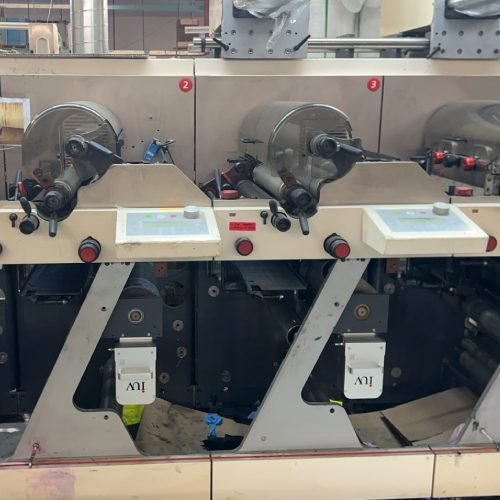
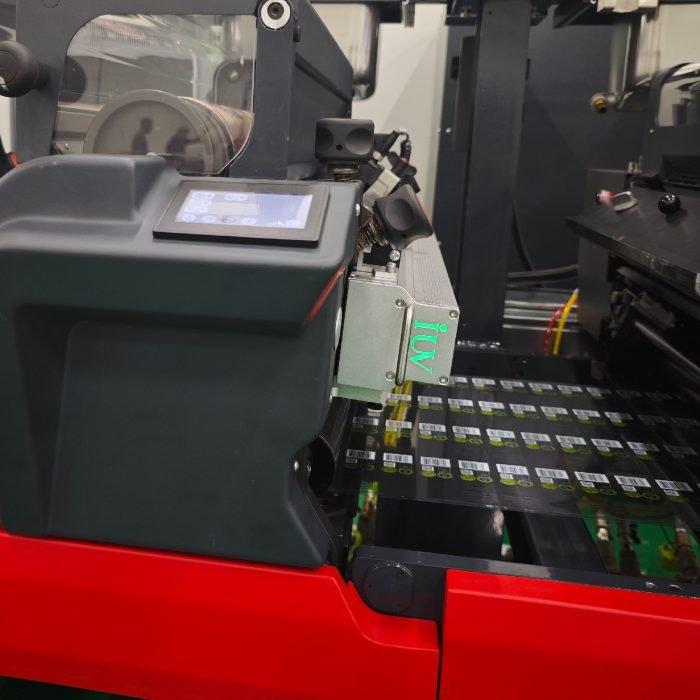
For narrow web printing, where speed and precision are paramount, LED UV curing is a game-changer. The instant curing capability of LEDs allows for much faster press speeds. This means that even on challenging metallic films, printers can achieve high-quality results without compromising their production output. The lack of heat also means that delicate metallic films are less likely to deform or warp during the curing process, maintaining their structural integrity.
Optimizing Ink Formulations for Metallic Films with LED UV
To fully leverage the benefits of LED UV curing on metallic films, careful consideration must be given to ink formulation. UV-curable inks are designed to polymerize under specific UV wavelengths. For metallic films, it’s often beneficial to use inks with photoinitiators that are highly responsive to the specific wavelengths emitted by the chosen LED system. This ensures maximum cure efficiency and optimal adhesion.
Furthermore, the interaction between the ink and the metallic substrate is critical. Certain metallic films can have a slight barrier effect or reflective properties that can hinder UV light penetration. Formulating inks with additives that promote light transmission or using specialized primers can enhance the curing process. The minimal heat generated by LED systems also reduces the likelihood of delamination or adhesion issues that can arise when metallic films are subjected to high temperatures.
Case Study Insights: Flexo and Offset Label Printing
Consider a scenario in flexographic label printing producing high-end cosmetic labels on metallic polyester film. Traditionally, achieving a perfectly smooth, streak-free print with vibrant colors on this substrate was difficult. Inconsistent drying led to a “ghosting” effect where faint outlines of printed areas appeared elsewhere on the label, and gloss levels varied across the design. Implementing an LED UV curing system with carefully selected UV inks dramatically improved this. The uniform light exposure ensured the ink cured identically across the entire surface, resulting in a smooth, consistent gloss and vibrant, solid color reproduction. The speed of LED curing also allowed for faster press speeds, increasing productivity by over 20%.
In offset printing for beverage labels on metallic paper, similar improvements are observed. Offset printing relies on precise ink transfer and setting. With traditional methods, slow drying on metallic stock could lead to ink rub-off during subsequent processes. LED UV curing locks the ink down instantly. This prevents smudging, allows for immediate stacking of printed sheets, and ensures that the metallic sheen of the substrate remains pristine beneath the cured ink layer. The absence of heat prevents any warping of the paper, maintaining dimensional stability.
Addressing Potential Challenges and Solutions
While LED UV curing offers significant advantages, some considerations remain. The initial investment in LED curing equipment can be higher than for traditional systems. However, this is often offset by lower energy consumption, reduced waste, and increased throughput over time. Another factor is the need for compatible UV-curable inks and coatings. Printers must work with ink manufacturers to ensure their formulations are optimized for both the specific metallic substrate and the LED UV system being used.
For very deep or opaque inks printed on metallic films, ensuring complete through-cure can sometimes be a challenge. This is where careful selection of LED wavelengths and power output becomes critical. Longer wavelength LEDs are often used for thicker ink layers, as they can penetrate deeper into the ink film.
The Future of Printing on Metallic Films
The trend towards premium packaging and eye-catching product labels continues to drive demand for printing on metallic films. LED UV curing technology is at the forefront of enabling printers to meet these demands with greater efficiency, quality, and sustainability. Its ability to provide uniform ink drying on challenging substrates like metallic films, coupled with its speed and low heat output, makes it an indispensable tool for modern flexographic, offset, and narrow web printing operations. As ink and LED technologies continue to evolve, we can expect even greater advancements in achieving flawless print results on these visually striking materials.