Powering Narrow Web Flexo: LED Curing for Peak Performance
The world of narrow web flexography is a dynamic one. Brands demand vibrant labels. Consumers expect flawless packaging. Printers need efficiency and sustainability. Meeting these demands requires cutting-edge technology. This is where advanced LED curing systems shine. They offer a powerful solution for narrow web flexo operations.
The Evolution of UV Curing in Flexography
Traditional UV curing methods have long been a staple in flexographic printing. They rely on mercury vapor lamps. These lamps generate significant heat. They also consume a considerable amount of energy. Furthermore, mercury lamps have a finite lifespan. Their disposal raises environmental concerns.
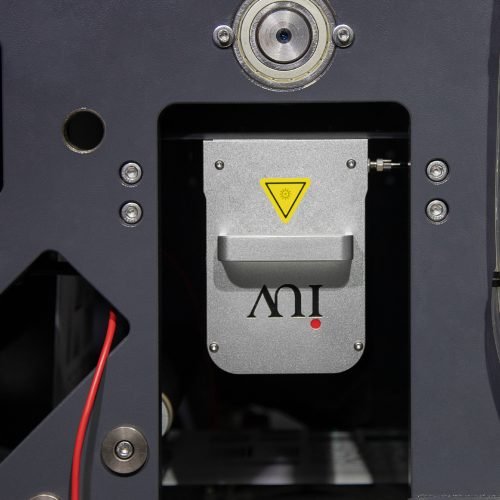
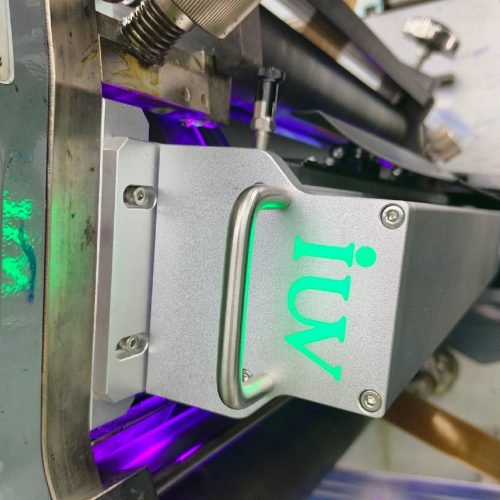
The shift towards LED UV curing represents a significant leap forward. Light Emitting Diodes (LEDs) offer a different approach. They emit light at specific wavelengths. This targeted emission is crucial for efficient ink and coating polymerization. Unlike mercury lamps, LEDs are highly durable. They also operate at much lower temperatures.
Why LED Curing for Narrow Web Flexo?
Narrow web printing, often used for labels and packaging, presents unique challenges. Presses run at high speeds. Space is often limited. The substrates can be delicate and heat-sensitive. Traditional UV systems can struggle to keep up. They might introduce too much heat. This can lead to substrate distortion or ink issues.
LED curing systems are perfectly suited for this environment. Their precise wavelength control ensures rapid and complete curing. This means faster press speeds are achievable. It also translates to sharper dot reproduction and vibrant colors. The low heat output protects even the most sensitive films and papers. This minimizes waste due to material damage.
Maximum Output: Boosting Productivity with LED
Achieving maximum output is a printer’s constant goal. LED curing directly contributes to this. Their instant on/off capability is a major advantage. There’s no lamp warm-up time. This reduces job changeover delays. Presses can be started and stopped as needed without performance loss.
The efficiency of LED curing means less energy is used. This directly impacts operating costs. Lower energy consumption translates to a healthier bottom line. Furthermore, the consistent curing performance of LEDs reduces the likelihood of print defects. Fewer reprints mean more saleable product. This maximizes overall press utilization and output.
Minimum Waste: A Greener, More Profitable Approach
Waste is a significant concern in any manufacturing process. In narrow web flexography, waste can come from several sources. Substrate damage, uncured ink, and rejected jobs all contribute. LED curing systems help to minimize this waste.
The targeted wavelengths ensure inks and coatings cure thoroughly. This eliminates issues with ink tackiness or smudging. It reduces the chance of product contamination. The low heat output prevents substrate shrinkage or warping. This ensures consistent dimensional stability. This is especially important for labels that need to fit precisely.
Moreover, the extended lifespan of LED lamps means fewer replacements are needed. This reduces maintenance downtime and associated waste. The energy efficiency also aligns with growing environmental consciousness. Brands increasingly favor suppliers who demonstrate sustainable practices. Choosing LED curing positions a printer as a forward-thinking, eco-responsible partner.
Understanding LED UV Curing Technology
LED UV curing relies on specific wavelengths of light. These wavelengths activate photoinitiators within UV-curable inks and coatings. Common LED wavelengths for printing include 365 nm, 385 nm, 395 nm, and 405 nm. The choice of wavelength depends on the ink formulation.
The intensity of the LED output is also critical. Higher intensity generally leads to faster curing speeds. However, it must be balanced with the ink’s absorption characteristics. Advanced LED systems offer adjustable intensity. This allows for fine-tuning of the curing process for different jobs.
Substrate Considerations for LED Curing
A wide array of substrates is used in narrow web flexography. This includes paper, various films (PET, BOPP, PE), and even some metalized materials. The surface energy of the substrate can influence ink adhesion and curing. Primers or surface treatments might be necessary for optimal results.
LED curing’s low heat output is a boon for heat-sensitive substrates. Thin films are less likely to deform or degrade. This expands the range of printable materials. It opens up new application possibilities for label printers.
Ink and Coating Formulations for LED
Specialized UV-curable inks and coatings are designed for LED curing. These formulations contain photoinitiators optimized for LED wavelengths. Not all traditional UV inks will cure effectively with LEDs. It is crucial to select inks specifically designed for LED curing systems.
The benefits of using LED-specific inks are numerous. They offer excellent adhesion, rub resistance, and chemical resistance. They also cure faster and more efficiently under LED light. This leads to sharper print definition and superior color vibrancy.
Integrating LED Curing into Your Flexo Workflow
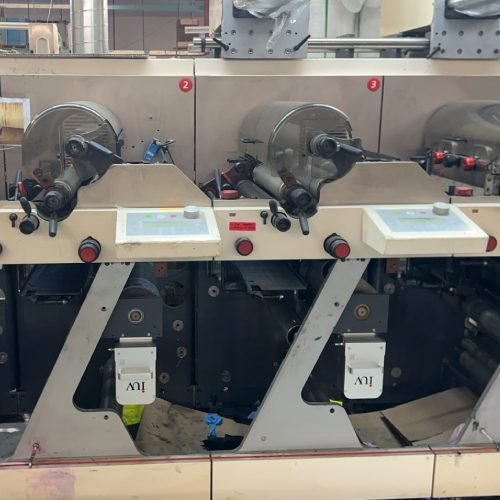
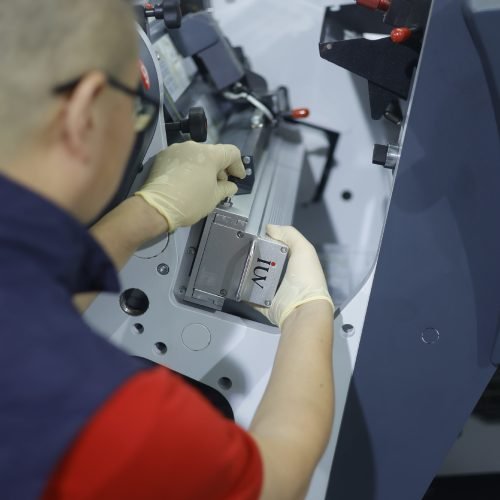
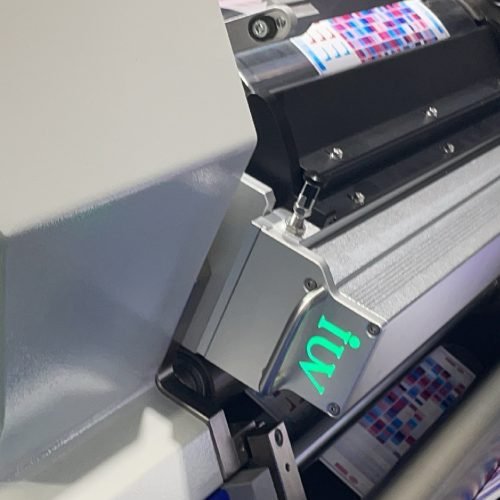
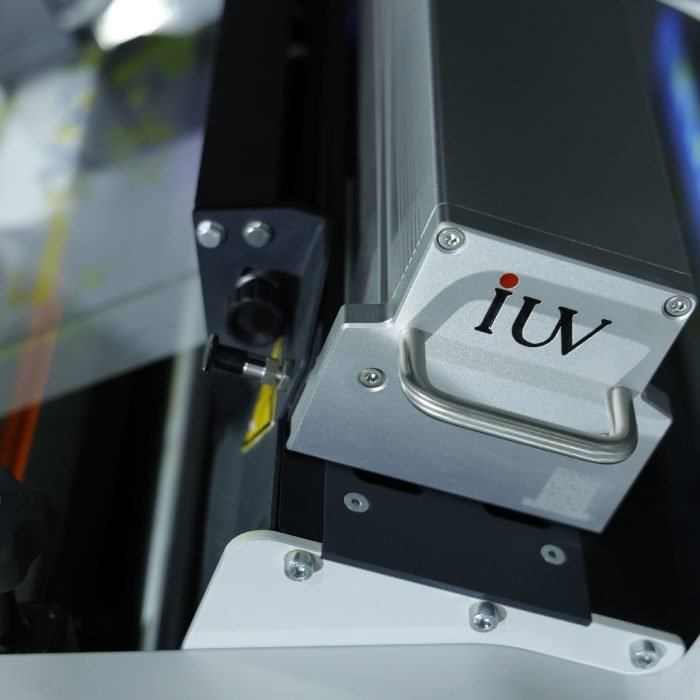
Integrating LED curing systems into existing narrow web flexo presses is often straightforward. Many systems are designed for easy retrofitting. Key considerations include ensuring adequate power supply and proper ventilation. The placement of the LED heads is also important. They need to be positioned correctly relative to the print stations.
A thorough assessment of your current press capabilities is recommended. Consult with LED curing system manufacturers. They can provide guidance on compatibility and installation. Proper setup ensures you maximize the benefits of this technology.
The Future of Narrow Web Printing with LED
LED curing is not just a trend; it’s the future of UV curing in narrow web flexography. Its combination of high performance, energy efficiency, and environmental benefits is compelling. As LED technology continues to advance, expect even greater capabilities.
For label printers and packaging converters, embracing LED curing is a strategic decision. It enhances productivity, reduces operational costs, and improves product quality. It also positions businesses for sustainable growth. The pursuit of maximum output and minimum waste finds a powerful ally in LED curing systems.