The printing industry is constantly seeking innovation. Efficiency and sustainability are now paramount concerns for label printers. Narrow web printing, in particular, demands solutions that can keep pace with high-speed production. LED UV curing technology offers a significant advancement in this arena. It provides energy efficiency and superior performance for narrow web printing lines.
The Evolution of UV Curing in Narrow Web Printing
Traditional UV curing systems have long been a staple in narrow web printing. These systems use mercury lamps. While effective, they come with drawbacks. Mercury lamps generate substantial heat. This can impact substrate choices and increase energy consumption. They also have a limited lifespan. Frequent replacement and disposal are necessary. This adds to operational costs and environmental concerns.
The shift towards LED UV curing represents a natural progression. Light Emitting Diodes offer a more focused and efficient light spectrum. This targeted output translates to faster, more effective curing. It also dramatically reduces wasted energy. For narrow web presses, where space and power are often at a premium, this is a game-changer.
Understanding LED UV Curing Technology
LED UV curing systems utilize semiconductor diodes to produce ultraviolet light. Unlike broadband mercury lamps, LEDs emit light within a specific wavelength range. Common ranges include UVA (320-400nm) and sometimes UVB (280-320nm). This precise output is crucial for efficient photoinitiator activation. Photoinitiators are the compounds within inks, coatings, and adhesives that react to UV light.
The benefits of this specificity are manifold. It ensures consistent and thorough curing. It minimizes the risk of uncured ink or coating, a common problem with older technologies. Furthermore, LEDs generate very little heat. This is a stark contrast to the radiant heat produced by mercury lamps. This low heat output opens up new possibilities for printing on sensitive substrates. Think thin films, certain plastics, and even some papers that would warp or degrade under high heat.
Energy Efficiency: A Core Advantage
Energy consumption is a major operational expense for any printing business. LED UV curing systems excel in this area. They are significantly more energy-efficient than traditional mercury lamp systems. A substantial portion of the energy used by mercury lamps is converted into heat. This heat is not directly beneficial for the curing process. LEDs, on the other hand, convert most of their energy directly into UV light.
This means less power is drawn from the grid. It translates to lower electricity bills. The payback period for an investment in LED UV systems is often shorter than initially anticipated, due to these direct energy savings. Beyond direct cost reduction, this increased efficiency aligns with broader corporate sustainability goals. Reducing energy footprints is becoming increasingly important for brand image and regulatory compliance.
Performance Benefits for Narrow Web Presses
The advantages of LED UV curing extend beyond energy savings. They directly impact printing performance and production output.
- Instantaneous On/Off: LEDs can be switched on and off instantly. This eliminates warm-up and cool-down periods associated with mercury lamps. For short print runs or job changes, this saves valuable production time. It also prevents unnecessary energy use when the press is idle.
- Consistent Output: LEDs maintain their UV output over a much longer period than mercury lamps. Mercury lamps degrade over time, leading to inconsistent curing. LED systems provide stable, reliable performance throughout their lifespan. This consistency is vital for maintaining high print quality across entire production runs.
- Reduced VOCs: While not solely an LED benefit, UV-curable inks and coatings are inherently low in Volatile Organic Compounds (VOCs). When combined with LED curing, this offers a cleaner printing process. This is beneficial for workplace air quality and reduces environmental emissions.
- Substrate Versatility: As mentioned, the low heat output allows for printing on a wider range of substrates. This includes heat-sensitive materials. This expands the application possibilities for narrow web printers. They can cater to more diverse market demands.
Applications in Tag and Label Printing
The tag and label sector is a primary beneficiary of LED UV curing technology in narrow web printing. These applications often require vibrant colors, durable finishes, and compliance with specific regulations (e.g., food packaging).
- High-Quality Graphics: LED curing ensures inks are fully cross-linked. This results in sharp, well-defined graphics and vibrant color reproduction. The precise spectrum of LED light is ideal for curing specialized inks and coatings, such as those used for metallic effects or high-gloss finishes.
- Durability and Resistance: Cured UV inks offer excellent scratch, chemical, and abrasion resistance. This is crucial for labels that need to withstand handling, environmental exposure, or product contents.
- Specialty Finishes: LED UV systems facilitate the application of various overprint varnishes and special effects. This includes matte finishes, soft-touch coatings, and raised effects (embossing). The controlled curing ensures these finishes are applied precisely and consistently.
Integrating LED UV Systems into Flexographic and Offset Presses
Narrow web flexographic and offset printing lines can be readily adapted to incorporate LED UV curing.
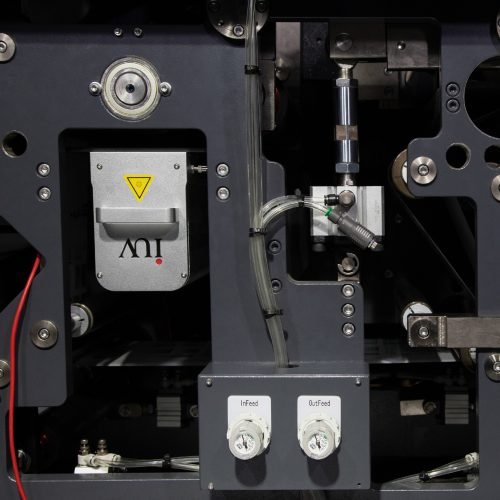
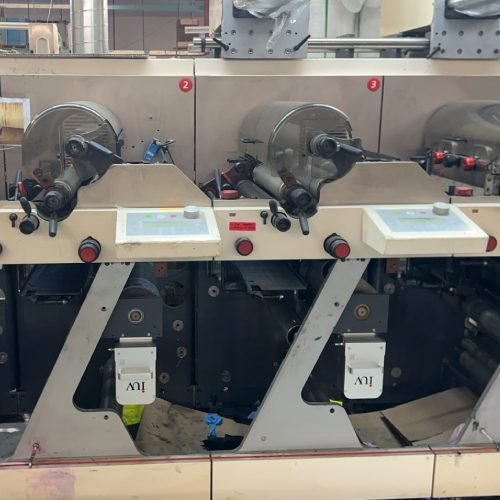
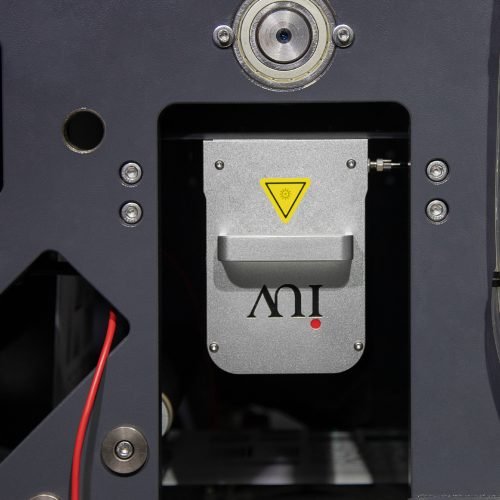
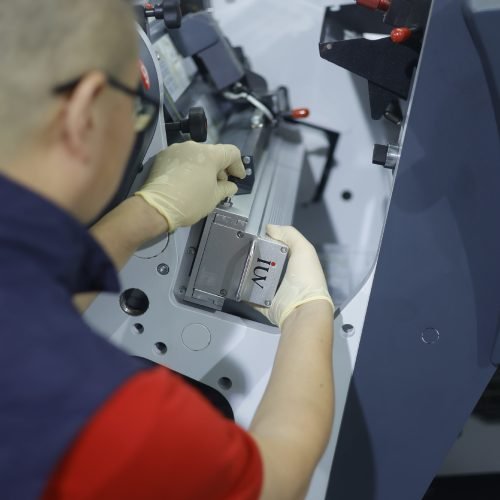
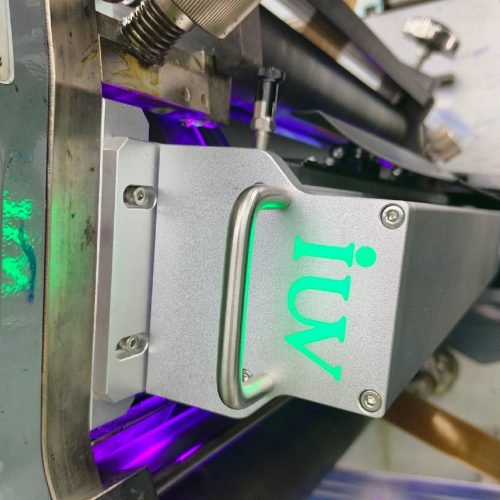
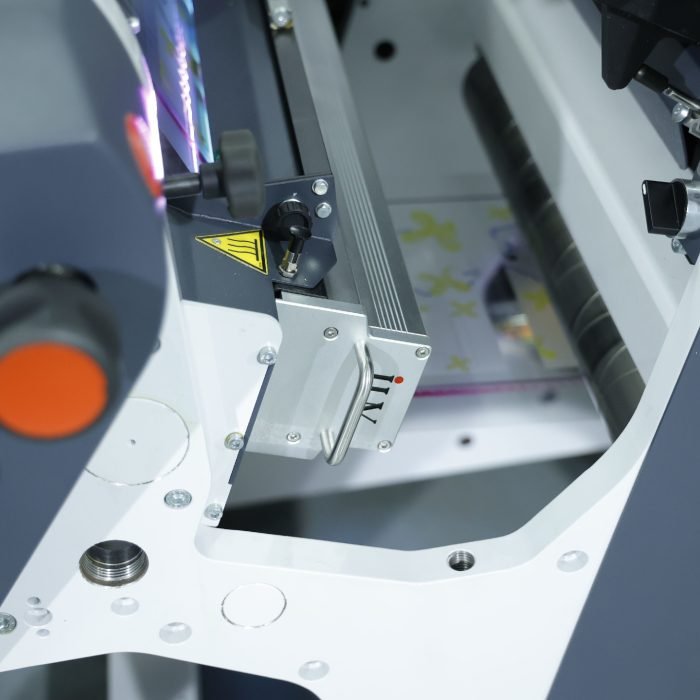
Flexographic Printing: In flexo, UV-curable inks are widely used. Transitioning to LED UV curing involves replacing mercury lamp units with LED arrays. These arrays are often designed as modular units that can be retrofitted into existing press configurations. Careful consideration is given to placement. Positioned between print stations or at the end of the press, they ensure optimal curing of inks and coatings. The integration requires attention to power supply and cooling (though LED cooling needs are much less demanding).
Offset Printing: Narrow web offset presses also benefit immensely. LED UV curing allows for high-speed offset printing on a wider variety of substrates. Similar to flexo, retrofitting involves installing LED UV lampheads. These are strategically placed to cure inks and coatings effectively. The ability to cure instantly on paper, board, and plastic films without excessive heat is a significant advantage.
Considerations for Implementation
When considering the adoption of LED UV curing systems for narrow web printing lines, several factors warrant attention:
- Wavelength Compatibility: Ensure the LED system’s wavelength output matches the photoinitiators in the inks and coatings being used. Most UV inks are formulated for 365nm or 395nm wavelengths, which are common in LED systems.
- Irradiance Levels: The intensity of the UV light (irradiance) is critical for cure speed. Higher irradiance generally leads to faster curing. This needs to be matched to the press speed and ink formulation.
- Cooling Requirements: While LEDs produce less heat, some still require a cooling system (air or water) to maintain optimal operating temperature and longevity. This is significantly less demanding than mercury lamp cooling.
- Retrofit vs. New Press: For existing presses, retrofitting LED UV units is a common and cost-effective approach. For new press investments, integrated LED UV systems offer seamless performance.
- Service and Support: Partner with reputable suppliers who offer reliable service and support for LED UV systems. This ensures minimal downtime and maximum return on investment.
The Future of Narrow Web Printing
LED UV curing is not just a trend; it’s a foundational technology for the future of narrow web printing. Its energy efficiency, consistent performance, and versatility make it indispensable for printers aiming for high productivity and sustainability. As the technology continues to mature, we can expect even more advancements. These will further enhance its capabilities and cost-effectiveness. For label printers and converters, embracing LED UV curing is a strategic move. It positions them for success in an increasingly demanding and environmentally conscious market.