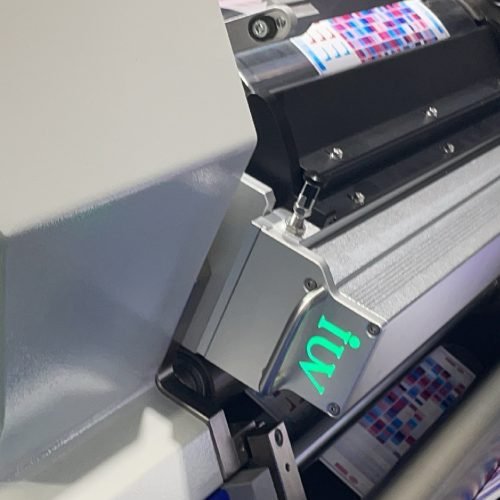
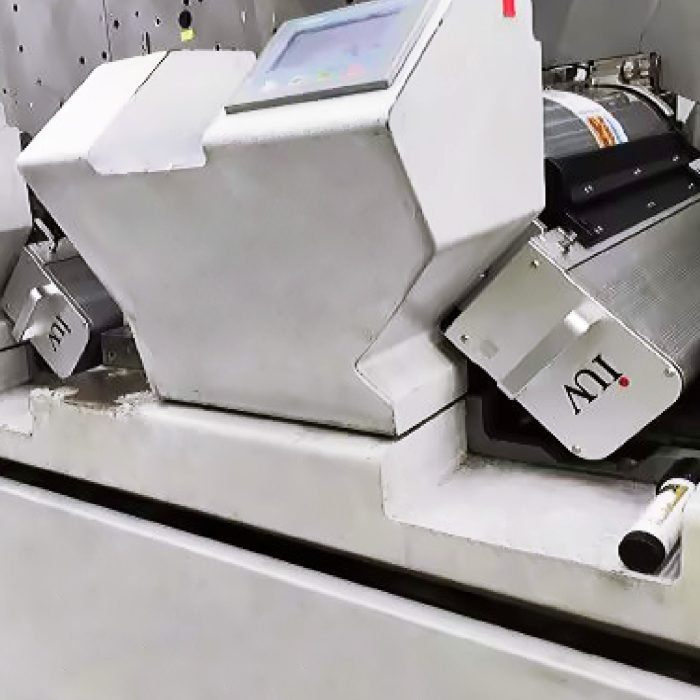
Food packaging demands a delicate balance. It must protect its contents, attract consumers, and, crucially, remain entirely safe for human consumption. When it comes to printing on food packaging, this safety aspect is paramount, especially concerning the inks and coatings used. Traditional curing methods can sometimes leave behind unwanted residues, raising concerns about migration into food products. This is where LED UV curing technology emerges as a transformative solution, particularly for low-migration printing applications.
The Growing Need for Low-Migration Inks in Food Packaging
The food industry operates under stringent regulations designed to protect consumers from harmful substances. This extends to the packaging materials themselves. Migratory substances are chemical compounds that can transfer from the packaging to the food. These can originate from various components, including inks, adhesives, and coatings. For years, the printing industry has been working to develop and implement inks and curing processes that minimize this risk.
The challenge lies in ensuring that the printing process itself doesn’t introduce new risks. Curing inks, for example, involves a chemical reaction that solidifies the ink layer. If this reaction is incomplete, or if the curing process uses components that can later break down, unwanted substances may be present. Low-migration printing aims to prevent this by using specialized ink formulations and robust curing methods that ensure complete polymerization and the absence of volatile organic compounds (VOCs) or other potentially harmful by-products.
Understanding UV Curing: A Brief Overview
Ultraviolet (UV) curing is a well-established technology in the printing industry. It uses UV light to initiate a photochemical reaction that instantly dries or cures inks, coatings, and adhesives. Unlike conventional drying methods that rely on solvent evaporation, UV curing is a physical and chemical transformation. This offers several advantages: speed, reduced VOC emissions, and the ability to print on a wide range of substrates, including non-porous materials like plastics and foils.
Traditional UV curing systems typically employ mercury vapor lamps. These lamps generate UV light across a broad spectrum. While effective, they have certain drawbacks. They consume significant energy, generate considerable heat, and have a limited lifespan, requiring frequent replacement. Furthermore, their broad spectrum can sometimes lead to the generation of ozone and other by-products, which can be a concern in sensitive applications like food packaging.
The Arrival of LED UV Curing Technology
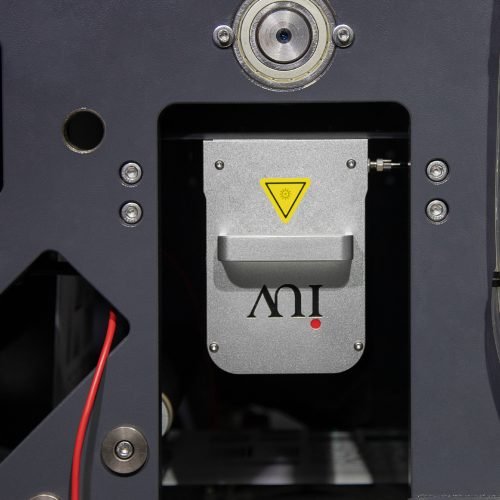
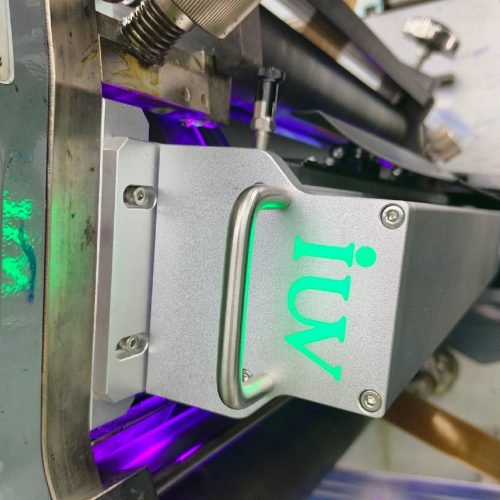
Light Emitting Diode (LED) UV curing represents a significant advancement over traditional mercury lamp systems. LEDs emit UV light within very narrow, specific wavelengths. This precision is a game-changer, especially for low-migration applications.
The key advantages of LED UV curing for food packaging printing are:
- Targeted Curing: LEDs can be designed to emit light at wavelengths that are highly efficient for curing specific UV-curable ink formulations. This precise activation ensures a more complete and robust cure.
- Reduced Heat Generation: Compared to mercury lamps, LEDs produce significantly less heat. This is vital when printing on heat-sensitive substrates commonly used in food packaging, such as thin films. Excessive heat can cause warping, deformation, or even degradation of the packaging material.
- No Ozone Production: The specific wavelengths emitted by LEDs do not typically generate ozone, a gas that can be harmful and requires ventilation. This simplifies the printing environment and enhances workplace safety.
- Energy Efficiency: LEDs are far more energy-efficient than mercury lamps, consuming substantially less power. This translates to lower operational costs and a reduced environmental footprint.
- Longer Lifespan: LED lamps have a much longer operational lifespan than mercury lamps, reducing maintenance downtime and replacement costs.
- Instant On/Off Capability: LEDs can be switched on and off instantaneously, allowing for more precise control over the curing process and preventing unnecessary energy consumption.
LED UV Curing and Low-Migration Inks: A Synergistic Partnership
The combination of specialized low-migration ink formulations and LED UV curing technology creates a powerful synergy for food packaging printing. Low-migration inks are designed with specific photoinitiators and monomers that, when cured under the right conditions, result in a fully cross-linked polymer network with minimal potential for migration.
LED UV curing systems are ideal for these inks because:
- Complete Polymerization: The precise wavelengths of LED light are highly effective at activating the photoinitiators in low-migration inks. This ensures that the ink cures thoroughly, forming a stable, inert layer. Incomplete curing is a primary cause of migration.
- Formulation Compatibility: Modern low-migration ink systems are often formulated to be optimally cured by specific LED wavelengths (e.g., 365 nm, 395 nm). This precise match between the light source and the ink chemistry maximizes curing efficiency.
- Substrate Integrity: By generating less heat, LED UV curing protects the integrity of the food packaging substrate, preventing any degradation that could potentially lead to migration issues.
Applications in Label Printing and Flexible Packaging
The advantages of LED UV curing for low-migration printing are particularly relevant in sectors like label printing and flexible packaging for food products.
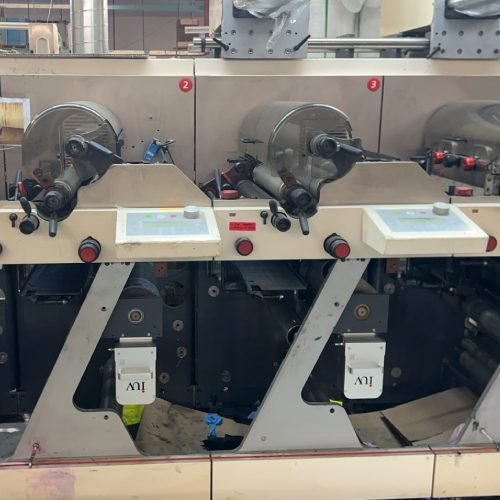
Narrow Web Label Printing: The narrow web printing sector, often utilizing flexographic and offset (lithographic) presses, is a prime area for LED UV integration. Labels for food products, beverages, and pharmaceuticals frequently require high-quality graphics and robust durability, alongside stringent safety standards.
- Flexography: In flexographic printing, LED UV offers a clean, fast curing method for water-based and solvent-based inks, and increasingly for UV-curable inks. For food labels, the ability to achieve a fast, thorough cure with low-migration UV inks using LED technology is a significant advantage. It allows for high printing speeds without compromising the safety of the label.
- Offset Lithography: Sheetfed and web offset presses also benefit. LED UV curing enables high-speed printing on a variety of substrates, including films and foils often used for premium food labels. The precise curing minimizes ink spread and enhances print quality, while the low-migration aspect ensures compliance with food safety regulations.
Flexible Packaging: Flexible packaging, including pouches, sachets, and wrappers, is ubiquitous in the food industry. Printing on these materials, often thin plastic films or laminates, presents unique challenges.
- Barrier Properties: The packaging must maintain its barrier properties against oxygen, moisture, and light, all while being printed on. LED UV cured inks, when applied in low-migration formulations, do not compromise these critical barrier functions.
- Print Quality and Durability: LED UV enables vibrant, high-resolution printing that remains durable throughout the product’s shelf life. The instant cure prevents smudging and improves scuff resistance. For food packaging, this means branding remains intact and the product is visually appealing from production to consumption.
- Reduced Environmental Impact: The energy efficiency and absence of VOCs associated with LED UV printing contribute to a more sustainable packaging production process, aligning with growing consumer and regulatory demands for eco-friendly solutions.
Considerations for Implementing LED UV Curing Systems
Adopting LED UV curing for low-migration printing requires careful consideration of several factors:
- Ink System Selection: Not all UV inks are formulated for low migration or optimal performance with LED curing. It is essential to work with ink manufacturers specializing in low-migration UV inks and to verify their compatibility with specific LED wavelengths.
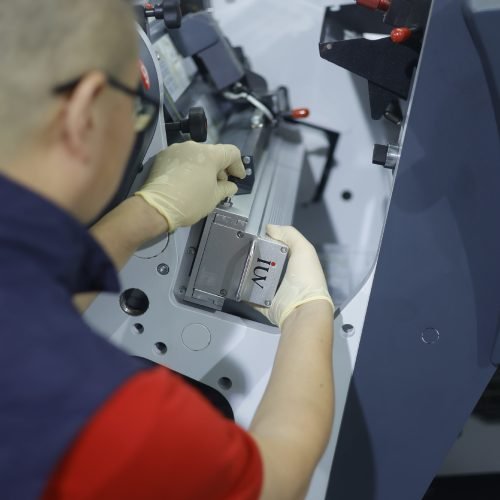
- Press Integration: Retrofitting existing printing presses with LED UV curing units requires expertise. Factors such as lamp placement, power output, cooling requirements, and integration with press controls must be addressed by experienced engineers.
- Wavelength Specificity: Understanding the optimal LED wavelength for the chosen ink system is crucial. Different ink formulations are optimized for specific narrow bands of UV light, such as 365 nm, 385 nm, or 395 nm.
- Process Control: Maintaining consistent curing performance requires careful monitoring of lamp output, web speed, and ink laydown. While LED systems are generally stable, periodic checks are still necessary.
- Regulatory Compliance: Always ensure that the chosen inks, coatings, and curing process meet the relevant food contact regulations in your target markets (e.g., EU regulations, FDA guidelines).
The Future of Food Packaging Printing
The trend towards safer, more sustainable, and higher-quality food packaging is undeniable. LED UV curing systems, with their inherent advantages in precision, efficiency, and reduced environmental impact, are perfectly positioned to lead this transformation. For printers focused on the food packaging sector, particularly in narrow web label and flexible packaging applications, investing in LED UV technology for low-migration printing is not just an upgrade – it’s a strategic imperative for meeting market demands and ensuring consumer safety. As technology continues to evolve, we can expect even more sophisticated ink formulations and curing solutions that further enhance the safety and appeal of food packaging worldwide.