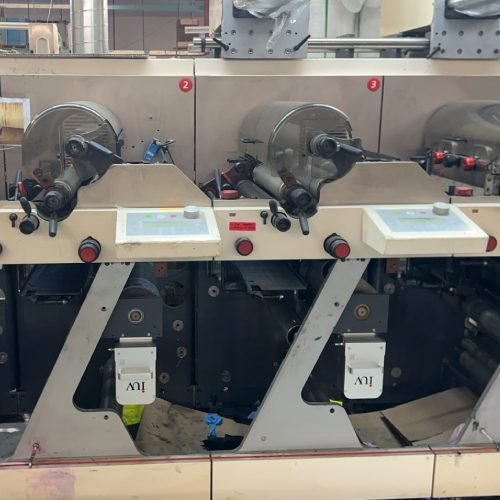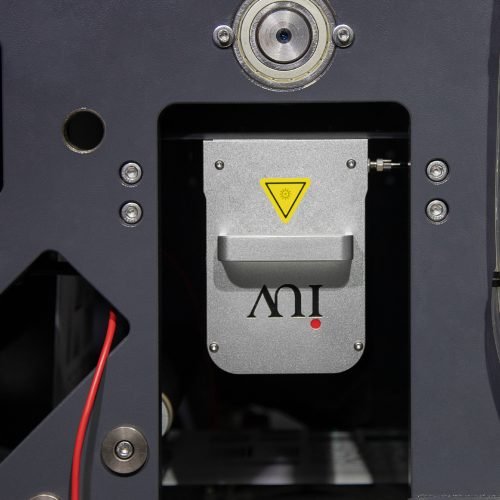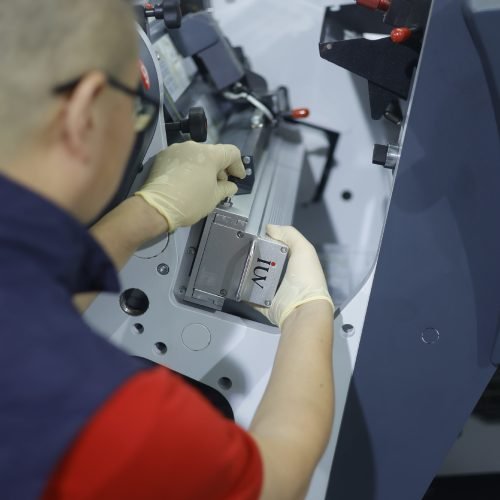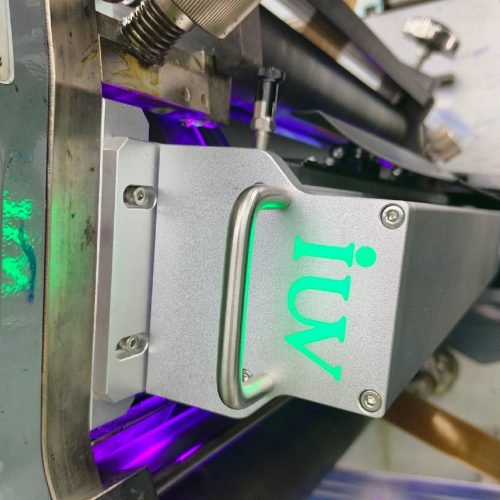
The quest for consistent and high-quality curing in printing operations has never been more critical. As print shops navigate the demands of diverse substrates and varying production speeds, the technology behind the curing process becomes paramount. This is particularly true in the realm of UV curing, where the transition from traditional mercury vapor lamps to advanced LED UV systems offers significant advantages, especially when it comes to achieving stable curing across both wide web and narrow web formats.
The Evolution of UV Curing in Printing
For decades, mercury vapor lamps have been the standard for UV curing. They provide a broad spectrum of UV light, effective for initiating the polymerization process in UV-curable inks, coatings, and adhesives. However, these lamps come with inherent drawbacks. Their performance is often inconsistent, fluctuating with lamp age and power input. They generate substantial heat, which can affect sensitive substrates and increase energy consumption. Furthermore, their spectral output can vary, leading to potential curing issues, especially in demanding applications.
The advent of Light Emitting Diode (LED) UV curing technology marked a paradigm shift. LEDs offer a precise and narrow spectral output, concentrated at specific wavelengths that are highly efficient for curing. This targeted approach means less wasted energy and a more controlled curing environment. Unlike mercury lamps that warm up and cool down, LEDs reach full power almost instantaneously and maintain a stable output over their operational life. This stability is a game-changer for printers.
Stability: The Cornerstone of Quality Printing
In any printing process, stability translates directly to quality and repeatability. When the curing process is stable, printers can rely on consistent ink and coating properties, predictable adhesion, and robust performance of the final printed product. This is crucial for brand integrity and customer satisfaction.
In narrow web printing, where labels and flexible packaging are often produced, precision is key. Even slight variations in curing can lead to adhesion failures, color shifts, or a lack of scratch resistance. Similarly, in wide web printing, used for applications like commercial print, packaging, and industrial graphics, maintaining consistent curing across the entire width of the web is essential. Any inconsistency can result in defects that are magnified by the larger print area.
LED UV: Delivering Stable Curing Across Formats
The inherent characteristics of LED UV curing systems make them exceptionally well-suited for achieving stable curing across a wide range of web formats.
1. Consistent Spectral Output: LEDs emit UV light within a very narrow wavelength band. This means that the energy delivered is precisely tuned to activate the photoinitiators in the ink or coating. Unlike mercury lamps, which have a broad and sometimes fluctuating spectrum, LED output remains remarkably consistent. This consistency ensures that the polymerization process occurs uniformly, regardless of whether you are printing on a narrow label stock or a wide sheet of packaging material. For printers working with sensitive or specialized inks, this predictable performance is invaluable.
2. Instant On/Off and Stable Intensity: LEDs reach their full UV output the moment they are switched on. There’s no warm-up period required, which is a significant advantage for short runs or job changes where presses are frequently started and stopped. More importantly, their intensity remains stable throughout their operational life. This contrasts sharply with mercury lamps, whose output degrades over time, often requiring frequent replacement or power adjustments to maintain a consistent cure. This stable intensity ensures that the energy delivered to the ink is constant, leading to uniform curing across the entire web width and length.
3. Reduced Heat Generation: While UV curing inherently generates some heat, LEDs are far more energy-efficient than mercury lamps. They convert a larger percentage of electrical energy into UV light, with less energy lost as heat. This reduced thermal load is beneficial for a multitude of reasons. In narrow web printing, it helps prevent heat-sensitive substrates like thin films or certain plastics from deforming or shrinking. In wide web applications, it contributes to overall press stability, reducing the risk of web wander or dimensional changes that can impact registration. This cooler operation also translates to lower energy bills and a more comfortable working environment.
4. Targeted Wavelengths for Specific Applications: The ability to select specific LED wavelengths allows printers to optimize their curing process for different ink formulations. For example, certain inks and coatings are designed to cure most efficiently at 365 nm, 395 nm, or other specific wavelengths. LED systems can be configured with emitters that precisely match these requirements, ensuring maximum cure efficiency and minimizing waste. This precision is beneficial for both narrow and wide web printing, enabling printers to achieve optimal results with a wider range of materials and ink types.
Application in Narrow Web Printing
Narrow web printing, dominated by label and flexible packaging production, places immense demands on curing systems. Here, the challenges often include high printing speeds, a wide variety of substrates (from paper and film to foil), and the need for robust physical properties in the final product.
- Label Printing: Labels often require excellent scratch and abrasion resistance, chemical resistance, and vibrant colors that don’t fade. Stable LED UV curing ensures that the ink and overprint varnishes are fully cross-linked, delivering these critical performance characteristics. The consistent curing also prevents issues like delamination or poor adhesion, which are common problems when curing is inconsistent.
- Flexible Packaging: In this sector, print quality is paramount, but so is the safety and functionality of the packaging. LED UV curing provides a reliable method for curing inks and coatings without transferring excessive heat to delicate film substrates. This is vital for maintaining the barrier properties and integrity of the packaging. The consistent cure also ensures that the printed graphics are durable and will withstand the rigors of product handling and consumer use.
Application in Wide Web Printing
Wide web printing encompasses applications like commercial print, large-format graphics, and some packaging segments. While the web widths are larger, the fundamental need for stable curing remains.
- Commercial Print: For high-volume commercial printing, especially where coatings are applied, consistent curing is vital for achieving desired gloss levels, tactile effects, and durability. The stability of LED UV systems ensures that even across a wide sheet, the coating is applied and cured uniformly, preventing visual defects and ensuring the longevity of the printed piece.
- Industrial Graphics and Signage: Large-format graphics and signage often require exceptional weatherability and durability. LED UV curing systems, with their stable and consistent energy output, are ideal for curing inks that need to withstand prolonged exposure to the elements. The precise control offered by LEDs ensures that the inks are fully cured for maximum outdoor performance.
Overcoming Challenges and Maximizing Benefits
While LED UV systems offer substantial advantages, successful implementation requires careful consideration.
- Ink and Coating Compatibility: Not all UV-curable inks and coatings are formulated for LED curing. Printers must ensure they are using formulations specifically designed for the wavelengths emitted by their chosen LED system.
- Wavelength Selection: Choosing the correct LED wavelength is crucial. This depends on the photoinitiators present in the ink or coating. Consulting with ink manufacturers is often recommended to determine the optimal wavelength for specific applications.
- Dose Management: The total energy delivered (dose) is critical for complete curing. This is a function of UV intensity and exposure time. While LED intensity is stable, exposure time is determined by web speed. Printers need to ensure that their press speeds and LED system power are balanced to deliver the required UV dose.
The Future of Curing is Stable and Efficient
The transition to LED UV curing systems represents a significant leap forward for the printing industry. The inherent stability of these systems, offering consistent spectral output, instant operation, and reduced heat generation, directly translates into higher print quality, improved repeatability, and greater operational efficiency. Whether printing intricate labels on a narrow web press or large-scale graphics on a wide web machine, LED UV technology provides the reliable and stable curing solution necessary to meet the demands of modern print production. As the technology continues to evolve, its adoption will undoubtedly accelerate, solidifying its position as the future of UV curing in printing.