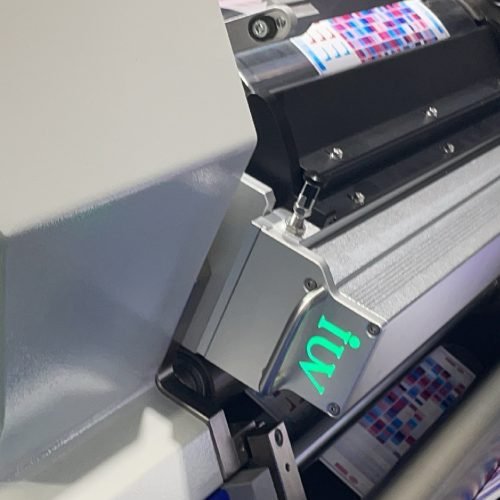
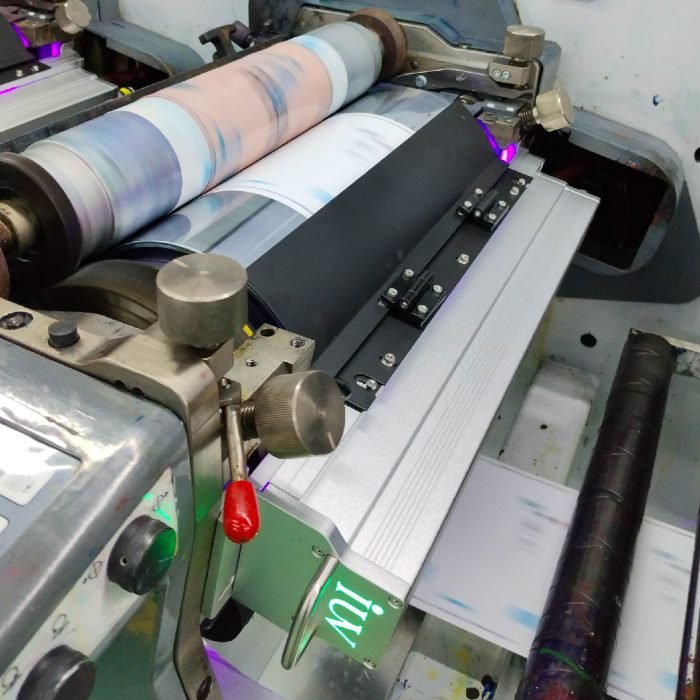
The pace of modern label and flexible packaging production is relentless. Manufacturers are constantly seeking ways to increase throughput while maintaining impeccable print quality and meeting stringent environmental standards. In this demanding landscape, the role of LED UV curing in high-speed roll-to-roll printing applications has become not just significant, but transformative. This technology offers a compelling solution for printers aiming to optimize their operations across a variety of printing methods.
Advancements in Roll-to-Roll Printing
Roll-to-roll (R2R) printing, by its nature, involves continuous material fed from one large roll and wound onto another. This process is ubiquitous in the production of labels, flexible packaging, commercial print, and even specialized applications like printed electronics. The inherent efficiency of R2R makes it ideal for mass production. However, achieving high speeds in R2R printing presents unique challenges, particularly when it comes to drying or curing inks and coatings. Traditional methods often involve heat, air drying, or older UV lamp technologies, each with its own set of drawbacks regarding speed, energy consumption, substrate compatibility, and environmental impact.
The Rise of UV Curing
Ultraviolet (UV) curing technology has been a staple in the printing industry for decades. It utilizes UV light to initiate a photochemical reaction that instantly solidifies (cures) specially formulated inks, coatings, and adhesives. This rapid curing process eliminates the need for extensive drying times, allowing for faster press speeds and immediate post-print handling. The benefits are substantial: improved scratch and chemical resistance, vibrant color reproduction, and the ability to print on a wider range of substrates, including heat-sensitive materials.
Introducing LED UV Curing Technology
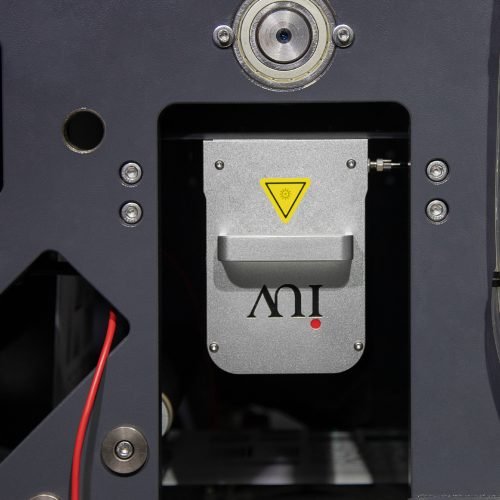
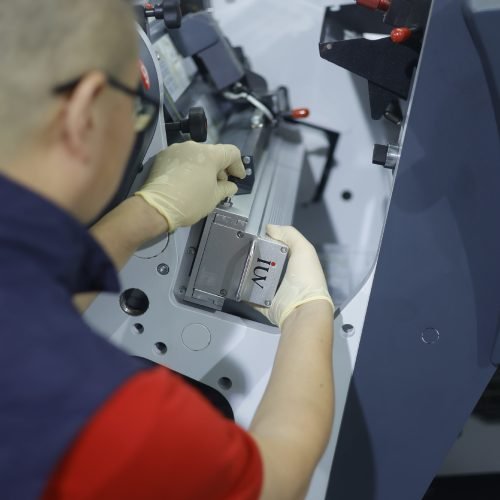
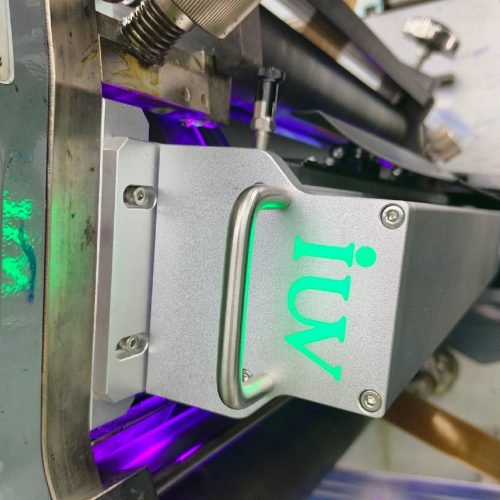
While traditional mercury arc UV lamps have served the industry well, the advent of Light Emitting Diode (LED) UV technology represents a significant leap forward. LED UV systems emit UV light at specific wavelengths, precisely tuned to activate the photoinitiators in UV-curable inks and coatings. This targeted emission offers several distinct advantages over conventional broad-spectrum mercury lamps.
One of the most immediate benefits is energy efficiency. LED lamps are significantly more power-efficient, consuming a fraction of the electricity compared to their mercury counterparts. This translates directly into lower operating costs for printing businesses. Furthermore, LEDs have a much longer operational lifespan, reducing maintenance downtime and the frequency of lamp replacements. They also generate less heat, which is critical when printing on thin or heat-sensitive substrates commonly used in label and flexible packaging applications.
LED UV in Flexographic Printing
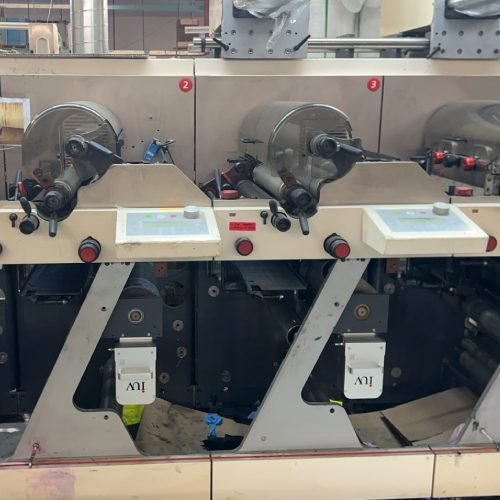
Flexographic (flexo) printing is a cornerstone of the narrow web label and flexible packaging industry. Its versatility and ability to handle a wide array of substrates make it a preferred choice for many applications. Integrating LED UV curing into flexo presses operating in a roll-to-roll configuration offers immense advantages.
The instant curing provided by LED UV allows flexo presses to run at their maximum mechanical speeds. This means more labels or packaging units produced per hour. The precise control over UV output from LEDs ensures consistent cure quality across the entire print width, even at high speeds. This consistency is vital for achieving superior print results, including fine details and solid ink areas.
Moreover, the lower heat output from LED UV systems is particularly beneficial for flexo printing on sensitive films and papers. It minimizes the risk of substrate distortion or damage, allowing for greater substrate flexibility and consistent print registration. The reduced ozone generation compared to mercury lamps also contributes to a safer and more environmentally friendly working environment on the press floor.
LED UV in Offset (Lithographic) Printing
Offset printing, particularly in narrow web applications for labels and specialty packaging, also benefits greatly from LED UV curing. High-speed roll-to-roll offset presses can achieve unprecedented levels of productivity when equipped with LED UV curing units.
The instant cure prevents ink smudging and allows for immediate back-printing or finishing operations. This eliminates bottlenecks in the production workflow. The ability of UV-curable inks to adhere to a wide range of non-absorbent substrates, such as plastics and foils, is fully leveraged with LED UV. This expands the range of printable products, enabling printers to cater to diverse market demands.
For offset printers, the reduced makeready times associated with UV curing are also a significant advantage. Since there’s no drying time needed for inks to set, jobs can be turned around much faster. The consistent and powerful curing provided by LEDs ensures that even complex print jobs with dense ink coverage achieve a full cure, leading to durable and high-quality finished products.
LED UV in Other Roll-to-Roll Processes
Beyond flexo and offset, LED UV curing is also making inroads into other roll-to-roll printing technologies. For instance, in some digital printing applications, particularly those designed for high-volume production, LED UV curing is the standard. This is especially true for inkjet and some toner-based systems where instant solidification of the ink is paramount for maintaining high print speeds and image integrity.
The application extends to coating and varnishing operations as well. High-speed R2R lines can apply functional coatings, protective varnishes, or decorative effects with precision, and LED UV ensures these layers are instantly cured and bonded to the substrate. This is critical for achieving the desired tactile and visual properties in packaging and labels.
Key Advantages Summarized
To crystallize the benefits, let’s look at the core advantages LED UV curing brings to high-speed roll-to-roll printing:
- Increased Press Speeds: Instant curing allows presses to operate at their mechanical limits, boosting productivity.
- Energy Efficiency: Significantly lower power consumption leads to reduced operational costs and a smaller carbon footprint.
- Reduced Heat Output: Protects sensitive substrates, maintains registration, and improves operator comfort.
- Longer Lamp Lifespan: Minimizes maintenance, downtime, and replacement costs.
- Instant Handling: Eliminates drying times, enabling immediate further processing.
- Enhanced Print Quality: Consistent, high-intensity UV output leads to durable, vibrant prints with excellent resistance properties.
- Environmental Benefits: Less ozone generation, mercury-free operation, and lower energy usage contribute to a greener process.
- Substrate Versatility: Enables printing on a wider range of materials, including plastics, foils, and thin papers.
The Future of High-Speed R2R Printing
As the printing industry continues to evolve, driven by demands for faster turnarounds, higher quality, and greater sustainability, LED UV curing is poised to become even more integral to high-speed roll-to-roll operations. Its ability to deliver on all these fronts – speed, quality, efficiency, and environmental responsibility – makes it an indispensable technology for label printers, flexible packaging converters, and commercial printers alike. The ongoing development of new ink formulations and even more efficient LED systems will only further solidify its position as the optimal curing solution for the demanding world of high-speed R2R printing.