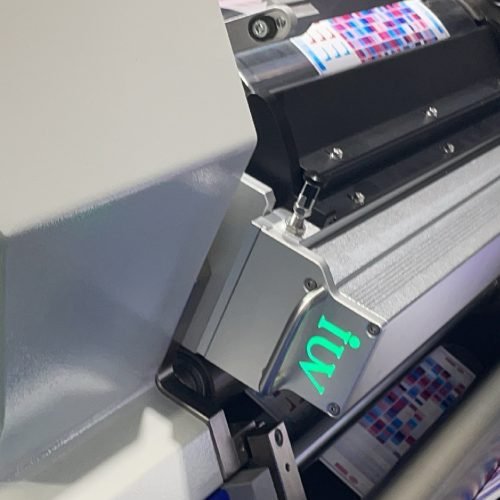
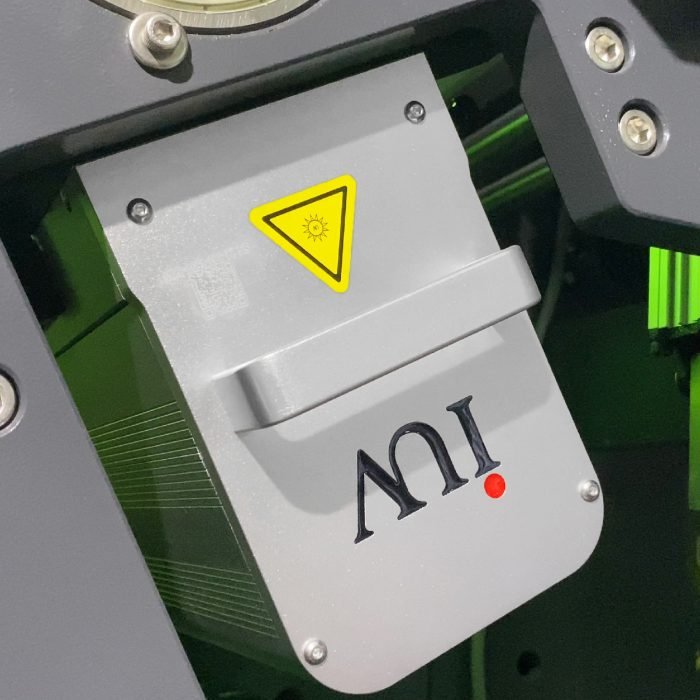
The label printing industry is currently navigating a significant technological transition. Traditional mercury arc lamps, once the standard for UV curing, are losing ground to LED UV technology. For converters operating hybrid flexo and letterpress lines, this shift represents more than just a lamp swap. It is a fundamental change in how energy interacts with chemistry on the press.
Narrow web printing requires precision, speed, and consistency. When you combine flexography and letterpress in a single line, you face unique challenges regarding ink thickness and substrate sensitivity. This guide examines how to implement LED UV curing effectively to maximize production efficiency.
The Physics of LED UV vs. Mercury Arc
Standard UV curing systems rely on medium-pressure mercury vapor lamps. These lamps produce a broad spectrum of light, ranging from UVC through UVA and into the infrared (IR) spectrum. While effective, they generate massive amounts of heat. Much of that energy does nothing for curing and instead risks deforming thin films.
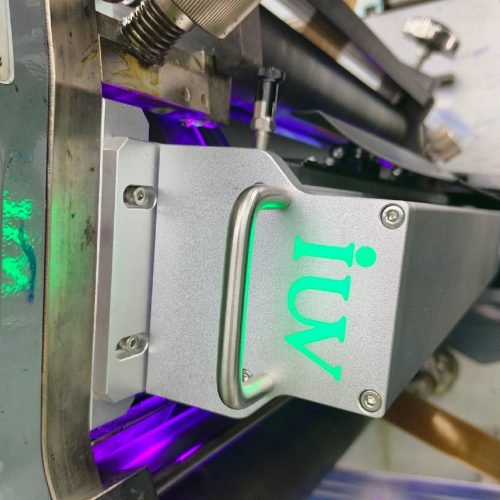
LED UV systems work differently. They utilize semi-conductors to emit light at specific wavelengths, typically 385nm or 395nm. This is concentrated UVA energy. Because LEDs do not emit IR radiation, the substrate remains cool. For narrow web printers working with heat-sensitive materials like PE or thin BOPP, this temperature control is a game-changer.
Adapting Hybrid Lines for LED Curing
Hybrid lines often feature flexo stations for high-speed coverage and letterpress units for fine detail or specialized textures. Each process deposits ink at different densities. Flexo inks are relatively thin, while letterpress inks carry a higher viscosity and pigment load.
When transitioning a hybrid line to LED, you must ensure the light intensity (irradiance) and energy density (dose) are sufficient for both methods. Flexo requires high-speed curing to keep up with the press velocity. Letterpress requires deep penetration through thicker ink films. Modern LED arrays provide enough peak irradiance to handle both, provided the press configuration is optimized.
Ink Chemistry and Photo-initiators
You cannot simply use traditional UV inks under an LED lamp. Traditional inks are formulated to react to the broad spectrum of mercury lamps. LED UV requires inks with photo-initiators specifically tuned to the 385nm or 395nm range.
In a hybrid setup, the ink supply chain becomes vital. Your flexo inks and letterpress inks must share compatible curing profiles. Using “LED-ready” inks ensures that the polymerization occurs instantly. If the ink chemistry does not match the LED wavelength, you will experience poor adhesion, “tacky” surfaces, or ghosting.
Heat Management on Narrow Web Substrates
One of the primary drivers for LED adoption in label printing is the ability to run thinner, cheaper substrates. Mercury lamps often require massive chill rollers to keep the web from melting or stretching. These rollers add complexity and maintenance costs.
LED UV systems are “cold” curing solutions. Since the heat output is minimal, you can often reduce the tension and cooling requirements of the press. This allows for better registration on heat-sensitive films. In the narrow web sector, where margins are tight, reducing material waste during setup and run-time provides an immediate boost to the bottom line.
Mechanical Integration and Form Factor
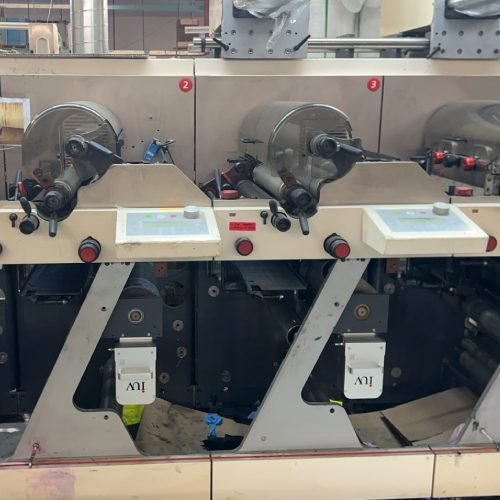
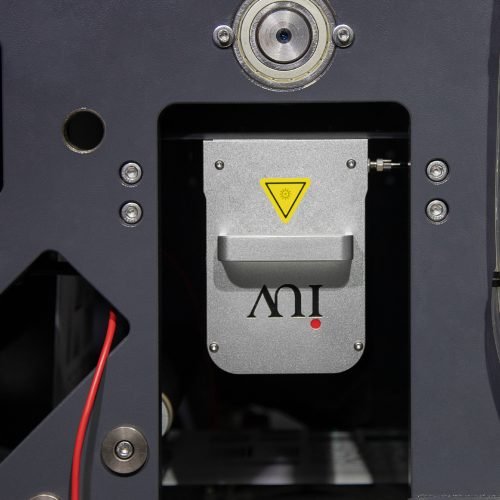
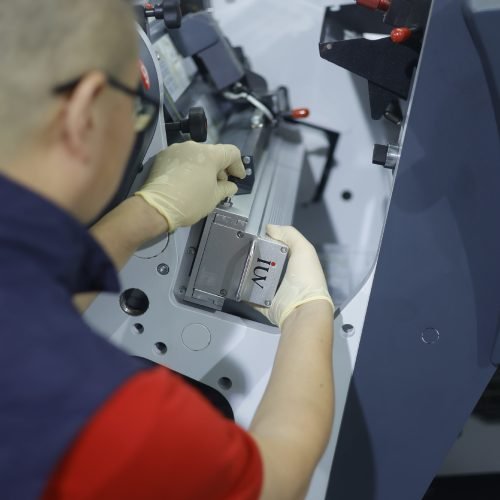
Retrofitting a hybrid line requires careful spatial planning. Mercury lamp housings are bulky because they require shutters, reflectors, and large exhaust ducts for ozone removal. LED units are remarkably compact.
The small footprint of LED lamp heads allows for easier mounting between printing stations. In many cases, you can place an LED unit in a space where a mercury lamp simply would not fit. This flexibility is particularly useful for hybrid presses where the web path might be complex. Furthermore, LEDs do not produce ozone, eliminating the need for expensive and noisy extraction blowers.
Energy Consumption and Operational Costs
The financial argument for LED UV is centered on energy efficiency. Mercury lamps require a warm-up and cool-down period. They are often left running at standby power even when the press is not printing. This wastes a staggering amount of electricity.
LEDs are instant-on/instant-off. They only consume power when the press is actually moving and the sensors detect the web. Most converters report energy savings between 50% and 80% after switching to LED. When you multiply those savings across a hybrid line with six, eight, or twelve stations, the ROI usually lands within 12 to 24 months.
Maintenance and Lifespan
A standard mercury bulb lasts between 1,000 and 2,000 hours. Their output degrades over time, which forces operators to slow down the press to ensure a full cure. This creates a moving target for quality control.
LED modules are rated for 20,000 to 30,000 hours of operation. Their output remains remarkably stable throughout their life. For a maintenance engineer, this means less downtime for bulb changes and no need to manage hazardous mercury waste. In a hybrid flexo/letterpress environment, where mechanical complexity is already high, simplifying the curing system reduces the overall “headache” of daily operations.
Achieving Optimal Adhesion
Surface tension and ink wetting are critical in label printing. Sometimes, the high intensity of LED UV can cause “surface shrivel” if the cure happens too fast on certain coatings. However, this is easily managed by adjusting the power output of the LED array relative to the press speed.
For hybrid lines, testing is required for each substrate. Use a dyne pen to check surface energy before and after the cure. Because LED provides a more consistent output, once you find the “sweet spot” for a specific material, you can save those settings in your press profile. This level of repeatability is difficult to achieve with aging mercury lamps.
Productivity Gains in Hybrid Environments
Hybrid presses are designed for versatility. You might run a paper job in the morning and a shrink sleeve job in the afternoon. LED UV facilitates these quick changeovers. Since there is no waiting for lamps to reach temperature, the press is ready to run as soon as the plates are mounted.
The lack of heat also means the press components stay cool. This reduces the thermal expansion of the cylinders and the frame, keeping the registration tighter over long runs. For narrow web label lines, where 0.1mm can be the difference between a pass and a fail, thermal stability is a major technical advantage.
Environmental Impact and Compliance
Global regulations regarding mercury are tightening. The Minamata Convention on Mercury is pushing many regions to phase out mercury-containing products. Transitioning a hybrid label line to LED UV future-proofs the facility against these looming bans.
Beyond regulatory compliance, the removal of ozone and the reduction in CO2 emissions align with the sustainability goals of most major brand owners. Providing “green” labels printed with low-energy LED technology can be a powerful selling point for converters in the competitive packaging market.
Technical Challenges to Consider
While the benefits are clear, the transition requires a methodical approach. The initial capital expenditure for LED units is higher than mercury systems. However, looking at the total cost of ownership (TCO) reveals the long-term savings.
Another factor is the “window” of the cure. LEDs have a narrow spectral output. This means you must be diligent with your ink suppliers. Ensure they provide high-quality, LED-specific formulations that offer the same color gamut and lightfastness as your previous UV inks. In some cases, specialized coatings or metallic inks might require a specific LED configuration to achieve the desired gloss levels.
The Future of Narrow Web Curing
The label industry is moving toward total automation. Digital-flexo hybrids and smart press lines require components that can be digitally controlled and monitored. LED UV systems fit perfectly into this ecosystem. They offer real-time data on energy usage, lamp hours, and system health.
For the production engineer, LED UV is not just a light source; it is a precision tool. It allows for faster speeds, lower waste, and a safer working environment. Whether you are running flexo, letterpress, or a hybrid of both, the transition to LED is the most effective way to modernize a narrow web operation.
Conclusion for Production Planning
Implementing LED UV on hybrid lines is a strategic upgrade. It solves the heat issues of thin-film printing and slashes energy bills. By matching the right ink chemistry with the specific 395nm output, converters can achieve superior adhesion and vibrant colors at higher speeds. The move away from mercury is no longer a question of “if,” but “when.” For those aiming to stay competitive in the label and narrow web market, the “when” is now.