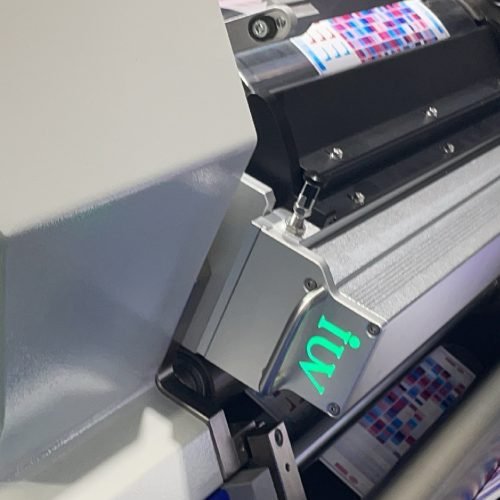
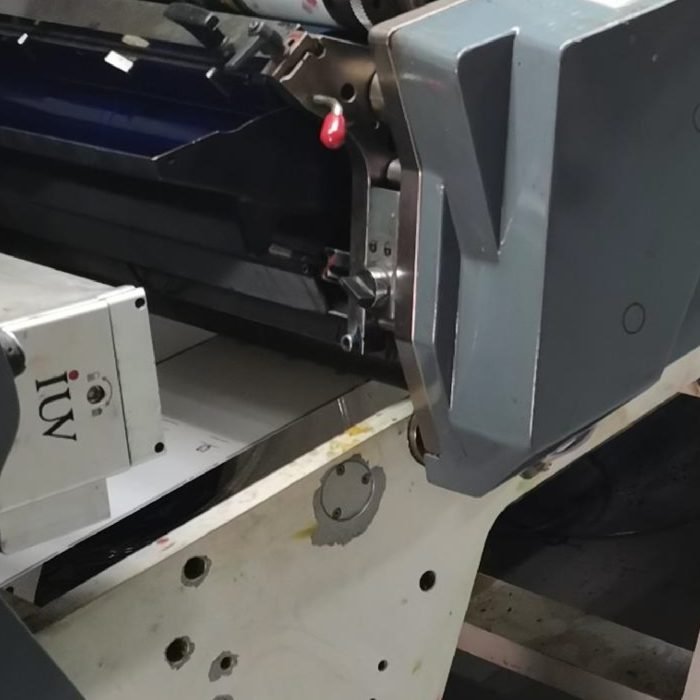
Multi-layer labels offer sophisticated solutions for product identification, branding, and information delivery. Their construction often involves combining different substrates, inks, and adhesives to achieve specific functional and aesthetic properties. Achieving high-quality and durable multi-layer labels relies heavily on efficient and effective curing processes. Ultraviolet (UV) curing technology has become a cornerstone in this area, providing rapid, high-performance solutions for label printing. This guide delves into the technical aspects of UV curing as applied to multi-layer label constructions, covering key printing methods and the advantages of UV technology.
The Nuances of Multi-Layer Label Construction
Before exploring UV curing, understanding the complexity of multi-layer labels is crucial. These labels are not simple single-layer designs. They can incorporate:
- Face Stocks: Various paper or film materials that form the visible surface of the label.
- Adhesives: Different types of adhesives used to bond layers together or to the substrate.
- Inks and Coatings: Specialized inks for printing graphics, text, and functional coatings for protection or special effects.
- Interlayers: Thin films or papers that might be present between the face stock and the adhesive, or between different printed layers.
Each component must be compatible with the printing and curing processes. The challenge lies in ensuring that each layer, including inks and adhesives, is properly cured without damaging adjacent materials or compromising the overall label integrity.
UV Curing Technology: The Foundation of High-Performance Labels
UV curing utilizes ultraviolet light to initiate a photochemical reaction, rapidly transforming liquid inks, coatings, and adhesives into solid, durable films. This process offers significant advantages over conventional thermal or oxidative drying methods. The core of UV curing lies in the formulation of UV-curable materials, which contain photoinitiators. When exposed to UV light of specific wavelengths, these photoinitiators absorb energy and generate free radicals or cations. These reactive species then initiate a polymerization process, cross-linking monomers and oligomers into a solid polymer network.
Key Printing Methods for Multi-Layer Labels and UV Curing Integration
UV curing is adaptable to various printing technologies commonly used for narrow-web label production.
Flexographic Printing (Flexo)
Flexography is a highly versatile printing process widely adopted for label manufacturing. It uses resilient relief plates to transfer ink from an anilox roll to the substrate.
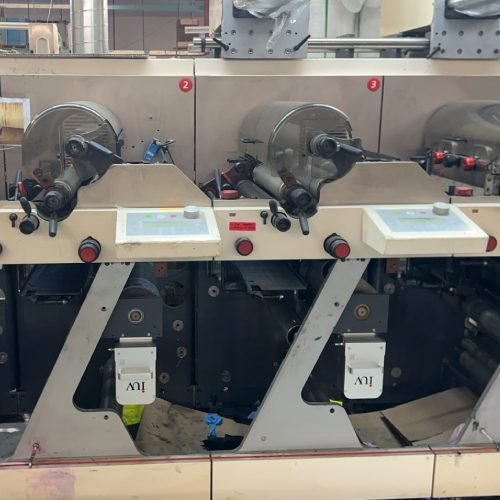
- UV Flexo for Multi-Layer Labels: In flexographic printing of multi-layer labels, UV-curable inks are applied to successive layers. The rapid curing speed of UV inks is a significant benefit, allowing for multiple print stations to operate efficiently. Each station can apply a different ink or coating, which is then immediately cured by a UV lamp positioned after the print unit. This prevents ink transfer or smudging between stations, which is critical for intricate multi-layer designs.
- Advantages:
- Fast Drying: UV inks cure almost instantaneously, enabling high printing speeds.
- Sharp Image Quality: The rapid curing locks the ink in place, leading to crisp dot reproduction.
- Durability: UV-cured inks and coatings offer excellent scratch, chemical, and abrasion resistance.
- Substrate Versatility: UV flexo can print on a wide range of substrates, including films, foils, and papers essential for multi-layer constructions.
Offset Lithography (Offset)
Offset printing, also known as lithography, is another popular method for producing high-quality labels. It uses a flat printing plate where the image area is ink-receptive and the non-image area is ink-repellent.
- UV Offset for Multi-Layer Labels: While traditionally associated with sheet-fed printing, UV offset is increasingly used in narrow-web applications. For multi-layer labels, UV offset can be employed for printing complex graphics or fine text on specific layers. Similar to flexo, UV lamps are placed after each print unit. This allows for instant curing of the ink, preventing it from interfering with subsequent printing or coating steps in the multi-layer build-up.
- Advantages:
- Excellent Print Quality: Offset printing is renowned for its ability to reproduce fine details and smooth tonal gradations.
- Cost-Effective for Long Runs: Can be economical for larger print volumes.
- UV Integration: Provides the benefits of rapid curing and enhanced durability for multi-layer applications.
Screen Printing
Screen printing uses a mesh screen to transfer ink onto a substrate. Ink is forced through the mesh onto the substrate in areas where the emulsion is open.
- UV Screen for Multi-Layer Labels: Screen printing is ideal for applying thick ink layers, special effects (like varnishes or tactile finishes), and opaque inks, all of which can be valuable in multi-layer label design. UV-curable screen inks can be used to build up these layers. The rapid curing ensures that subsequent layers, whether printed by screen, flexo, or offset, do not interact negatively with previously printed and cured materials.
- Advantages:
- High Ink Film Thickness: Allows for vibrant colors, opacity, and textured effects.
- Durability: UV-cured screen inks provide exceptional resistance properties.
- Versatile Application: Suitable for various specialty inks and coatings.
LED UV Curing: The Evolution of UV Technology
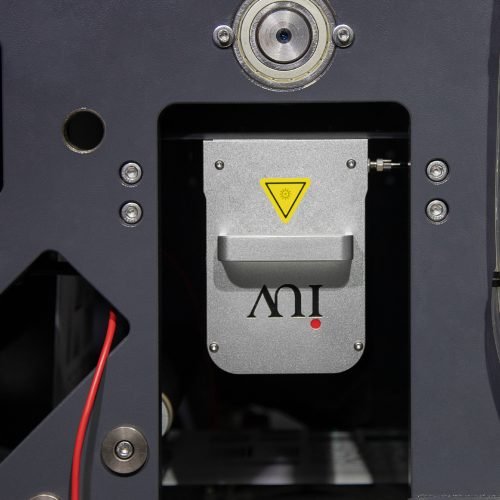
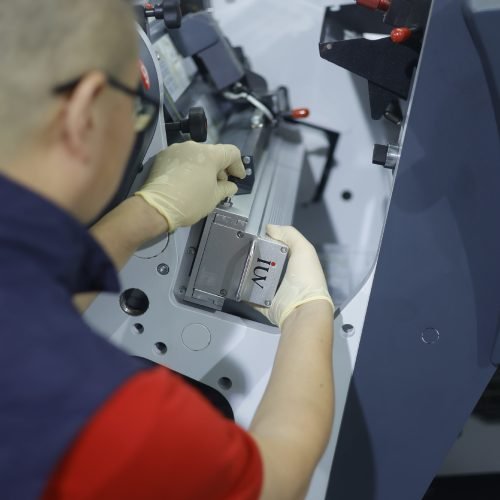
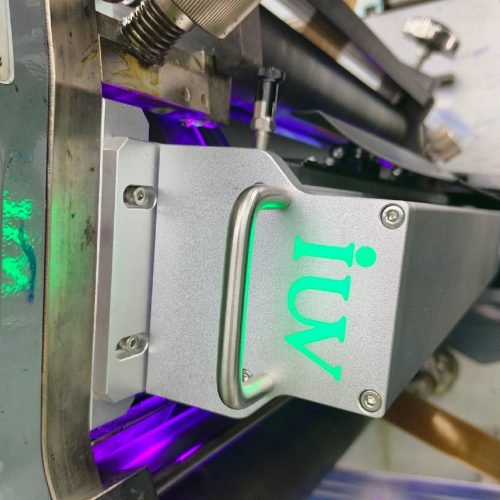
While traditional mercury-vapor UV lamps have been the standard, Light Emitting Diode (LED) UV curing technology is rapidly gaining traction. LED curing offers specific advantages, especially for sensitive multi-layer label constructions.
- How LED UV Works: LED lamps emit UV light within narrow, specific wavelength bands, typically centered around 365 nm, 385 nm, 395 nm, or 405 nm. This targeted emission spectrum is crucial for optimizing the curing of UV-curable formulations.
- Advantages of LED UV for Multi-Layer Labels:
- Lower Heat Emission: LED lamps generate significantly less heat compared to mercury lamps. This is critical for multi-layer labels where heat-sensitive films, adhesives, or inks might be present. Excessive heat can cause deformation, delamination, or degradation of these components.
- Instant On/Off: LEDs turn on and off instantly, requiring no warm-up or cool-down periods. This saves energy and allows for precise control over curing, preventing unnecessary heat build-up during press stops.
- Longer Lifespan and Consistent Output: LEDs have a much longer operational life than mercury lamps and maintain a more consistent UV output over time, leading to more predictable curing results across production runs.
- Energy Efficiency: LEDs are more energy-efficient, consuming less power and reducing operational costs.
- Wavelength Specificity: By matching the LED emission wavelength to the photoinitiator system in the UV-curable ink or adhesive, curing can be more efficient and complete, ensuring the integrity of all layers.
Technical Considerations for UV Curing Multi-Layer Labels
Successfully implementing UV curing for multi-layer labels requires careful attention to several technical aspects:
1. Ink and Coating Formulation
- Photoinitiator Systems: The choice of photoinitiators is paramount. They must be activated by the specific UV wavelength being used (mercury lamp or LED). For multi-layer constructions, formulations must be designed to cure thoroughly without affecting underlying layers. This may involve using different photoinitiator systems for different inks or coatings.
- Oligomers and Monomers: The backbone of the UV-curable system. These determine the physical properties of the cured film, such as hardness, flexibility, adhesion, and chemical resistance. For multi-layer applications, the cured film must be robust enough to withstand subsequent processing and the demands of the end-use.
- Pigmentation: Pigments can absorb or scatter UV light, hindering full cure. High-opacity inks or thick ink layers require careful formulation and sufficient UV energy to ensure through-cure.
2. Substrate Selection and Preparation
- UV Transparency/Reflectivity: Some substrates, particularly certain films, can be somewhat transparent to UV light, allowing it to pass through and potentially cure underlying layers unevenly or not at all. Conversely, highly reflective substrates can bounce UV light back, potentially affecting the curing process or equipment.
- Surface Treatment: For optimal ink adhesion, especially on non-porous films, surface treatments like corona or plasma treatment might be necessary. These ensure that the UV-curable inks bond effectively to the substrate.
3. UV Lamp Technology and Energy Delivery
- Wavelength Spectrum: As discussed, matching the lamp’s emission spectrum to the photoinitiator is vital for efficient curing. Mercury lamps offer a broad spectrum, while LEDs provide narrow, specific bands.
- Irradiance and Dose:
- Irradiance is the intensity of UV light delivered (measured in W/cm²). Higher irradiance leads to faster curing.
- Dose is the total amount of UV energy delivered (measured in J/cm²), calculated as irradiance multiplied by exposure time.
- For multi-layer labels, achieving the correct dose at each layer is critical. Insufficient UV energy can lead to incompletely cured inks or adhesives, resulting in poor performance and potential delamination.
- Cooling Systems: Adequate cooling for both the UV lamps and the substrate is necessary, especially with mercury lamps, to prevent overheating and maintain label integrity. LED curing significantly reduces this concern.
4. Adhesives and Lamination
- UV-Curable Adhesives: In some advanced multi-layer constructions, UV-curable adhesives are used. These adhesives are applied to one layer and then cured by UV light when the second layer is brought into position. This allows for on-demand bonding and precise control over the lamination process.
- Compatibility: If traditional adhesives are used, they must be compatible with the UV curing process. They should not degrade or be adversely affected by the UV exposure required for the inks or coatings.
Troubleshooting Common Issues in Multi-Layer UV Cured Labels
- Incomplete Cure (Under-curing): Leads to sticky labels, poor rub resistance, and potential migration issues. Causes include insufficient UV energy, incorrect wavelength, or poorly formulated inks.
- Delamination: Layers separating. Can result from thermal stress, poor adhesion between layers (due to under-curing or incompatible materials), or mechanical stress.
- Pinholing/Cratering: Small defects in the ink or coating. May be caused by trapped air, contaminants, or rapid solvent evaporation in certain formulations.
- Ink Transfer: Ink from one layer transferring to another. Indicates inadequate curing between print stations.
Conclusion
UV curing technology, particularly when enhanced by LED systems, provides an indispensable solution for producing high-quality, durable multi-layer labels. Its ability to deliver rapid, efficient curing across various printing methods like flexography, offset, and screen printing makes it ideal for the intricate demands of multi-layer label construction. By carefully considering ink formulation, substrate compatibility, and precise UV energy delivery, label converters can leverage UV curing to achieve superior performance, aesthetic appeal, and functional integrity in their advanced label products.