High-resolution flexographic label printing has evolved into a discipline where mechanical precision alone is no longer enough. As screen rulings increase and brand owners demand photographic quality on narrow web labels, control over ink behavior after transfer becomes decisive. Among all variables, surface tension management plays a central role in determining dot integrity, tonal balance, and edge sharpness. LED UV pinning has become a powerful process tool for stabilizing ink dots at the exact moment they are most vulnerable to deformation.
This technical guide focuses on how LED UV pinning can be applied step by step to control surface tension dynamics and reduce dot gain in narrow web flexo label printing, including UV inks, coatings, and multi-color press configurations.
Why Dot Gain Is the Limiting Factor in High-Resolution Flexo
Dot gain defines how accurately halftone dots reproduce from plate to substrate. In high-resolution flexo labels, even minimal dot growth can compromise highlights, flatten gradients, and reduce image contrast. Mechanical dot gain caused by plate compression is increasingly well controlled through plate technology and press setup. The remaining challenge lies in uncontrolled ink flow after impression.
Surface tension governs how ink spreads before curing locks the dot shape in place. On modern presses running at high speed, this window is extremely short, yet long enough to distort fine dots. Without intervention, ink mobility during this phase leads to optical dot gain that limits achievable resolution.
Surface Tension Behavior in UV Flexographic Printing
In UV flexo printing, inks are transferred in a low-viscosity state to ensure smooth laydown and color density. Once on the substrate, surface energy differences between ink and material drive wetting behavior. If surface tension is too low relative to substrate energy, ink spreads laterally. If it is too high, poor wetting and pinholes may occur.
UV curing eventually stops this movement, but full cure often happens after the ink has already flowed beyond its intended boundaries. Managing surface tension before final curing is therefore essential for dot control, especially on films and coated papers used in label applications.
The Function of LED UV Pinning in Dot Stabilization
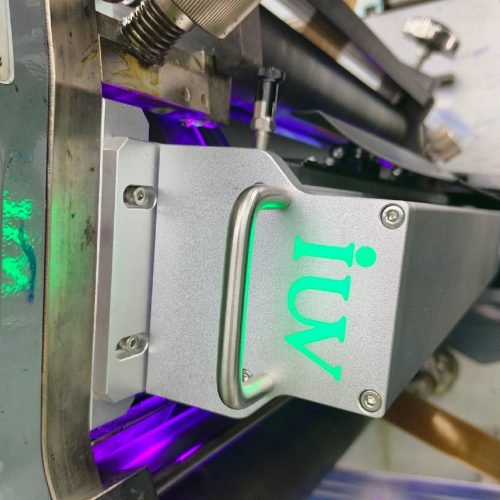
LED UV pinning introduces controlled UV energy immediately after ink transfer, creating partial polymerization at the ink surface. This process increases surface viscosity without fully curing the ink film. As a result, lateral flow is reduced while the ink remains receptive to subsequent colors.
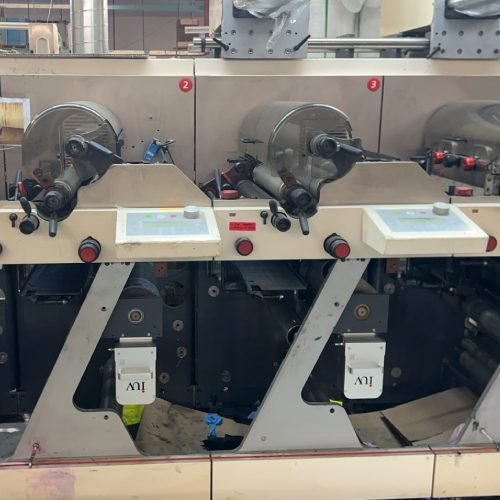
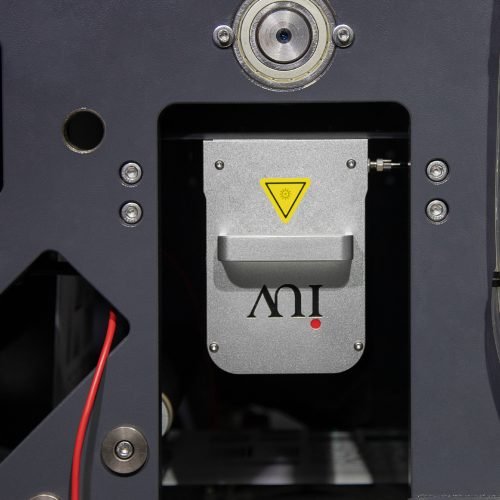
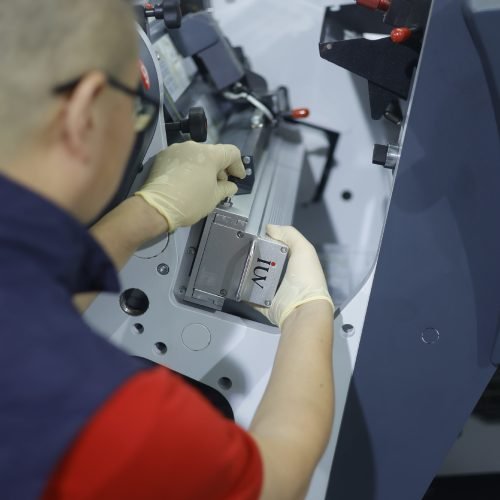
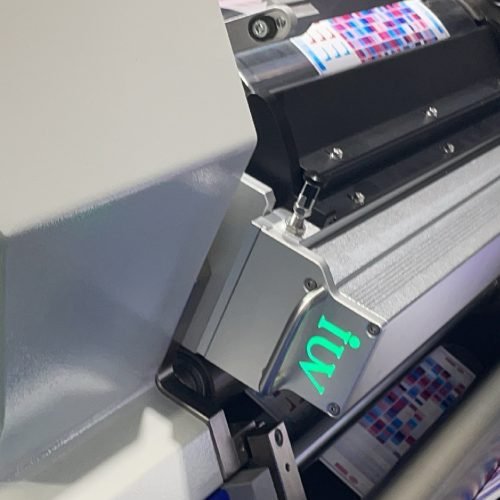
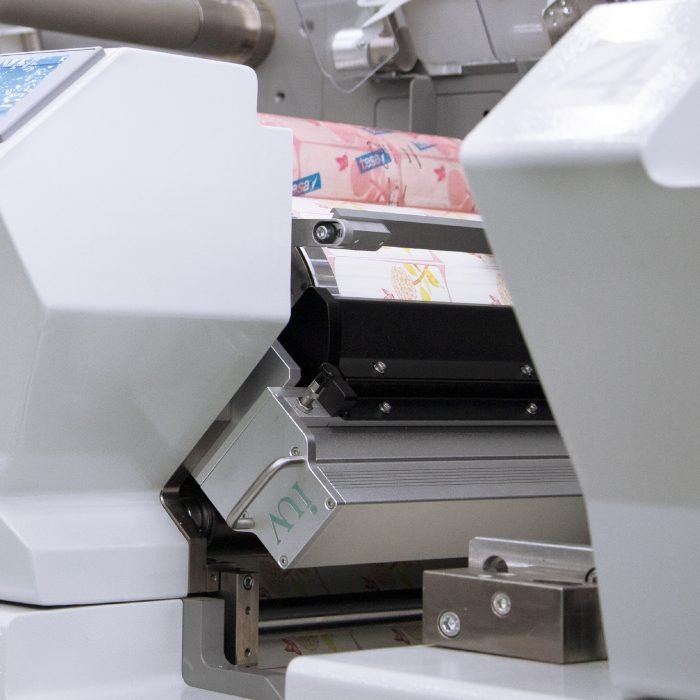
In narrow web presses, LED UV pinning units are typically placed between color stations. Their compact form, instant response, and low thermal output make them ideal for precise surface control. Unlike conventional UV systems, LED pinning delivers consistent energy without warm-up or spectral drift.
Wavelength Considerations for Effective Pinning
The effectiveness of LED UV pinning depends strongly on wavelength selection. Most flexographic UV inks are formulated for activation in the 385 nm to 395 nm range. Shorter wavelengths promote rapid surface reaction, which is beneficial for pinning, while longer wavelengths penetrate deeper into the ink film.
For dot gain control, surface reaction speed is more important than depth cure. Selecting a wavelength that favors surface gelation allows the dot shape to be fixed quickly without interfering with intercolor adhesion or final curing. Incorrect wavelength matching often leads to over-pinning, trapping issues, or incomplete cure downstream.
Step One: Defining the Baseline Printing Condition
Before introducing LED UV pinning, it is critical to establish a stable baseline. Press speed, anilox volume, ink formulation, and substrate surface energy should be fixed. Dot gain values should be measured across tonal ranges using consistent test forms.
This baseline reveals how much dot growth occurs under standard curing conditions. It also ensures that any improvement observed after pinning is directly related to surface tension control rather than unrelated press adjustments.
Step Two: Introducing Low-Energy Pinning
The first pinning adjustment should use minimal irradiance. At this stage, the goal is not visible curing but subtle surface immobilization. Under magnification, dots should appear more defined, with smoother edges and reduced feathering.
If no visual change is observed, energy can be increased gradually. Abrupt increases often lead to surface overcuring, which restricts ink acceptance for subsequent colors. Controlled, incremental adjustment provides a wider process window and better repeatability.
Step Three: Aligning Pinning Output with Press Speed
Press speed directly affects how long the ink is exposed to the pinning lamp. As speed increases, exposure time decreases, reducing pinning effectiveness unless output is adjusted. In narrow web label production, speed variation is common during setup, inspection, and finishing integration.
Linking pinning output to press speed ensures consistent surface tension control across operating ranges. This synchronization prevents dot gain variation between startup, steady production, and slowdown phases, which is especially important for short-run digital-to-flexo workflows.
Step Four: Evaluating Trapping and Color Interaction
Once dot shape is stabilized, trapping performance between colors must be evaluated. Effective pinning should improve color registration by preventing dot distortion, while still allowing proper wet-on-tacky interaction.
Poor trapping usually indicates excessive surface curing. In this case, reducing pinning energy or adjusting wavelength balance restores adhesion without sacrificing dot integrity. Optimal pinning creates a semi-stable surface that resists spread but remains chemically active.
Step Five: Confirming Final Cure Performance
LED UV pinning changes the curing profile of the ink film, making final cure optimization essential. The main curing lamp must deliver sufficient dose to complete polymerization through the entire ink layer.
Proper final curing ensures mechanical strength, chemical resistance, and scratch durability without altering the dot geometry established during pinning. LED UV systems provide stable output that supports this balance across a wide range of substrates.
Benefits for High-Resolution Narrow Web Labels
When LED UV pinning is correctly applied, dot gain is reduced consistently across the web and along the press direction. Highlights remain open, midtones retain detail, and solid areas appear smoother without excessive ink volume.
This stability supports higher line screens, extended color gamut printing, and finer text reproduction. It also reduces dependency on aggressive surface treatments, expanding the range of printable label materials.
Thermal Control and Substrate Safety
LED UV pinning introduces minimal heat, protecting thin films and heat-sensitive label stocks. This thermal advantage prevents distortion, shrinkage, and registration drift, which are common risks with traditional UV systems.
Lower thermal load also improves press stability in multi-color narrow web configurations, where cumulative heat can otherwise affect web tension and print consistency.
Process Repeatability and Production Efficiency
By stabilizing surface tension at the curing stage, LED UV pinning reduces sensitivity to minor variations in ink viscosity, ambient temperature, and substrate batch differences. This repeatability shortens setup time and reduces waste during color matching and press startup.
Over time, consistent dot gain control supports standardized print profiles and predictable output across multiple jobs and presses.
Conclusion
Advanced surface tension mastery through LED UV pinning has become a defining capability in high-resolution flexographic label printing. By immobilizing ink dots at the precise moment after transfer, converters gain direct control over dot gain without compromising speed, color strength, or material flexibility. In narrow web UV flexo environments, this approach delivers cleaner images, tighter tonal control, and a more stable production process suited to modern label quality demands.