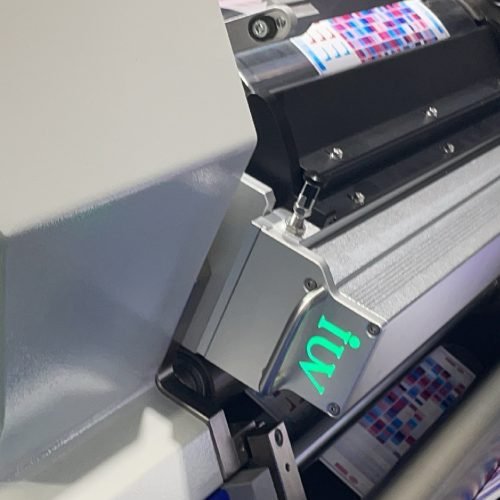
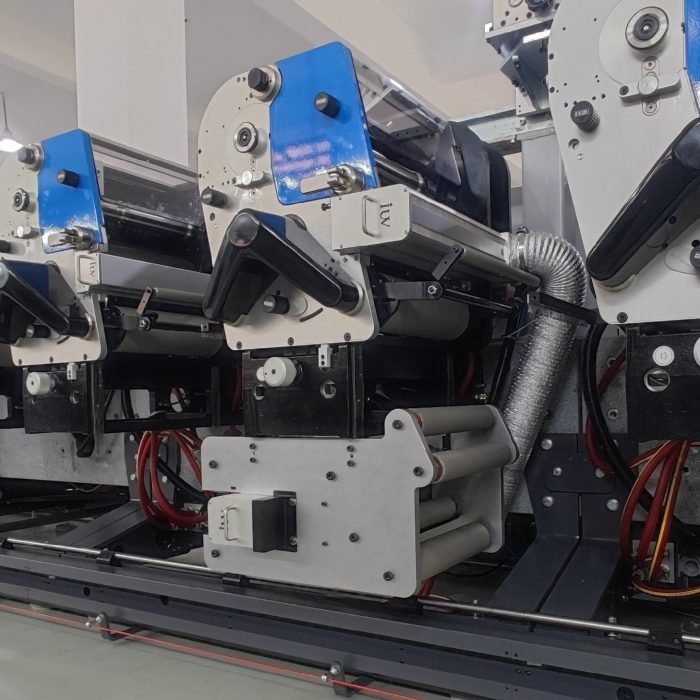
LED UV curing has transformed narrow web printing, especially for labels, flexo, and gravure processes. The combination of low heat, fast cure, and energy efficiency makes it attractive for high-throughput label production. For printers working across label stock, slim web formats, and gravure-like applications, LED UV offers advantages in tint control, dot definition, and downstream finishing. This guide blends practical engineering insight with UV LED fundamentals to help engineers optimize line performance, ink compatibility, and substrate outcomes in narrow web environments.
LED UV Curing: A Quick Primer for Narrow Web
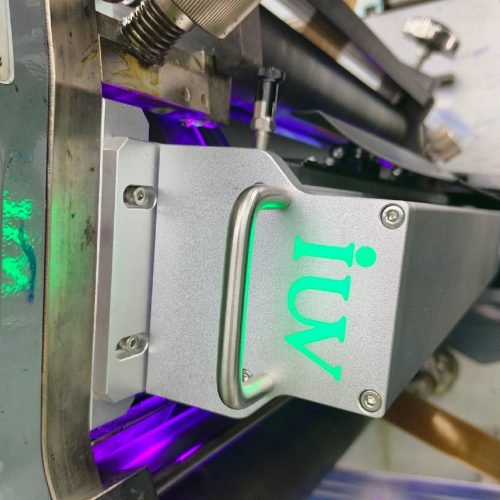
LED UV curing uses diodes that emit light in the near-UV range, typically around 395 to 430 nanometers. This narrows the spectrum compared with conventional mercury lamps, which broad spectrum into the UV and visible. The result is immediate cure on contact, reduced heat input to the web, and lower ozone generation. For narrow web applications, the key benefits are:
- Faster start-up and shut-down, enabling tight changeovers.
- Less thermal load on sensitive label substrates and silicone-driven liners.
- Consistent curing at high line speeds with minimal distortion.
- Easier integration with inline finishing stages due to a stable web temperature profile.
The core performance metric is dose, defined as irradiance multiplied by exposure time. With LED, irradiance is highly controllable and stable, but it must be matched to ink chemistry and substrate to achieve full cure without overexposure.
Understanding Dose, Wavelength, and Throughput
Dose control is central to successful LED UV curing in narrow web flexo and label printing. Several factors influence dose performance:
- Wavelength choice: Most LED systems operate around 395–405 nm and must align with the photoinitiator system in the ink or coating. A mismatch reduces cure efficiency and can cause residual tack.
- Irradiance uniformity: The LED array should deliver uniform light across the web width and across the roll circumference. Hot spots or shadows can lead to uneven cure and post-press issues.
- Exposure time: Narrow web runs at high line speeds. Achieving the required dose at 50–200 m/min or faster requires either higher irradiance, longer dwell time within the LED zone, or multiple curing passes.
- Ink film thickness and viscosity: Thicker deposited films require more energy. Pigmented white inks, spot colors, and overprint coatings behave differently from clear inks.
- Substrate surface energy: Substrates with high surface energy cure more readily; low-energy films can require pretreatment or high dose to reach cure.
In practice, engineers use dosimeters and radiometers to map the dose across the web and verify in-process consistency. Regular dose validation reduces color drift, tack, and blocking risks in high-speed runs.
Ink and Coating Chemistry for UV LED
The interaction between LED UV and ink chemistry drives successful curing. Narrow web label presses commonly use UV-curable inks and coatings optimized for fast cure and strong adhesion. Key chemistry considerations are:
- Photoinitiators: Modern inks employ Type I and Type II photoinitiators with good sensitivity to near-UV wavelengths. Excess initiator can cause yellowing or chalking, while too little can leave tack or insufficient crosslinking.
- Pigments and whiteness: Pigmented inks require efficient diffusion of light through the pigment network. White inks demand higher dose or higher transparency to achieve net cure without mottle or haze.
- Oligomer and resin balance: Resins influence cure depth, hardness, and scratch resistance. A well-balanced oligomer system supports edge definition and flexural performance on labels.
- Topcoats and varnishes: Overprint coatings must cure in tandem with the ink layer. Surface energy after cure affects lamination compatibility and overprint printability.
- Rheology: Inks for narrow web need stability at high speeds, with consistent viscosity and flow to maintain print definition and prevent edge webbing or mottle.
Substrate Compatibility for Labels
Label substrates span film stocks such as PET, BOPP, PE, and specialty films, plus paper label stock. LED UV curing interacts with substrate in several ways:
- Film substrates: PET and BOPP often benefit from low heat input, preserving dimensional stability. Bright, crisp prints with high gloss and good adhesion are common outcomes when cure dose matches ink chemistry.
- Paper substrates: Coatings and primers may be used to improve ink adhesion and moisture resistance. UV curing on paper must avoid excessive heat that could cause cockling or cocking of the substrate.
- Surface energy: A substrate with adequate surface energy ensures ink wets and adheres before cure. Corona or plasma pretreatment may be used in line to improve initial adhesion for UV inks.
- Blocking and lamination: For label rolls, finished sheets may be laminated later. A properly cured surface reduces blocking and improves lamination bond strength.
Narrow Web Flexo and Gravure: Process Differences and LED Implications
Flexo printing on narrow web is known for speed and efficiency, while gravure (gravure imaging via engraved cylinders) offers superb tonal range and solid fills. LED UV curing affects both processes differently:
- Flexo with LED UV: The ink layer is relatively thin, and dot gain control is critical for sharp type and bar codes. LED UV supports quick cure, enabling shorter process windows between color passes. The challenge is maintaining consistent cure across rapid web movement and multiple color stations.
- Gravure with UV LED: Gravure inks can benefit from LED cure through the thin cell transfer, but pigment dispersion and resin matrix must be tuned for rapid surface cure without micro-roughness. LED UV is favorable for gravure because of the low heat impact on engraved cylinders and precise cure in-line.
- Color management: Both processes require consistent pigment dispersion and ink film thickness. LED curing reduces heat-related substrate distortion that can otherwise impact color alignment between passes.
Process considerations across both platforms include:
- Ink transfer consistency: Anilox roll geometry and gravure cylinder engraving depth must be matched to ink rheology and LED cure dose to avoid non-uniform solid areas or excessive buildup.
- Edge definition: Narrow web demands clean edges on text and barcodes. Adequate dose and controlled cure prevent feathering and maintain legibility.
- White and spot colors: White inks and spot colors pose higher energy demands and may require tuned inks or dedicated cure modules to avoid clear zones that show through.
Process Integration: Printer Equipment, Handling, and Finishing
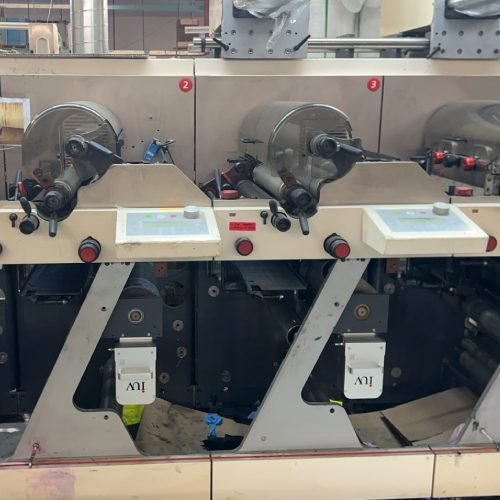
Integrating LED UV into a narrow web line requires attention to several subsystems:
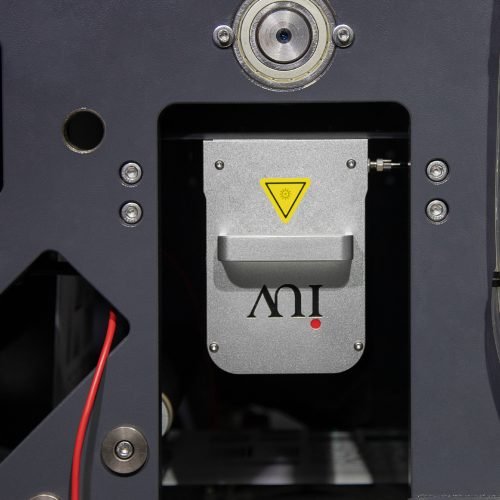
- UV module design: Choose modules with uniform irradiance across the web width and modular configuration to match press architecture. Consider the ability to add more LEDs for higher dose if line speed increases.
- Cooling and heat management: While LED UV emits less heat than mercury lamps, there is still heat to manage. Proper cooling prevents substrate distortion and maintains system longevity.
- Pre-treatment and surface energy: Inline corona or plasma treatments can improve ink adhesion on low-energy films. UV curing then fixes the surface immediately, reducing blocking risk.
- Post-press finishing: Inline laminators, die-cutters, and slitter/tabbing stations benefit from a stable cured surface. A well-cured finish improves lamination optical clarity and reduces scuffing in subsequent handling.
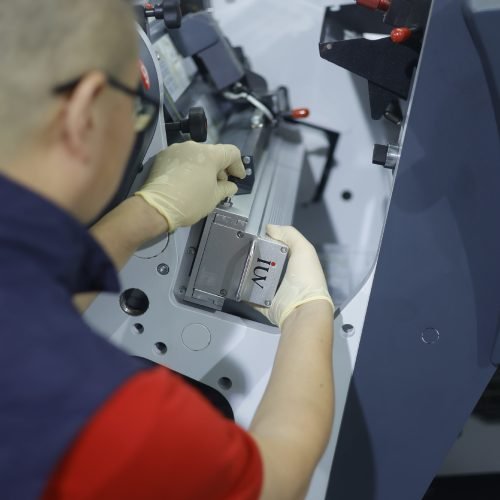
- Maintenance and serviceability: LED systems require periodic cleaning of optics and checking fans and heatsinks. A modular design allows quick replacement of a faulty LED bank without interrupting production.
Quality Control and Measurement
Achieving consistent results on label, flexo, and gravure lines rests on robust quality controls:
- Dose verification: Use in-line radiometers or calibrated dosimeters to verify irradiance and dose at multiple web positions. Record data for process control charts.
- Adhesion and scratch testing: Post-cold run tests for tape adhesion, solvent resistance, and scratch resistance verify cure performance under real-world handling.
- Color and sheen: Spectrophotometers track color accuracy, metamerism, and gloss. In UV LED, small dose variations can shift color or gloss uniformity.
- Surface definition: Edges, micro-roughness, and dot fidelity are checked with high-resolution imaging or densitometry. Pay attention to dot gain in narrow lines and text.
- Blocking checks: Especially with white inks and laminated materials, verify that cured sheets do not stick together under typical storage conditions.
Troubleshooting Common Issues
When LED UV curing doesn’t meet expectations, consider these focal points:
- Tack or surface softness: Often due to under-cured ink. Increase dose by raising irradiance, extending dwell time, or using a higher-initator ink.
- Over-curing: Excessive dose can cause embrittlement, loss of flexibility, or increased surface haze. Tuning down energy or optimizing exposure time helps.
- Color shift or mottling: Check pigment dispersion, ink viscosity, and cure depth. In some cases, a reformulation with a different photoinitiator or resin system is needed.
- Yellowing and aging: Inadequate photoinitiator balance or improper storage conditions can lead to discoloration. Verify ink shelf life and perform fresh ink validation.
- Heat effects on substrates: If substrate distortion appears, reassess cooling, line speed, and dose balance. Consider a less aggressive web path or different substrate primer.
Future Trends and Practical Tips
Looking ahead, LED UV systems for narrow web will continue to evolve along these lines:
- Higher efficiency LEDs and better spectral tailoring will improve cure for challenging pigments and thick coatings.
- Inline dosimetry and closed-loop control will enhance repeatability across shifts and job changes.
- More robust white and spot color inks with optimized cure curves will expand application breadth on film and paper stock.
- Modular LED arrays and predictive maintenance will reduce downtime and enable higher line speeds without compromising cure.
Practical setup tips:
- Start with a conservative dose for a baseline run and gradually adjust to achieve full cure without excessive exposure.
- Validate cure across the web width and at various web tensions to ensure consistent performance.
- Align pretreatment, ink formulation, and LED dosage as an integrated system rather than optimizing any single component in isolation.
- Keep lines clean and optics fog-free. Contaminants on lenses or covers can create uneven curing patterns.
Conclusion
LED UV curing for narrow web printing offers a compelling path for label production, flexo, and gravure-like applications. By understanding dose, wavelength alignment, ink chemistry, substrate compatibility, and inline process controls, engineers can drive higher throughput, better image fidelity, and more reliable finishing. The seamless integration of LED UV into label and narrow web lines helps printers meet demanding customer expectations while maintaining efficiency, flexibility, and product quality.