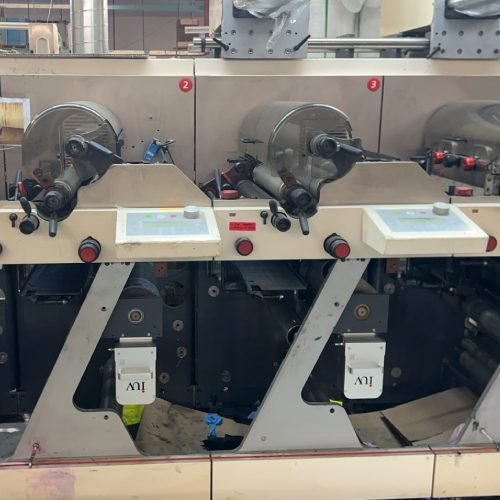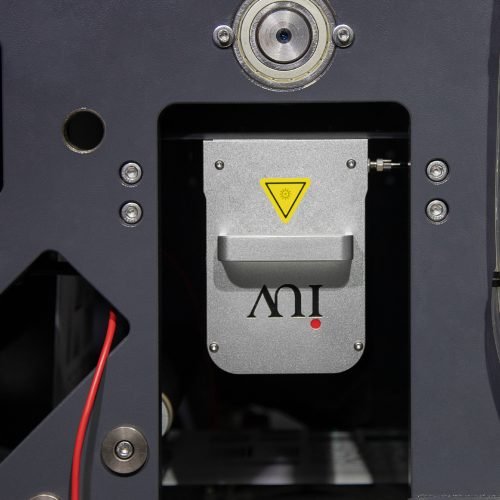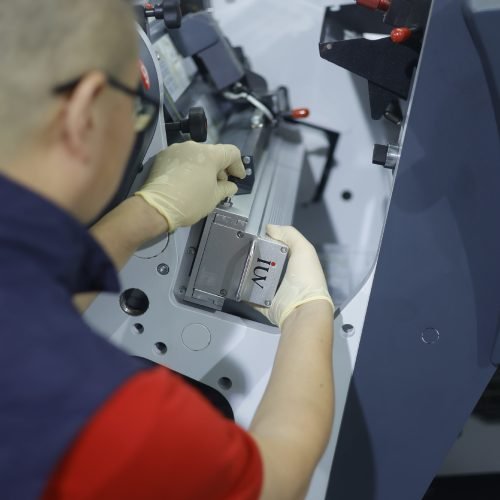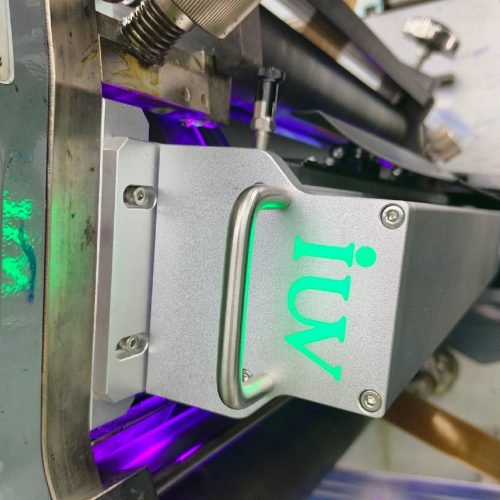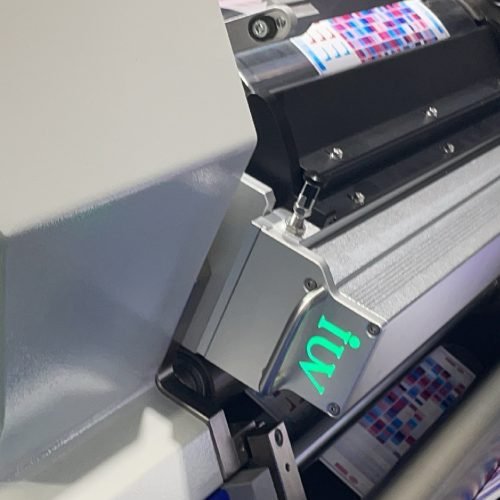
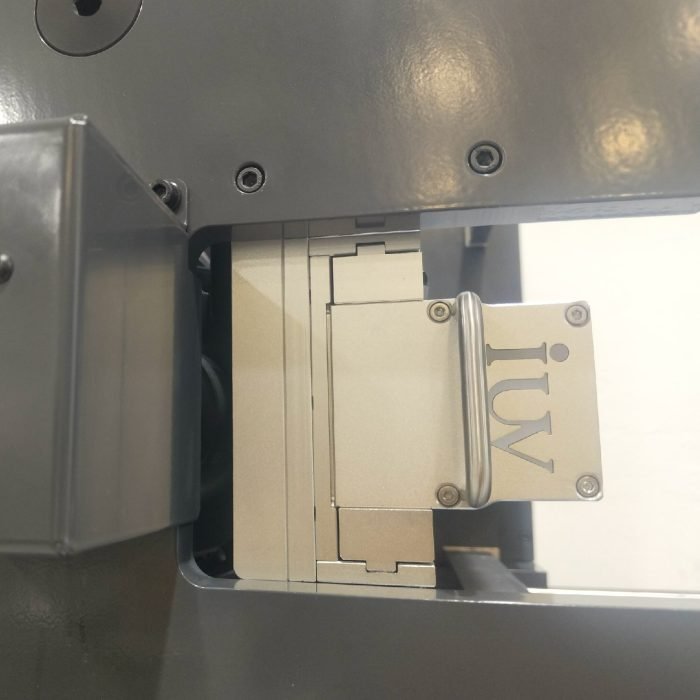
The printing industry is shifting away from traditional mercury vapor lamps toward Light Emitting Diode (LED) technology. This transition is particularly evident in high-demand environments like narrow web label printing and flexographic packaging. While LED curing offers significant energy savings, engineers often face challenges when dealing with heavy ink laydown applications. Opaque whites, high-build tactile varnishes, and dense specialty blacks require specific technical approaches to ensure a total cure through the entire ink film.
Physics of Penetration in Heavy Ink Layers
In standard UV curing, the primary challenge is achieving “through-cure.” When an ink layer exceeds a certain thickness, the pigments and additives within the ink absorb or scatter the UV light. This prevents the photons from reaching the bottom of the ink film, leading to poor adhesion or a “skinning” effect where only the surface is hard.
LED UV systems typically operate at narrow wavelengths, with 395nm being the industry standard for heavy laydown. Unlike the broad spectrum of mercury lamps, the 395nm wavelength sits in the UVA range. These longer wavelengths possess superior penetration capabilities compared to UVC. For an engineer, this means the light can travel deeper into dense pigmented layers, such as those found in rotary screen printing or high-volume flexo.
Wavelength Selection and Photoinitiator Synergy
Success in heavy ink laydown depends on the harmony between the LED lamp’s output and the ink’s chemistry. Traditional UV inks are formulated for mercury lamps that emit a wide range of light. LED-specific inks must utilize photoinitiators that peak at the specific output of the LED array.
For applications involving thick layers of opaque white—common in the narrow web label industry—a 395nm or 405nm LED head is often required. These wavelengths are less absorbed by TiO2 (Titanium Dioxide) pigments. This allows the energy to reach the substrate interface. When specifying equipment, ensure the ink supplier has validated the photoinitiator package for the specific irradiance levels (W/cm²) and energy density (J/cm²) of your LED system.
Managing Oxygen Inhibition in Flexo and Narrow Web
Oxygen inhibition is a chemical phenomenon where atmospheric oxygen reacts with the free radicals in the UV ink. This reaction halts the polymerization process, often resulting in a tacky surface. While this is a challenge for all UV curing, it is intensified in high-speed narrow web applications where the ink film is exposed to the air for a longer duration before hitting the lamp.
Engineers can combat this by increasing the peak irradiance at the point of cure. High-power LED arrays focus the light into a concentrated “dose.” By delivering a massive amount of photons instantly, the system overcomes the oxygen inhibition threshold faster than the oxygen can replenish. In some extreme heavy-laydown cases, nitrogen inerting is used to displace oxygen, though modern high-output LED lamps have made this less necessary for standard flexo applications.
Heat Management and Substrate Stability
One of the greatest advantages of LED UV curing in label printing is the lack of infrared (IR) heat. Conventional mercury lamps generate significant heat, which can distort thin filmic substrates or cause registration issues in narrow web presses.
However, the UV curing process itself is exothermic. As the ink polymerizes, it generates heat. When applying heavy laydown, such as a 50-micron tactile varnish, the heat from the chemical reaction can be substantial. Engineers must monitor the chill roll temperatures and web tension. Even though the “lamp” is cool, the “process” produces heat. Maintaining a stable substrate temperature ensures that the material does not stretch, which is vital for high-precision multi-color offset or flexo work.
Integration in Offset and Sheet-fed Systems
In offset printing, heavy ink laydown is frequently encountered in packaging and high-end commercial work. Integrating LED systems into an offset press requires a different strategy than flexo. The space between printing units (interdeck) is often limited.
LED lamps are compact, making them ideal for interdeck placement. This allows the engineer to “pin” the ink—partially curing it to prevent dot gain and bleeding—before the final curing station. For heavy coatings or dense solids, placing an LED lamp after the final coating unit ensures that the thickest layer receives the maximum dose of energy. This prevents “set-off” in the delivery pile, a common issue when conventional dryers fail to penetrate thick varnish layers.
Optimizing the Curing Window
The “curing window” refers to the range of press speeds and power settings where the ink is fully cured without over-curing. Over-curing can lead to brittleness and loss of adhesion, while under-curing leads to migration and smearing.
- Irradiance vs. Dosage: Peak irradiance (Watts per square centimeter) determines the ability to penetrate thick layers. Dosage (Joules per square centimeter) is the total energy delivered over time. For heavy laydown, high irradiance is non-negotiable.
- Distance to Substrate: The intensity of LED light follows the inverse square law, but with optics, many LED lamps have a “focal point.” Engineers must set the lamp height precisely (typically 10mm to 20mm) to ensure the peak intensity hits the ink surface.
- Reflector Efficiency: While LEDs don’t use traditional curved reflectors like mercury lamps, the internal optics or “lenses” on the LED chip determine how the light is directed. For thick coatings, a focused beam is generally superior to a diffused flood.
Application Focus: Shrink Sleeves and Tactile Effects
Shrink sleeve production in narrow web printing involves heavy ink laydown and heat-sensitive films. If the ink is not cured through the entire layer, the sleeve may crack or flake during the shrinking process in the heat tunnel. LED UV provides a solution because it offers the deep penetration needed for the opaque backup whites while keeping the film cool enough to avoid premature shrinkage.
Similarly, the trend toward “tactile” or “3D” varnishes requires massive amounts of UV energy. These coatings are often applied via rotary screen units integrated into flexo lines. An engineer must ensure the LED array has sufficient cooling (water-cooled or air-cooled) to maintain a constant output. LED output degrades if the chips overheat, which could lead to inconsistent curing during long production runs.
Maintenance and Long-term Consistency
Unlike mercury lamps, which lose intensity over 1,000 to 2,000 hours, LED lamps can last over 20,000 hours. However, this does not mean they are maintenance-free. For heavy laydown applications, even a 5% drop in output can result in under-cured ink.
Engineers should implement a regular schedule for cleaning the LED window. Ink mist and dust can settle on the glass, blocking the UV light. Furthermore, using a calibrated UV radiometer is essential. This tool measures the actual output hitting the web, allowing the operator to adjust power levels as the press speeds change.
Final Technical Considerations
Switching to LED for heavy ink laydown requires a holistic approach. It is not simply a matter of swapping a lamp. It involves re-evaluating the ink chemistry, the substrate’s thermal properties, and the mechanical alignment of the curing heads. When these variables are controlled, LED technology provides a more stable, faster, and more efficient production environment. The result is a higher quality product with fewer rejects and significantly lower energy overhead.
By focusing on high-irradiance output and wavelength-specific chemistry, printing facilities can master the most difficult curing tasks. Whether it is a dense black on a wine label or a thick protective coating on a folding carton, LED UV technology has matured into a reliable tool for the modern printing engineer.