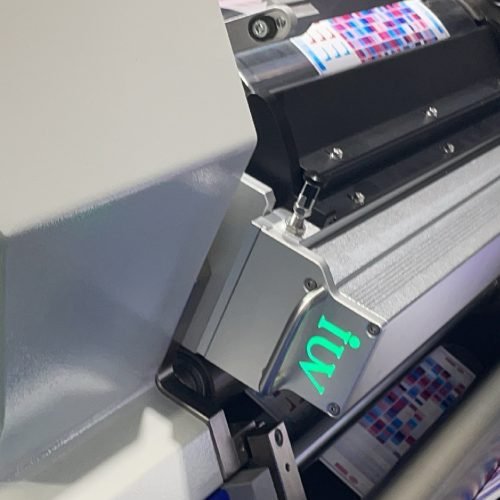
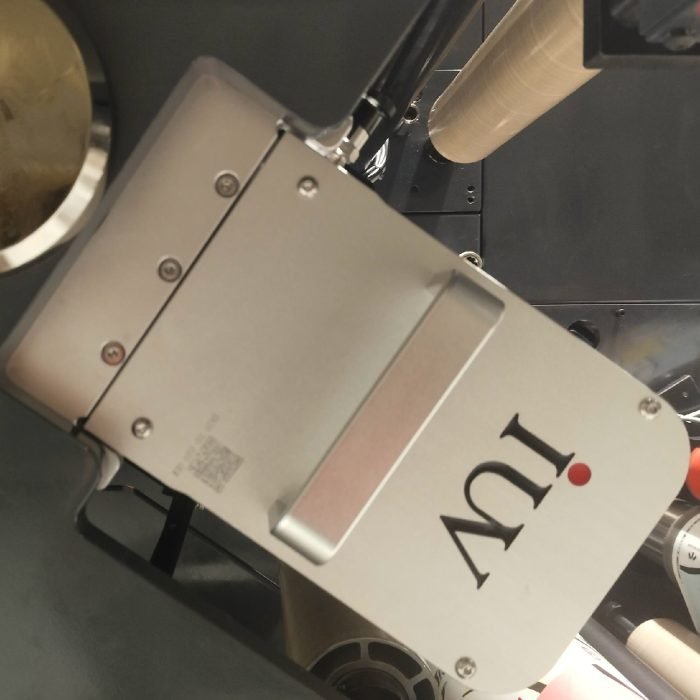
The label printing industry is a dynamic space. Manufacturers constantly seek ways to increase throughput, improve print quality, and reduce waste. This drive for efficiency has made automated UV printing a game-changer, particularly for high-speed operations. The integration of UV curing technology, especially LED UV, offers significant advantages over traditional methods. It allows for instantaneous drying, enabling faster production speeds and the use of a wider range of substrates.
This technology is especially relevant for narrow web printing, a dominant format for label production. Narrow web presses, by their nature, operate at high speeds. Traditional drying methods often become a bottleneck in these scenarios. Automated UV printing, with its rapid curing capabilities, removes this limitation, allowing presses to run at their maximum mechanical potential while ensuring ink is fully cured and ready for the next process or for handling.
Understanding UV Curing Technology
At its core, UV curing is a photochemical process. It uses ultraviolet light to initiate a rapid chemical reaction that transforms liquid ink, coating, or adhesive into a solid, dry film. This process relies on photoinitiators within the ink formulation. When exposed to UV light of a specific wavelength, these photoinitiators absorb the energy and generate free radicals or ions. These reactive species then trigger a polymerization process, where ink molecules link together to form a cross-linked polymer network.
This polymerization is incredibly fast. Unlike solvent-based inks that rely on evaporation, UV inks cure through a chemical transformation. This means that once exposed to the UV light, the ink solidifies almost instantaneously. This speed is crucial for high-speed printing. It prevents smudging, allows for immediate post-processing, and maintains the integrity of the printed image.
The Evolution to LED UV Curing
While traditional mercury vapor UV lamps have been used for decades, the advent of Light Emitting Diode (LED) UV technology has revolutionized the field. LED UV systems offer several distinct advantages. Firstly, they are highly energy-efficient. They consume significantly less power than mercury lamps, leading to substantial cost savings on electricity bills. Secondly, LEDs have a much longer lifespan, reducing the frequency and cost of lamp replacement.
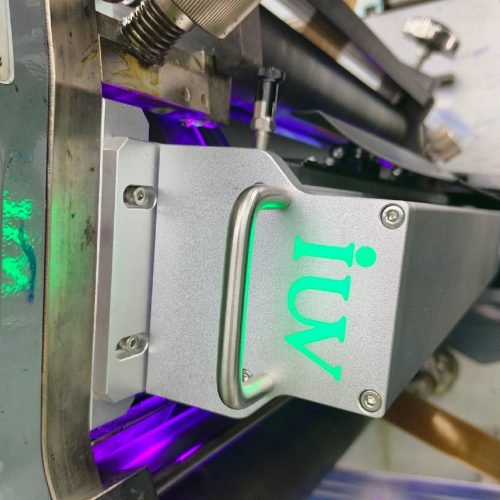
Furthermore, LED UV systems emit light in a very narrow spectral band, typically around 365 nm, 385 nm, 395 nm, or 405 nm. This focused output means that the energy is delivered precisely where it’s needed for curing, leading to more efficient polymerization. Traditional lamps emit across a broader spectrum, including heat-generating infrared radiation. This heat can be detrimental to heat-sensitive substrates, such as certain plastics or thin papers, and can also cause ink to expand or deform. LED UV, emitting minimal heat, is far gentler on substrates.
The “instant on/off” capability of LEDs is another significant benefit. Mercury lamps require a warm-up period and cannot be switched on and off rapidly without shortening their lifespan. LEDs can be turned on and off instantaneously, synchronized perfectly with the printing process. This means energy is only consumed when printing is actually occurring, further enhancing energy efficiency. It also helps to protect the substrate from prolonged heat exposure.
Precision Curing in High-Speed Label Production
Precision is paramount in label printing, especially when dealing with intricate designs, fine text, or vibrant colors. Automated UV printing operations allow for precise control over the curing process. The intensity of the UV light, the exposure time, and the distance between the lamp and the substrate can all be carefully managed.
In high-speed narrow web flexographic or offset printing, the label material moves at a consistent, rapid pace. The UV curing units must be perfectly integrated into the press line. They need to deliver the exact dose of UV energy required by the specific ink formulation at that speed. Too little energy, and the ink won’t cure properly, leading to smudging, poor rub resistance, and potential contamination issues. Too much energy, and the substrate can be damaged, inks can become brittle, or there can be an unnecessary increase in energy consumption.
Automated systems, often equipped with advanced sensors and control software, ensure that these parameters are maintained consistently across the entire print run. This automation minimizes variability and ensures that every label produced meets the required quality standards. This is especially important for brand owners who demand consistent, high-quality output for their products.
Integrating UV Curing into Flexographic and Offset Presses
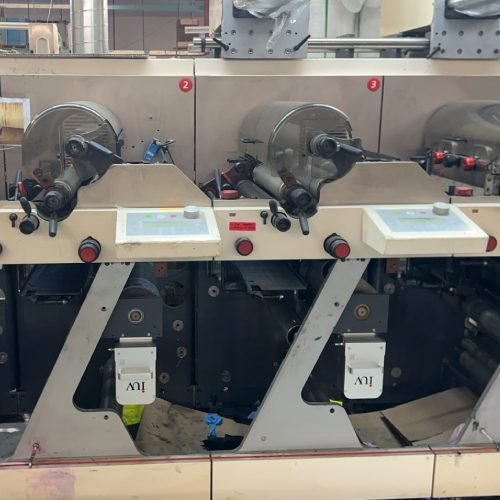
For flexographic printing, UV curing units are typically placed between printing stations or at the end of the press. In a multi-color flexo job, each station lays down a different ink color. Applying UV curing after each station, or at strategic points, ensures that each ink layer is properly cured before the next color is applied. This prevents ink trapping issues and allows for greater design flexibility. It also enables the use of opaque white inks or specialty varnishes that require a robust cure.
In offset printing, particularly for narrow web applications, UV curing is similarly integrated. After each color station, a UV unit can be employed to cure the ink. This is crucial for achieving sharp dot reproduction and preventing set-off (ink transferring from one printed sheet to the back of the next). The ability to cure instantly means that sheets can be immediately stacked or moved to the next process without waiting for ink to dry.
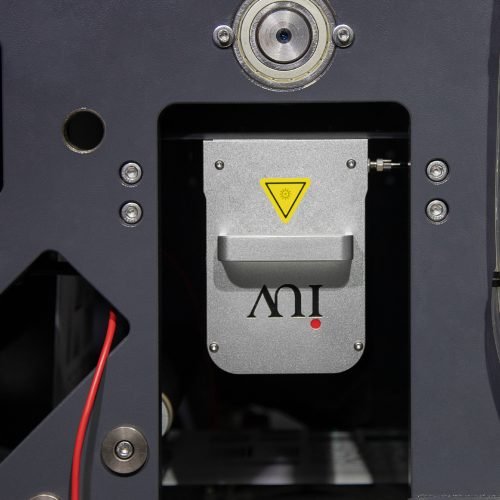
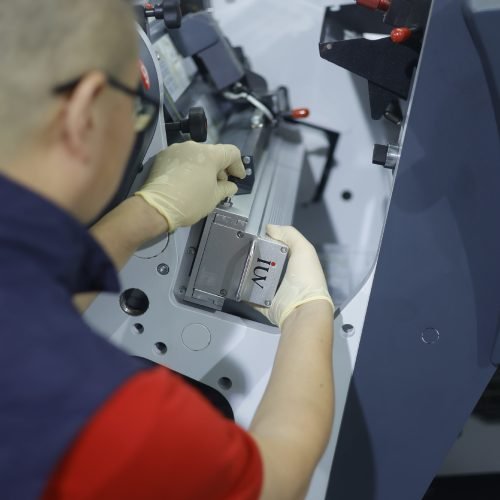
The design of UV curing units for these presses is critical. They must be compact enough to fit within the press layout without interfering with other components. They also need to be robust and reliable, capable of withstanding the demanding environment of a printing press. The cooling systems for the UV lamps (even LEDs generate some heat) are also essential for maintaining performance and longevity.
Benefits for Label Printers
The adoption of automated UV printing operations brings a multitude of benefits to label printers:
- Increased Productivity: The primary advantage is the ability to run presses at higher speeds. Instant curing eliminates drying time, allowing for faster job turnaround and increased output.
- Enhanced Print Quality: UV inks offer excellent adhesion, superior rub and scratch resistance, and vibrant color reproduction. Precision curing ensures these properties are maximized.
- Substrate Versatility: The low heat emission from LED UV systems allows printing on a wider array of materials, including heat-sensitive plastics, foils, and thin films, which are common in label applications.
- Reduced Waste: Consistent curing reduces the likelihood of defective labels due to smudging or poor ink adhesion, leading to less material waste and fewer customer complaints.
- Environmental Advantages: UV inks are typically 100% solids, meaning they contain no volatile organic compounds (VOCs). This makes them an environmentally friendly option compared to solvent-based inks. LED UV systems further enhance this by being energy-efficient.
- Cost Savings: While the initial investment in UV equipment can be higher, the long-term savings in energy, consumables (fewer lamp replacements), and reduced waste often make it a more economical choice over time.
The Future of Label Printing
Automated UV printing, powered by the advancements in LED technology, is no longer a niche application. It is rapidly becoming the standard for high-speed label production. As presses become faster and ink formulations more sophisticated, the demand for precise, efficient, and reliable curing solutions will only grow.
The focus will continue to be on optimizing energy delivery, enhancing substrate compatibility, and integrating UV curing seamlessly into increasingly automated printing workflows. The precision offered by these systems, combined with the speed and efficiency they enable, positions automated UV printing as a cornerstone of modern label manufacturing, ensuring that labels are not only visually appealing but also durable and produced in the most efficient manner possible.