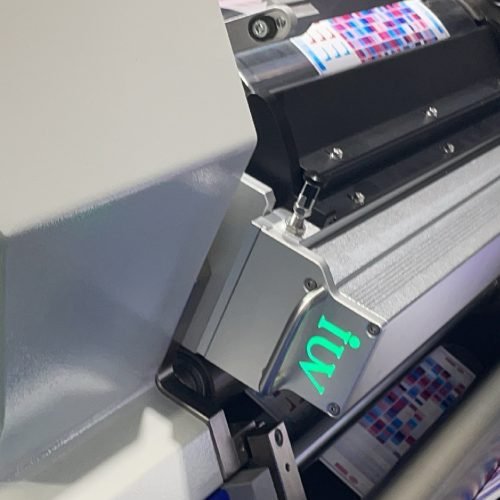
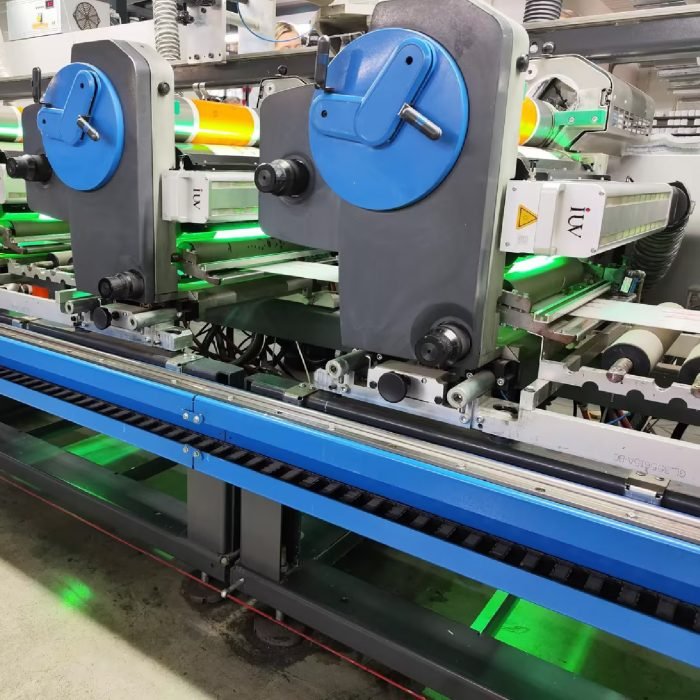
Printing with high-opacity white inks presents a unique set of challenges, particularly in achieving complete and consistent curing. Traditional UV curing methods often struggle to penetrate these dense ink layers, leading to under-cured areas, poor adhesion, and compromised print quality. However, the advent of high-intensity LED curing systems is revolutionizing this aspect of the printing industry, offering a powerful and efficient solution for even the most demanding white ink applications.
The Challenge of High-Opacity White Ink
White inks, by their very nature, contain a high concentration of titanium dioxide (TiO2), a pigment that scatters light. This scattering effect is precisely what gives white ink its excellent opacity and coverage. However, it also acts as a barrier to UV light. When UV energy attempts to cure the ink, much of it is reflected or absorbed by the TiO2 particles before it can reach the photoinitiators deep within the ink layer. This results in surface cure while the underlying ink remains uncured, a phenomenon known as “shadow curing” or “improper through-cure.”
This incomplete curing can manifest in several detrimental ways. Prints may exhibit poor rub resistance, scratch easily, and may not adhere properly to the substrate. In sensitive applications, like food packaging, under-cured inks can migrate, posing a health risk. Furthermore, the visual quality suffers, with a dull or patchy appearance instead of the crisp, vibrant white desired.
Traditional UV Curing Limitations
For years, mercury vapor lamps have been the standard in UV curing. While effective for many applications, they have inherent limitations when dealing with high-opacity whites. Mercury lamps emit a broad spectrum of UV light, including wavelengths that are not optimally absorbed by common photoinitiators. They also generate significant heat, which can distort delicate substrates or affect ink viscosity.
The intensity output of mercury lamps can also be inconsistent, degrading over time and requiring frequent replacement. Achieving adequate cure depth with high-opacity white inks using mercury lamps often necessitates slower press speeds, multiple passes, or specialized, high-concentration photoinitiator packages. These solutions add complexity and cost to the printing process.
The LED Curing Revolution
Light Emitting Diode (LED) curing technology has emerged as a game-changer. Unlike mercury lamps, LEDs emit light in very narrow, specific wavelength bands. This allows for the precise selection of LED emitters that perfectly match the absorption peaks of the photoinitiators used in modern UV inks, including those formulated for high-opacity white applications.
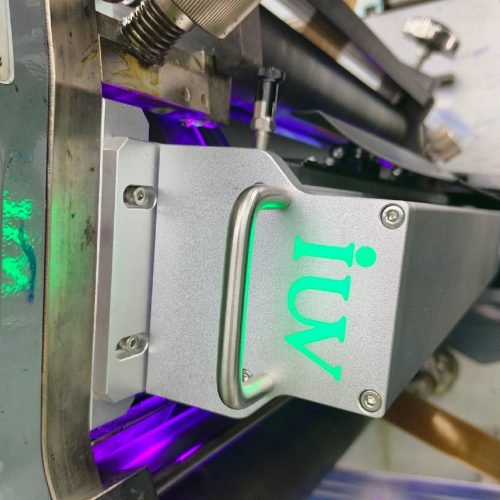
The key advantage of high-intensity LED systems lies in their focused energy output. They deliver a significantly higher spectral irradiance (intensity) at the targeted wavelengths. This powerful, concentrated UV energy is far more effective at penetrating dense ink layers and initiating the polymerization process throughout the entire ink film.
Benefits of High-Intensity LED for White Ink
The advantages of employing high-intensity LED curing systems for high-opacity white ink applications are substantial and far-reaching:
- Superior Through-Cure: The concentrated, high-intensity output of LEDs ensures that UV energy reaches the photoinitiators deep within the white ink layer. This results in complete polymerization, achieving excellent through-cure and eliminating the issues associated with incomplete curing.
- Enhanced Adhesion and Durability: Complete curing directly translates to improved adhesion of the ink to various substrates. Prints exhibit superior resistance to abrasion, scratching, and chemical attack, crucial for demanding applications like labels and packaging.
- Consistent Color and Opacity: High-intensity LED curing ensures a uniform cure across the entire print area. This leads to consistent color reproduction and the full, intended opacity of the white ink, eliminating patchy or dull areas.
- Higher Press Speeds: The efficiency of LED curing allows printers to maintain or even increase press speeds without sacrificing cure quality. This directly impacts productivity and profitability.
- Reduced Heat Generation: LEDs emit very little infrared radiation, meaning they generate significantly less heat compared to mercury lamps. This is beneficial for heat-sensitive substrates and allows for more stable ink viscosity.
- Longer Lifespan and Lower Maintenance: LED lamps have a much longer operational lifespan (tens of thousands of hours) compared to mercury lamps (typically 1,000-2,000 hours). This reduces downtime for lamp replacements and lowers overall maintenance costs.
- Instant On/Off Capability: LEDs can be switched on and off instantaneously. This not only saves energy when the press is stopped but also prevents premature curing or degradation of ink on the anilox rolls or printing plates during brief pauses.
- Environmental Benefits: LEDs are mercury-free, making them a more environmentally friendly option. Their energy efficiency also contributes to a lower carbon footprint.
Applications in Narrow Web and Flexographic Printing
Narrow web printing, particularly in the label and packaging sectors, is a prime area where high-opacity white inks are frequently used. Whether it’s for creating vibrant white backgrounds, spot white layers for enhanced color vibrancy of subsequent inks, or special effects, achieving a perfect cure is paramount.
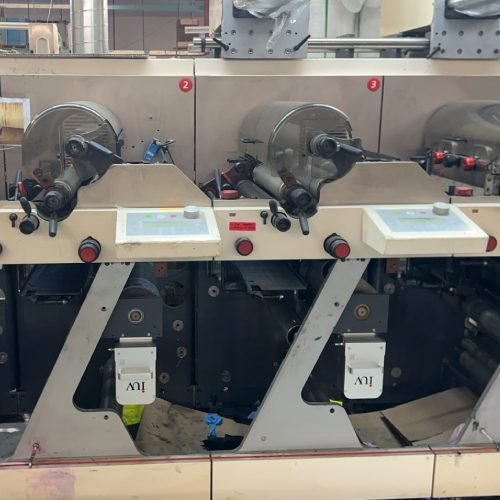
In flexographic printing, which is prevalent in narrow web operations, the challenges of curing opaque whites are amplified. The nature of the ink transfer in flexo, combined with the need for high speeds and diverse substrates (from films to papers), makes efficient curing essential. High-intensity LED systems integrated into flexo presses provide the necessary power and spectral precision to overcome these hurdles. This is especially true for applications requiring overprinting white ink, where the opacity needs to be perfect to allow subsequent colors to pop.
Applications in Offset and Screen Printing
While narrow web flexo is a major beneficiary, high-intensity LED curing also finds significant application in offset and screen printing for white ink jobs. In offset printing, achieving through-cure in dense white inks on non-porous substrates can be problematic. LED technology offers a reliable solution.
Screen printing, often used for high-build, highly opaque applications like decorative labels or industrial markings, also benefits immensely. The ability of high-intensity LEDs to penetrate thick ink films is critical for ensuring these prints are durable and fully cured.
Selecting the Right LED Curing System
When choosing a high-intensity LED curing system for high-opacity white ink applications, several factors need consideration:
- Wavelength: Ensure the LED system emits at wavelengths that are optimally absorbed by the photoinitiators in your white inks. Common wavelengths for UV curing include 365 nm, 385 nm, 395 nm, and 405 nm. Consult with your ink supplier to determine the best match.
- Intensity (Irradiance): Higher irradiance is generally better for penetrating opaque inks. Look for systems that provide sufficient power density (measured in W/cm²) at the substrate level to ensure rapid and complete curing.
- Uniformity: The light output must be uniform across the entire web width. Poor uniformity will lead to inconsistent curing and print quality issues.
- Cooling: Effective cooling mechanisms are essential to maintain LED performance and longevity. Air-cooled or water-cooled systems are available, depending on the application and the required power output.
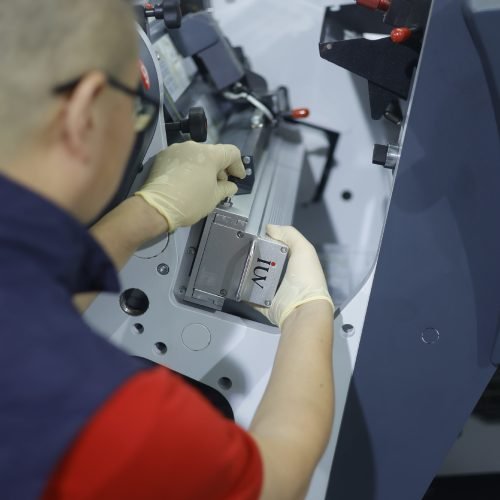
- Integration: Consider how the LED system will integrate with your existing press. This includes physical space, power requirements, and control systems.
The Future of White Ink Curing
The evolution of high-opacity white inks and the corresponding advancements in LED curing technology are closely linked. Ink manufacturers are continually developing new formulations with enhanced photoinitiator packages that are more responsive to LED energy. In turn, LED manufacturers are pushing the boundaries of intensity, spectral control, and system integration.
The combination of high-intensity LED curing and advanced white ink formulations represents a significant leap forward for the printing industry. It provides a robust, efficient, and high-quality solution for applications where opaque white ink is critical, ensuring prints that are not only visually stunning but also functionally superior. As presses continue to evolve, the role of high-intensity LED curing systems in achieving perfect opaque white prints will only become more pronounced.