The demand for high-volume label production is constantly increasing. Businesses worldwide rely on efficient, cost-effective methods to meet this demand. In the competitive printing landscape, optimizing every stage of the production process is paramount. This includes the critical step of ink curing. Traditional curing methods, while functional, often present limitations when it comes to speed, energy consumption, and environmental impact. This is where high-intensity LED curing systems are emerging as a transformative technology, particularly for high-volume label production efficiency.
The Evolution of Curing in Label Printing
For decades, the label printing industry has utilized various curing technologies. Thermal curing and electron beam (EB) curing have played significant roles. However, UV curing, especially with traditional mercury vapor lamps, became a dominant force due to its speed and ability to cure a wide range of inks and coatings. Mercury lamps offered high UV output, but they came with drawbacks. Their lifespan was limited, they generated substantial heat, and they required frequent maintenance and replacement. Furthermore, their energy consumption was considerable, contributing to higher operating costs and a larger carbon footprint.
Introducing High-Intensity LED UV Curing
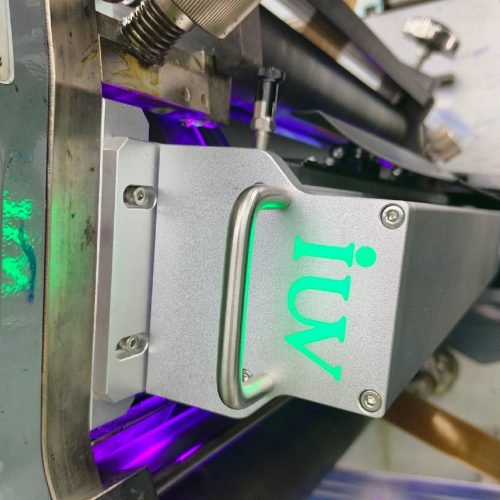
High-intensity LED UV curing systems represent a significant leap forward. Instead of a broad spectrum of light emitted by mercury lamps, LEDs emit very specific wavelengths of UV light. This targeted emission is a key advantage. When paired with appropriate UV-curable inks and coatings formulated for LED curing, the process becomes exceptionally efficient. The “high-intensity” aspect refers to the power output of these LED systems, allowing for very rapid curing even at high press speeds.
Benefits for High-Volume Label Production
The advantages of high-intensity LED curing systems directly translate into improved efficiency for high-volume label production. Let’s break down the key benefits:
1. Unmatched Curing Speed: High-intensity LEDs can deliver the required UV energy in fractions of a second. This rapid curing capability allows presses to run at their maximum mechanical speeds without compromising ink adhesion or finish quality. For high-volume runs, this means significantly higher output per shift, directly impacting throughput and profitability.
2. Energy Efficiency and Cost Savings: LEDs are remarkably energy-efficient. They consume considerably less power than mercury vapor lamps, often by as much as 50-70%. This reduction in energy usage translates into substantial operational cost savings over the lifespan of the equipment. Additionally, LEDs generate less heat, reducing the need for extensive cooling systems on the printing press, further contributing to energy savings and a more stable print environment.
3. Extended Equipment Lifespan and Reduced Maintenance: Unlike mercury lamps that degrade over time and require replacement every few hundred to a thousand hours, LEDs have a much longer operational life, often tens of thousands of hours. This longevity drastically reduces downtime associated with lamp changes and associated maintenance. The consistent output of LEDs also means less variability in the curing process, leading to more predictable results and fewer quality control issues.
4. Environmental Advantages: The reduced energy consumption of LED systems contributes to a lower carbon footprint. Furthermore, LEDs do not contain mercury, making them an environmentally friendlier choice. The reduced heat output also lessens the thermal load on the production facility, potentially lowering HVAC costs and improving working conditions.
5. Improved Print Quality and Substrate Versatility: High-intensity LED curing allows for precise control over the curing process. This precision can lead to sharper graphics, better ink adhesion, and improved scratch and chemical resistance. Because LEDs generate less heat, they are also ideal for curing on heat-sensitive substrates, such as certain plastics and thin films, which are commonly used in label production. This opens up new possibilities for substrate choice and application.
Integrating LED Curing into Label Printing Presses
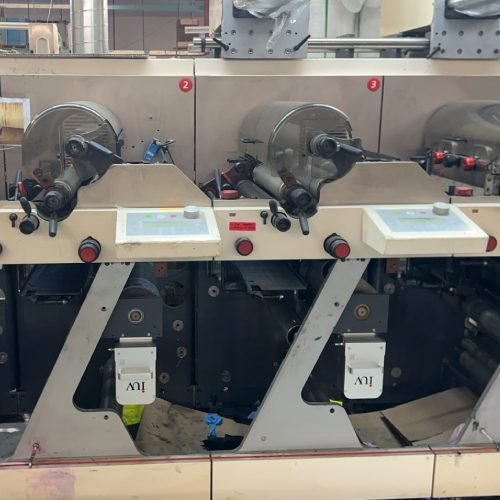
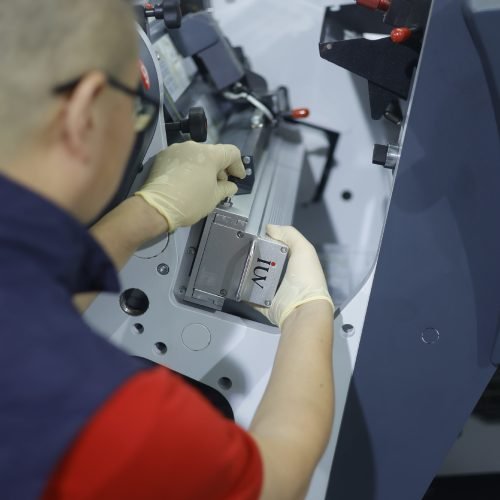
Modern narrow web flexographic and offset presses are increasingly designed with LED UV curing in mind. These systems can be retrofitted to existing presses or specified as original equipment.
Flexographic Printing: Flexography is a workhorse for label production. Integrating high-intensity LED UV curing units between print stations or at the end of the press allows for inline curing of inks and coatings. This enables faster press speeds and the use of multiple ink colors and special effects in a single pass. The ability to cure instantly also prevents ink transfer issues between stations, which can be a problem with slower curing methods.
Offset Printing: For label applications requiring high print quality and fine detail, offset printing is often chosen. LED UV curing is highly compatible with offset inks. The instant cure provided by high-intensity LEDs allows for immediate handling of printed sheets or rolls, accelerating the finishing process and reducing the risk of smudging or scratching, especially for demanding jobs.
Hybrid Presses: The advent of hybrid presses, combining different printing technologies, also benefits from LED curing. These systems can integrate flexo, offset, digital, and screen printing stations, all enhanced by the rapid and efficient curing capabilities of high-intensity LEDs.
Key Considerations for Implementation
While the benefits are clear, successful implementation of high-intensity LED curing systems requires careful consideration:
- Ink and Coating Formulation: It is crucial to use inks and coatings specifically formulated for LED UV curing. These formulations are designed to react efficiently to the specific wavelengths and energy output of LED lamps. Standard UV inks may not cure adequately.
- Wavelength Compatibility: LED systems emit light in specific wavelength bands, typically in the UVA range (e.g., 365 nm, 395 nm, 405 nm). Ensure your chosen inks and coatings are optimized for these wavelengths.
- Press Speed and Energy Requirements: The required UV energy (irradiance) for proper curing depends on the ink type, ink film thickness, substrate, and press speed. High-intensity LED systems are designed to deliver the necessary power, but understanding these relationships is vital for optimal setup.
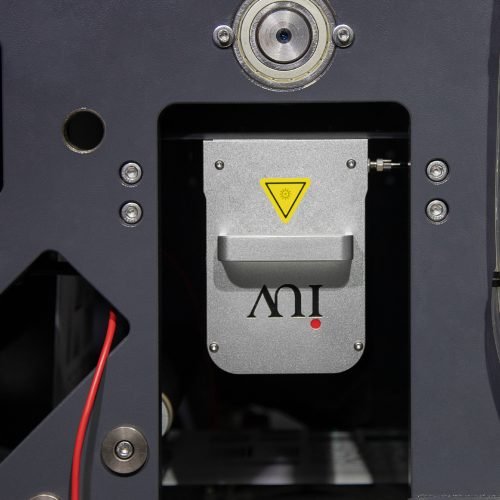
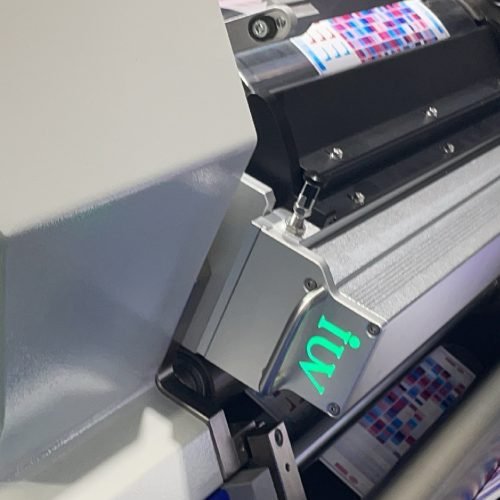
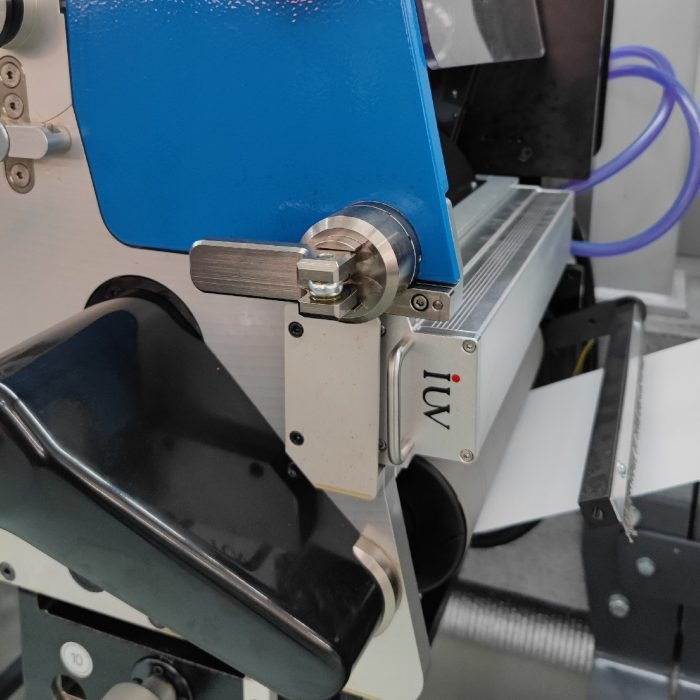
- Anatomy of an LED Curing System: A typical LED UV curing system comprises the LED lamp module(s), a power supply unit, and a controller. The modules contain the LED arrays and cooling mechanisms. The power supply drives the LEDs, and the controller manages intensity, on/off timing, and other parameters.
- Cooling: Even though LEDs produce less heat than mercury lamps, effective cooling is still necessary to maintain optimal LED performance and longevity. This is usually integrated into the lamp head design.
The Future of Label Production Efficiency
The shift towards high-intensity LED UV curing is not merely a technological upgrade; it’s a strategic move that enhances efficiency, reduces costs, and improves the environmental profile of label production. As printing speeds increase and the demand for more sophisticated label designs grows, the advantages offered by LED technology become even more pronounced. For label printers looking to stay competitive in a high-volume market, investing in high-intensity LED curing systems is a pathway to greater productivity, improved quality, and a more sustainable operation. This technology is rapidly becoming the standard for forward-thinking label manufacturers.