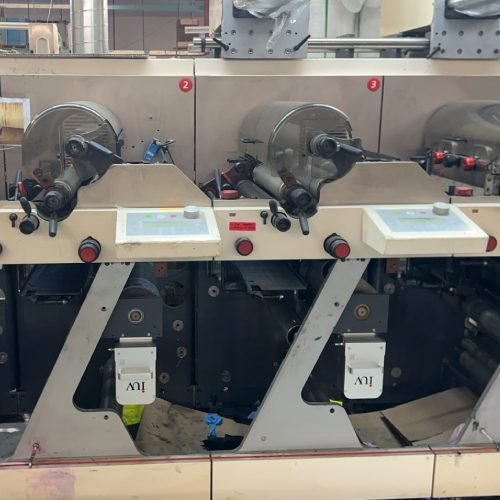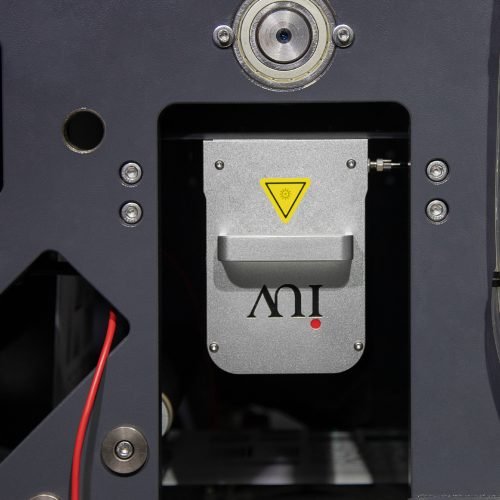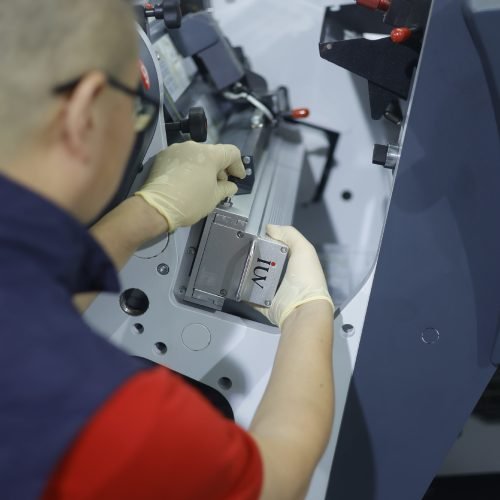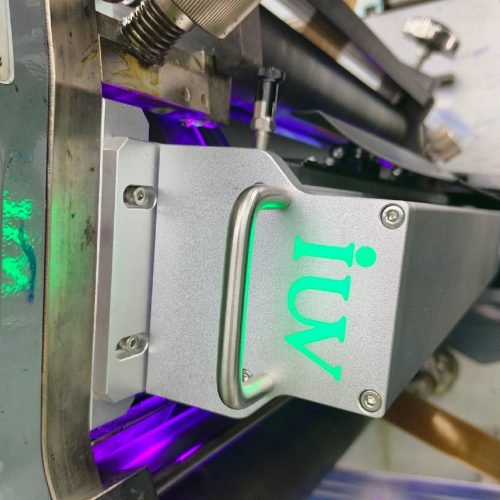
The label printing industry is a dynamic field constantly seeking improvements in quality, efficiency, and material performance. For narrow web printers, in particular, achieving precise registration and consistent print quality across various substrates is paramount. Dimensional stability of the printed material plays a critical role in this pursuit. Traditional curing methods have limitations, but the advent of LED UV curing technology is revolutionizing how we achieve superior dimensional stability in label printing.
The Challenge of Dimensional Stability in Label Printing
Dimensional stability refers to a material’s ability to resist changes in its size and shape due to environmental factors or processing conditions. In label printing, several factors can compromise this stability:
- Heat: Traditional thermal drying processes can introduce heat that causes some substrates to expand or contract. This is especially problematic with heat-sensitive materials.
- Moisture: Absorption or release of moisture by the substrate can lead to significant dimensional changes, impacting registration and overall print accuracy.
- Mechanical Stress: The tension applied during printing and converting processes can stretch or distort the substrate, particularly in high-speed narrow web operations.
- Ink Layer Properties: Inconsistent ink film thickness or inadequate curing can also contribute to instability.
When dimensional stability is poor, printers encounter issues like:
- Registration Problems: Misalignment between colors or between print and die-cut positions.
- Shrinkage or Stretching: Labels may not fit the intended application area correctly.
- Warping or Curling: Especially after printing, leading to handling and application difficulties.
- Reduced Print Quality: Fine details can be lost, and overall sharpness degrades.
Understanding UV Curing Technology
Ultraviolet (UV) curing is a photopolymerization process that uses UV light to instantly dry (cure) inks, coatings, and adhesives. This is achieved by triggering a chemical reaction within the photopolymerized formulation. The process involves:
- Photoinitiators: These molecules absorb UV light energy.
- Free Radicals or Cationic Species: The absorbed energy initiates a chain reaction, forming these reactive species.
- Monomers and Oligomers: These are the building blocks of the ink or coating.
- Polymerization: The reactive species rapidly link the monomers and oligomers together, forming a solid, cross-linked film.
Traditional UV curing typically utilizes mercury vapor lamps. While effective, these lamps have drawbacks:
- High Heat Output: Mercury lamps generate significant heat, which can affect substrate dimensions.
- Energy Inefficiency: They consume a lot of power and have a relatively short lifespan.
- Ozone Production: Mercury lamps can produce ozone, requiring ventilation.
- On/Off Warm-up Time: They need time to reach optimal operating temperature.
The LED UV Curing Advantage
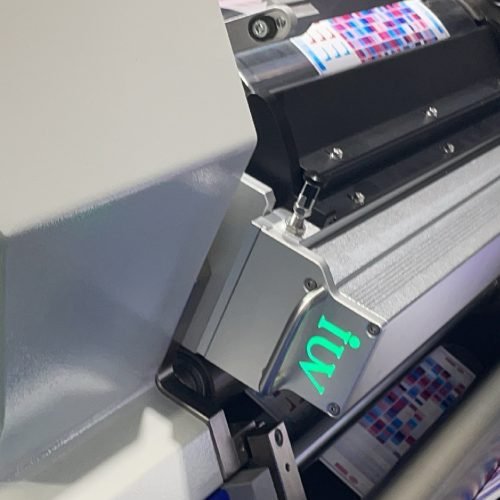
Light Emitting Diode (LED) UV curing technology offers a significant advancement over traditional mercury lamps. Instead of broadband UV light, LEDs emit UV light at specific wavelengths, typically in the UVA range (365nm, 395nm, 405nm). This targeted approach brings several benefits directly relevant to dimensional stability in label printing:
1. Minimized Heat Transfer to Substrates
This is arguably the most crucial factor LED UV curing contributes to dimensional stability. Unlike mercury lamps that radiate heat broadly, LEDs produce very little infrared (heat) radiation. They are highly energy-efficient, converting most of their energy into UV light rather than heat.
- Low Operating Temperatures: The substrate remains much cooler throughout the curing process. This is especially beneficial for sensitive materials like thin films, certain plastics, and even some papers that are prone to shrinking or deforming under heat.
- Reduced Thermal Stress: By minimizing heat, LED UV curing reduces the thermal stress on the substrate, preventing expansion and subsequent contraction that can lead to dimensional inaccuracies.
- Consistency Across the Web: The uniform energy output of LED arrays ensures consistent temperature across the entire width of the label web, preventing differential shrinkage.
2. Instant and Complete Curing
LED UV curing provides an immediate and complete cure upon exposure to the UV light. The specific wavelengths emitted by LEDs are highly efficient at activating photoinitiators, leading to rapid polymerization.
- Locking Dimensions: The instant curing process effectively locks the substrate’s dimensions in place at the moment of cure. There is no prolonged drying or cooling phase where dimensional changes can occur.
- No Ink Migration: The rapid solidification of the ink film prevents migration of solvents or plasticizers, which can sometimes cause slight dimensional shifts in other drying methods.
- Efficient Ink Film Formation: The quick polymerization creates a robust, cross-linked ink layer that adheres well to the substrate, further contributing to its structural integrity.
3. Targeted Wavelengths and Formulation Optimization
LED UV curing systems emit light at specific wavelengths. This allows ink and coating manufacturers to develop formulations optimized for these specific wavelengths.
- Efficient Photoinitiator Activation: Formulations designed for LED curing can use photoinitiators that are highly responsive to the specific LED wavelengths, ensuring a fast and thorough cure.
- Reduced Energy Input for Cure: Because the wavelengths are targeted, less energy is needed to achieve a full cure compared to the broader spectrum of a mercury lamp, further minimizing any residual heat.
- Consistent Ink Properties: Optimized formulations result in consistent ink film hardness and flexibility, which contribute to the overall stability of the printed label.
4. Enhanced Durability and Adhesion
While not directly dimensional stability, the superior adhesion and durability achieved with LED UV cured inks indirectly support dimensional integrity by ensuring the ink layer remains firmly bonded and intact.
- Strong Substrate Bonding: LED UV curing promotes excellent adhesion to a wide range of substrates, from coated papers to challenging plastics. This strong bond prevents the ink layer from peeling or delaminating, which could otherwise affect the label’s structural behavior.
- Scratch and Chemical Resistance: The cross-linked nature of LED UV cured inks provides excellent resistance to abrasion and chemicals. This means the printed image is less likely to be damaged, which could potentially alter its physical properties.
Applications in Label Printing Technologies
The benefits of LED UV curing for dimensional stability are particularly relevant across various label printing methods used in narrow web applications:
- Flexographic Printing: Flexo printing is a cornerstone of narrow web label production. LED UV curing allows for high-speed printing with consistent color reproduction and sharp detail. The minimized heat ensures that thinner films used in shrink sleeves or pressure-sensitive labels do not distort, maintaining precise registration for multiple color stations and die-cutting.
- Offset Printing (Sheetfed and Web): While traditionally associated with sheetfed, narrow web offset presses are also used for labels. LED UV curing enables faster run speeds and immediate handling of printed sheets or webs, eliminating the delays associated with cooling or drying, thus preserving the sheet’s or web’s initial dimensions. This is crucial for multi-pass printing or complex finishing operations.
- Inkjet Printing: Digital label printing, especially UV inkjet, benefits greatly from LED curing. The instant cure prevents ink spread and allows for immediate post-processing, ensuring the label retains its precise dimensions from the inkjet head to the finished product. This is vital for variable data printing where exact placement is critical.
Implementing LED UV Curing for Optimal Results
To fully leverage the advantages of LED UV curing for dimensional stability, consider these points:
- Substrate Selection: Choose substrates known for their inherent dimensional stability. However, even less stable materials can be handled more effectively with LED UV.
- Ink and Coating Formulation: Work with ink suppliers who offer LED-curable formulations specifically designed for your printing process and substrate.
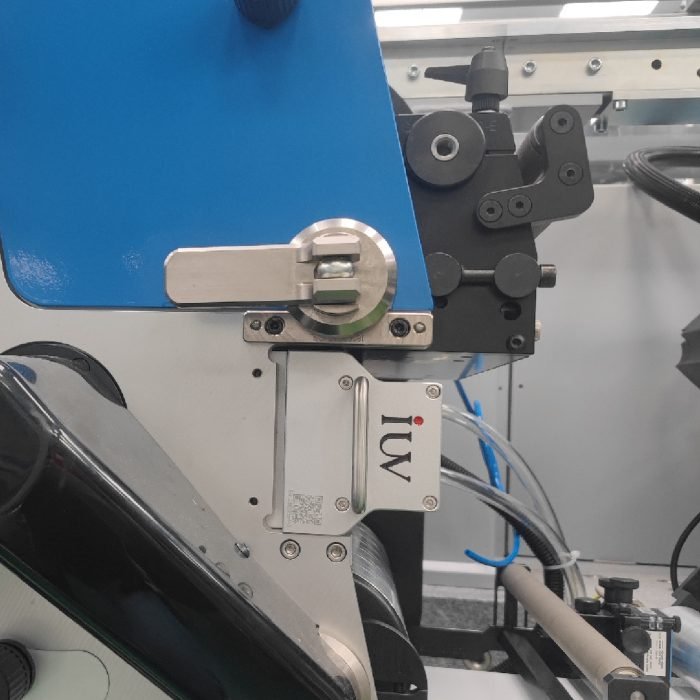
- System Integration: Ensure the LED UV curing system is correctly integrated into your printing press, with appropriate power and placement for effective curing without overheating.
- Process Control: Monitor substrate temperature and press tension to ensure optimal conditions are maintained throughout the print run.
Conclusion
For label printers aiming for the highest quality and precision, improving dimensional stability is a constant objective. LED UV curing technology offers a compelling solution by significantly reducing heat transfer to the substrate, enabling instant and complete ink polymerization, and facilitating optimized ink formulations. This translates directly into superior registration, reduced waste, and greater consistency across all types of label printing, particularly in the demanding narrow web sector. By embracing LED UV curing, printers can confidently produce labels that meet the exacting demands of today’s market, ensuring every label is dimensionally stable and perfectly printed.