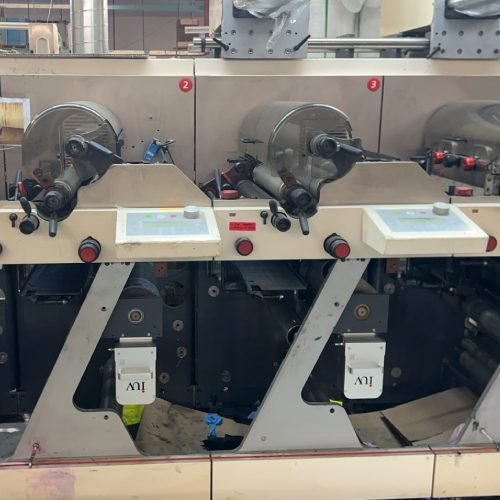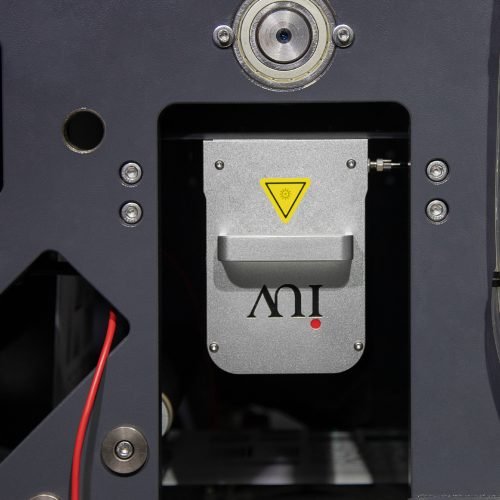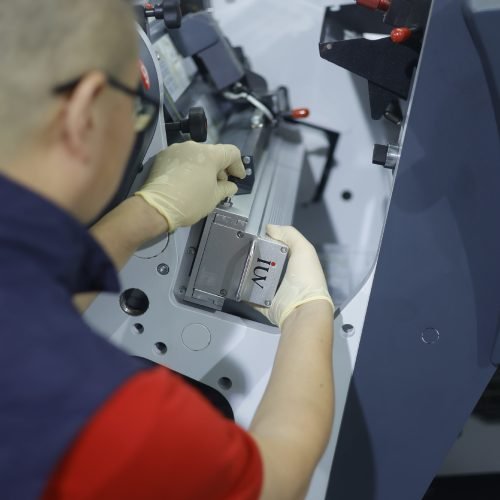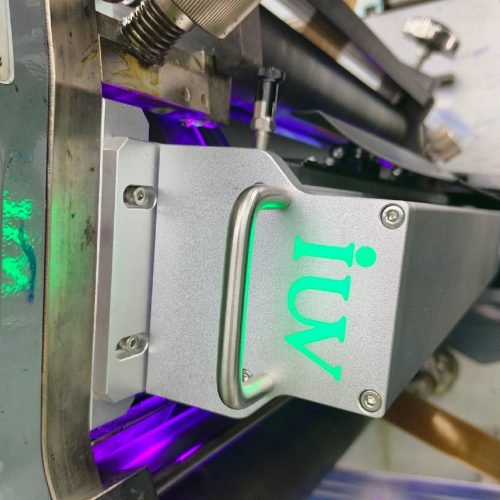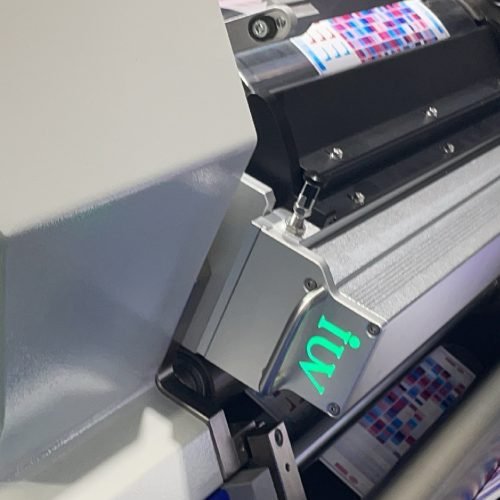
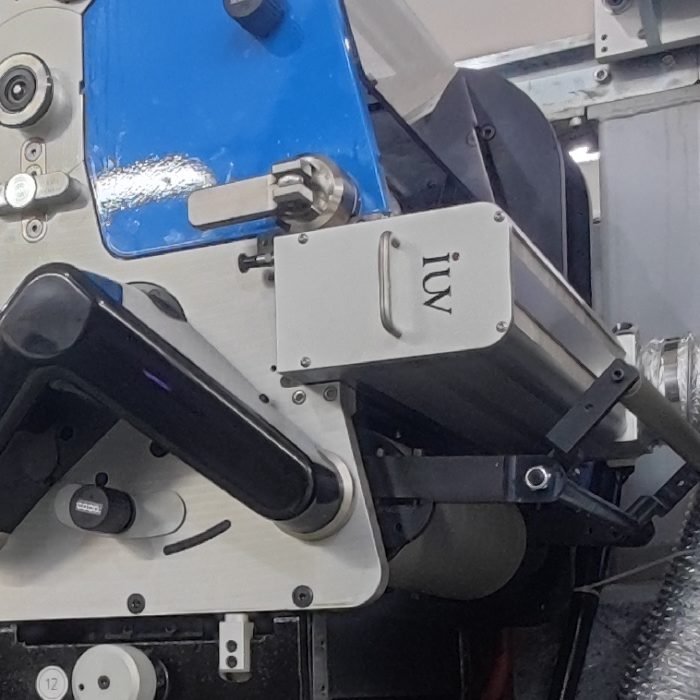
Reliable UVcuring is critical to label printing outcomes. It ensures ink adhesion, rub resistance, chemical durability, and long-term outdoor performance. When substrates are challenging—thin films, pre-printed foils, or heavily coated papers—the cure must be precise, uniform, and repeatable. This article combines label printing, flexography, letterpress, and narrow web expertise with current UV and LED curing knowledge. The goal is to help you achieve consistent curing across difficult substrates without compromising print quality or production efficiency.
Understanding Substrates and Print Technologies
Label substrates vary widely. Common materials include PET, BOPP, PE films, foil, and specialty papers. Each carries unique surface energies, roughness, coatings, and barrier layers. Ink formulas and curing strategies must align with these properties.
- PET and BOPP films: Typically smooth but can have low surface energy after coatings or corona treatments fade over time. They often require pre-treatment or primers to improve ink adhesion and cure response.
- Paper labels: More porous, with higher absorbency. They may cure unevenly if ink overspreads or if the substrate wicks solvent or water-based components.
- Foils and metalized substrates: Reflective surfaces can influence cure energy distribution and may benefit from focused lamp angles or pre-treatment to enhance ink grip.
- Coated or laminated substrates: May present surface energy barriers due to top coatings. Primer layers or surface activation often improve cure uniformity.
Printing technologies to consider:
- Flexography (flexo): Most common in label work. Fast ink turnover, wide substrate compatibility, and frequent use of UV-curable inks. The challenge is achieving uniform cure across widths and variable substrate finishes.
- Letterpress: Photopolymer plates and UV inks can deliver sharp edges and tactile results. Surface cure and interlayer adhesion are critical on tight tolerances and heavy solids.
- Narrow web: High line counts and tight registration demand precise cure control. Web tension, winding, and in-line drying/curing must be synchronized.
Ink and Resin Chemistry for UV Curing
The chemistry behind UV curing influences how well a substrate accepts ink and how effectively energy converts to a cross-linked film.
- UV-curable inks: Rely on photoinitiators that start polymerization when struck by UV light. For LED systems, photoinitiator blends are chosen for efficiency in the 395 nm or near-UV range.
- LED-curable inks: Use specific wavelengths and emitters with long lifetimes and low heat. They are energy-efficient and space-saving, but require compatible inks and optics.
- Pigments and binders: Pigment loading affects opacity and cure depth. High solids reduce solvent carryover but may require higher energy input to cure. Binders influence film flexibility after cure.
- Additives: Oligomers, monomers, and reactive diluents control viscosity and open time. Photoinitiator concentration governs cure speed and surface cure versus through-cure balance.
- Surface inhibitors: Oxygen inhibition can slow surface cure, especially on glossy films. Topcoats and interlayers can mitigate this effect.
Pre-Treatment and Surface Preparation
Substrate preparation is often the deciding factor for reliable cure. Proper surface energy and cleanliness improve ink adhesion and cure uniformity.
- Surface energy targets: For UV inks, achieving sufficient surface energy is important. Corona, plasma, or flame treatments raise surface energy to promote wetting and adhesion.
- Primers and tackifiers: Primers improve bonding on difficult surfaces or on foils and resistant coatings. They can also help reduce the time to full cure by providing a better initial film.
- Cleaning and conditioning: Remove dust, oils, and handling residues before printing. A clean surface reduces cure variability and prevents blocking or scuffing after curing.
- Surface roughness: Mild roughness can help ink anchoring but excessive roughness may cause uneven cure. The coating/substrate finish should be compatible with the chosen ink and cure system.
Curing System Design and Process Controls
A well-designed curing system is essential for challenging substrates. LED systems offer advantages in energy efficiency, heat management, and precise wavelength control, but require careful alignment with ink chemistry and substrate type.
- LED vs traditional mercury-arc: LED UV lamps deliver stable irradiance at specific wavelengths, run cooler, and enable instant end-of-life readiness. Mercury-arc lamps provide broad-spectrum cure potential but require warm-up and more heat management.
- Wavelength and photoinitiators: LED systems with emission around 385–405 nm work well with many modern photoinitiators. If you use distinct chemistries, ensure compatibility with the lamp spectrum.
- Dose and intensity: Cure dose is a function of irradiance and exposure time (or speed). On challenging substrates, higher doses may be needed to reach through-cure and surface cure simultaneously.
- Distance, angle, and cooling: The lamp-to-substrate distance, lamp angle, and cooling influence cure uniformity. Too-close distances can cause overheating or prevent proper penetration on thick or reflective layers.
- In-line monitoring: Install radiometers or dosimeters to monitor real-time UV dose. Inline color and gloss sensors help detect under- or over-cured areas promptly.
Process Optimization by Printing Technology
Label Printing (substrates, inks, and coatings)
- Ink selection: Choose UV inks with good adhesion to the substrate and compatible with the adhesive systems used in labels. Consider low-odour, low-mismatch chemistries for sensitive applications.
- White underbase and color layers: If printing on transparent films or foils, a solid white layer can improve color vibrancy and cure consistency. Ensure the white underbase cures thoroughly to avoid blocking or adhesion issues later.
- Barrier and topcoats: UV varnishes add protection but can alter cure depth. Match varnish cure requirements to the underlying ink to prevent trapping or orange-peel effects.
- Handling and finishing: After curing, allow sufficient dwell time before finishing steps like lamination or die-cutting. Quick post-cure checks help prevent migration or pigment bleed.
Flexography
- Plate and chamber dynamics: Ensure plate inking and chamber checks are compatible with LED or arc lamp curing. Uniform plate relief and chamber fill contribute to consistent cure across the web.
- Ink rheology: Adjust viscosity, tack, and solids to suit fast drying via UV cure. Higher solids often require more energy for full cure but can yield better print density.
- Inter-deck curing: When applying multiple layers, ensure each layer is adequately cured before the next is applied. Insufficient cure between decks can cause adhesion problems or blocking.
Letterpress
- Plate sensitivity: Photopolymer plates in letterpress respond to UV differently than flexo inks. Ensure the cure depth is appropriate for the plate thickness and ink pickup.
- Edge sharpness and cure: The metal plate’s edge quality and ink film thickness influence light transmission to the substrate. Focus on uniform layer thickness to facilitate even cure.
- Oxygen management: Oxygen inhibition may be more evident on surface areas with high gloss. Use proper curing angles or surface treatments to minimize this effect.
Narrow Web
- Tension and wrap: Narrow web systems require precise tension control to prevent misregistration that can affect cure uniformity at the edge of the print area.
- In-line curing geometry: The compact design of narrow-web presses demands compact yet powerful curing heads. The dose distribution must cover the full width evenly.
- Speed and exposure: High-speed runs demand efficient energy use. Calibrate exposure with test patterns to optimize cure without overheating or dulling the ink.
Quality Assurance and Troubleshooting
A robust QA approach helps catch cure issues early and prevents costly downtime.
- Dose verification: Use a calibrated UV radiometer to verify dose across the web and across the width. Check in multiple points to catch hotspots or shadow zones.
- Cure indicators: Monitor color, gloss, and tack after cure. A tacky surface suggests under-cure; overly hard surfaces may indicate over-cure or embrittlement.
- Adhesion tests: Perform cross-hatch or peel tests on representative samples. Substrates with primer or corona pre-treatment should show consistent adhesion.
- Weather and aging: Test for colorfastness and adhesion under drop tests, humidity, and UV exposure. Substrates in outdoor or long-life applications require stable cure performance.
- Blocking and scuff resistance: Print samples should resist set-on and rub from handling or lamination processes. If post-curing is necessary, verify compatibility with the entire process chain.
Practical Guidelines and Recommendations
- Start with substrate pre-treatment: If adhesion or cure is inconsistent, begin with surface energy optimization through corona, plasma, or primers.
- Align chemistry with cure: Confirm that the chosen UV ink system and photoinitiators match your LED or lamp type. A mismatch often causes surface haze or poor through-cure.
- Calibrate dose for substrate: Perform a dose mapping run on a representative substrate. Record dosage across the web width and at multiple points in the run.
- Manage heat: LED systems are cooler than arc lamps, but substrates can still heat up at high speeds. Use proper cooling and avoid overheating the ink film.
- Gatekeep interlayers: If you use varnishes, primers, or overprints, ensure their cure profiles align with the base ink. Misaligned curing can lead to cracking, de-lamination, or color shifts.
- Plan for post-processing: Consider die-cutting, lamination, or embossing steps in the curing plan. Ensure the cured film has adequate dimensional stability for downstream processes.
- Document settings: Keep a process window with lamp settings, substrate type, ink recipe, speed, and dose. This record makes it easier to reproduce successful runs and train staff.
Conclusion
Achieving reliable UV curing on challenging label substrates requires a holistic approach. Substrate preparation, ink chemistry, printer technology, and curing system design must be aligned. LED curing, when matched with the correct photoinitiators and substrate pre-treatment, offers clean operation, energy efficiency, and precise control. By understanding how flexography, letterpress, and narrow web printing interact with UV-curable inks, you can design robust curing strategies that deliver consistent adhesion, durability, and print quality across even the most demanding substrates. A disciplined testing regime, thorough process documentation, and proactive maintenance will keep your UV curing stable as substrate challenges evolve.