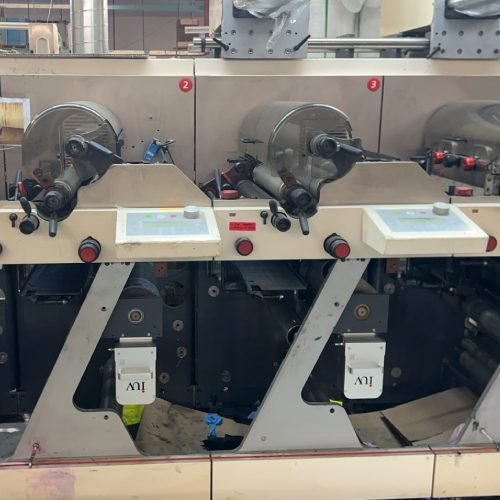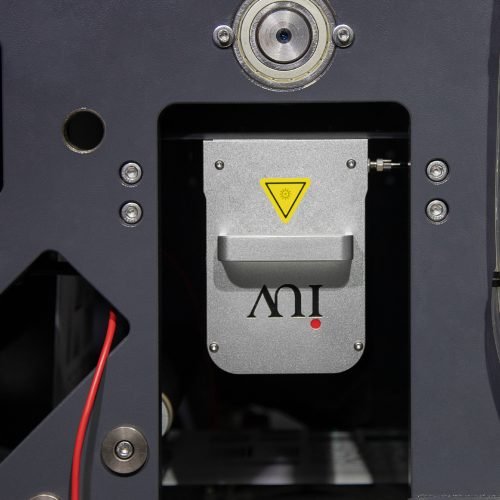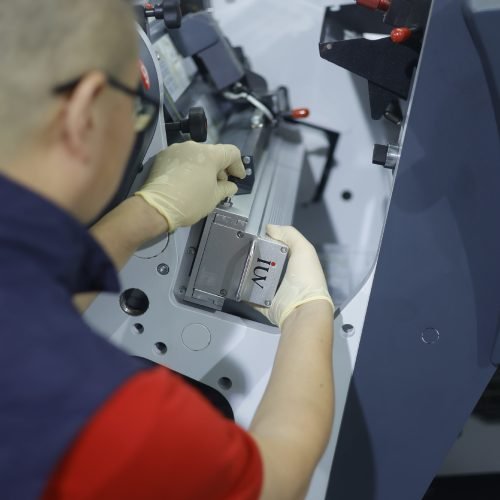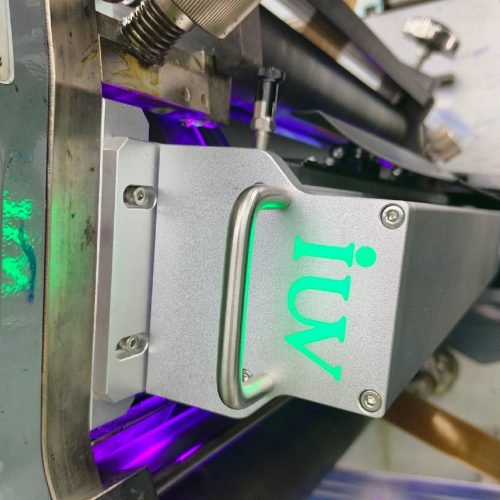
Insufficient UV energy can cause many print defects on UV-curable inks. This issue is common in label printing, flexo presses, gravure (rotogravure), and narrow-web operations. A precise match between ink chemistry, substrate, and curing energy is essential. This article outlines practical steps to reduce defects by optimizing UV energy, with a focus on flexo, label printing, gravure, and narrow-web formats. It also covers LED curing technology and conventional UV lamps.
Understanding UV Energy in Flexo, Gravure, and Narrow-Web Printing
UV energy, or UV dose, is the product of light intensity and exposure time. In UV-curable inks, the dose drives polymerization and film formation. If the dose falls short, you see tackiness, incomplete cure, and color or gloss defects. In flexo presses, the interdeck curing zone must provide sufficient energy for the ink layer. In gravure, surface coatings and varnishes require adequate cure to avoid blocking and rub-off. Narrow-web lines demand precise dose control because web widths are tight and heat buildup can affect cure. LED UV curing systems offer immediate turn-on, adjustable spectrum, and lower heat input, but only if configured to deliver the correct dose across the web.
Common Defects from Low UV Dose
- Cured-incompletely areas: tacky or soft ink films that rub off.
- Orange peel and roughness: uneven film formation due to partial polymerization.
- Hazy or milky appearance: scattered light from undercured resin.
- Poor adhesion of coatings or primers: insufficient cross-linking at the ink/substrate interface.
- Ink blocking during finishing: films stick together in converters or packaging lines.
- Color shifts and under-cure glow: incomplete cure changes pigment or resin optics.
- Pinholes or voids in the print: local under-polymerization creating voids.
- Reduced abrasion resistance: surface becomes less durable over time.
Key Factors That Affect UV Dose on the Web
- Lamp type and spectrum: Mercury lamps emit broad spectra; UV-LEDs offer targeted bands (e.g., near 365–405 nm). The photoinitiator system in the ink must match the lamp spectrum.
- Lamp intensity and aging: Lamps lose output with time. LED systems can maintain stable output, but uniformity across modules matters.
- Distance from ink to lamp: Greater gaps reduce dose. Interdeck clearances must be controlled.
- Conveyor speed and dwell time: Faster line speeds reduce exposure unless lamps compensate with higher intensity.
- Ink film thickness and surface energy: Thicker films need more energy. Substrate roughness and surface treatment alter cure efficiency.
- Substrate absorptivity and translucency: Some substrates absorb more energy, altering the available dose at the ink surface.
- Intercoat layers: Primers or coatings can block or alter cure progression.
- Heat management: Excess heat can affect ink rheology and cure kinetics, especially in tight web environments.
Practical Strategies to Increase UV Dose on the Press
Ink Formulation and Photoinitiators
- Choose ink systems with photoinitiators matched to the lamp spectrum. For UV-LED, use initiators designed for 365–405 nm.
- Balance initiator concentration to achieve fast cure without excessive heat or yellowing.
- Consider co-initiators or sensitizers to widen the effective cure range for high-speed lines.
- Use monomers and oligomers that cure cleanly at the intended dose to minimize shrinkage and distortion.
Substrate Preparation and Surface Energy
- Treat substrates to achieve stable surface energy. Corona or flame treatment helps ink spread and cure uniformity.
- Use primers or adhesion promoters when printing on difficult films or recycled substrates.
- Ensure substrate flatness and tension are controlled to prevent uneven ink film thickness.
Ink Viscosity, Rheology, and Layer Thickness
- Set ink viscosity to promote uniform laydown at the chosen line speed. Too thick an ink film reduces cure efficiency at a fixed dose.
- Monitor rheology to avoid sagging or excessive dot gain, which can demand higher dose for full cure.
- Calibrate doctor blade or metering systems to produce consistent film thickness across the web.
Plate, Anilox, and Printing Parameters
- Use anilox with an appropriate cell volume to achieve the target ink film thickness. Higher volumes may need more dose.
- Ensure plate quality and stability to avoid unintended ink transfer patterns that alter cure needs.
- Optimize printing sequence to minimize the impact of multiple layers on total dose. Interdeck curing can help.
Curing Equipment: Lamp Type, Intensity, and Exposure
- For LED curing, verify module intensity and uniformity across the web. Use a radiometer that measures dose at the ink surface.
- For traditional UV lamps, ensure lamp-output consistency and appropriate filtering to avoid spectral gaps.
- Align curing zones so the ink layer receives the designed exposure time. Minimize gaps between lamp banks and the substrate.
- Maintain proper air cooling and chamber cleanliness to prevent energy loss from contamination.
Interdeck Cure and Post-Cure Methods
- Introduce interdeck curing for multi-pass printing to lock each layer before the next is applied.
- Use a brief post-cure stage if needed to ensure complete cross-linking after final drying.
- For sensitive substrates, balance interdeck cure to avoid premature curing that can crack or misregister later.
On-Press Recipe Adjustments and Checks
- Establish a baseline cure curve by testing with radiometry at multiple web speeds and ink film thicknesses.
- Increase energy in small increments and test for cure completeness with standard rub tests and adhesion tests.
- Map cure uniformity across the web to locate zones that require lamp repositioning or power adjustment.
- Use spot-check strips printed with a known pigment and spectrally characterized ink to track changes over time.
Process Validation, Testing, and Documentation
- Create a cure validation protocol with objective criteria: surface tack, gloss, adhesion, and color stability.
- Use in-line or offline measurement tools to measure the UV dose across the full web width.
- Document lamp maintenance, age, and cleaning schedules. Track how these affect dose consistency.
- Schedule regular calibration of radiometers and spectrometers used for dose assessment.
Label Printing: Specific Considerations
- Labels often use clear or translucent films that can hinder cure. Ensure the ink and primer system is tuned for these substrates.
- For weatherproof or outdoor labels, ensure the UV dose is sufficient to maintain abrasion resistance and colorfastness.
- Side-by-side tests with knife-coated varnishes or spot coatings help ensure the printed area cures evenly and bonds well to over-lacquers.
- Corona treatment of films used in labels can improve ink adhesion, but ensure this treatment remains stable through the cure process.
Flexo Printing: Practical Tips
- In flexo, ensure consistent substrate tension to prevent web flutter which can cause varied dose exposure.
- Optimize anilox cell geometry and frequency for stable ink transfer that matches cure capability.
- Use an interdeck UV cure zone if multiple ink layers are applied in sequence.
- Check for ink thickness variation around the web edge and adjust the doctor blade to maintain uniform film.
Gravure (Rotogravure) Printing: Practical Tips
- Gravure often uses varnish or overprint coats. Ensure the UV dose is sufficient to cure these coatings without causing blocking.
- Monitor surface smoothness of engraved cylinders; roughness can create uneven ink film, demanding higher dose to cure completely.
- Validate the compatibility of gravure varnishes with UV-curable systems to avoid yellowing or cracking.
Narrow-Web Printing: Practical Tips
- Narrow-web lines face higher exposure challenges due to tighter clearances. Ensure lamp alignment covers the entire narrow width evenly.
- Use fast-cure inks for high-speed narrow-web operations. Marginal under-cure areas show quickly under stress.
- Interdeck curing is especially beneficial in narrow-web to prevent misalignment and ensure complete cure before the next layer.
Maintenance and Preventive Measures
- Keep curing lamps clean and free of varnish or dust buildup to maintain output.
- Replace aging UV modules before significant deterioration affects dose.
- Regularly verify dose uniformity across the web with portable radiometers.
- Maintain consistent substrate storage conditions to prevent changes in surface energy.
A Practical Checklist
- Confirm lamp spectrum matches ink photoinitiators.
- Measure the UV dose at multiple web speeds and film thicknesses.
- Validate interdeck cure with a test print chain and adhesion tests.
- Inspect for tackiness, color shifts, or gloss changes after cure.
- Check substrate treatment and adhesion promoters for stability.
- Maintain clean, properly aligned curing modules and chambers.
Conclusion
Reducing defects caused by insufficient UV energy requires a disciplined approach. Align ink chemistry, substrate preparation, press parameters, and curing hardware with the intended print job. For label printing, flexo, gravure, and narrow-web operations, a data-driven cure strategy yields consistent results and higher productivity. Whether using LED curing or traditional UV systems, a well-tuned dose across the web is the cornerstone of reliable, high-quality UV-curable prints.