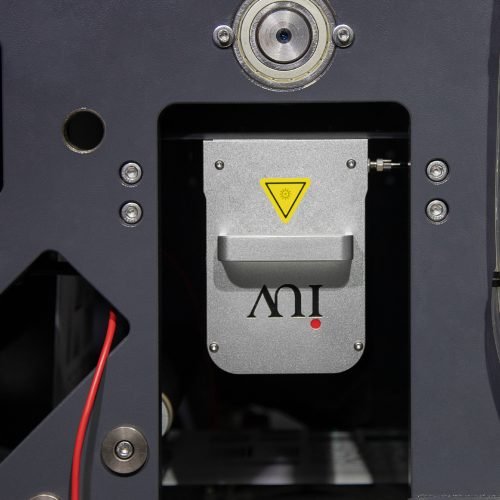
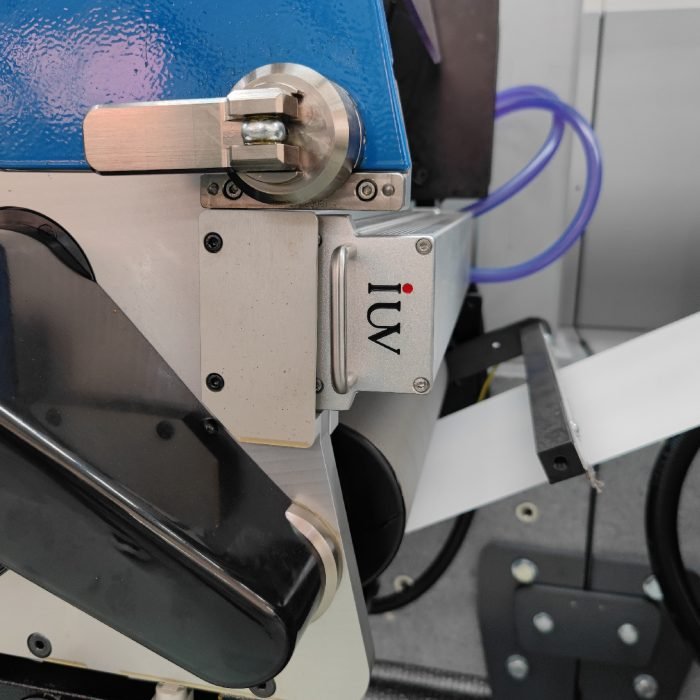
Your flexographic press has delivered years of reliable service. It prints labels, flexible packaging, and cartons. But the market now demands faster turnaround and thinner materials. Conventional UV curing holds you back. The heat distorts films. The lamps consume power. The warm-up time eats into every shift.
LED UV curing changes that. It cools the web. It cuts energy bills. It starts instantly. Yet many printers worry about one thing: speed. Will the retrofit force you to run slower?
It should not. A properly executed LED UV retrofit maintains or increases your existing line speed. Here is the engineering behind that claim and the steps to make it work on your floor.
Assess Your Current Press Configuration
Every press is different. You cannot buy a generic LED system and expect it to perform. Start by mapping your current setup.
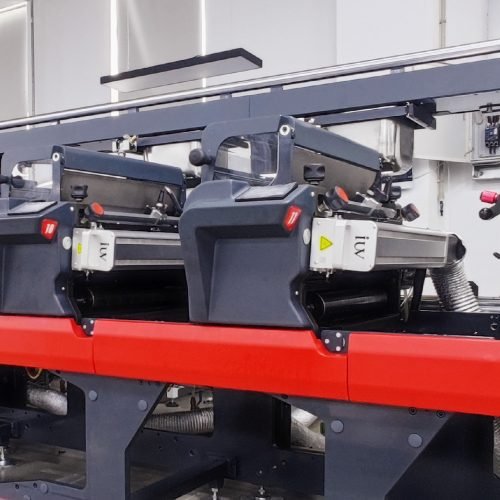
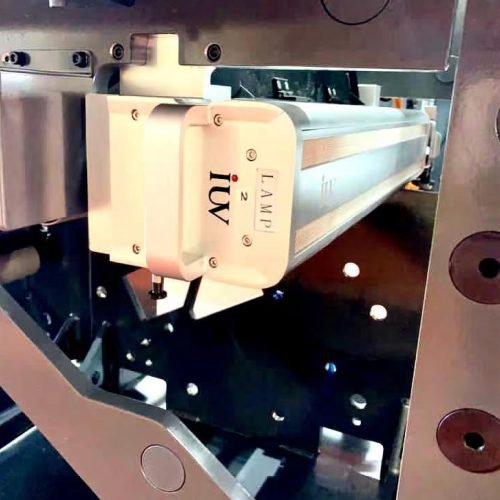
Measure the available space between print stations. LED cassettes vary in length. Some are compact enough to fit where your arc lamps sit now. Others require minor frame modifications. Check your power supply ratings too. LED systems draw less current, but they need clean DC power. Your facility may need new wiring runs.
Also examine your substrate mix. If you run mostly paper, heat is less critical. If you run 12-micron PET or shrink sleeves, heat management becomes your top priority. LED runs cool, but the initial retrofit must account for every material you run.
Select the Correct Spectral Output for Your Inks
LED UV is not a one-size-fits-all light source. Arc lamps emit a broad spectrum. LEDs emit a narrow band. Your inks must match that band.
Standard LED curing uses 395 nm wavelength. This works for most cyan, magenta, yellow, and black inks. But some whites and opaques need 385 nm or even 365 nm for through-cure. Check with your ink supplier before you order hardware. Ask for compatibility data at full production speed.
If you run multiple ink sets, consider a multi-wavelength system. Some newer LED units switch between wavelengths electronically. This allows one lamp house to cure standard process colors and specialty whites without changing hardware. That flexibility keeps changeovers fast.
Verify Peak Irradiance at the Substrate
Speed depends on energy delivery. The lamp head may advertise high power, but what reaches the web?
Look for systems that specify irradiance at the substrate level, not just at the window. You need at least 8 to 12 W/cm² for most label work. Dense coverage or high-opacity whites may require 16 W/cm² or more. If the energy is too low, you slow down to achieve full cure.
Optical design matters here. Some LED arrays use simple reflectors. Others use focused micro-optics to concentrate light onto a narrow band. Focused optics deliver higher peak energy. That translates to faster cure speeds, especially on non-porous films where ink sits on the surface.
Control Heat Without Slowing the Web
Conventional UV lamps cook the substrate. Long runs on thin films require chill drums or increased web tension. Both complicate the process and limit speed.
LED UV emits virtually no infrared. The web stays cool. You eliminate chill rollers for most jobs. You also reduce expansion and contraction in register-sensitive materials. This alone can increase your effective speed because you spend less time chasing registration.
But the LED unit itself generates heat at the diode junction. That heat must be removed. Air-cooled systems are easier to retrofit. They require no water lines or chillers. Just ensure adequate airflow around the lamp heads. If the diodes overheat, they dim. Dimming means slower cure.
Retrofit in Stages to Minimize Downtime
You do not need to convert every station overnight. A phased approach keeps the press running while you integrate new technology.
Start with the stations that cause the most slowdowns. If your white ink station runs slower to avoid heat damage, retrofit that station first. If cold foil adhesive requires extended exposure, start there. LED cures adhesives almost instantly. This alone can lift overall line speed.
For the remaining stations, run a hybrid system. Use LED-compatible inks across the press. Cure some stations with LED and others with your existing arc lamps. This allows side-by-side comparison. You see the speed gain on converted stations while maintaining production on the rest.
Adjust Ink Formulation for High Speed
LED chemistry has evolved. Early LED inks were slow. They required reduced press speeds or multiple lamps. Today’s formulations cure fast.
But you must fine-tune for your specific press. Work with your ink supplier during the first weeks after retrofit. Run speed trials on every common substrate. Check adhesion, rub resistance, and chemical resistance at maximum speed. If a color fails, adjust the photoinitiator package or add a second LED lamp at that station.
Some converters report running 20 percent faster after switching to optimized LED inks. The instant curing allows higher stack heights at the rewind. It also eliminates setoff in the roll. That means fewer rejects and faster overall throughput.
Train Operators on Instant On/Off Efficiency
Your operators know the ritual of arc lamps. Warm up the lamp. Adjust the shutter. Wait for stabilization. That ritual costs minutes on every job start and every web break.
LED eliminates the wait. Operators can stop the press, clear a jam, and restart instantly. There is no cooldown period. There is no re-strike delay. Over a three-shift day, those minutes add up to significant extra production time.
Train your crew to use this feature. Teach them to trust the instant cure. Show them that finished rolls can go straight to slitting without off-gassing or blocking. Once they see the workflow change, they will push for full conversion on all stations.
Monitor Cure Consistency with Inline Tools
Speed is only valuable if quality holds. LED output degrades slowly over time, but you may not notice until jobs fail.
Install a radiometer that reads through the running web. Some LED systems include built-in dose monitoring. These sensors measure energy at the substrate for every meter of material. If output drops below the cure threshold, the system alerts you before bad product reaches the rewind.
This is especially important for critical end uses like food labels or medical devices. Inline monitoring gives you confidence to run at maximum speed without spot checks every roll.
Calculate the Speed ROI
A retrofit costs money. But the speed gains pay back quickly.
Faster curing means shorter job times. Shorter job times mean more jobs per shift. More jobs per shift mean higher revenue from the same asset. Add the energy savings from LED, and the math becomes clear.Many converters see full payback within 18 to 24 months. After that, the speed advantage becomes pure profit. Your old press now outperforms newer models that still rely on arc technology.Retrofitting is not about keeping up. It is about running ahead of competitors who hesitate to change.