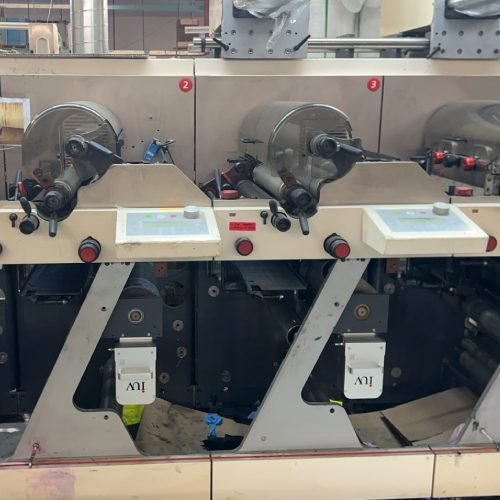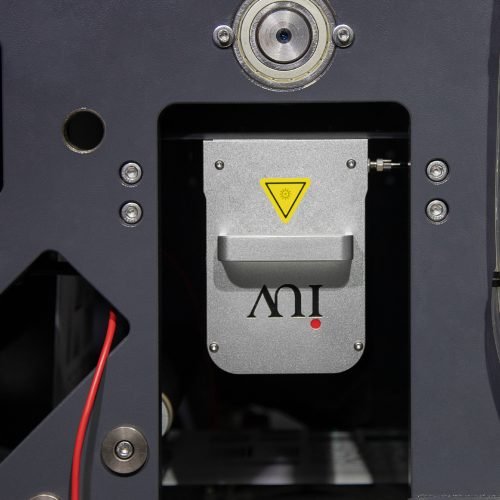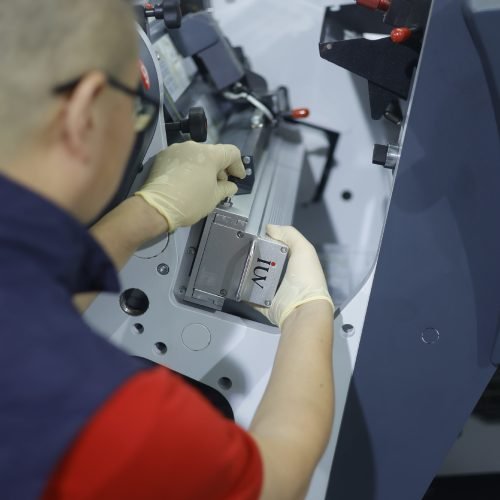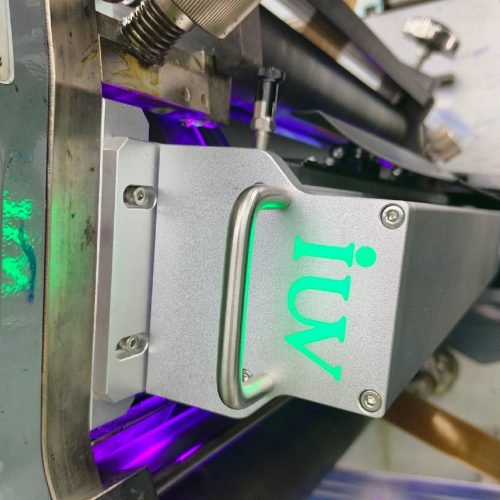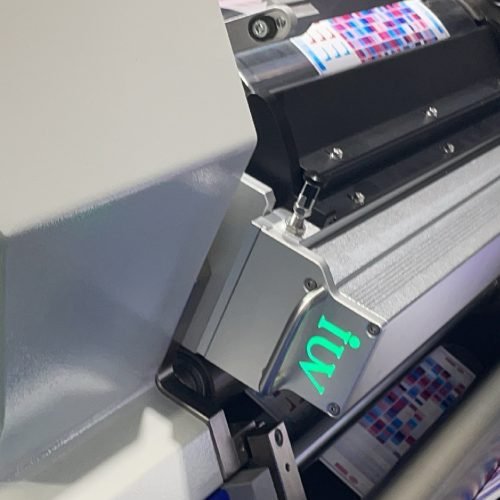
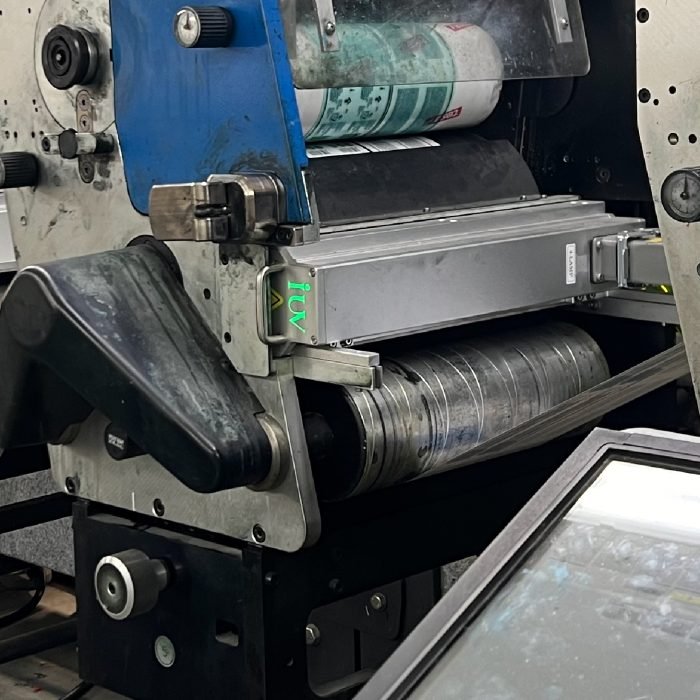
In high-speed label printing, UV curing ensures ink performance, adhesion, and durability. The shift to LED curing brings energy efficiency and longer lamp life, but validation remains essential. This article outlines practical steps to assess UV curing performance across label printing, flexo, gravure, and narrow-width processes. It covers UV chemistry, measurement methods, and process-specific checks to support reliable production.
UV Curing Fundamentals for Labels
UV curing relies on photoinitiators in ink formulations reacting to light. The result is rapid polymerization and cross-linking that lock color and finish. LED systems provide targeted wavelengths and cooler operation than traditional mercury lamps. For label work, the key factors are spectral match to photoinitiators, irradiance at the ink surface, dose per pass, and cure stability under web speed. Ink chemistry must align with substrate, surface energy, and post-process handling. Poor match or mis-tuned dose leads to undercure, overcure, or surface defects such as gloss loss or tackiness.
Measurement Parameters to Validate
Dose is the primary metric. It equals irradiance (power per area) times exposure time. On a moving web, exposure time depends on web speed and lamp length or dwell time under the lamp bank. A consistent curing window is critical across the full web width. Other important metrics include surface cure (top-surface hardness and resistance), through-cure (cross-linking into the ink layer), and adhesion to the substrate. Visual indicators like gloss, color consistency, and tackiness provide quick cues, while instrumental tests quantify performance.
Test Equipment and Setup
Use a calibrated UV radiometer or spectrally matched sensor to measure irradiance at the ink surface. Place sensors at representative positions across the web width and at multiple along-run locations. For LED curing, verify the spectral match to the photoinitiator system in the ink. Record lamp age, power settings, and any optical losses from shields or cooling paths. Maintain consistent ambient conditions, including substrate temperature, humidity, and press speed. Use test forms with color swatches, solids, and varnish layers to reveal cure gaps and finish variations.
Key test variables include:
- Web speed and dwell time under the lamp
- Lamp irradiance and spectral output
- Distance from lamp to ink surface (arc gap) and any diffuser effects
- Ink formulation and substrate surface energy
- Environmental conditions and substrate flatness
Dose calculation is essential. For a given speed and lamp configuration, compute the dose as irradiance times the exposure time per unit area. If the press runs at multiple speeds, perform dose checks at representative speeds to map the cure window.
Process-Specific Validation: Flexo, Gravure, Narrow-Web
Label Printing Context
Label printing combines variable artwork with robust ink films. In flexo and gravure, ink transfer and dot structure influence cure performance. Solid areas require sufficient dose to achieve full cure, while halftones demand uniform cure across tone values. Narrow-web configurations stress uniformity across a narrow web and may reveal edge effects.
Flexo Printing
- Ink transfer and surface energy interact with cure. Adequate coverage on the anilox cell is necessary to avoid lean areas that under-cure.
- Check for dot gains that shift color and create cure inconsistencies. Measure across the web width and along the run.
- Validate cure through samples with dense solids and gradients. Use a gloss meter and a cross-cut test to detect over- or under-cure that affects adhesion.
- Monitor lamp-to-substrate distance and press speed. Small changes can shift dose enough to impact performance.
Gravure Printing
- Gravure lays down ink with precise thickness; cure must penetrate the layer evenly.
- Due to thin ink films, even small dose variations can cause under-cure or surface tack. Conduct tests with representative line counts and solid areas.
- Use pinhole checks and solvent rub tests to reveal incomplete cure. Map dose across width to identify any shading or nonuniformity.
- Ensure illumination is uniform across the gravure cell pattern. Calibrate lamp geometry and shields to minimize obstructions.
Narrow-Web Printing
- Narrow webs demand tight control of dose uniformity across a small width. Edge effects and warping can be more pronounced.
- Validate with narrow test strips and color bars that reveal both surface cure and through-c cure.
- Confirm that the LED output maintains consistency from shoulder to center of the web. Use fast, repeatable measurements at multiple points.
- Consider heat management in compact lamp housings. Excess heat can affect ink rheology and cure kinetics.
LED Curing Considerations
LED systems offer advantages but require careful tuning for each ink and substrate combination. Important aspects include:
- Spectral match: Ensure the LED wavelength aligns with the photoinitiator system in the ink. Some inks need multi-wand or multi-peak LEDs for complete cure.
- Intensity uniformity: A consistent irradiance map across the lamp and the web is essential. Diffusers and optics should minimize hot spots.
- Ink chemistry compatibility: Some inks may cure too quickly or generate surface micro-roughness if formulators use aggressive photoinitiators.
- Heat management: Even with cooler LEDs, sustained operation can heat the resin layer or substrate, altering varnish tack and cure behavior.
- Lens and window losses: Any protective window or optical element reduces dose. Regular cleaning and inspection are needed.
Validation Protocol: Step-by-Step
1) Define targets: establish acceptable cure criteria for each ink system, substrate, and print job. Include surface tack, adhesion, and appearance targets.
2) Baseline measurements: validate new ink/LED configurations against a known good recipe. Record press settings, speed, and environmental conditions.
3) Reference test form: create a panel with color bars, solids, gradients, and a cross-hatch pattern. Use forms that reveal tack and adhesion issues.
4) Dose mapping: measure irradiance at multiple points across the web width. Compute dose for each speed setting used on press.
5) Run-in tests: print the reference form at several speeds and capture data on surface cure, through-cure, and adhesion. Mark any regions of concern.
6) Instrument validation: verify radiometer calibration against a traceable standard. Confirm the sensor’s spectral response matches the ink photoinitiators.
7) Visual and instrumental checks: use gloss measurements, pencil hardness tests, solvent rub tests, and cross-cut adhesion. Compare with acceptance criteria.
8) Data analysis: plot dose versus cure indicators. Look for a flat, stable cure region across speeds and positions. Identify the minimum dose for full cure and the maximum allowable dose before overcure.
9) Process optimization: adjust lamp intensity, speed, ink formulation, or substrate surface energy to expand the cure window. Re-run validation after each change.
10) Documentation: maintain a clear record of conditions, measurements, and outcomes. Include environmental data, equipment IDs, and maintenance notes.
Data Analysis and Reporting
Translate measurements into actionable guidance. Report should cover:
- Dose maps across width and along the run
- Visual inspection results with quantitative notes
- Adhesion, hardness, and solvent resistance results
- Any observed color shifts or gloss changes
- Recommendations for ink formulations or lamp settings
- A clear summary of the cure window for the specified press and substrate
Troubleshooting Common Issues
- Undercure: look for low dose, slow ink drying, or weak through-cure. Remedy by increasing irradiance, extending dwell time, or adjusting ink chemistry.
- Overcure: signs include excessive film hardness, brittleness, or yellowing. Solutions include reducing dose, adjusting photoinitiator concentration, or changing substrate surface energy to slower cure.
- Tackiness: surface remains sticky due to insufficient cross-linking at the outer layer. Increase dose modestly or adjust post-cure handling.
- Edge nonuniformity: verify lamp uniformity and check for shading near ends. Rebalance lamp-to- web distance and clean optical paths.
- Color and gloss shifts: confirm spectral match and dose distribution. Revisit ink colorants and finish formulations.
Practical Tips for High-Speed Production
- Start with a robust cure window rather than a single target dose. Prefer a conservative approach that tolerates minor speed variations.
- Calibrate sensors regularly and align measurement geometry to printing positions that matter for your workflow.
- Build a routine for lamp maintenance, window cleaning, and diffuser checks to minimize dose drift.
- Use test runs on representative substrates rather than relying on blanket recommendations from other presses.
- Document how process changes affect performance to enable quick diagnosis in future jobs.
Conclusion
Validating UV curing performance in high-speed label printing integrates knowledge of ink chemistry, substrate behavior, and UV illumination. Whether using flexo, gravure, or narrow-web processes, a structured validation protocol reveals cure adequacy, helps prevent defects, and supports stable production. With LED curing, attention to spectral match, dose control, and uniformity becomes even more critical. A disciplined approach—combining measurements, functional tests, and process optimization—delivers consistent label quality, stronger adhesion, and longer press life.