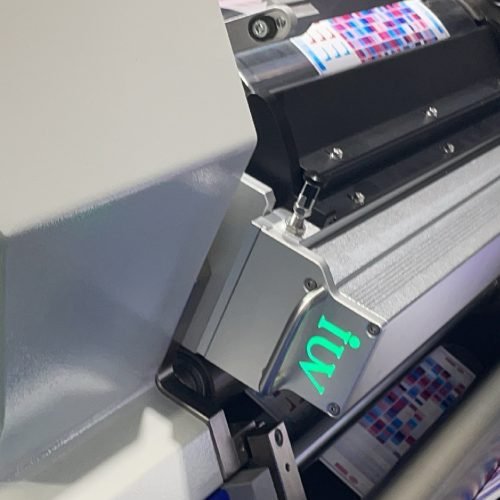
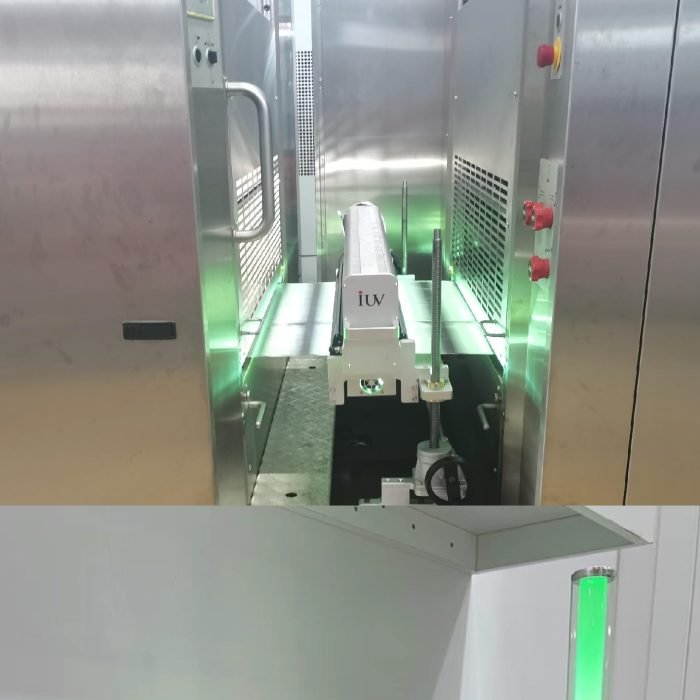
In the high-stakes world of narrow-web label printing, achieving consistent color density is the hallmark of quality. Brand owners demand perfect color matching across every batch. However, achieving this consistency involves more than just mixing the right ink or choosing a high-quality substrate. The UV curing process serves as a critical variable that can either stabilize or sabotage your color management efforts. Understanding the physics behind UV and LED curing helps engineers and press operators maintain tighter control over their output.
The Science of UV Curing and Ink Chemistry
UV curing is a photochemical process rather than a thermal drying one. When UV-sensitive inks are exposed to high-intensity ultraviolet light, photoinitiators within the ink absorb the energy. This triggers a cross-linking reaction that turns liquid ink into a solid film in milliseconds.
In label printing, particularly in flexo and offset processes, the speed of this reaction directly impacts the final appearance of the color. If the curing is incomplete, the ink film might remain slightly mobile, leading to “dry-back” effects. This phenomenon causes the color density to shift as the ink settles into the substrate. Conversely, over-curing can lead to brittleness or yellowing, which alters the spectral values of the printed image.
How UV Intensity Influences Pigment Perception
Color density is essentially a measurement of how much light a printed surface reflects. In UV printing, the density you see on the press is heavily influenced by the “cure through” efficiency.
High-density inks, such as deep blacks or opaque whites, contain high concentrations of pigments. These pigments are excellent at absorbing or scattering light, which unfortunately includes the UV light meant for curing. If the UV intensity is insufficient to penetrate the entire ink layer, the bottom of the ink film remains tacky. This creates a “skinning” effect where the top is hard but the base is soft. This structural instability causes light to refract differently, often resulting in a duller, less saturated color than intended.
For narrow-web flexo printing, managing the balance between anilox roll volume and UV lamp output is vital. A higher volume anilox increases ink film thickness. To maintain color density at these higher volumes, the UV curing system must provide enough “dose” (total energy) to reach the substrate-ink interface.
Narrow-Web Flexo vs. Offset: Curing Challenges
Flexographic and offset printing handle ink delivery differently, which changes how UV curing affects color density.
In UV offset printing, the ink film is significantly thinner than in flexo. Because the film is thin, UV light penetrates more easily. However, offset inks are highly viscous and sensitive to temperature. The heat generated by traditional mercury vapor lamps can lower the ink’s viscosity on the press, leading to “dot gain.” Increased dot gain naturally increases the measured color density, often making the print look darker or muddier.
In narrow-web flexographic printing, the ink film is thicker and the pigments are often more aggressive. Here, the challenge lies in oxygen inhibition. Oxygen in the air can interfere with the curing of the very top layer of the ink. If this layer doesn’t cure properly, the surface remains “open,” affecting the gloss levels. Since gloss and perceived density are linked, a drop in gloss often looks like a drop in color density to the naked eye.
The Shift to LED UV Curing Technology
The industry is rapidly moving toward LED UV curing, and for good reason. Traditional mercury lamps emit a broad spectrum of light, including infrared (heat). LED systems emit light in a narrow, specific wavelength, usually 365nm or 395nm.
From a color control perspective, LED UV offers two major advantages:
- Spectral Consistency: Mercury lamps degrade over time. As the bulb ages, its spectral output shifts and its intensity drops. This means your cure becomes less efficient, and your color density may drift over a long production run. LEDs maintain a stable output for tens of thousands of hours, ensuring that the cure you get at hour one is the same as hour five thousand.
- Thermal Management: Because LEDs do not emit infrared radiation, the substrate stays cool. Heat-sensitive films used in label printing can shrink or stretch when exposed to hot mercury lamps. Even a microscopic change in the substrate’s dimensions can throw off registration and change how the ink dots sit on the surface, directly impacting color density and sharpness.
Substrate Interaction and Absorption
The type of material you are printing on—whether it is paper, PE, PP, or PET—dictates how UV light interacts with the ink. On porous substrates, a slower curing speed allows the ink to “sink” into the fibers before it solidifies. This usually results in a lower color density.
A high-performance UV system allows for “pinning.” UV pinning involves a low-intensity light source placed immediately after the print station to “freeze” the ink dot in place. This prevents the ink from spreading or soaking into the substrate. By pinning the ink, you maintain the maximum possible dot height and surface area, which maximizes color density and sharpens the detail in narrow-web applications.
Managing the “Yellowing” Effect
One of the most common issues in UV curing is the yellowing of the varnish or the ink vehicle. This is particularly noticeable in white labels or light pastel colors. Yellowing occurs when photoinitiators are over-exposed or when the UV wavelength is too short.
When an engineer optimizes a press for color density, they must account for this potential shift. If the UV lamps are running at 100% power for a job that only requires 50%, the excess energy can chemically “scorch” the photoinitiators, leaving a yellow tint. This shift can move your Delta E (color deviation) outside of the acceptable range for demanding clients. Tuning the power output to match the press speed and ink load is a fundamental step in professional color management.
Ink Film Thickness and Cure Rate
There is a non-linear relationship between ink film thickness and the energy required to cure it. In label printing, if you want to increase color density by increasing ink volume, you cannot simply increase the UV power linearly.
As the ink layer thickens, the “shading” effect of the pigment increases exponentially. For instance, doubling the ink thickness might require triple the UV energy to achieve the same degree of polymerization at the base. Engineers must use a densitometer to check the density and a tape test or rub test to check the cure. If the density is high but the cure is poor, the ink will eventually flake off, or the color will change during the finishing process (lamination or die-cutting).
Practical Steps for Press Operators
To maintain perfect color density through the UV curing process, follow these technical protocols:
- Monitor Lamp Hours: Track the age of mercury bulbs. Replace them before they reach the end of their rated life to avoid “drift” in curing efficiency.
- Reflector Maintenance: In mercury systems, the reflectors do 80% of the work. Dirty reflectors scatter light, reducing the intensity that reaches the web and causing inconsistent density across the width of the press.
- Calibrate LED Chill Plates: If using LED, ensure your cooling system is consistent. Overheating LEDs will reduce their intensity, leading to a drop in curing power and a potential shift in color.
- Sync Power to Speed: Ensure your UV system is integrated with the press drive. If the press slows down but the lamps stay at full power, you risk over-curing and yellowing. If the press speeds up and the lamps don’t respond, you get under-curing and dry-back.
The Role of Photoinitiator Tuning
Modern ink chemistry allows for “tuned” inks that react specifically to certain UV wavelengths. When matching a color for a specific narrow-web job, ensure the ink’s photoinitiator package matches your curing system’s output. Using an ink designed for mercury lamps under an LED array will result in poor curing and unstable color density. The mismatch in energy absorption means the pigments will not be properly “locked” into the polymer matrix, causing the color to look washed out or inconsistent.
Final Thoughts on Process Stability
Color density control in label printing is not just about the ink kitchen; it is about the physics of the entire press line. The UV curing system is the final gatekeeper of color quality. By controlling the intensity, managing the heat, and ensuring the wavelength matches the chemistry, printing plants can achieve remarkable consistency. Whether you are running flexo or offset, the goal remains the same: a stable, fully polymerized ink film that reflects the exact color the brand owner expects. Understanding these variables allows engineers to troubleshoot issues before they result in wasted material or rejected jobs.