Here’s an article tailored for “Innovative UV LED Curing Solutions for High-Speed Label Production,” written from the perspective of a printing equipment and process engineer with SEO expertise:
The demand for efficient, high-quality label production continues to escalate. Manufacturers across various sectors require labels that are not only visually appealing but also durable and produced at remarkable speeds. This presents a significant challenge for traditional printing methods and curing technologies. Fortunately, the advent of innovative UV LED curing solutions is revolutionizing high-speed label production, offering substantial benefits for printers focused on narrow-web applications.
The Evolution of Curing in Narrow-Web Printing
For decades, heat-set and UV arc lamp curing have been the staples in label printing. Heat-set relies on thermal energy to evaporate solvents, a process that can be energy-intensive and introduce potential substrate distortion. UV arc lamps, while faster, generate considerable heat and ozone, requiring extensive ventilation and cooling systems. These older technologies often struggled to keep pace with the increasing speeds demanded by modern label presses. Furthermore, the broad spectrum of UV light emitted by arc lamps can sometimes lead to unwanted substrate effects or premature ink degradation.
The limitations of these legacy systems paved the way for a new generation of curing technology: UV LED. This technology utilizes light-emitting diodes to generate UV light at specific wavelengths. This targeted approach offers a level of control and efficiency previously unattainable in narrow-web printing.
Understanding UV LED Curing Technology
At its core, UV LED curing involves exposing inks, coatings, or adhesives to ultraviolet light, causing them to instantly polymerize or “cure.” Unlike traditional UV arc lamps, UV LEDs emit light in a narrow spectral band, typically centered around specific wavelengths like 365 nm, 385 nm, 395 nm, or 405 nm. This precise wavelength emission is critical for efficient curing.
The process relies on photoinitiators within the ink or coating formulation. When these photoinitiators absorb UV light of the correct wavelength, they generate free radicals or cations. These reactive species then initiate a rapid chain reaction, cross-linking the ink or coating molecules to form a solid, durable film. This instant polymerization is what allows for high-speed printing, as the ink is dry and ready for the next process step immediately after exposure.
Advantages of UV LED Curing for High-Speed Label Production
The integration of UV LED curing systems into narrow-web presses offers a compelling suite of advantages, directly addressing the needs of high-volume label manufacturers:
- Exceptional Energy Efficiency: UV LED systems consume significantly less power compared to traditional UV arc lamps. Because they only emit light at the required wavelengths and can be turned on and off instantly, energy wastage is minimized. This translates to lower operational costs and a reduced environmental footprint, which are increasingly important considerations for businesses.
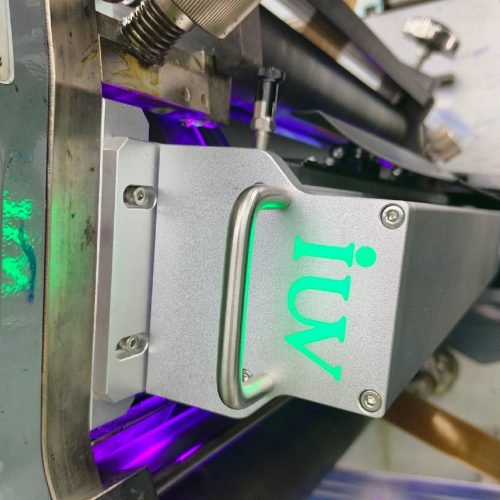
- Reduced Heat Transfer: A key benefit of UV LED curing is its significantly lower heat output. While arc lamps radiate heat in all directions, LEDs are highly directional and emit very little infrared radiation. This is particularly advantageous when printing on heat-sensitive substrates like thin films or certain plastics commonly used in label applications. Reduced heat means less risk of substrate deformation, bubbling, or shrinkage, leading to higher quality finished labels.
- Instant On/Off Capability: UV LEDs can be switched on and off instantaneously. This is invaluable on modern presses that frequently start and stop. There’s no warm-up or cool-down period required, meaning no wasted time or energy during job changes or brief interruptions. This contributes directly to increased press uptime and overall productivity.
- Longer Lamp Lifespan: UV LED modules boast a considerably longer operational lifespan than UV arc lamps, often lasting tens of thousands of hours. This reduces maintenance costs, minimizes downtime associated with lamp replacement, and ensures consistent curing performance over extended periods.
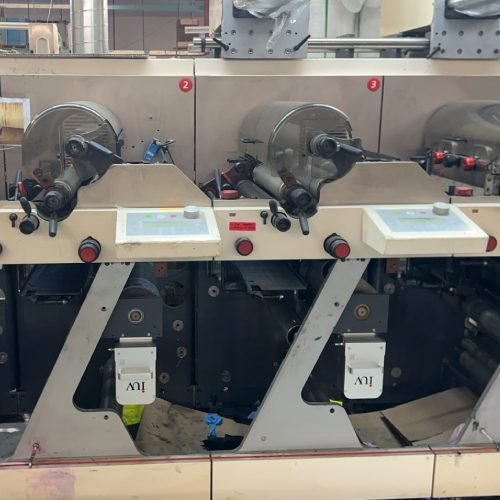
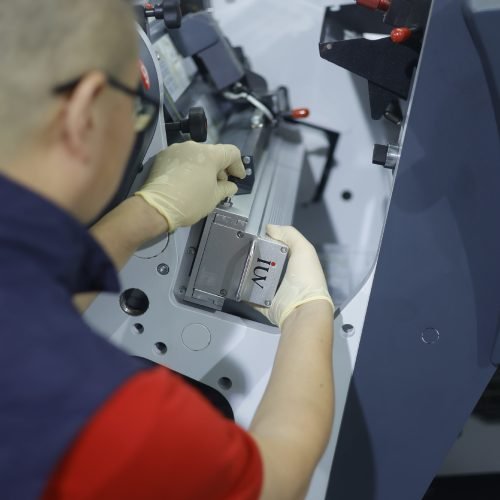
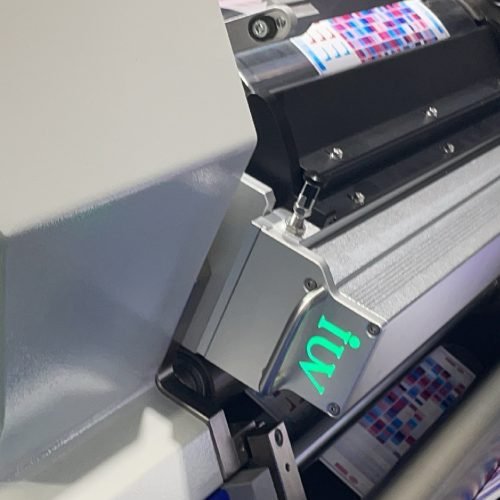
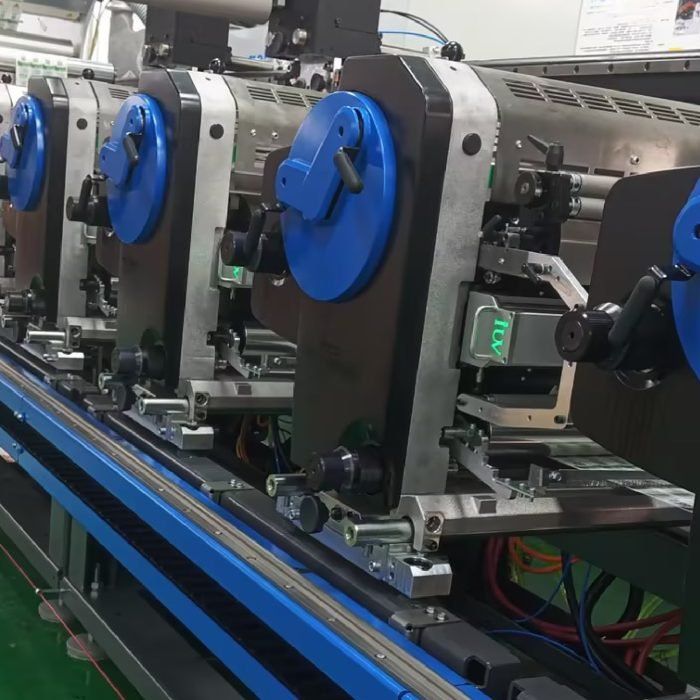
- Compact Design and Integration: The modular nature of UV LED systems allows for easier integration into existing or new narrow-web presses. Their smaller size and lower heat output simplify installation and reduce the need for extensive exhaust and cooling infrastructure typically required for arc lamps. This makes them an attractive retrofit option for older presses.
- Wavelength Specificity for Optimized Curing: As mentioned, UV LEDs emit light at specific wavelengths. This allows formulators to develop inks and coatings with photoinitiators precisely matched to these wavelengths. This targeted approach ensures efficient and thorough curing, leading to superior ink adhesion, scratch resistance, and chemical resistance – all critical for label durability.
- Mercury-Free Operation: Unlike traditional UV arc lamps, UV LEDs do not contain mercury. This makes them an environmentally friendlier option and simplifies disposal processes, aligning with sustainability goals.
Applications in Key Printing Technologies
UV LED curing is highly compatible with the primary printing technologies used in narrow-web label production:
- Flexographic Printing (Flexo): Flexography is a dominant force in label printing due to its versatility and speed. UV LED curing integrates seamlessly into flexo presses, allowing for instant curing of inks and coatings between printing stations. This enables multi-color jobs with tight registration and vibrant finishes, even at the highest press speeds. The ability to cure quickly prevents ink transfer between blankets or anilox rolls and allows for immediate finishing processes like die-cutting or slitting.
- Offset Printing (Lithography): For labels requiring exceptionally fine detail and consistent color reproduction, offset printing is often preferred. UV LED curing enhances offset capabilities by providing immediate drying of inks and coatings. This is crucial for managing ink laydown on the substrate and preventing smudging, especially in high-speed web offset label presses. The low heat transfer is also beneficial for offset’s often complex ink trains and paper substrates.
- Digital Printing: While not as widely adopted as flexo or offset for high-volume, short-run labels, digital printing is growing. UV LED curing is the standard for most UV inkjet label printers. It enables instant drying of inkjet droplets on a wide range of substrates, from paper to plastic films, at high speeds. This allows for variable data printing, on-demand production, and rapid turnaround times without compromising print quality or durability.
Considerations for Implementing UV LED Curing
While the benefits are substantial, successful implementation of UV LED curing requires careful consideration:
- Ink and Coating Formulation: The inks, coatings, and adhesives must be specifically formulated for UV LED curing. This involves using photoinitiators that are sensitive to the specific wavelengths emitted by the chosen LED system. Working closely with ink manufacturers is essential to ensure compatibility and achieve optimal curing performance.
- Wavelength Selection: The choice of LED wavelength (e.g., 365nm, 395nm) depends on the ink formulation and desired curing characteristics. Different wavelengths penetrate different ink layers to varying degrees. A thorough understanding of ink chemistry and LED spectral output is needed to select the most appropriate system.
- Irradiance and Dose: Effective curing depends on both the intensity of the UV light (irradiance, measured in W/cm²) and the total energy delivered (dose, measured in mJ/cm²). The press speed, lamp power, and exposure time all contribute to the delivered dose. Proper setup ensures that the ink receives sufficient energy to cure completely.
- Substrate Compatibility: While UV LED curing is generally gentle on substrates, it’s still important to consider the specific material. The ability of the substrate to withstand the printing process and the specific UV exposure should be evaluated.
- Press Integration: Whether retrofitting an existing press or specifying a new one, careful planning is needed for the physical integration of the LED curing units. This includes considering power requirements, cooling (though significantly less than arc lamps), and air flow around the curing zone.
The Future is Bright with UV LED
Innovative UV LED curing solutions are not just an incremental improvement; they represent a fundamental shift in how labels are produced. For narrow-web printers focused on speed, efficiency, and quality, the advantages are undeniable. From significant cost savings through energy efficiency and reduced maintenance to enhanced print quality and environmental benefits, UV LED technology empowers label manufacturers to meet and exceed the demands of today’s dynamic market. As the technology continues to advance, we can expect even more specialized solutions and wider adoption across all label printing applications.