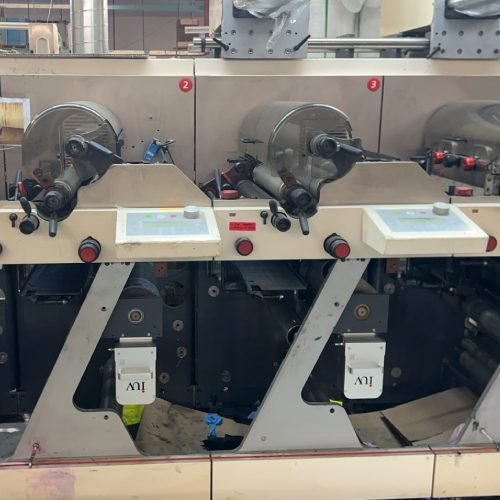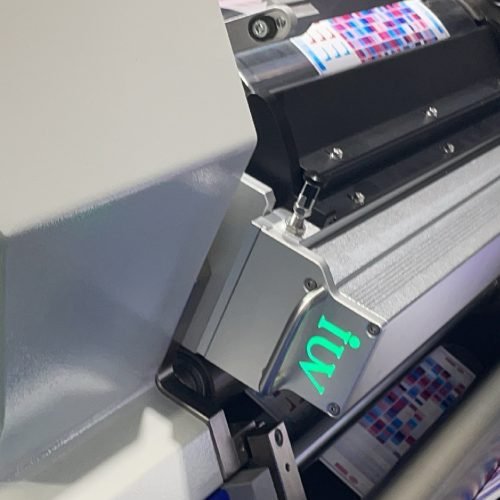
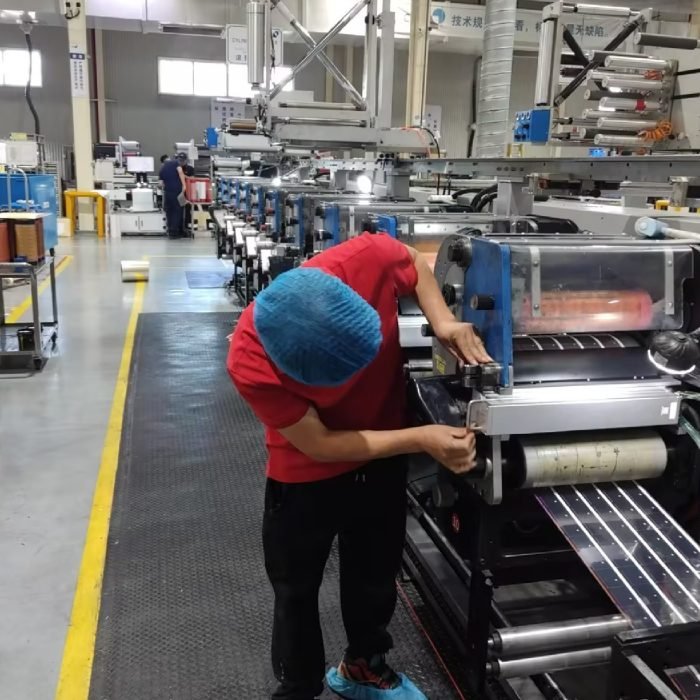
In high-speed narrow web label production, achieving consistent depth of cure is a decisive factor for print durability, adhesion, and visual quality. This challenge becomes more complex in hybrid printing lines that combine rotary screen and flexographic units. Thick ink deposits from rotary screen printing, combined with fine halftone flexo layers, create non-uniform film geometries that are highly sensitive to LED UV curing conditions. Shadowing effects, caused by ink topography, screen mesh structures, and mechanical clearances, often limit UV penetration and lead to undercured layers beneath the surface. Optimizing depth of cure in this environment requires a precise understanding of LED UV optics, energy delivery, ink chemistry, and press configuration.
Understanding Shadowing Effects in Rotary Screen and Flexo Hybrid Processes
Shadowing occurs when parts of the printed ink film block or attenuate UV radiation, preventing sufficient energy from reaching lower layers. In rotary screen printing, ink is transferred through a cylindrical mesh, resulting in raised ink profiles with steep edges. These profiles can shield adjacent areas from direct UV exposure, especially when LED UV sources are mounted at fixed angles. In flexo units, anilox volume, plate relief, and dot structure further influence how light interacts with the ink surface. When both processes are combined on a narrow web press, shadowing becomes cumulative, increasing the risk of incomplete polymerization in deeper regions of the ink layer.
LED UV vs Mercury UV in Depth of Cure Applications
Traditional mercury UV systems emit a broad spectrum of wavelengths, including UVB and UVC, which can penetrate deeper into thick ink films. LED UV systems, by contrast, operate at narrow wavelength bands such as 365 nm, 385 nm, 395 nm, or 405 nm. While LED UV offers higher efficiency, lower heat, and longer service life, its depth of cure depends heavily on photoinitiator selection and optical design. In hybrid printing, this spectral specificity means that shadowed zones are less forgiving, making system optimization essential rather than optional.
Ink Film Thickness and Its Impact on UV Penetration
Rotary screen inks are often applied at thicknesses several times greater than flexo inks. High-opacity whites, tactile varnishes, and functional coatings amplify this effect. As ink thickness increases, UV light intensity decays exponentially within the film. Shadowed regions experience even lower effective irradiance, leading to surface cure without full through-cure. This condition may pass immediate handling tests but fail during die-cutting, rewinding, or long-term use. Controlling ink laydown through screen mesh selection, squeegee pressure, and flexo anilox volume is a foundational step toward improving depth of cure.
Optical Geometry and Lamp Positioning in Narrow Web Presses
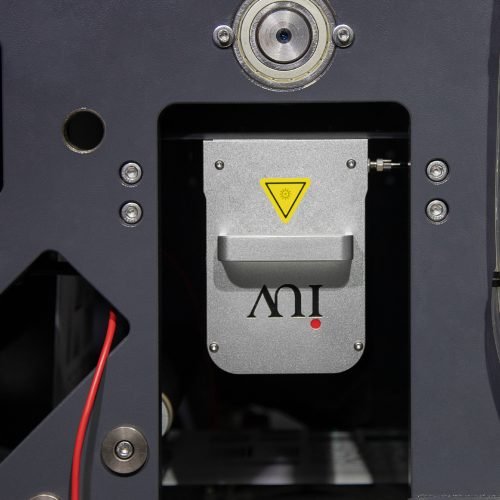
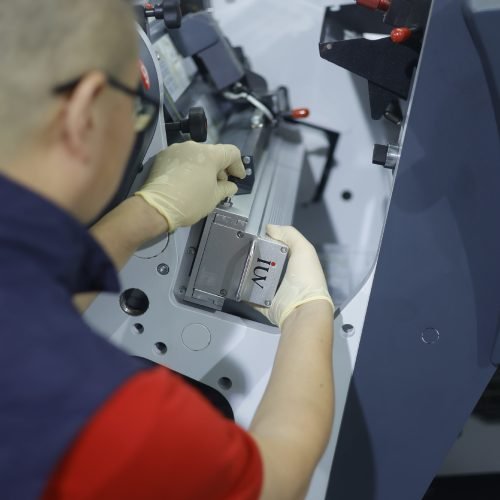
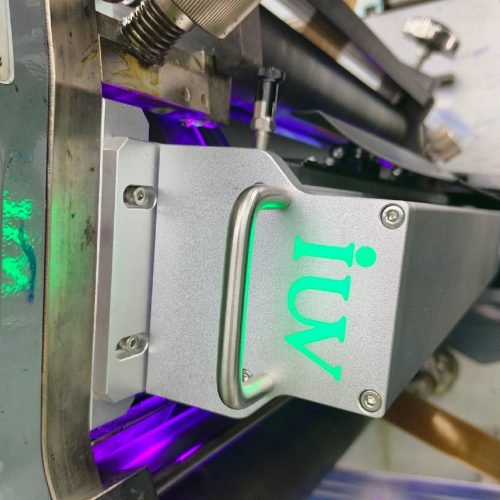
The physical placement of LED UV lamps plays a critical role in mitigating shadowing. Unlike mercury lamps, LED UV heads produce a directional beam. If the beam angle is too narrow or misaligned with the ink topography, shaded areas remain underexposed. In hybrid presses, staggered lamp positioning between rotary screen and flexo stations can improve angular coverage. Some converters achieve better results by using multiple LED UV heads with overlapping beam profiles, ensuring that light reaches ink valleys from different directions.
Beam Profile Optimization for Thick and Textured Inks
Uniform irradiance across the web is not sufficient when dealing with textured ink surfaces. Beam profile shape must be optimized to balance peak intensity and lateral spread. A flat-top beam profile can deliver consistent energy across raised ink features, while excessive hot spots may overcure surfaces without improving depth of cure. Advanced optical lenses designed for narrow web LED UV systems can widen the effective curing window, reducing sensitivity to shadowing caused by screen patterns or flexo dot edges.
Photoinitiator Strategy for Hybrid LED UV Curing
Ink formulation is a decisive factor in overcoming shadowing effects. Photoinitiators with higher absorption efficiency at LED UV wavelengths improve radical generation deeper in the ink film. In rotary screen inks, combining surface-reactive and through-cure photoinitiators can balance fast surface set with sufficient internal polymerization. For flexo inks overprinted on screen layers, compatibility between ink systems is essential to prevent interlayer inhibition. Close collaboration with ink suppliers is often required to tailor formulations for hybrid LED UV curing environments.
Inter-station Curing and Partial Cure Control
In hybrid presses, inter-station LED UV curing must be carefully controlled to avoid premature full cure. Partial curing, often referred to as pinning, stabilizes ink layers without locking out subsequent UV penetration. For rotary screen units, controlled pinning prevents ink flow while maintaining sufficient reactivity for final cure. Excessive inter-station irradiance increases shadowing risks by creating a hard surface skin that blocks deeper curing. Adjustable power settings and precise dose measurement are critical tools in this balancing act.
Web Speed and Exposure Time Considerations
High-speed narrow web label production reduces exposure time under each LED UV lamp. When combined with thick ink films and shadowing effects, this reduced dwell time can compromise depth of cure. Increasing lamp power alone is not always effective, as it may exacerbate surface overcure. Optimizing web speed in relation to ink thickness, lamp spacing, and optical efficiency often yields better results than relying on maximum irradiance.
Thermal Management and Its Indirect Effect on Cure Depth
LED UV systems generate less radiant heat than mercury lamps, but thermal conditions still influence polymerization kinetics. Moderate substrate and ink temperatures can improve molecular mobility, supporting deeper cure. In hybrid printing, excessive cooling between stations may reduce this benefit. Controlled thermal management, without risking substrate distortion, contributes to more uniform curing through thick ink layers.
Measuring and Verifying Depth of Cure in Production
Surface tack tests alone are insufficient for evaluating depth of cure in hybrid LED UV printing. Advanced methods such as solvent rub resistance, cross-hatch adhesion testing, and microtome cross-section analysis provide deeper insight into polymerization quality. UV radiometers designed for LED wavelengths help verify delivered dose, but results must be interpreted in the context of ink geometry and shadowing. Consistent measurement protocols enable reliable process optimization over time.
Best Practices for Overcoming Shadowing in Hybrid LED UV Printing
Successful depth of cure optimization in rotary screen and flexo hybrid printing relies on a system-level approach. Ink formulation, optical design, lamp positioning, and process parameters must be aligned. Incremental adjustments, supported by measurement and testing, deliver more stable results than isolated changes. As LED UV technology continues to evolve, converters who understand and manage shadowing effects gain a clear advantage in print quality, production efficiency, and long-term reliability.
Conclusion: Building a Stable LED UV Cure Window for Hybrid Label Lines
Optimizing depth of cure in LED UV rotary screen and flexo hybrid printing is a technical challenge rooted in physics, chemistry, and press mechanics. Shadowing effects cannot be eliminated entirely, but they can be controlled through informed system design and disciplined process management. By aligning optics, ink chemistry, and curing strategy with the realities of thick ink films and high-speed narrow web production, printers can achieve consistent cure performance without sacrificing productivity. This approach ensures that LED UV technology delivers its full value in modern label printing environments.