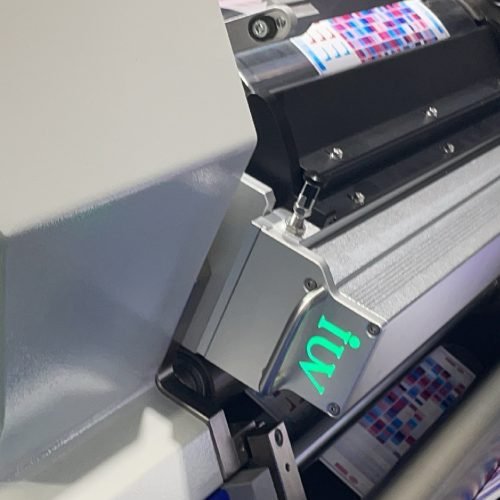
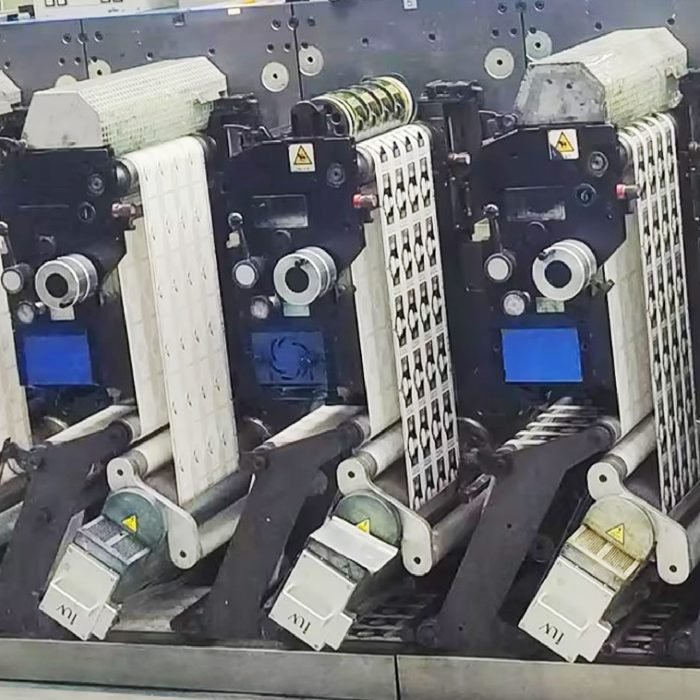
Long-run label jobs place very different demands on curing systems than short or variable work. When a press runs continuously for hours or days, even small fluctuations in curing output can accumulate into visible defects, color drift, adhesion loss, or post-finishing failures. In narrow web label printing, where flexo, offset, and hybrid presses are expected to maintain tight tolerances over extended runs, curing stability becomes a decisive factor in overall process control.
For decades, mercury UV lamps have been the standard curing solution for long-run production. Their performance is well understood, but their limitations become more apparent as run lengths increase. LED UV curing systems, designed around solid-state light sources, offer a fundamentally different stability profile. A direct comparison of output behavior over time reveals how these differences affect print quality, waste levels, and press efficiency in long-run label applications.
Understanding Output Stability in UV Curing Systems
Output stability refers to the ability of a curing system to deliver consistent irradiance and dose over time under constant operating conditions. In practical terms, this means maintaining the same curing energy at the ink surface from the first label to the last without requiring operator intervention.
In narrow web printing, output stability directly affects ink polymerization, coating hardness, adhesion to substrates, and resistance to abrasion or chemicals. When output fluctuates, printers often compensate by adjusting speed, lamp power, or ink formulation. These adjustments introduce variability and increase the risk of inconsistency during long runs.
Mercury Lamp Behavior During Extended Production
Traditional mercury lamps rely on an electrical arc passing through vaporized mercury to generate UV radiation. This process is inherently sensitive to temperature, electrode condition, and reflector cleanliness. As a lamp heats up during operation, its spectral output and intensity change until it reaches a thermal equilibrium. Even then, gradual degradation begins as electrodes erode and the quartz envelope ages.
During long-run label jobs, these changes manifest as slow but measurable output decline. Printers may notice the need to reduce press speed, increase exposure, or clean reflectors to maintain curing performance. Shutter systems, used to control exposure during stops, add mechanical complexity and can further influence consistency if timing drifts or components wear.
Over extended runs, the cumulative effect of these variables can lead to uneven curing across the web or between print stations. In flexo and narrow web offset printing, this instability may appear as variations in gloss, ink density, or post-conversion durability.
LED UV Output Characteristics Over Time
LED UV systems generate light through semiconductor junctions rather than electrical arcs. Once energized, LEDs reach full output almost instantly and maintain a stable emission profile throughout their operating life. The wavelength distribution remains fixed, and intensity variation over time is minimal compared to mercury lamps.
In long-run production, this stability means that curing conditions established during setup remain unchanged for the duration of the job. There is no warm-up drift, no progressive electrode wear, and no mechanical shutter timing to influence exposure. For narrow web presses running continuous label jobs, this consistency reduces the need for mid-run adjustments and simplifies process control.
Impact on Ink Polymerization and Mechanical Properties
Consistent curing output directly affects how inks and coatings polymerize. Mercury lamps emit a broad spectrum that can compensate for formulation variability but also introduces excess energy that may fluctuate over time. As output declines, polymerization depth can change, affecting surface hardness and adhesion.
LED UV systems deliver energy in a narrow wavelength range optimized for modern photoinitiators. When output remains stable, polymerization proceeds uniformly across the entire run. This consistency is particularly important for long-run labels that must withstand downstream processes such as die-cutting, slitting, and high-speed application.
For converters producing pressure-sensitive labels or functional coatings, stable curing ensures predictable performance during converting and end use. Variations in cure depth, common with aging mercury lamps, are far less likely under LED UV conditions.
Color Consistency and Visual Uniformity
Color consistency is a key quality metric in label printing, especially for brand-sensitive products. Changes in curing output can alter ink density, gloss, and dot shape, leading to visible differences across a long run.
Mercury lamp output drift can subtly affect how inks dry and level, particularly in dense solids or high-coverage areas. Over time, these changes may require color corrections or produce scrap if they exceed tolerance limits.
LED UV curing supports stable color reproduction by maintaining constant curing conditions. In flexo and offset label printing, this stability helps preserve dot gain behavior and trapping performance throughout long runs. Printers benefit from predictable color results without frequent recalibration.
Waste Generation and Quality Risk Over Long Runs
Waste during long-run jobs often results from gradual process drift rather than sudden failures. Mercury lamp aging can introduce slow changes that go unnoticed until defects appear in finished labels. By the time the issue is detected, a significant volume of material may already be affected.
LED UV systems reduce this risk by eliminating many sources of drift. With stable output, the probability of producing out-of-spec labels late in a run is significantly lower. This reliability is especially valuable for long-run contracts where consistency across multiple reels is required.
Lower waste levels translate directly into higher effective throughput and better material utilization. For narrow web converters, these gains often outweigh the initial investment in LED UV technology.
Thermal Stability and Web Handling
Long-run production amplifies the effects of heat buildup in the press. Mercury lamps emit infrared energy that accumulates over time, potentially affecting web tension, registration, and substrate dimensional stability.
LED UV curing produces minimal radiant heat, allowing presses to maintain more consistent thermal conditions during extended runs. This stability supports better web control and reduces the likelihood of heat-related defects, particularly on thin films or metallized substrates.
In high-speed narrow web presses, improved thermal stability contributes to smoother operation and fewer interruptions, further enhancing long-run efficiency.
Maintenance Intervals and Run Continuity
Mercury lamp systems require periodic maintenance that can interrupt long-run production schedules. Lamp replacement, reflector cleaning, and shutter servicing must be planned around production demands, sometimes forcing converters to break runs into smaller segments.
LED UV systems offer longer service intervals and fewer consumable components. Their reliability supports uninterrupted long-run operation, enabling converters to complete large jobs without planned downtime. This capability improves scheduling flexibility and enhances overall equipment effectiveness.
Economic Implications of Output Stability
While energy savings are often highlighted, the economic value of output stability lies in reduced waste, fewer adjustments, and higher usable press speed. Over long runs, even small improvements in consistency can deliver substantial cost savings.
Stable curing output reduces the need for operator intervention and minimizes the risk of quality disputes or reprints. For label converters serving regulated or brand-sensitive markets, this reliability also strengthens customer confidence and long-term relationships.
Conclusion
A performance review focused on long-run label production highlights clear differences between LED UV curing and traditional mercury lamps. Mercury systems, while proven, introduce variability that becomes more pronounced as run length increases. LED UV systems deliver stable output, consistent curing, and predictable performance from start to finish.
For narrow web label printers running extended jobs in flexo, offset, or hybrid configurations, output stability is not a theoretical advantage. It directly influences quality, waste, and profitability. As long-run production remains a core segment of the label market, LED UV curing stands out as the more controlled and reliable solution for maintaining performance over time.