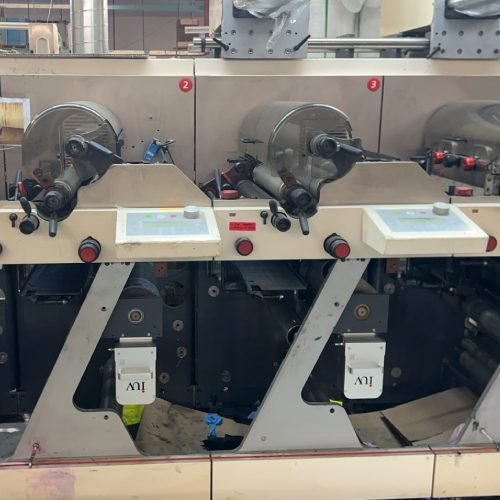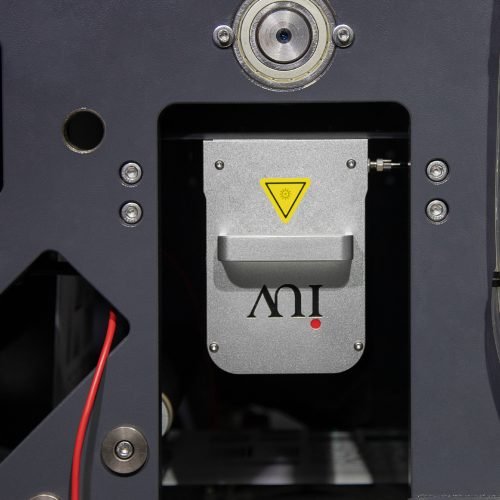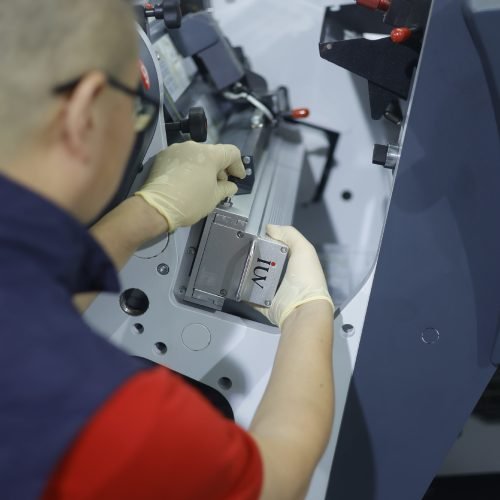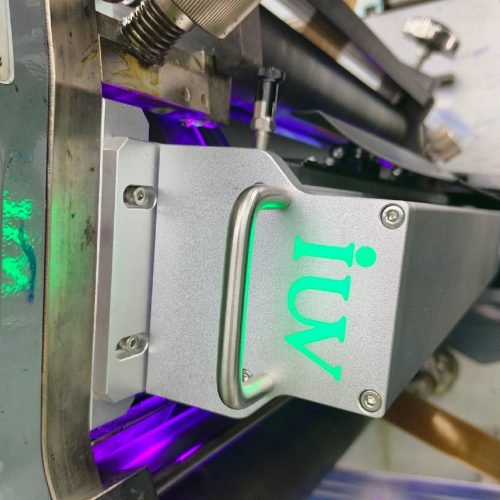
In narrow web flexo printing, curing technology has always been a decisive factor in determining real production speed, output stability, and overall equipment effectiveness. While traditional mercury UV systems have supported the growth of UV flexo for decades, their operational limitations increasingly constrain modern label production. As converters face shorter run lengths, higher color expectations, and rising energy costs, LED UV curing has emerged as a process upgrade that directly influences productivity rather than acting as a simple energy-saving alternative. This review examines how switching to LED UV changes productivity dynamics in flexo label printing, with a focus on measurable gains in throughput, setup efficiency, and process consistency.
Baseline Constraints of Traditional UV in Flexo Pressrooms
Conventional mercury UV systems impose several structural limits on flexo productivity. Warm-up time before stable output delays press start-up and slows job changeovers. Lamp aging causes gradual output decay, forcing operators to compensate with reduced press speed or increased power consumption. Excessive infrared heat restricts substrate choices and limits maximum speed on thin films or pressure-sensitive materials. These factors combine to create hidden productivity losses that are often accepted as normal operating conditions. In high-mix label environments, these losses accumulate across multiple short runs, reducing daily net output even when nominal press speed appears unchanged.
Immediate Speed Stabilization with LED UV Curing
One of the most direct productivity gains observed after switching to LED UV is speed stabilization. LED UV systems deliver full output instantly and maintain consistent irradiance across extended production runs. This stability allows presses to operate closer to their mechanical speed limits without the risk of undercure. In narrow web flexo, where speed fluctuations often occur due to substrate changes or ink coverage variations, LED UV provides a more forgiving curing window. Printers report that once optimal curing parameters are established, press speed becomes a fixed variable rather than a constant adjustment point, resulting in higher average throughput over the course of a shift.
Reduction of Setup and Changeover Time
Setup efficiency is a critical productivity metric in label printing, especially for converters handling frequent job changes. Traditional UV systems require lamp warm-up, shutter synchronization, and power stabilization before printing can begin. LED UV eliminates these steps through instant on and off capability. During job changeovers, operators can stop the press without curing delays and resume production immediately after setup adjustments. Over multiple short runs, this reduction in non-productive time translates into significant gains in usable press hours. In many cases, presses converted to LED UV complete more jobs per shift without extending operating hours.
Impact on Interstation Control and Print Stability
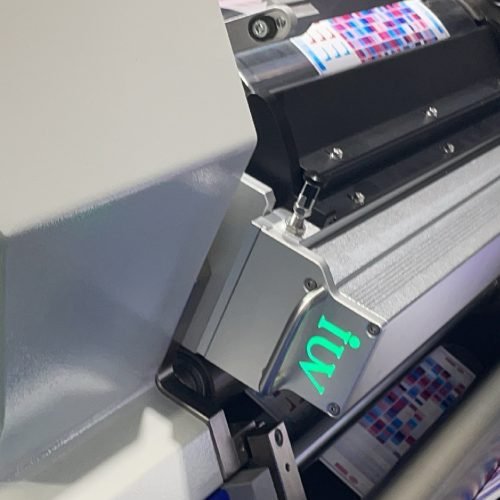
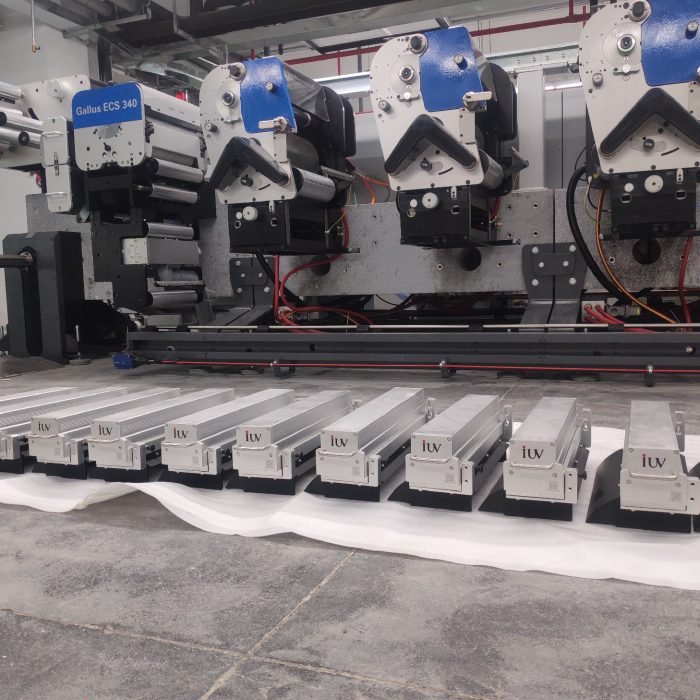
In multi-color flexo label printing, interstation curing plays a crucial role in controlling ink trapping, dot gain, and color consistency. LED UV pinning systems provide precise control over partial curing between print stations, allowing inks to gel without fully curing. This controlled pinning stabilizes ink dots and reduces wet-on-wet interference at higher speeds. As a result, printers can maintain high image quality without slowing the press to manage ink behavior. This capability supports sustained high-speed operation on complex label designs that previously required conservative speed settings with mercury UV systems.
Waste Reduction as a Productivity Multiplier
Productivity gains from LED UV extend beyond speed alone and include measurable reductions in waste. Consistent curing output reduces startup waste, as fewer impressions are required to reach stable color and adhesion. The absence of lamp degradation eliminates mid-run adjustments that often generate scrap. Lower heat exposure minimizes substrate distortion and adhesive failures, further reducing rejects. When evaluated across daily production volumes, lower waste effectively increases saleable output without increasing press time, making waste reduction a key contributor to overall productivity improvement.
Energy Efficiency and Its Indirect Effect on Throughput
While energy savings are often discussed separately from productivity, they indirectly support higher output levels. LED UV systems consume less power and generate less heat, reducing the load on pressroom cooling systems. This thermal stability allows presses to operate at higher speeds without triggering temperature-related limitations. Operators experience fewer forced slowdowns due to web handling issues or adhesive sensitivity, particularly on thin films and linerless constructions. Over long runs, the ability to maintain speed without thermal interruptions contributes to more predictable production schedules.
Maintenance Downtime and Operational Continuity
Maintenance requirements significantly affect real-world productivity. Mercury UV systems demand regular lamp replacement, reflector cleaning, and shutter maintenance, all of which introduce planned and unplanned downtime. LED UV systems, with their solid-state design, require far less routine intervention. Reduced maintenance frequency improves press availability and allows production planning with greater confidence. Over time, higher equipment uptime increases annual output capacity without the need for additional capital investment in new presses.
Consistency Across Shifts and Operators
In many flexo operations, productivity varies between shifts due to differences in operator experience and process control. LED UV reduces this variability by delivering consistent curing performance that is less dependent on manual adjustments. Once curing parameters are defined, they remain stable across operators and shifts. This consistency simplifies training and reduces the learning curve for new personnel. As a result, presses achieve similar output levels regardless of who is operating them, improving overall plant efficiency.
Compatibility with Modern Ink and Substrate Trends
Productivity in label printing is increasingly tied to the ability to handle diverse substrates and specialty inks without sacrificing speed. LED UV curing supports high-opacity whites, low-migration inks, and specialized coatings that are difficult to process with traditional UV. Faster curing response and lower heat exposure enable printers to run demanding materials at competitive speeds. This flexibility allows converters to accept a broader range of jobs without compromising throughput, effectively increasing productive capacity through application diversity.
Quantifying Productivity Gains in Real Operations
When productivity gains are measured holistically, the impact of LED UV becomes clear. Presses converted from mercury UV often show moderate increases in maximum speed, but more significant improvements in average running speed and net output per shift. Reduced setup time, lower waste, and fewer interruptions combine to deliver meaningful gains in finished labels per hour. These improvements are particularly pronounced in narrow web operations with frequent changeovers and high quality requirements, where process stability is as important as raw speed.
Long-Term Productivity and Process Scalability
LED UV curing supports long-term productivity by providing a stable platform for future process optimization. As presses are upgraded with automation, inspection systems, and digital workflows, curing consistency becomes even more critical. LED UV integrates seamlessly with these advancements, ensuring that curing does not become a bottleneck as production complexity increases. This scalability allows printers to grow output and capabilities without revisiting the curing system.
Conclusion
Comparing productivity in flexo printing before and after switching to LED UV reveals gains that extend far beyond energy efficiency. LED UV curing improves speed stability, reduces setup and waste, minimizes downtime, and enhances process consistency across shifts. In narrow web label printing, where profitability depends on efficient handling of short runs and complex designs, these gains translate directly into higher usable output and improved operational control. For converters seeking sustainable productivity improvements, the transition to LED UV represents a fundamental upgrade to the flexo production process rather than a simple equipment replacement.