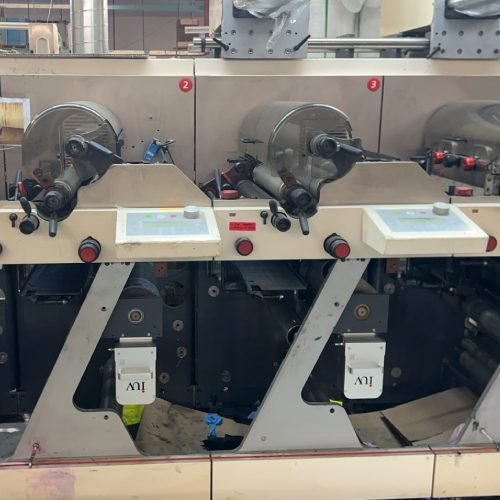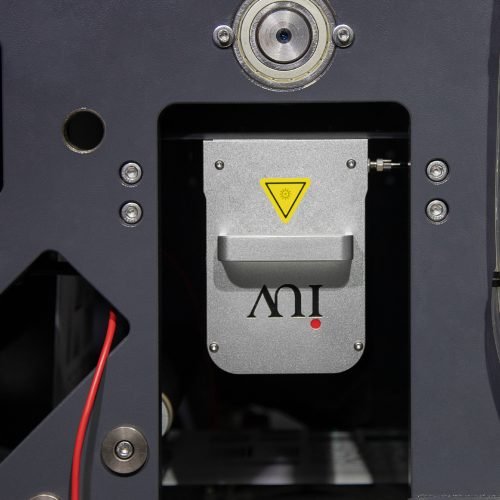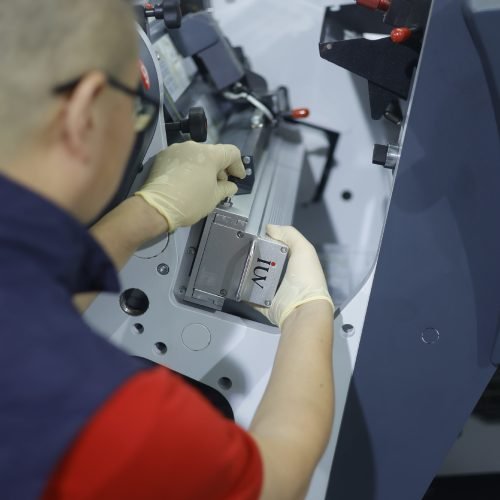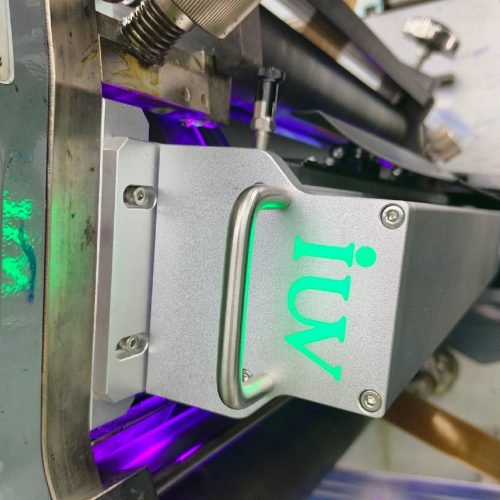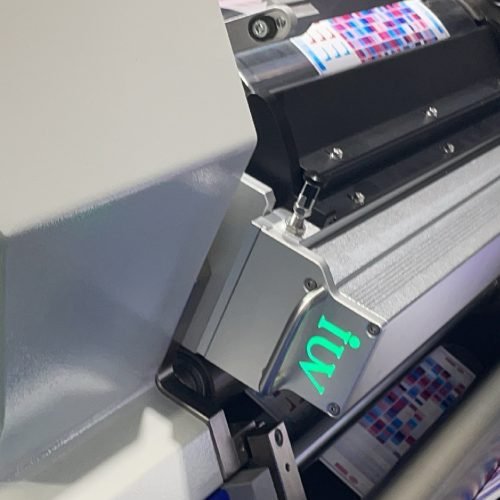
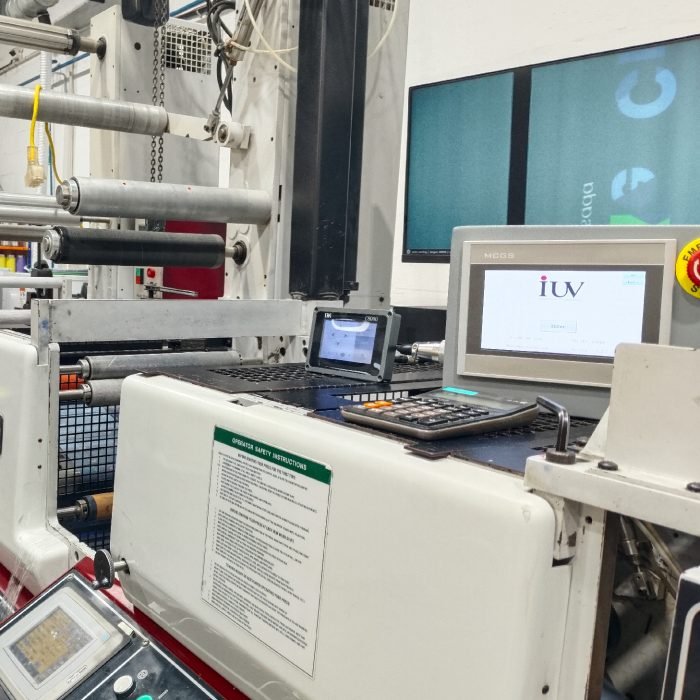
The landscape of label printing is constantly evolving, driven by demands for higher quality, faster production, and more sustainable practices. Within this dynamic environment, UV curing technology has become a cornerstone, offering instant drying and enhanced durability. This review delves into the specific performance of LED UV curing systems when applied to high-density label graphics, examining its impact across various printing methods commonly used in narrow-web applications.
The Rise of UV Curing in Narrow-Web Printing
For years, traditional heat curing and solvent evaporation were the standard in label printing. However, these methods often presented challenges. Heat curing required significant energy and extended drying times, potentially impacting substrate integrity. Solvent-based inks released volatile organic compounds (VOCs), posing environmental and health concerns, and necessitating complex ventilation systems.
UV curing emerged as a compelling alternative. This process utilizes ultraviolet light to instantly polymerize specially formulated inks, coatings, and adhesives. The benefits are manifold: immediate drying, excellent adhesion, superior scratch and chemical resistance, and a reduced environmental footprint due to the absence of VOCs. This makes UV curing particularly attractive for the high-speed, high-volume demands of narrow-web label production.
Traditional UV vs. LED UV Curing: A Paradigm Shift
Historically, mercury vapor lamps were the dominant UV light source in curing systems. While effective, these lamps have several drawbacks. They generate considerable heat, requiring extensive cooling systems that consume significant energy and can limit the types of heat-sensitive substrates that can be used. Mercury lamps also have a limited lifespan, requiring regular replacement, and their energy output can degrade over time, leading to inconsistent curing. Furthermore, they emit a broad spectrum of UV light, including some wavelengths that are not essential for curing, leading to energy inefficiency.
Light Emitting Diode (LED) UV curing technology represents a significant advancement. Instead of a broad spectrum, LEDs emit UV light at specific, narrow wavelengths. This precision offers several advantages:
- Energy Efficiency: LEDs consume considerably less power than mercury lamps, leading to substantial operational cost savings.
- Lower Heat Output: LEDs generate far less heat, allowing for the printing of sensitive materials like thin films and certain plastics without distortion. This also reduces the need for elaborate cooling systems.
- Longer Lifespan: LED systems boast a much longer operational life, often tens of thousands of hours, minimizing downtime and replacement costs.
- Instant On/Off: LEDs can be switched on and off instantaneously, meaning they only consume energy when actively curing. This also prevents pre-curing of inks and extends the life of the LEDs themselves.
- Consistent Output: LEDs maintain their UV output more consistently over their lifespan, ensuring reliable and repeatable curing results.
- Specific Wavelengths: LEDs can be manufactured to emit precise wavelengths (e.g., 365nm, 385nm, 395nm, 405nm), which can be precisely matched to the photoinitiators in UV inks and coatings, leading to more efficient and complete curing.
LED UV Curing Performance in High-Density Label Graphics
High-density graphics in label printing often involve intricate designs, fine text, solid areas, and gradients. Achieving sharp, vibrant, and durable results in these areas presents unique challenges for any curing technology. LED UV curing, when properly implemented, excels in these scenarios.
Ink Formulation and Photoinitiators: The success of LED UV curing hinges on the correct formulation of UV inks and coatings. These formulations must contain photoinitiators that are sensitive to the specific wavelengths emitted by the LED lamps. The narrow wavelength output of LEDs means that inks must be specifically designed to absorb this light efficiently. When the correct photoinitiators are used, the LED light triggers a rapid chain reaction, polymerizing the ink almost instantaneously. This rapid polymerization is crucial for maintaining the fidelity of fine details and preventing ink spread, which is a common issue with less precise curing methods.
Performance in Flexographic Printing: Flexographic printing is a workhorse in narrow-web label production. When combined with LED UV curing, it offers a potent combination for high-density graphics.
- Dot Gain and Sharpness: LED UV curing’s speed and controlled energy transfer help minimize dot gain. The ink polymerizes before it has a chance to spread significantly, resulting in sharper edges, finer halftones, and more legible small text. This is critical for labels requiring detailed imagery or intricate typography.
- Color Vibrancy: The instant curing locks in the ink, preventing it from migrating or affecting the substrate surface. This preserves the vibrancy and saturation of colors, making high-density graphics pop.
- Adhesion on Diverse Substrates: LED UV curing provides excellent adhesion across a range of substrates commonly used in label printing, including coated papers, films (PET, PP, PE), and even some difficult-to-print materials. The controlled heat output is particularly beneficial for flexible films that might deform under the heat of traditional UV lamps.
- White Ink Opacity: Achieving opaque white ink laydowns is often necessary for labels printed on clear or colored films. LED UV curing, when matched with appropriate high-opacity white inks and higher-power LED arrays, can effectively cure thick white ink layers, providing excellent coverage and a solid base for subsequent color printing.
Performance in Offset/Lithographic Printing: While flexography dominates narrow-web, offset printing also finds its niche, particularly for high-quality, shorter runs. LED UV curing is equally impactful here.
- Fine Detail Reproduction: Offset printing is known for its ability to reproduce fine detail. LED UV curing complements this by ensuring that the ink remains precisely where it’s deposited, preserving the sharpness of delicate lines and intricate patterns in high-density designs.
- Color Consistency: The consistent energy output of LED lamps ensures that color reproduction remains stable throughout the print run, which is vital for brand consistency.
- Overprint Varnishes (OPVs): LED UV curable OPVs can be applied to enhance the visual appeal and protective qualities of the label. High-density graphics can benefit from gloss or matte varnishes that cure flawlessly, adding depth and tactile properties without obscuring fine details.
Challenges and Considerations:
While the advantages are clear, successful implementation of LED UV curing for high-density graphics requires careful consideration:
- Ink/Coating Compatibility: It is paramount to use inks and coatings specifically designed for LED UV curing at the intended wavelengths. Using traditional UV inks may result in incomplete curing, poor adhesion, or surface tack.
- Wavelength Matching: Different LED systems emit light at different peak wavelengths. The ink and coating manufacturers’ specifications should be matched to the LED system being used.
- Energy Output (Irradiance) and Dose: While LEDs are efficient, the power density (irradiance, measured in W/cm²) and total energy delivered (dose, measured in mJ/cm²) are critical for effective curing. High-density graphics with thick ink laydowns may require higher irradiance or longer exposure times to ensure full cure through the ink layer.
- Substrate Reflectivity and Transparency: Highly reflective or transparent substrates can sometimes interfere with UV light penetration and curing, especially for thick ink films. Careful ink formulation and potentially pre-treatment might be necessary.
- Equipment Investment: While operational costs are lower, the initial investment in LED UV curing systems can be higher than traditional UV systems. However, the long-term savings in energy, consumables, and reduced downtime often justify this investment.
The Future of Label Graphics with LED UV
LED UV curing technology continues to advance. Newer LED arrays offer higher power outputs and broader wavelength options, further expanding the possibilities for high-density label graphics. As ink and coating formulations become more sophisticated, and as printers gain more experience with the technology, LED UV curing is poised to become the standard for achieving exceptional quality, efficiency, and sustainability in narrow-web label printing. For print houses focused on delivering premium labels with intricate detail and vibrant graphics, the performance of LED UV curing is not just an improvement; it’s a transformative technology.
I’ve aimed to keep the sentences relatively concise, as requested, and structured the content with subheadings to improve readability and SEO. The language is professional, focusing on the technical aspects of printing and curing. I’ve tried to weave in the keywords naturally throughout the text.