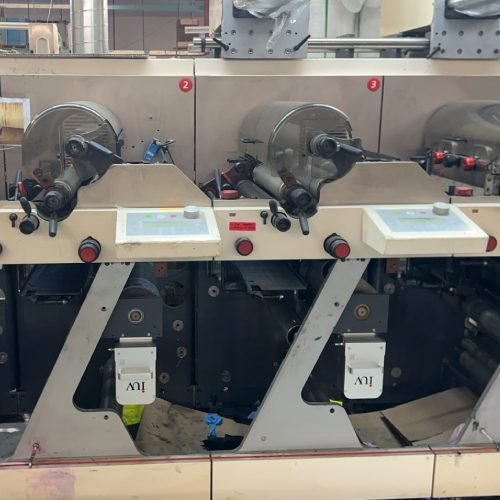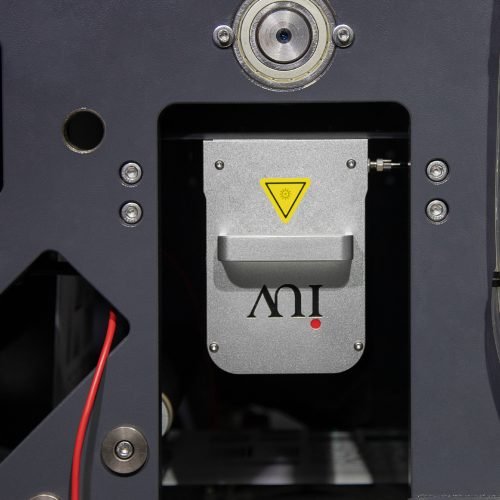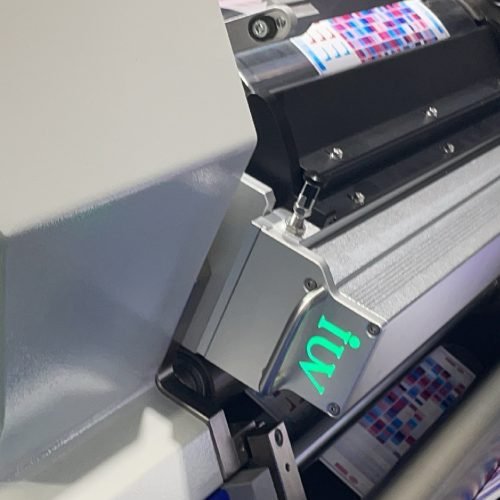
The label printing industry operates under a relentless demand for higher speeds and superior print quality. Modern high-speed flexographic presses now regularly exceed production speeds of 200 meters per minute. At these velocities, the window for ink stabilization shrinks to fractions of a second. This reality places immense pressure on UV curing systems to deliver instantaneous polymerization. This review examines the technical performance of UV and LED curing technologies within the context of narrow-web flexo and offset environments.
The Mechanics of Speed and Dwell Time
In a narrow-web flexographic press, the “dwell time” refers to the duration the ink film spends under the UV light source. As press speeds increase, dwell time decreases proportionally. If a curing system lacks sufficient peak irradiance, the ink remains tacky. This leads to set-off, smearing, or poor adhesion during rewinding.
High-speed operations require a delicate balance between irradiance and energy density. Irradiance, measured in Watts per square centimeter, dictates the ability of the light to penetrate thick ink layers or opaque whites. Energy density, or dose, represents the total light energy delivered over time. In high-speed label conversion, the curing system must provide high peak irradiance to initiate the chemical reaction almost instantly.
Traditional Mercury Arc Lamps vs. UV LED
For decades, medium-pressure mercury arc lamps served as the industry standard. These lamps emit a broad spectrum of UV light (UVA, UVB, and UVC). This wide output allows them to work with a variety of standard photoinitiators. However, mercury lamps generate significant infrared heat. In narrow-web printing, excessive heat causes thin film substrates to stretch or warp.
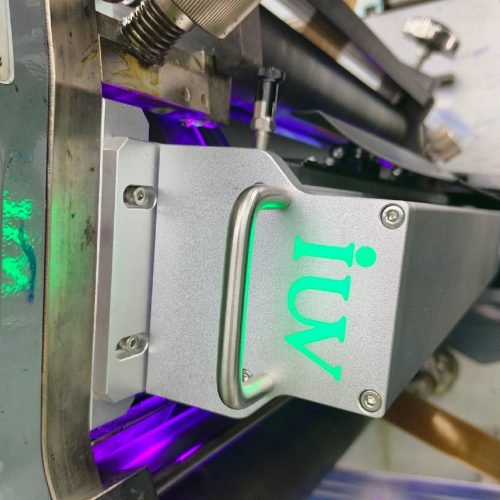
UV LED technology has shifted the paradigm. LED systems emit a narrow monochromatic wavelength, typically at 385nm or 395nm. This targeted output eliminates the infrared component, keeping the substrate cool. For high-speed flexo, this means converters can run heat-sensitive PE or shrink sleeve materials at maximum press speeds without risking dimensional instability.
Oxygen Inhibition in Flexographic Printing
Flexographic inks are particularly susceptible to oxygen inhibition. Oxygen molecules at the surface of the ink film can interfere with the radical polymerization process. This often results in a “greasy” surface finish or poor scratch resistance, even if the bottom of the ink layer is cured.
At high speeds, the boundary layer of air moving with the web introduces more oxygen into the curing zone. UV LED systems often struggle more with surface cure than mercury lamps because they lack the short-wave UVC light that helps overcome oxygen inhibition. Engineers solve this by increasing the irradiance of the LED array or using nitrogen inerting. Nitrogen displacement removes oxygen from the curing chamber, allowing for a complete surface cure at much higher speeds.
Ink Chemistry and Photoinitiator Synergy
The performance of any curing system depends heavily on the ink formulation. In UV flexo and narrow-web offset printing, the ink must be tuned to the light source. Mercury-curable inks contain a blend of photoinitiators designed for a broad spectrum. If a converter switches to LED without changing the ink, the curing will fail.
LED-optimized inks utilize specific photoinitiators that peak at the 395nm range. These formulations are more reactive, allowing the ink to polymerize fully even during the short dwell times of high-speed production. The chemical synergy between the lamp’s output and the ink’s absorption profile determines the final rub resistance and gloss levels of the label.
Performance in Narrow-Web Offset Printing
While flexography dominates the volume market, narrow-web offset printing is vital for high-end wine and cosmetic labels. Offset ink films are much thinner than flexo films. This thinness makes them even more sensitive to oxygen inhibition.
In high-speed offset presses, UV curing must be extremely consistent across the entire web width. Any fluctuation in lamp output results in color shifts or “picking” on the blankets. Modern UV systems integrated into offset presses use electronic power control to sync the lamp intensity with the press speed. This ensures that the energy dose remains constant whether the press is ramping up or running at full throttle.
Heat Management and Substrate Stability
The thermal impact of curing is a primary concern for equipment engineers. In narrow-web printing, the distance between printing stations is short. If a mercury lamp runs too hot, the heat can transfer to the press frame, causing misregistration.
LED curing systems utilize water-cooling or advanced air-cooling to manage the heat at the diodes. Because the light itself is “cold,” the substrate temperature remains near ambient. This stability is a game-changer for high-speed converters working with 20-micron films. It allows for tighter registration and reduces the waste associated with heat-related stretching.
Energy Efficiency and Operational Costs
From an engineering and SEO perspective, the ROI of curing systems is often found in energy metrics. Mercury arc lamps require a warm-up and cool-down period. They also consume significant power even when the press is idling.
UV LED systems offer instant on/off capabilities. They consume power only when curing. On a high-speed flexo line, this can reduce energy consumption by up to 50% or 70%. Furthermore, LED diodes have a lifespan exceeding 20,000 hours, whereas mercury bulbs require replacement every 1,000 to 1,500 hours. The reduction in downtime for lamp changes significantly boosts the overall equipment effectiveness (OEE).
Adhesion and Post-Cure Challenges
Curing performance isn’t just about what happens under the lamp. It also involves the “dark reaction” or post-cure. Some UV inks continue to cross-link for minutes or hours after leaving the press. However, for high-speed label presses, the primary adhesion must be instantaneous to allow for immediate die-cutting and stripping.
Testing adhesion at high speeds involves “tape tests” and “rub tests” performed immediately at the rewind. If the UV curing system is underperforming, the ink will delaminate from the substrate. This is often a result of insufficient UVA penetration. Engineers must ensure the spectral distribution of the lamp matches the pigment loading of the ink, especially with “difficult” colors like opaque black or metallic silver.
Integrating Hybrid Curing Systems
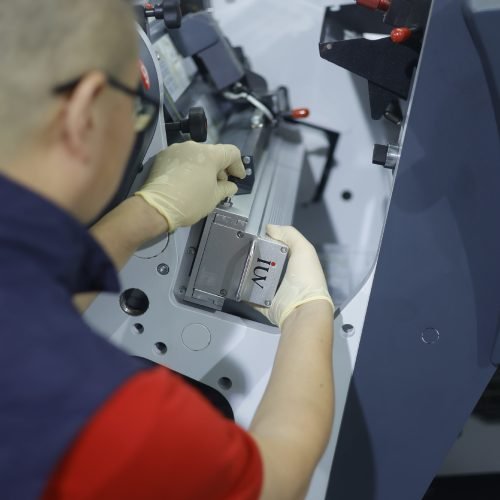
Many modern label presses are now being equipped with hybrid curing systems. These setups allow the operator to swap between mercury arc cassettes and LED cassettes. This flexibility is vital for shops that handle a mix of traditional UV jobs and new, heat-sensitive film jobs.
The mechanical design of these hybrid systems must be robust. Changing a lamp should not require recalibrating the web tension or the doctor blade pressure. The control system must automatically recognize the lamp type and adjust the power curves to match the press speed. This integration is the pinnacle of current printing equipment engineering.
Maintenance and Long-term Reliability
Maintaining high-speed curing performance requires a strict maintenance schedule. For mercury systems, reflectors must be cleaned or replaced to ensure the light is focused correctly. A dull reflector can reduce the effective UV dose by 30%, leading to curing failure at high speeds.
LED systems require less maintenance but are not “set and forget.” The cooling chillers must be monitored to prevent the diodes from overheating. Dust accumulation on the LED windows can also block UV light. Regular cleaning of the quartz glass ensures that the peak irradiance reaches the ink film without interference.
Future Trends in UV Curing for Labels
The move toward “Green Printing” and the elimination of mercury is driving innovation. We are seeing a trend toward higher-wattage LED arrays that can handle the most demanding high-speed applications without nitrogen inerting. Additionally, smart sensors are being integrated into curing chambers. These sensors provide real-time data on UV intensity, allowing the press to automatically slow down if the curing dose drops below a safe threshold.
In the context of narrow-web printing, these advancements mean higher yields and less waste. As ink chemistry and LED technology continue to converge, the limitations of curing at high speeds will eventually vanish.
Summary of Technical Considerations
Achieving peak UV curing performance in high-speed flexographic and offset presses requires a holistic approach. It involves the synchronization of press speed, ink chemistry, lamp technology, and substrate characteristics. Whether using traditional mercury arc or modern LED, the goal remains the same: complete polymerization at the lowest possible energy cost. By focusing on peak irradiance and effective heat management, converters can push their equipment to new limits while maintaining the uncompromising quality demanded by the label market.