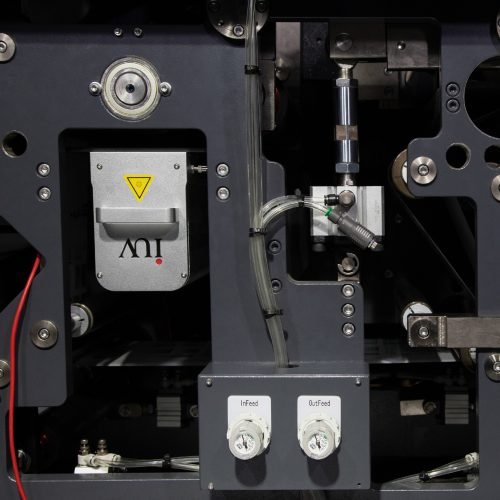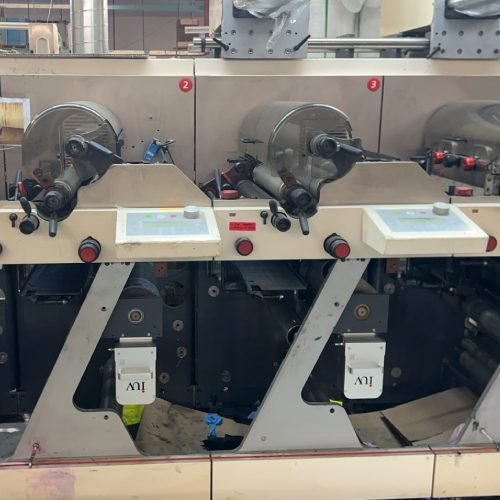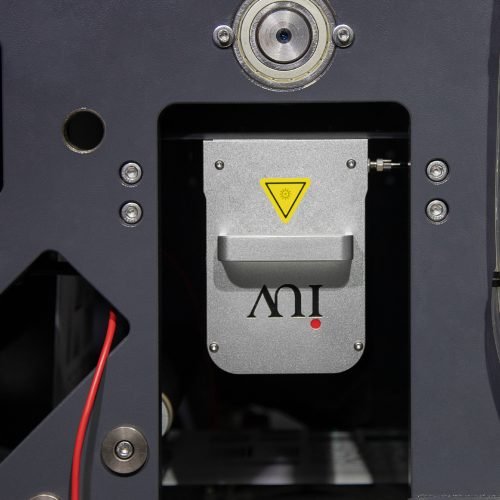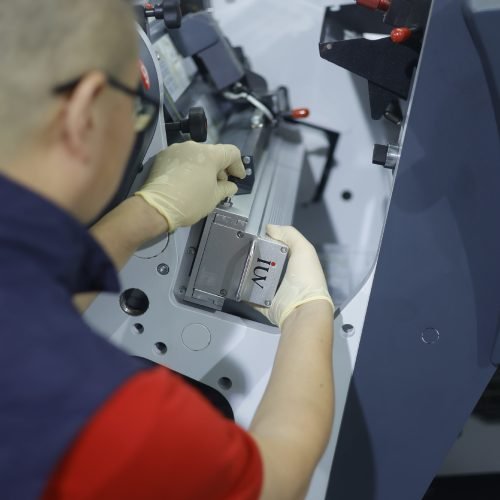
The label printing landscape is shifting toward higher speeds and more complex substrates. Multi-station flexographic presses stand at the center of this evolution. These machines rely heavily on the efficiency of UV curing systems to maintain productivity and quality. When evaluating UV curing performance, engineers must look beyond the light source itself. They must consider the synergy between ink chemistry, substrate characteristics, and thermal management across multiple print stations.
The Mechanics of UV Curing in Narrow-Web Flexo
In a multi-station flexographic press, each station applies a specific color or coating. The UV curing system sits immediately after the print nip. Its job is to transform liquid ink into a solid film instantly. This process, known as photo-polymerization, happens when ultraviolet light hits photoinitiators in the ink. These photoinitiators release free radicals that cause monomers and oligomers to link together.
Traditional mercury vapor lamps have served the industry for decades. They emit a broad spectrum of UV light, which is effective for curing thick coatings and various ink types. However, they generate significant infrared heat. In narrow-web printing, particularly on heat-sensitive films like PE or thin BOPP, this heat can cause web stretching or registration issues.
The Shift to LED UV Technology
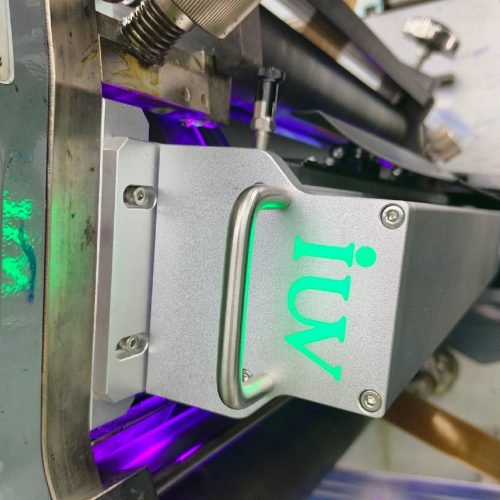
LED UV technology has redefined performance benchmarks in the label industry. Unlike mercury lamps, LEDs emit a narrow wavelength, typically centered at 385nm or 395nm. This targeted output offers several operational advantages for multi-station setups.
First, LEDs are “instant on/off.” There is no warm-up or cool-down period. This reduces downtime during roll changes or plate cleaning. Second, the lack of infrared radiation means the web stays cool. Engineers can run thinner materials without the risk of melting or distorting the substrate. This opens up new markets for shrink sleeves and flexible packaging on flexo presses.
From a maintenance perspective, LEDs boast a lifespan of over 20,000 hours. Mercury lamps usually require replacement after 1,000 to 2,000 hours. For a ten-station press, the labor and hardware costs of replacing mercury bulbs add up quickly. LED systems provide a more stable output over time, which ensures consistent curing across long production runs.
Irradiance vs. Dose: Understanding Curing Metrics
To review curing performance, we must distinguish between peak irradiance and energy density (dose). Peak irradiance is the intensity of the UV light at the surface of the substrate. It dictates the “kick” required to start the polymerization process. Energy density is the total amount of light energy the ink receives as it passes under the lamp.
In high-speed narrow-web flexo, the dwell time under each lamp is extremely short. If the press runs at 200 meters per minute, the ink has only milliseconds to cure. High peak irradiance is necessary to penetrate the ink layer, especially with opaque whites or high-pigment blacks. If the irradiance is too low, the surface might feel dry, but the bottom of the ink layer remains liquid. This leads to poor adhesion and “ink pick-off” on subsequent stations.
Thermal Management in Multi-Station Presses
Managing heat is a primary challenge in multi-station printing. Even with LED systems, some heat is generated by the polymerization reaction itself. In mercury systems, the problem is magnified.
Modern presses utilize chilled rollers (chill drums) to dissipate heat. The web passes over a water-cooled roller at the curing station. This prevents the heat from the UV lamp from elevating the substrate temperature. Efficient curing performance depends on the synchronization between the UV lamp output and the cooling system. If the chill rollers are not maintained, the web can lose tension, leading to misregistration across the stations.
Ink Chemistry and Wavelength Matching
Curing performance is not just an equipment metric. It is a chemical one. Ink manufacturers formulate flexo and offset inks to match specific UV wavelengths.
For mercury systems, inks contain a variety of photoinitiators that respond to different parts of the UV spectrum (UVA, UVB, UVC). For LED systems, the ink must be highly sensitive to the specific 395nm peak. Using a “mercury-optimized” ink under an LED lamp often results in a tacky surface or incomplete cure.
In multi-station narrow-web printing, the “inter-station” cure is vital. Each color must be pinned—partially cured—or fully cured before the next station applies another layer. If the first station’s UV performance is weak, the second station’s ink will mix with the first, causing muddy colors and poor image sharpess.
Comparing Flexo and Offset Curing Requirements
While flexography is dominant in the label sector, narrow-web offset printing is used for high-end wine and cosmetic labels. Offset inks are thinner and more highly pigmented than flexo inks.
UV curing for offset requires very high peak irradiance because the ink film is so dense. The performance review for an offset press often focuses on “ink-water balance” and how UV heat affects the chemistry on the plate. Flexo, by contrast, is more forgiving regarding heat but requires precise anilox roll management to ensure the ink film thickness matches the UV lamp’s curing capacity.
Adhesion and Migration Challenges
In the food and pharmaceutical sectors, UV curing performance is a safety requirement. Incomplete curing can leave unreacted monomers in the ink film. These small molecules can migrate through the label material into the product.
Low-migration UV inks are designed specifically for these applications. However, they are harder to cure. A multi-station press running low-migration jobs must have calibrated UV sensors. These sensors monitor the output of each lamp in real-time. If the output drops below a certain threshold, the press should automatically slow down or stop to prevent the production of unsafe labels.
Operational Efficiency and Total Cost of Ownership
Reviewing UV performance also involves an economic analysis. Mercury systems are cheaper to buy but expensive to run. They consume vast amounts of electricity and require exhaust systems to remove ozone.
LED UV systems have a higher upfront cost. However, they reduce energy consumption by up to 50% or 70%. In a multi-station environment, these savings are compounded. Furthermore, the absence of ozone and mercury makes the print shop a safer environment. The reliability of the curing process directly impacts the “make-ready” time. If the operator knows the UV system will perform consistently, they can dial in the press faster, reducing substrate waste.
Maintenance Protocols for Peak Performance
A UV system is only as good as its maintenance. For mercury lamps, reflectors must be cleaned or replaced regularly. A dull reflector can lose 30% of its curing power, even if the bulb is new. Dust on the quartz plate or the LED lens will also block UV light.
In multi-station presses, it is common for one station to be used more than others (like the black or varnish station). This leads to uneven wear across the curing units. A professional engineer must implement a rotation or monitoring schedule to ensure that every station provides the same level of cure.
Testing and Validation in the Field
How do we measure UV curing performance on the shop floor? The most common method is the “tape test” for adhesion. A piece of standardized tape is applied to the cured ink and pulled off. If ink stays on the tape, the cure is insufficient.
For a more technical review, “rub tests” using MEK (methyl ethyl ketone) or other solvents are used. These tests measure the chemical resistance of the cured film. Advanced shops use radiometers to measure the actual millijoules of energy delivered to the web. This data-driven approach allows engineers to set “curing profiles” for different materials, ensuring that the press runs at the maximum possible speed without compromising quality.
The Future of Curing in Narrow-Web Printing
The industry is moving toward hybrid curing systems. Some presses now feature both mercury and LED stations. This allows printers to use specialized coatings that still require broad-spectrum UV while using LED for the standard CMYK colors.
However, as ink technology improves, the need for mercury lamps is fading. The performance of LED UV in multi-station flexo presses has reached a point where it can handle the most demanding label applications. From high-speed wine labels to complex industrial decals, the focus remains on achieving a total cure at the highest possible velocity.
Optimization Summary
Maximizing UV curing performance requires a holistic view of the press. You must balance the web speed with the lamp’s irradiance. You must match the ink’s photoinitiators to the lamp’s wavelength. Finally, you must manage the thermal load on the substrate to maintain registration. When these factors align, a multi-station flexo press becomes a powerhouse of efficiency, delivering durable, vibrant labels with minimal waste and maximum throughput.