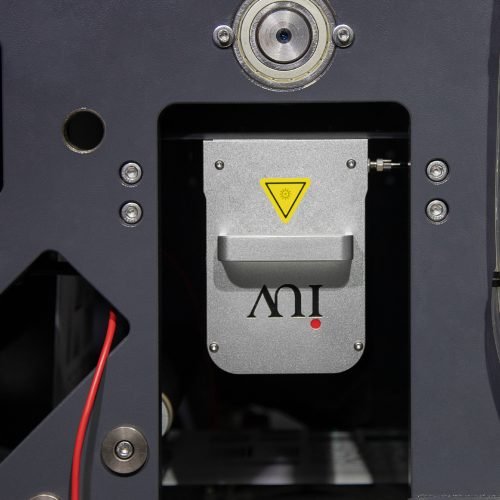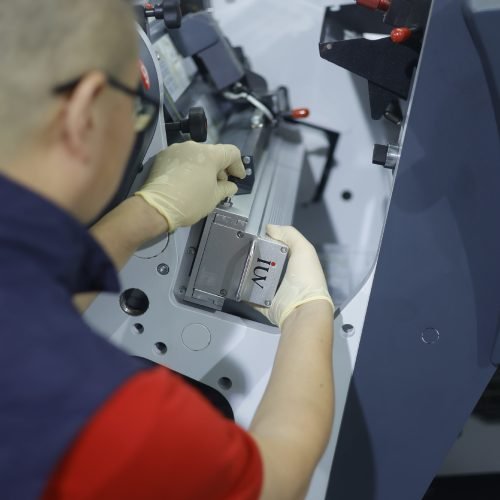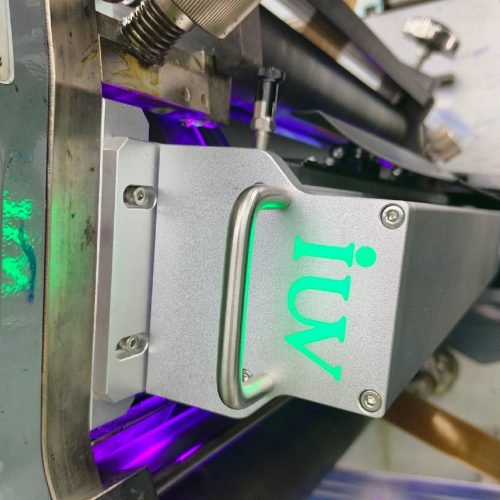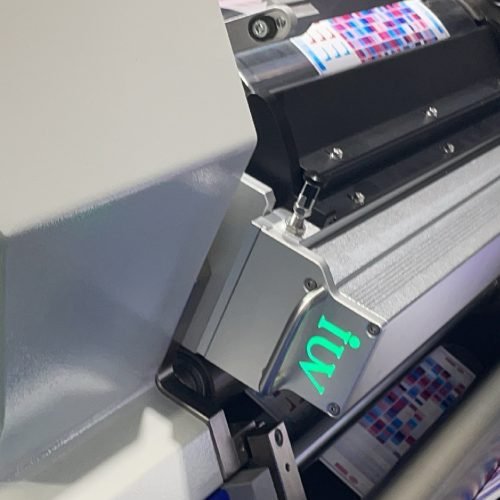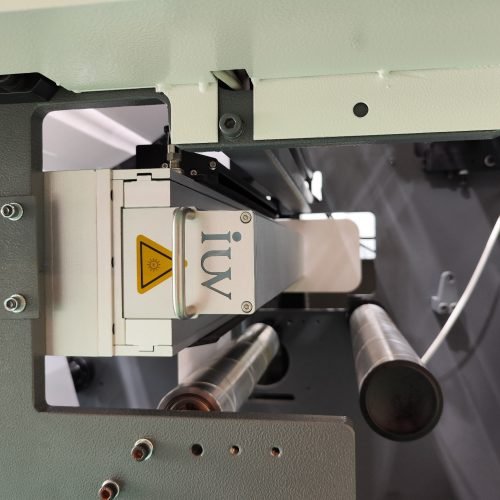
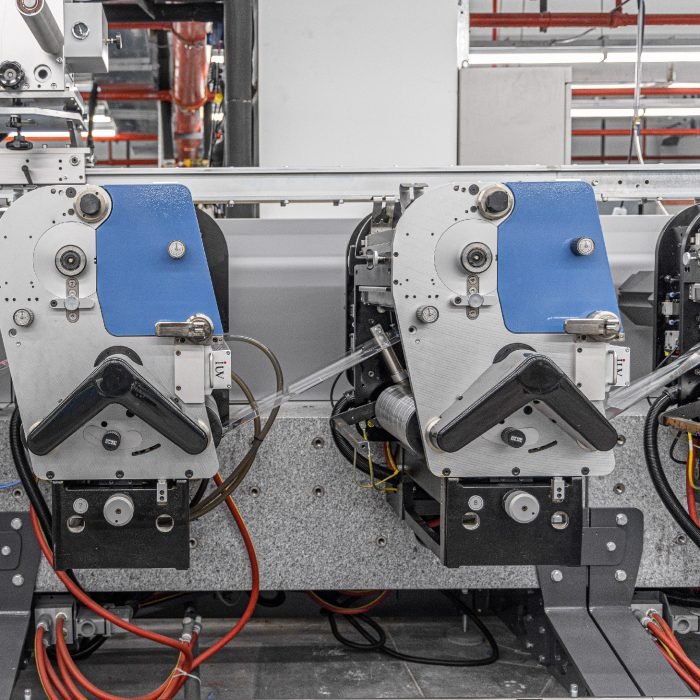
Label and flexible packaging production has evolved toward shorter runs, faster changeovers, and a broader mix of substrates. Narrow web flexographic and offset presses must handle conventional UV inks, LED-optimized formulations, specialty whites, tactile coatings, and low-migration systems within the same production week. A hybrid curing configuration that combines mercury UV and LED UV technologies provides the operational range required to meet these demands without replacing existing press platforms.
Mercury UV lamps deliver broadband spectral output with strong penetration. They remain effective for thick ink films, metallic layers, and legacy formulations. LED UV systems, by contrast, operate within narrow wavelength bands and produce minimal infrared heat. They offer instant on-off capability, stable irradiance, and improved energy efficiency. When integrated correctly, the two systems complement each other and expand curing versatility across label, flexographic, offset, and narrow web applications.
Retrofitting a hybrid system requires careful engineering analysis. Mechanical structure, electrical capacity, thermal management, and process compatibility must align to ensure reliable long-term operation.
Assessing Press Architecture Before Retrofit
The first step in any hybrid upgrade is a detailed assessment of the existing press configuration. Narrow web presses vary in interdeck spacing, lamp mounting design, and power infrastructure. Flexographic lines often provide modular curing positions, while offset narrow web presses may have more compact layouts. Accurate measurement of available space determines whether LED arrays can be installed without altering web path geometry or interfering with chill rollers and tension systems.
Electrical evaluation is equally critical. Mercury UV systems rely on high-voltage power supplies and require warm-up cycles. LED systems operate at lower voltage but demand stable current and efficient thermal control at the diode junction. The total electrical load must remain within the press facility’s capacity. Integrating both technologies on the same line requires load balancing and proper circuit segmentation to prevent instability during simultaneous operation.
Cooling infrastructure also deserves attention. Mercury lamps generate substantial heat and require effective exhaust ventilation. LED modules remove heat directly from the diode substrate and typically use water or forced air cooling. Existing cooling loops must be evaluated for flow rate, pressure stability, and heat exchange capacity to support additional LED modules.
Selecting the Appropriate LED Wavelength for Hybrid Production
LED UV curing operates at specific peak wavelengths, commonly 365 nm, 385 nm, 395 nm, or 405 nm. The chosen wavelength must correspond with the photoinitiator system in LED-compatible inks and coatings. In hybrid systems, mercury lamps continue to cure conventional UV formulations that rely on broadband emission. LED modules are typically dedicated to process colors, overprint varnishes, and low-migration packaging inks.
In label printing, 395 nm has become a widely adopted wavelength because of its balance between cure depth and diode efficiency. However, certain adhesives or specialty coatings may require alternative spectral output. Before installation, converters should review their ink portfolio and confirm compatibility with LED curing parameters. Dual-cure inks provide additional flexibility because they respond effectively to both mercury and LED radiation.
Correct wavelength selection prevents under-cure, surface tackiness, and adhesion failure. It also ensures consistent gloss and mechanical resistance across the print width.
Mechanical Integration and Web Geometry Stability
Precise mechanical alignment determines curing uniformity. LED arrays typically operate at shorter working distances compared to mercury lamps. If mounted too far from the substrate, irradiance drops and curing becomes inconsistent. If positioned too close, thermal stress may increase and mechanical clearance may be compromised.
Stable mounting brackets prevent vibration at high press speeds. In narrow web flexographic presses running above 150 meters per minute, even minor structural instability can affect cure uniformity across wide labels. Proper shielding and thermal isolation protect adjacent sleeves, impression cylinders, and bearings from heat exposure.
Hybrid retrofits should allow independent positioning of mercury and LED units. This configuration provides flexibility when switching between ink systems or substrates. Quick-access maintenance design also reduces downtime during lamp or module servicing.
Integrating Control Systems for Seamless Operation
Hybrid curing performance depends on intelligent control integration. Mercury lamps require shutter systems and controlled warm-up sequences. LED units provide instant full output and precise intensity modulation. To maximize versatility, LED intensity should synchronize with press speed through encoder feedback. This ensures consistent energy density regardless of production rate.
Operators benefit from a centralized interface that allows independent control of each curing source. Recipe management simplifies job changeovers and reduces human error. Instant switching between mercury and LED curing supports diverse production requirements without extended setup time.
Proper synchronization ensures that curing energy matches coating thickness and substrate characteristics. Stable control logic enhances repeatability and print quality.
Cooling Optimization for Long-Term Reliability
Thermal stability directly affects curing performance. Mercury lamps radiate heat toward the substrate and surrounding components. LED systems concentrate heat at the semiconductor junction. Without effective cooling, diode efficiency decreases and output becomes unstable.
Water-cooled LED modules offer precise temperature regulation and extended service life. Air-cooled designs simplify installation but require unobstructed airflow and regular maintenance. During hybrid retrofits, airflow patterns must prevent interference between exhaust systems and LED cooling paths.
Temperature monitoring near the LED array helps maintain consistent junction conditions. Stable thermal management supports long-term output stability and protects print quality.
Ink, Coating, and Substrate Strategy in Hybrid Lines
Hybrid curing systems expand the material portfolio available to converters. Conventional UV inks remain suitable for mercury curing, especially for thick whites and specialty metallic formulations. LED-compatible inks reduce energy consumption and lower substrate heat exposure. Dual-cure coatings enable seamless transitions between curing modes.
In label and flexible packaging production, heat-sensitive substrates such as shrink sleeves and unsupported films benefit from LED curing’s reduced infrared output. Mercury lamps remain valuable for deep cure penetration when coating weight increases.
Process validation should include solvent resistance testing, adhesion checks, and gloss measurement. Controlled trials at different press speeds confirm consistent curing across the web width. Balanced energy application prevents overexposure while ensuring full polymerization.
Energy Efficiency and Sustainable Production Benefits
Hybrid curing improves overall operational efficiency when configured correctly. LED modules eliminate warm-up cycles and reduce idle energy consumption. Mercury lamps provide high power when needed but can be selectively engaged. This selective usage reduces total energy demand compared to fully mercury-based systems.
Lower heat output decreases cooling requirements and stabilizes web temperature. Stable substrate temperature enhances registration accuracy and reduces tension variation. For sustainable label production, hybrid systems offer a practical transition path toward greater LED adoption without abandoning proven curing methods.
Energy savings, reduced maintenance intervals, and improved process control support long-term competitiveness in narrow web markets.
Performance Validation and Continuous Monitoring
After installation, comprehensive validation ensures reliable operation. Irradiance and energy density should be measured across the entire print width. Uniform curing confirms proper mechanical alignment and electrical integration. Periodic monitoring of LED output prevents unnoticed degradation.
Maintenance schedules should address both mercury bulb replacement cycles and LED module inspection. Proactive service planning maintains consistent curing quality and reduces unexpected downtime.
Hybrid curing retrofits, when engineered with precision, deliver maximum versatility for label, flexographic, and offset narrow web printing. By combining broadband mercury capability with energy-efficient LED performance, converters achieve expanded material compatibility, improved thermal control, and stable production efficiency across diverse applications.