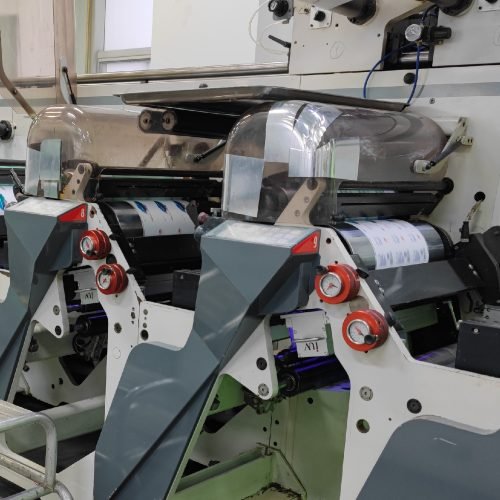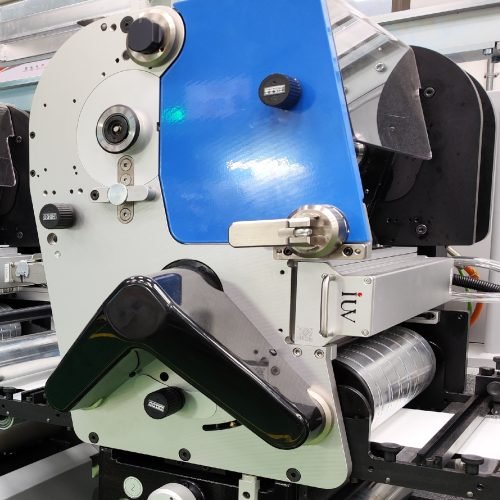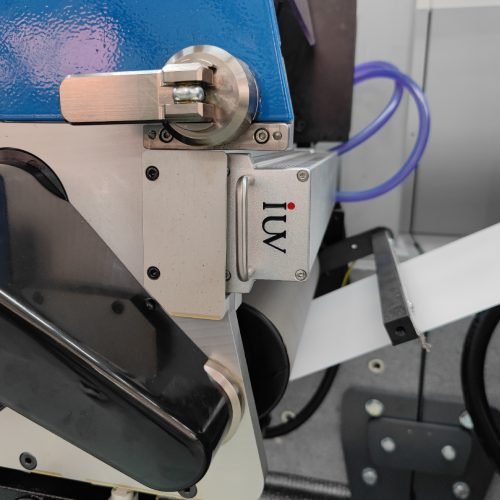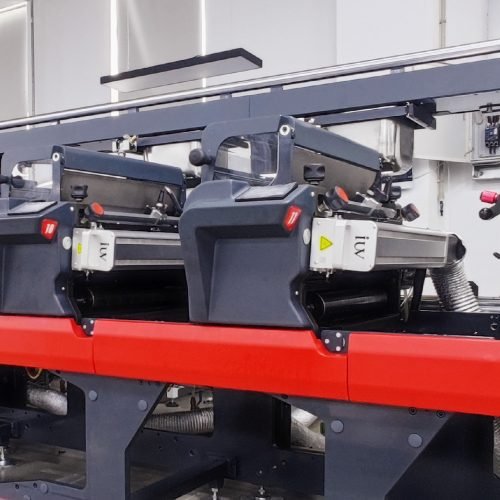
Installing UV LED curing systems on narrow web flexographic presses requires detailed planning to ensure compatibility with existing press architecture and production requirements. Flexo label presses operate under tight tolerances, where curing stability directly affects ink transfer, adhesion, and final print quality. Before installation begins, it is necessary to evaluate press configuration, available mounting space, electrical capacity, and cooling infrastructure.
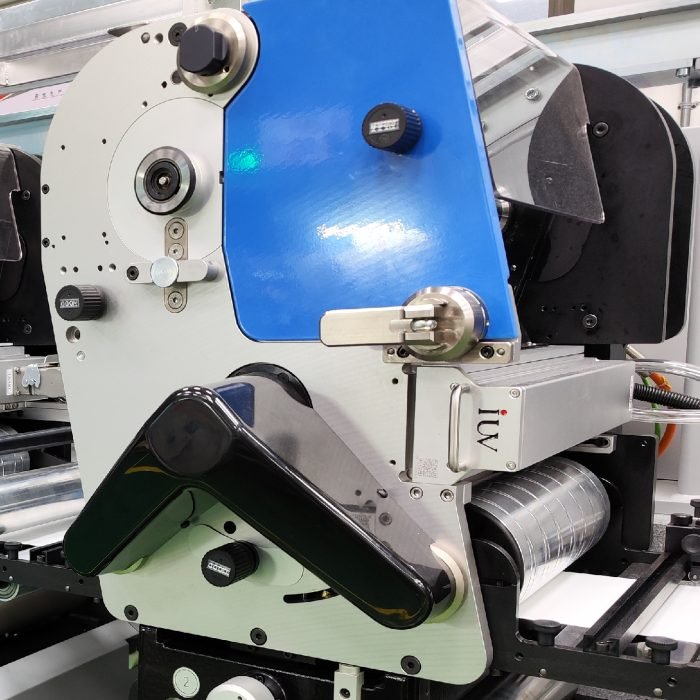
The type of flexo press, whether inline or modular, determines where LED curing units can be positioned. Interstation curing locations are typically preferred for multi-color wet-on-wet printing, while end-of-line curing ensures complete polymerization. Careful planning at this stage reduces installation time and prevents disruptions during production.
Ink compatibility must also be confirmed in advance. LED UV curing requires inks formulated for specific wavelengths, commonly 385 nm or 395 nm. Matching ink chemistry with the LED output ensures efficient curing and avoids incomplete polymerization during operation.
Mechanical Installation of LED UV Curing Modules
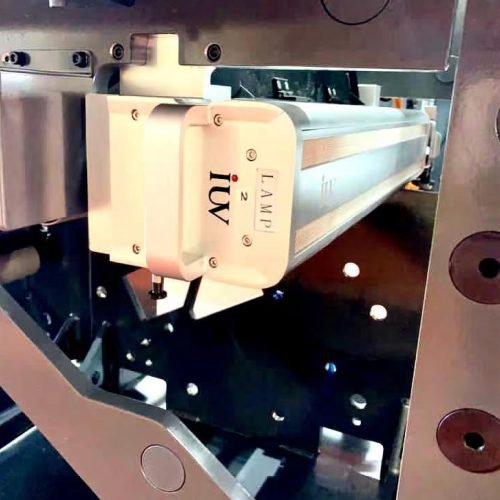
Mechanical installation begins with selecting the correct mounting position relative to the print station. The curing lamp must be aligned parallel to the substrate to ensure uniform irradiance across the web width. The distance between the LED module and the substrate is critical, as it directly affects energy intensity.
Mounting brackets should provide stable support and allow fine adjustment of lamp position. During installation, it is important to ensure that the module does not interfere with web path components such as rollers or guide systems. Proper clearance must be maintained to avoid contact with the substrate during high-speed operation.
In narrow web flexo presses, vibration control is essential. The mounting structure must be rigid enough to prevent movement that could lead to uneven curing. Once installed, alignment should be verified using measurement tools to confirm consistent positioning across the entire width.
Electrical Integration and Power Configuration
Electrical integration ensures that the LED curing system operates reliably within the press environment. Power supplies must be matched to the LED module specifications, providing stable voltage and current under varying load conditions. Proper grounding and shielding are necessary to prevent electrical interference with press control systems.
Integration with the press control system allows synchronization between curing output and press speed. Encoder signals are often used to adjust LED intensity in real time, maintaining consistent energy dose as production conditions change. This synchronization is critical for achieving stable curing during acceleration and deceleration.
Control interfaces should be accessible for operators to adjust parameters such as power level and operating mode. Clear communication between the LED system and the press ensures smooth operation and reduces the risk of curing inconsistencies.
Cooling System Setup and Thermal Management
Effective cooling is essential for maintaining LED performance and longevity. LED diodes generate heat during operation, and excessive temperature can reduce output intensity and shorten system lifespan. Cooling systems may use air or liquid circulation depending on the module design.
During installation, cooling lines or airflow channels must be properly connected and tested. Consistent coolant flow or air circulation ensures stable operating temperature across the LED array. Monitoring temperature levels during operation helps verify that the system remains within safe limits.
Thermal management also contributes to consistent curing performance. Stable diode temperature ensures uniform irradiance, which is essential for maintaining print quality across long production runs.
Calibrating Irradiance and Energy Output
After installation, calibration of irradiance and energy output is required to match curing performance with printing conditions. Radiometric measurement tools are used to measure peak irradiance and total energy dose across the web width. These measurements help identify any inconsistencies in energy distribution.
Adjustments to LED power output and lamp positioning ensure that the required energy reaches the ink surface. Calibration must consider factors such as press speed, ink thickness, and substrate type. Proper calibration prevents undercuring, which can lead to adhesion failure, and overcuring, which may cause brittleness.
Uniform energy distribution is particularly important in narrow web printing, where variations across the width can affect color consistency and gloss uniformity. Regular verification ensures that curing performance remains stable over time.
Integrating Interstation Curing for Multi-Color Printing
Interstation LED curing plays a critical role in multi-color flexographic printing. Partial curing between print stations stabilizes each ink layer, preventing spreading and maintaining dot definition. This controlled curing approach supports accurate registration and clean ink trapping.
During setup, interstation curing levels must be carefully adjusted. Excessive curing may reduce the ability of subsequent layers to bond, while insufficient curing can lead to smearing or dot gain. Finding the correct balance ensures optimal interaction between layers.
Final curing units provide the energy required for complete polymerization. These units are typically set at higher output levels to ensure that all ink layers achieve full mechanical strength and chemical resistance.
Matching Anilox Configuration with LED Curing
Anilox roll selection directly influences curing requirements. Higher cell volumes deposit thicker ink films, which require increased energy for complete curing. Lower volumes used for fine detail printing require precise control to avoid excessive surface curing.
During system setup, LED output should be matched to the anilox configuration used in each print station. This ensures that each ink layer receives the appropriate energy dose. Proper matching improves curing efficiency and supports consistent print quality.
Ink formulation must also be considered. LED-compatible inks are designed to respond efficiently to specific wavelengths, allowing rapid and uniform polymerization. Ensuring compatibility between ink, anilox, and curing system is essential for stable operation.
Substrate Considerations During Installation and Setup
Different substrates require different curing conditions. Paper substrates may absorb part of the ink, affecting the energy required for complete polymerization. Film substrates, such as polypropylene or polyethylene, have low surface energy and require surface treatment to improve adhesion.
LED UV curing is well suited for heat-sensitive materials due to its low infrared output. During setup, curing parameters should be adjusted to prevent substrate deformation while ensuring strong ink bonding. Testing on representative substrates helps confirm that curing conditions are appropriate for production.
Consistent substrate handling, including proper web tension and alignment, supports uniform curing. Variations in tension can affect the distance between the lamp and the substrate, influencing irradiance levels.
Testing and Validation Before Production
Before full production begins, the installed system must be thoroughly tested. Trial runs should be conducted at different speeds and curing settings to verify performance. Printed samples should be evaluated for adhesion, gloss, and resistance to mechanical stress.
Testing ensures that the curing system operates reliably under real production conditions. Adjustments can be made based on observed results, refining the balance between speed and curing quality. Validation reduces the risk of defects during actual production runs.
Continuous monitoring during initial production helps confirm that the system maintains consistent performance. Data collected during this phase can be used to establish standard operating parameters for future jobs.
Maintaining System Performance Over Time
Once installed, maintaining consistent performance requires regular inspection and maintenance. Optical surfaces should be kept clean to ensure maximum energy transmission. Cooling systems must be monitored to prevent overheating.
Periodic measurement of irradiance helps detect gradual changes in output. Adjusting system settings based on these measurements ensures that curing performance remains stable. Preventive maintenance extends system lifespan and supports consistent print quality.
Reliable operation of the curing system contributes to overall press efficiency. Minimizing downtime and maintaining stable output allows narrow web flexo presses to operate at optimal performance levels.
Conclusion
Installing UV LED curing systems on narrow web flexo presses involves coordinated mechanical, electrical, and process adjustments. Proper positioning, accurate calibration, and integration with press controls ensure consistent curing performance. By aligning LED output with ink formulation, anilox configuration, and substrate characteristics, printers achieve reliable polymerization and high-quality label production. Careful installation and ongoing maintenance support efficient operation and stable performance across demanding flexographic applications.