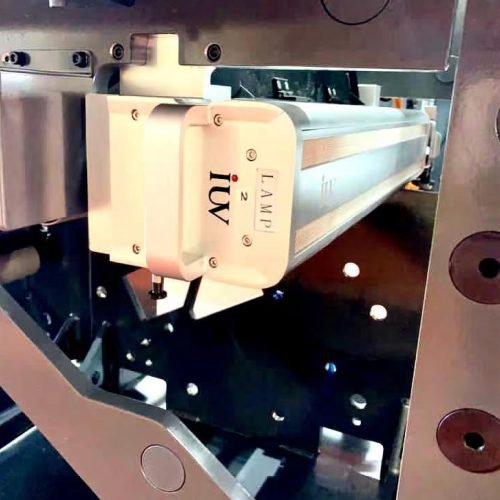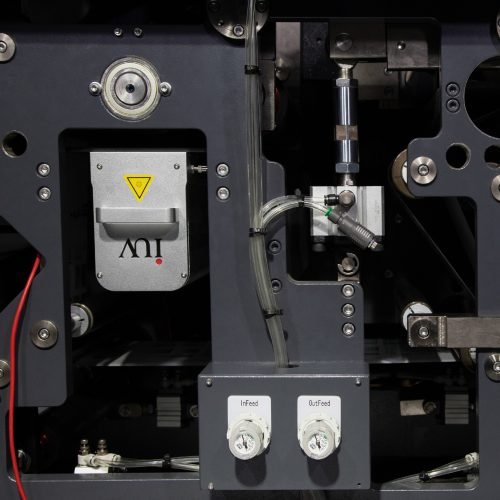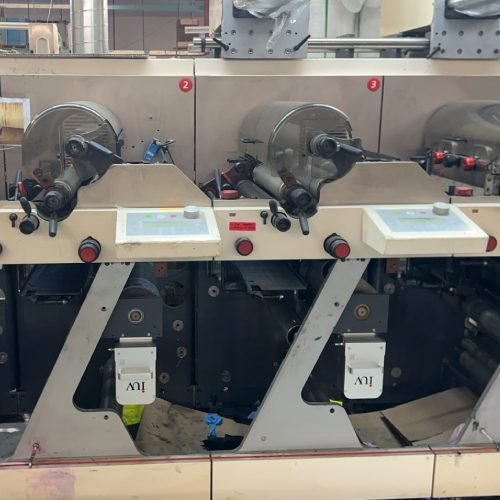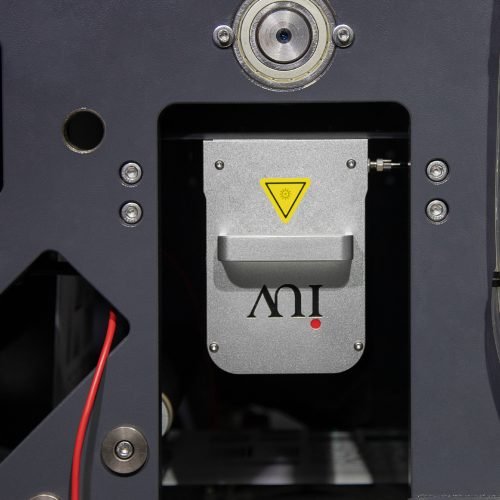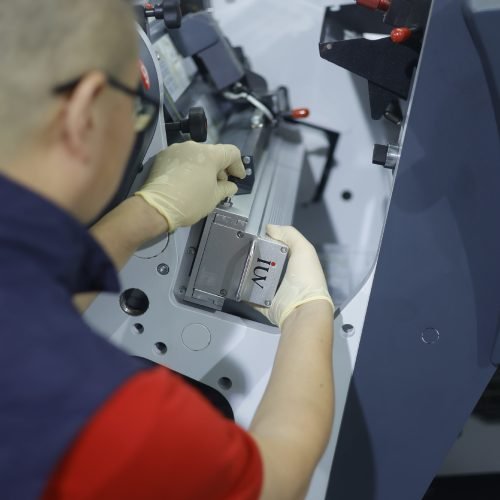
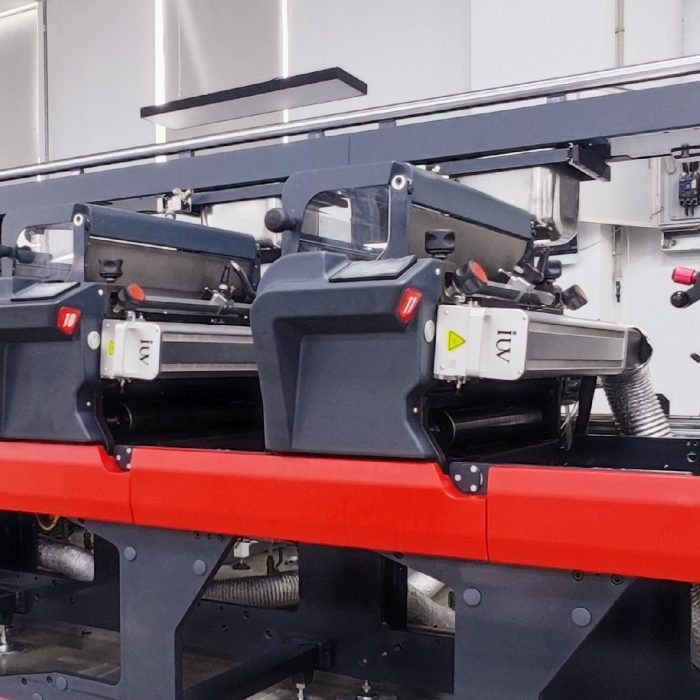
LED UV curing technology has become widely adopted in modern label printing production, particularly in narrow web printing environments where efficiency, process control, and substrate versatility are essential. Flexible label materials, including polymer films and lightweight paper structures, present specific engineering challenges when exposed to UV ink curing processes. While LED UV curing systems offer advantages such as reduced heat emission and stable optical output, the interaction between curing energy, ink chemistry, and substrate structure can still influence dimensional stability, adhesion behavior, and overall press performance.
In practical flexographic printing systems and hybrid offset label presses, substrate stability during LED UV curing is not determined by a single parameter. Instead, it is the result of multiple interacting factors that include substrate mechanical properties, thermal sensitivity, ink layer characteristics, curing exposure conditions, and press transport dynamics. Engineers responsible for press integration and process optimization must therefore evaluate how these factors influence each other under real production conditions.
Characteristics of Flexible Label Materials in Narrow Web Printing
Flexible label materials used in narrow web printing typically consist of multilayer constructions designed for pressure-sensitive labeling applications. These constructions may include a printable face stock, an adhesive layer, and a release liner. The printable surface can be paper-based or polymer-based, with materials such as polypropylene, polyethylene, or polyester commonly used in label production.
Each material type exhibits different thermal and mechanical properties. Polymer films generally have lower stiffness and may expand or contract under localized heat exposure. Paper-based substrates can absorb some thermal energy but may also demonstrate dimensional variation when exposed to changes in moisture or temperature.
When LED UV curing is applied during flexographic printing, even moderate thermal input from curing units can influence these substrate characteristics. Although LED curing produces less infrared radiation compared with conventional arc lamps, energy concentration near the curing zone can still create localized temperature gradients. In high-speed narrow web printing lines, repeated exposure to these conditions across multiple curing stations may gradually affect substrate dimensional stability.
Dimensional changes in the substrate can directly influence print registration accuracy. In hybrid offset and flexographic presses, where multiple printing units are aligned sequentially, even small variations in substrate length or tension can lead to misregistration between colors or between printing technologies.
Thermal Influence of LED UV Curing on Substrate Behavior
Thermal management remains one of the most important engineering considerations when implementing LED UV curing systems in label printing production. Although LED curing technology is designed to minimize heat exposure to the substrate, the curing process still involves energy absorption by both the ink layer and the substrate surface.
In flexible film materials, localized heating can cause slight expansion in the machine direction or cross direction of the web. These dimensional changes may not be visible immediately but can accumulate across multiple printing stations. In flexographic printing systems, this phenomenon can affect the stability of web tension and the alignment between print units.
Substrate deformation may also influence contact conditions between the substrate and printing components. For example, if a thin film substrate softens slightly due to thermal exposure, its interaction with impression cylinders or transport rollers may change. This can lead to variations in ink transfer behavior or slight fluctuations in coating thickness during varnish application.
Thermal influence is particularly relevant in hybrid press configurations where LED UV curing units are installed after both offset and flexographic stations. Each curing event introduces a small amount of thermal energy into the web. Without adequate cooling strategies or thermal control, the cumulative effect may reduce substrate dimensional stability over the full length of the press.
Interaction between Ink Curing and Substrate Surface Properties
Ink adhesion and curing performance are closely related to the surface properties of the label substrate. Flexible label materials often undergo surface treatment processes such as corona or plasma treatment in order to increase surface energy and improve ink wetting behavior.
In LED UV curing environments, the polymerization reaction of UV inks begins rapidly after exposure to curing energy. If the ink layer polymerizes before adequate surface wetting occurs, the resulting ink film may exhibit limited mechanical anchoring to the substrate surface. This issue is more likely to occur when printing on low surface energy polymer films.
Substrate stability plays a role in this interaction. When the substrate surface temperature changes during curing, the surface energy characteristics of the material can also shift slightly. This may influence the ability of the ink layer to spread and anchor effectively before the curing reaction progresses.
In flexographic printing systems where multiple ink layers or coatings are applied sequentially, substrate surface conditions after each curing stage may influence the adhesion of subsequent layers. Engineers must therefore consider how curing exposure affects not only the current ink layer but also the surface condition of the web as it moves through the press.
Mechanical Transport Stability in Narrow Web Press Systems
Narrow web printing relies on precise web transport control to maintain consistent print quality across long production runs. Substrate stability during LED UV curing has direct implications for the mechanical behavior of the web as it travels through the press.
Flexible label materials are typically transported under controlled tension between multiple rollers, printing stations, and curing units. If the substrate experiences thermal expansion or localized softening near curing zones, the tension distribution across the web may change slightly. Even minor variations in tension can affect the contact pressure between the substrate and printing plates or anilox rollers.
In flexographic printing, consistent contact conditions are essential for uniform ink transfer. When substrate stability is compromised, operators may observe variations in print density or image sharpness. These effects are not always immediately attributed to curing conditions, but in many cases the root cause can be traced to subtle changes in substrate behavior caused by repeated curing exposure.
Hybrid offset and flexographic presses add further complexity because the substrate must pass through printing units with different mechanical configurations. Offset units involve blanket cylinders and plate cylinders, while flexographic units rely on anilox rollers and flexible printing plates. Maintaining stable substrate transport across these different technologies requires careful coordination of curing system placement and web tension control.
Substrate Compatibility and Ink Formulation Considerations
Another factor affecting substrate stability during LED UV curing is the compatibility between ink formulations and substrate materials. UV inks used in flexographic and offset printing contain photoinitiators, oligomers, and monomers designed to polymerize under specific curing conditions. The interaction between these chemical components and the substrate surface can influence adhesion strength and curing uniformity.
Certain flexible films may contain additives, coatings, or slip agents that influence how the ink layer behaves during curing. If the ink formulation does not interact properly with these surface characteristics, the resulting polymerized film may demonstrate reduced adhesion or increased brittleness.
Engineers evaluating LED UV curing performance must therefore consider both the chemical composition of the ink system and the physical properties of the substrate. Laboratory testing and press trials are often required to verify that the curing conditions provide stable polymerization without introducing mechanical stress in the substrate structure.
Substrate compatibility also influences low migration printing requirements. In applications involving food packaging labels, incomplete curing can allow residual ink components to migrate through the label structure. Ensuring adequate curing while maintaining substrate stability is therefore a critical requirement for compliance with packaging safety standards.
Press Retrofitting and System Integration Constraints
Many narrow web printing presses currently in operation were originally designed for conventional UV curing technologies. When LED UV curing systems are retrofitted into these presses, engineers must evaluate how the new curing units interact with the existing press architecture and substrate transport system.
Space limitations within older press frames may restrict the optimal positioning of curing units. If curing units are installed too close to sensitive substrate transport components, localized heating or airflow disturbances may influence web stability. In addition, the optical output of the curing system must be aligned carefully with the printed image area to ensure uniform curing across the web width.
Electrical integration and control system synchronization are also important considerations. LED UV curing units must respond dynamically to changes in press speed and production conditions. If the curing output does not adjust properly during press acceleration or deceleration, the substrate may experience inconsistent curing exposure that affects both ink polymerization and dimensional stability.
Operational Strategies for Maintaining Substrate Stability
Maintaining substrate stability during LED UV curing requires coordinated process control across multiple aspects of label printing production. Press operators and engineers often monitor web tension, substrate temperature, and curing system performance to identify conditions that may influence substrate behavior.
Cooling system efficiency is particularly important in long production runs. Proper heat dissipation helps maintain stable operating conditions for both the curing system and the surrounding press components. In addition, regular inspection of curing unit optical surfaces ensures that light output remains uniform across the web width.
Substrate handling procedures can also influence stability. Careful storage and conditioning of flexible label materials before printing can reduce the risk of dimensional variation caused by environmental changes. Consistent substrate preparation helps ensure that the material behaves predictably when exposed to curing energy during production.
Conclusion
Substrate stability during LED UV curing represents a complex engineering challenge in modern label printing production. Flexible label materials respond to curing exposure through a combination of thermal, mechanical, and chemical interactions that influence both print quality and process reliability.
In narrow web printing and hybrid offset flexographic press configurations, maintaining stable substrate behavior requires careful coordination between curing system design, ink formulation, substrate preparation, and press transport control. Engineers responsible for press integration must evaluate these relationships under real production conditions to ensure that curing efficiency does not compromise substrate dimensional stability.
As LED UV curing technology continues to evolve, improvements in thermal management, curing system control, and ink chemistry will further enhance compatibility with flexible label materials. However, achieving consistent performance will continue to depend on a thorough understanding of the interactions between curing energy, substrate structure, and printing process dynamics.