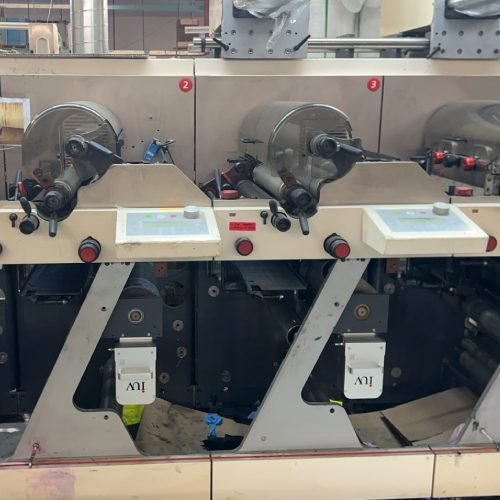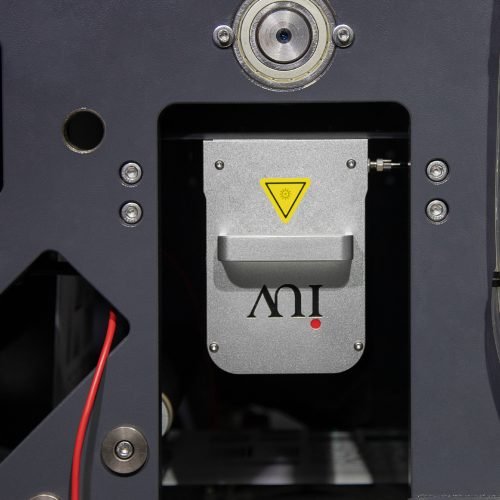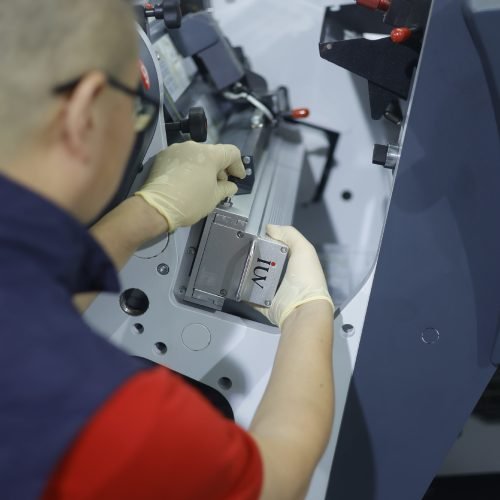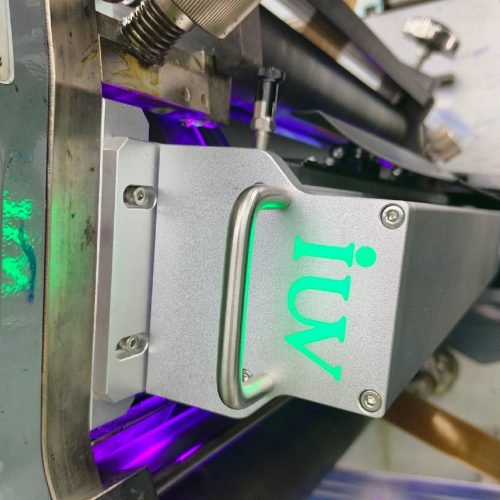
In narrow web flexographic printing, color consistency is one of the most sensitive indicators of process stability. Brand owners expect repeatable color across long production runs, reorders, and multiple press lines. Any deviation in cured ink appearance can lead to rejection, waste, and loss of confidence.
LED UV curing systems play a central role in achieving this consistency. As LED UV technology replaces traditional lamps in label and letterpress printing, attention has shifted from short-term curing performance to long-term stability. One of the most important but often underestimated factors is LED UV diode aging and its impact on color consistency.
Understanding LED UV Diode Aging
LED UV diode aging refers to the gradual change in optical and electrical performance over operating time. Unlike conventional UV lamps, LEDs do not fail abruptly. Instead, their radiant output slowly declines, and their emission characteristics can shift.
In flexo printing, this aging process affects the delivered UV dose and spectral balance. Since ink curing depends on both energy level and wavelength, even small changes can influence polymerization behavior and final color appearance.
Optical Output Decay and Its Printing Implications
As LED UV diodes age, total irradiance at the substrate surface decreases. In high-speed narrow web presses, curing margins are often tight. Reduced output means inks may not reach full polymerization at the same press speed and exposure settings.
Incomplete or marginal curing alters ink film properties. Gloss level, surface hardness, and pigment orientation can change. These variations directly affect perceived color density and hue, especially in solid areas and brand-critical colors.
Spectral Stability and Photoinitiator Response
Beyond total power loss, diode aging can influence spectral distribution. While the dominant wavelength remains relatively stable, secondary emission characteristics may shift slightly over time.
Flexographic inks are formulated with specific photoinitiators tuned to defined UV wavelengths. If spectral output changes, photoinitiator efficiency may decline. This results in uneven curing across different ink colors, leading to subtle but measurable color shifts on press.
Interaction Between Aging LEDs and Ink Formulations
Not all inks respond equally to aging LED UV systems. High-opacity whites, dense spot colors, and heavily pigmented inks are more sensitive to curing energy changes. As LED output declines, these inks are often the first to show inconsistency.
In multi-color label printing, differences in curing response between colors can disrupt trapping and overprint behavior. This alters color balance and introduces variability across the web and between print stations.
Impact on Repeatability and Job Re-Runs
Repeatability is essential in label production. Customers expect reprints to match previous deliveries. When LED UV diodes age without compensation, curing conditions drift over time.
A job printed months earlier under higher UV output may not match current production if aging is not accounted for. This makes color matching more difficult and increases setup time, ink adjustments, and material waste.
Press Speed Sensitivity and Aging Effects
As LED UV output decreases, presses become more sensitive to speed variation. At high web speeds, exposure time is short, leaving less tolerance for reduced irradiance.
Operators may compensate by slowing the press or increasing output settings. Both approaches affect productivity and thermal load. Without proper monitoring, these adjustments can introduce further variability and accelerate diode degradation.
Measuring Aging Effects Through Process Data
Monitoring optical output over time provides insight into diode aging. Regular irradiance measurements at the substrate plane help correlate curing performance with color stability.
In flexo label printing, linking these measurements to color data such as density and delta E values reveals how aging impacts visual results. Trend analysis allows early detection of drift before customer complaints arise.
Compensation Strategies in Production
To maintain color consistency, aging effects must be compensated in a controlled way. Increasing drive current within safe limits can partially restore output, but this also raises junction temperature.
Alternative strategies include adjusting exposure geometry, optimizing ink formulations, or revising press speed profiles. The most effective approach balances curing stability with long-term system reliability.
Role of Cooling and Thermal Management
Thermal conditions strongly influence aging rate. Poor cooling accelerates output decay and increases variability between LED modules. In narrow web presses with compact UV cassettes, effective liquid or air cooling is essential.
Stable operating temperature slows aging and helps maintain uniform output across the diode array. This uniformity is critical for consistent curing and color across the full web width.
Differences Between New and Aged LED Arrays
New LED UV systems often deliver excess curing capacity. As systems age, this buffer gradually disappears. Printing processes that rely on this initial margin become vulnerable over time.
Understanding this transition helps printers design processes that remain stable throughout the LED lifecycle, rather than only during early operation.
Maintenance Practices to Support Color Stability
Routine maintenance supports predictable aging behavior. Cleaning optics, checking cooling performance, and verifying electrical stability all help preserve output consistency.
Documenting UV output and correlating it with color measurements builds a reliable reference for production decisions. This data-driven approach reduces guesswork and improves confidence in long-term color control.
Relevance for Narrow Web Label Converters
For narrow web converters, color consistency is a competitive advantage. Managing LED UV diode aging protects this advantage by ensuring stable curing conditions across time and presses.
Converters running multiple shifts and high volumes benefit most from proactive aging management. It reduces scrap, minimizes press adjustments, and supports predictable delivery schedules.
Long-Term Perspective on LED UV Aging
LED UV diode aging is unavoidable, but its impact can be controlled. By understanding how aging affects curing energy, spectral response, and ink behavior, printers can maintain color consistency throughout the system’s service life.
This technical awareness transforms LED UV curing from a static setup into a managed process variable, aligned with modern flexographic quality requirements.