Tutorial: Managing UV Curing for Low-Migration Inks in Label Printing
Introduction
UV curing has become a backbone technology for label printing, delivering fast production speeds, sharp images, and strong adhesion. When low-migration inks are required—especially for food-contact labels—the curing process must be carefully controlled. Light source selection, ink chemistry, substrates, and press architecture all influence migration performance. This tutorial blends practical advice for label printing, flexography (flexo), gravure (rotogravure), and narrow-web applications with current UV curing knowledge, including LED-UV technology and low-migration ink strategies.
Understanding Low-Migration Inks and Migration Testing
Low-migration inks are formulated to limit the transfer of constituents from ink into surrounding media under defined conditions. For label printing, this means photoinitiators, monomers, oligomers, and additives are selected and bundled to minimize leachables in contact with primary packaging or food. Key concepts include:
- Specific migration vs. total migration: Specific migration focuses on individual substances; total migration sums all leachables.
- Regulatory context: Compliance typically hinges on food-contact regulations and declarations from ink suppliers. Records should show traceability of materials and tested migration results.
- Ink formulation considerations: Low-migration inks often use photoinitiators and monomers with reduced migration potential, along with optimized oligomer blends and barrier-compatible additives.
- Testing strategies: In-house QC may measure energy dose and surface hardness, while formal migration testing follows accredited protocols with representative simulants and temperatures.
UV Curing Technologies: LED vs Mercury Lamps
Understanding the curing source is critical for low-migration performance.
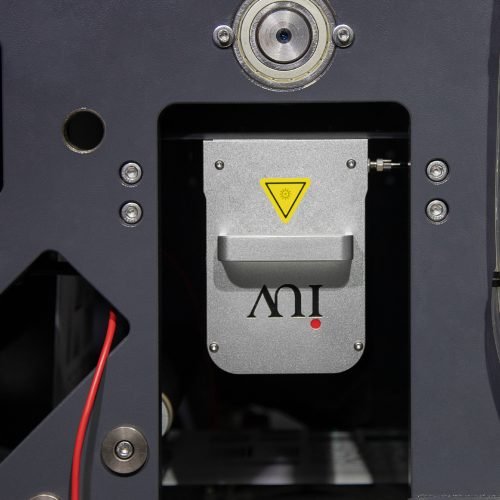
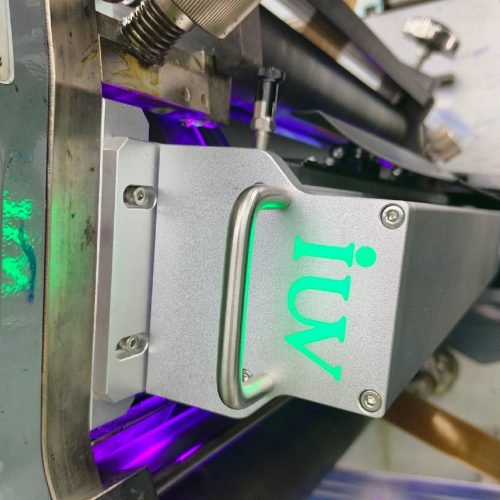
- LED-UV advantages: Instant on/off, lower heat load on substrates, longer lamp life, and energy efficiency. LEDs enable precise spectral control to match chosen photoinitiators, which helps achieve complete cure with minimal overexposure.
- Mercury-arc lamps: Established, broad-spectrum UV sources with high peak irradiance. They often require more heat management and periodic lamp replacement but can be forgiving with a wider range of inks.
- Implications for low-migration inks: LED-UV demands inks with photoinitiators that respond efficiently to the LED spectrum. Inconsistent cure can increase surface uncured chemistry, potentially impacting migration performance. A well-matched ink and LED system yields consistent crosslink density and reduced extractables.
- Process considerations: LED systems typically use multi-point arrays for uniform energy delivery across narrow web widths. Ensure the cure width, lamp distance, and web tension allow for stable energy dosing.
Process-Specific Guidelines for Label Printing
Label production spans flexography, gravure, and narrow-web printing. Each process has distinct curing dynamics and ink interactions with substrates.
Flexographic (Flexo) Printing
- Ink and doctoring: Flexo inks for UV cure must be formulated for low migration while maintaining good rheology at press speeds. Viscosity, tack, and open time influence ink laydown and cure uniformity.
- Anilox and transfer efficiency: The choice of anilox line (cell volume) influences ink film thickness and cure depth. Higher line counts can deliver finer color but require precise curing to avoid pinholes or under cure.
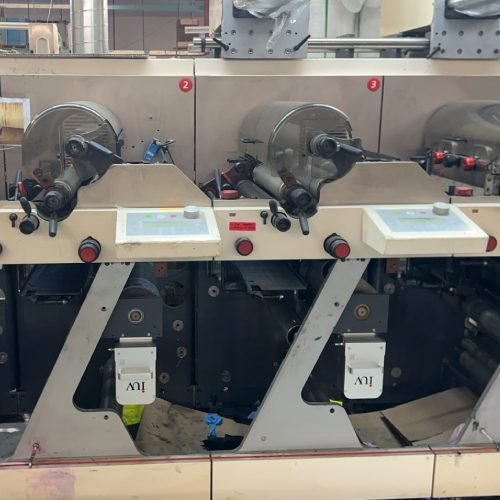
- Curing geometry: Place UV lamps or LED heads to maximize exposure across the printed area. For narrow-web flexo, wrap and angle considerations matter to minimize shadowing on opaque or colored inks.
- Substrate interaction: Label stock—PET, BOPP, PE-coated laminates, or paper—often includes primers or primers with functional barriers. Ensure ink adhesion and interlayer compatibility without compromising migration performance.
- Quality indicators: Monitor cure through gloss, hardness, and color stability. Inline radiometry helps maintain a consistent energy dose.
Gravure (Rotogravure) Printing
- Ink chemistry and surface cure: Gravure inks used in UV curing are frequently high-solids systems formulated for deep color and smooth laydown. Keep cure rates high enough to crosslink robustly, even on glossy films.
- Image quality with UV inks: Gravure’s cell geometry provides excellent ink transfer. Ensure the final cure achieves full polymerization to minimize surface sol fractions that could migrate.
- Photoinitiator selection: Gravure inks benefit from photoinitiators that respond well to LED spectra if LED curing is used. Low-migration photoinitiators help minimize potential leachables.
- Substrates and barrier layers: For label substrates that include barrier films, verify that print and laminate layers cure uniformly without creating delamination risks.
- Process stability: Maintain consistent web tension, doctor blade settings, and chamber design (if applicable) to prevent streaks and pinholes after curing.
Narrow-Web Printing
- Speed vs cure balance: Narrow-web presses demand fast cure to keep up with high line speeds. LED-UV helps by enabling rapid crosslinking without excessive heating.
- Energy distribution: A uniform energy profile across the narrow web is essential. Use properly spaced LED emitters or reflective optics to minimize cure variance along the web path.
- Dry trap and ink cohesiveness: Narrow-web lines can show dot gain if the ink does not cure uniformly. Calibrate ink film thickness and curing energy to keep color integrity intact.
- Substrate accommodation: For labels on thin films or heat-sensitive substrates, manage heat load carefully. LED-UV typically reduces thermal stress, supporting delicate materials.
- Inline quality checks: Use spectrometers or radiometers to verify energy density, and apply gloss and adhesion checks to validate cure status.
Ink Formulation and Substrates for Low-Migration Performance
- Substrate compatibility: PET, BOPP, PE-coated films, and formable papers each interact differently with UV inks. Barrier layers, primers, and adhesive systems influence migration risk and cure behavior.
- Photoinitiators and migration: Choose photoinitiators with proven low-migration characteristics, especially for food-contact labels. Supplier declarations and migration testing data should guide selection.
- Additives and oligomers: Opt for low-migration oligomer platforms and UV absorbers that support cure depth without increasing extractables.
- Ink-softening and surface energy: Achieve a balance between cure rigidity and surface gloss. Ensure surface energy remains above the level needed for durable ink-film adhesion after curing.
- Adhesives and facings: If the label involves multiple layers, ensure adhesive systems do not introduce migration concerns. Cross-check sealed laminates and liner interactions.
Quality Control: In-Line and Off-Line Verification
- Dose monitoring: Use inline radiometers to confirm that each zone of the UV array delivers the intended energy dose. Track dose versus ink color and film thickness.
- Cure metrics: Evaluate cure through scratch resistance, solvent resistance in test panels, and rub testing. For low-migration goals, include a migration-focused test panel as part of routine QC.
- Printability checks: Monitor dot gain, color density, and maximum optical density under stable curing conditions. Keep a log of press conditions and energy settings.
- Documented traceability: Maintain records for substrate lots, ink batches, and curing equipment calibration. This supports migration compliance and problem tracing.
Troubleshooting Common Issues
- Under-cure: Symptoms include tacky surfaces, poor ink adhesion, or easily abraded films. Action: increase energy dose, verify LED spectrum compatibility, and inspect nozzle or lamp cleanliness.
- Over-cure: Excessive crosslinking can cause embrittlement or cracking of flexible labels. Action: recalibrate dose, adjust ink film thickness, and verify substrate sensor readings.
- Ink migration symptoms: Look for edge translucency or solvent-like odors. Action: confirm photoinitiator choice, verify curing depth, and review substrate barrier integrity.
- Print defects with UV inks: Pinholes, hickeys, or poor adhesion may indicate curing too fast, improper ink rheology, or contaminants on the press. Action: adjust print speed, clean rollers, and verify the ink’s viscosity at operating temperature.
Maintenance and Safety Considerations
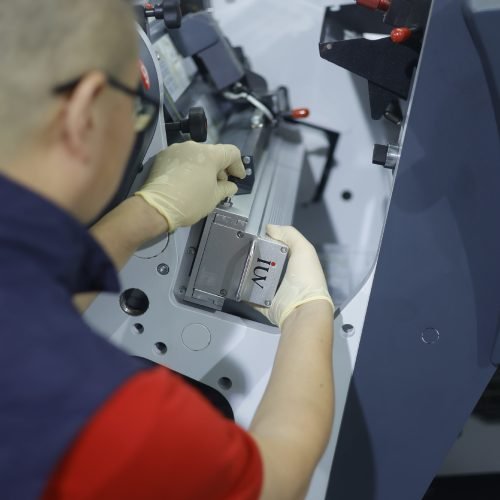
- Equipment upkeep: Clean UV lenses and reflective surfaces regularly. Replace worn seals and verify cooling systems on LED arrays or mercury lamps.
- Substrate and consumable handling: Store inks and photoinitiator components per manufacturer guidance. Protect from light exposure to maintain stability.
- Safety protocols: Follow standard PPE for UV work when applicable, and ensure proper shielding around UV sources to prevent exposure.
Compliance and Best Practices
- Supplier collaboration: Use inks and primers backed by migration testing data and regulatory compliance statements. Maintain a clear chain of custody for all materials.
- Documentation: Keep a current material safety data sheet (MSDS) for each ink and adhesive, plus any migration test reports. This supports audits and customer requirements.
- Process validation: When switching ink families, revalidate cure settings, substrate compatibility, and migration expectations. Document results for future references.
- Continuous improvement: Track defect trends, analyze root causes, and implement preventive actions. Regularly review LED performance, energy density, and substrate interactions.
Conclusion
Managing UV curing for low-migration inks in label printing requires a holistic approach. The interplay between ink chemistry, curing technology, and substrate architecture determines both print quality and regulatory compliance. By aligning LED-UV or lamp-based curing with process-specific needs in flexo, gravure, and narrow-web applications, printers can achieve durable labels that meet migration standards without sacrificing speed or image quality. Ongoing testing, equipment maintenance, and meticulous documentation are the cornerstones of a robust, migration-conscious production workflow.