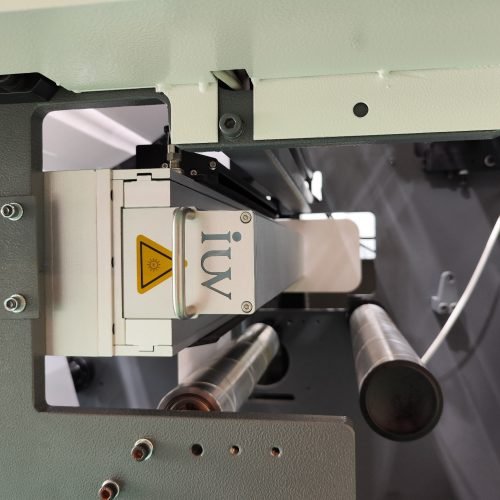
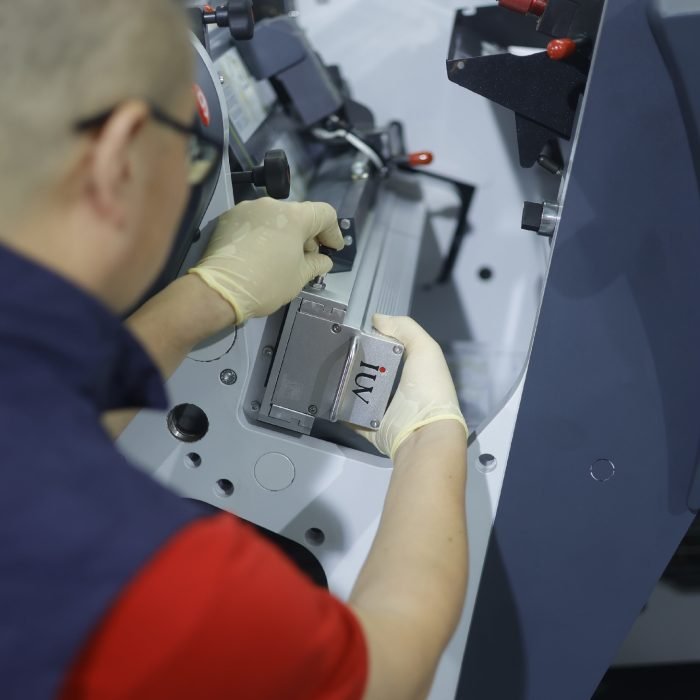
In narrow web flexographic printing and UV offset label production, fine screen ruling demands precise control of ink transfer and curing energy. When LED UV systems are introduced into high-resolution applications, matching output intensity to anilox cell geometry becomes critical. The interaction between ink film thickness and UV energy directly influences dot reproduction, surface cure, and final print durability.
Fine screen ruling in label printing often exceeds 150 to 200 lines per inch, especially for cosmetic, pharmaceutical, and premium food packaging. At this resolution, ink laydown must remain extremely consistent. The anilox roll, defined by its cell volume, cell depth, and engraving angle, controls how much UV ink reaches the plate and substrate. LED UV output must be calibrated to match this controlled ink volume, ensuring complete polymerization without dot distortion.
Anilox Cell Geometry in High-Resolution Flexographic Printing
Anilox rolls used for fine screen ruling typically feature lower cell volumes and higher line counts. Common specifications for detailed process work range between 2.0 and 4.0 BCM, depending on substrate type and ink formulation. The cell shape, whether hexagonal, elongated hex, or channeled engraving, influences ink release efficiency.
In narrow web UV flexography, shallow cells are preferred for highlight dots and fine text. These cells deposit thin ink films that preserve tonal values and reduce dot gain. However, thin films require precise UV energy control. Excessive irradiance can cause surface over-cure, while insufficient output leads to incomplete crosslinking.
LED UV curing systems differ from traditional mercury lamps in spectral distribution. LED units emit narrowband UV-A energy, commonly around 385 or 395 nm. UV ink photoinitiator systems must be optimized for this wavelength. When ink film thickness changes due to anilox geometry, LED output must be adjusted accordingly to maintain proper curing depth.
Ink Film Thickness and Polymerization Dynamics
Fine screen ruling results in small, controlled ink deposits. With low-volume anilox rolls, the ink layer is thinner and more uniform. This improves image sharpness but narrows the curing process window. In UV label printing, polymerization occurs when photoinitiators absorb UV energy and initiate crosslinking reactions. The energy must penetrate through the entire ink layer.
If LED UV output is too low, the base of the ink film remains under-cured. This reduces adhesion, chemical resistance, and scuff durability. In multi-color wet-on-wet flexographic printing, under-cured layers can also affect intercoat bonding. Conversely, excessive irradiance can create rapid surface curing, trapping uncured material beneath and increasing brittleness.
Matching LED UV intensity to anilox cell geometry ensures balanced curing. Thicker films from higher-volume rolls require greater energy density. Finer engravings with thin films demand moderate but uniform irradiance to avoid overheating and dot deformation.
Calibrating LED UV Systems for Fine Screen Applications
Calibration begins with measuring peak irradiance and total energy dose using a UV radiometer designed for LED wavelengths. For narrow web label presses operating between 50 and 200 meters per minute, energy dose must align with ink manufacturer recommendations. Typical energy ranges vary from 200 to 600 mJ/cm², depending on film thickness.
When running fine screen ruling above 175 lpi, start with moderate LED intensity and gradually increase while monitoring cure quality. Adhesion testing, solvent rub tests, and gloss evaluation help confirm full polymerization. Monitoring dot gain under magnification ensures that curing energy does not distort highlight areas.
In UV offset printing, similar principles apply. Although ink transfer differs from flexography, ink film thickness remains critical. Offset UV inks are generally thinner, but high-speed sheetfed production still requires precise LED output control to maintain consistent curing across the sheet.
Influence of Press Speed and Substrate Type
Press speed directly affects exposure time under LED arrays. At higher speeds, exposure duration decreases, requiring higher peak irradiance to maintain energy dose. However, increasing intensity without considering anilox cell volume may over-cure thin films.
Film substrates such as PET, BOPP, and PVC reflect UV energy differently than paper stocks. Reflective films can enhance curing efficiency by bouncing UV light back into the ink layer. Paper absorbs part of the energy, reducing effective cure depth. When switching substrates in narrow web label production, recalibration of LED output is necessary.
Temperature sensitivity must also be considered. Although LED UV systems generate less heat than mercury lamps, localized heating can still affect thin films. Fine screen ruling is particularly sensitive to heat distortion. Stable web tension and controlled cooling airflow support consistent results.
Managing Multi-Color Wet-on-Wet Configurations
Modern narrow web presses often use multiple LED UV stations positioned after each print unit. In wet-on-wet configurations, partial curing between colors may be required. Anilox cell geometry for each color can differ depending on coverage and function.
For example, white ink layers often use higher cell volumes to achieve opacity. These thicker films demand higher LED output for full cure. Process colors with fine screens use lower volumes and require carefully controlled energy to preserve detail. Balancing output between stations ensures that each layer polymerizes correctly without compromising subsequent ink transfer.
Hybrid press lines combining LED and conventional UV systems require additional calibration. Mercury lamps provide broader spectral output, which can penetrate deeper into thicker films. When transitioning between technologies, ink formulation compatibility and photoinitiator response must be verified.
Avoiding Common Curing Defects in Fine Screen Work
Banding, mottling, and inconsistent gloss often trace back to mismatched LED output and anilox geometry. Uneven irradiance across the web width may exaggerate tonal variations in gradient screens. Regular measurement across the entire curing width helps maintain uniform performance.
Surface tackiness or reduced scratch resistance indicates insufficient energy for the given ink film thickness. In label applications requiring high chemical resistance, such as household or industrial products, incomplete curing can lead to product failure.
Excessive curing intensity can reduce flexibility, especially on thin film labels. This may cause cracking during die-cutting or application. Fine screen ruling demands balanced curing that maintains both surface hardness and film elasticity.
Process Control and Documentation
Establishing standard operating procedures improves consistency in UV flexographic and offset printing environments. Record anilox specifications, LED intensity settings, press speed, substrate type, and measured energy dose for each job. Over time, this database supports faster setup and predictable performance.
Routine inspection of LED arrays and protective quartz windows ensures that output remains stable. Dust or contamination reduces effective irradiance, altering the balance between ink film thickness and curing energy. Preventive maintenance protects print quality in high-resolution work.
When new anilox rolls are introduced, recalibration should follow immediately. Even slight differences in cell geometry can change ink film thickness enough to affect curing behavior. Collaboration between press operators, ink suppliers, and UV system technicians strengthens overall process control.
Achieving Stable High-Definition Label Production
Fine screen ruling in narrow web and UV offset printing represents one of the most demanding production conditions. High-definition graphics require precise coordination between ink transfer and curing technology. Matching LED UV output to anilox cell geometry protects dot integrity, enhances adhesion, and ensures long-term durability.
By aligning irradiance levels with controlled ink volumes, printers achieve consistent polymerization without sacrificing detail. Balanced energy application supports vibrant color, stable gloss, and mechanical resistance. In competitive label markets where visual quality defines brand value, optimized LED curing performance provides a measurable advantage.