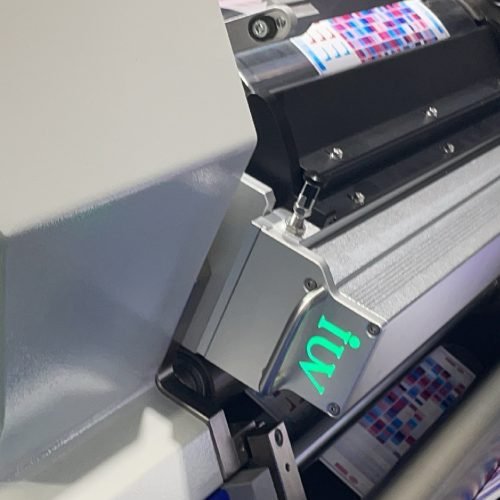
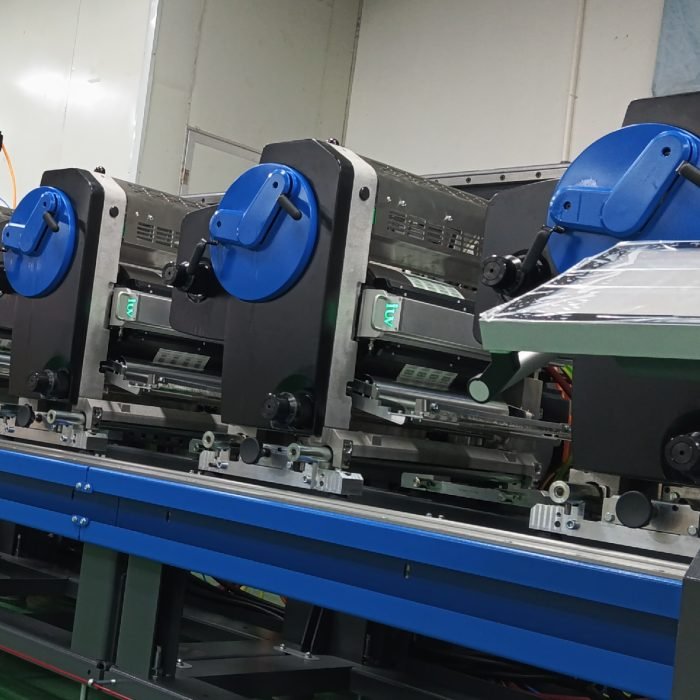
The demand for vibrant, durable, and high-performance labels and packaging is constantly growing. As printers push the boundaries of what’s possible, they encounter an ever-expanding array of specialty substrates. These materials, from textured papers to challenging plastics and metallic foils, present unique adhesion challenges for inks. This is where UV LED curing technology emerges as a game-changer, offering superior ink adhesion and unlocking new creative possibilities.
Understanding the Adhesion Challenge
Traditional curing methods, like thermal drying or mercury vapor UV lamps, often struggle to achieve optimal ink adhesion on non-porous or low-surface-energy substrates. These surfaces resist ink penetration and can lead to issues like poor rub resistance, cracking, and delamination. Achieving robust adhesion requires a chemical reaction that binds the ink to the substrate at a molecular level.
Mercury vapor lamps, while effective for a long time, have drawbacks. Their broad spectrum output can generate significant heat, potentially damaging sensitive substrates. They also have a limited lifespan, require frequent replacement, and contain hazardous materials. Furthermore, their energy consumption is high.
The Science Behind UV LED Curing
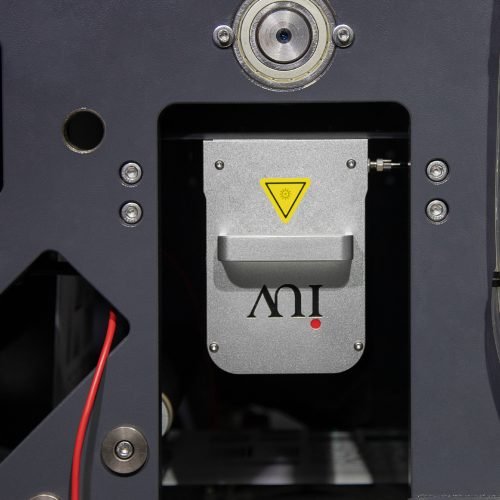
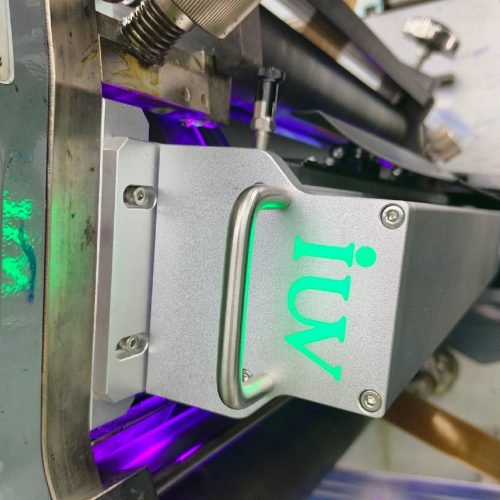
UV LED curing operates on a different principle. Instead of a broad spectrum, UV LEDs emit a very specific wavelength of ultraviolet light. This targeted energy precisely activates photoinitiators within the ink formulation. These photoinitiators, upon exposure to the correct UV wavelength, initiate a rapid polymerization process. This means the liquid ink transforms into a solid, cross-linked polymer almost instantaneously.
The benefits of this targeted approach are numerous. The wavelength specificity ensures efficient energy transfer to the photoinitiators, leading to a complete and thorough cure. This thorough cure is the foundation for excellent ink adhesion. Unlike thermal curing, which relies on solvent evaporation, UV LED curing is a chemical transformation. This chemical bond is inherently stronger and more durable.
Advantages for Specialty Substrates
Specialty substrates often have unique surface properties that make ink adhesion difficult. Think about films like polypropylene (PP) and polyethylene (PE), which are known for their low surface energy. Or consider metallic foils and certain coated papers that can be sensitive to heat. UV LED curing offers distinct advantages in these scenarios:
- Low Heat Emission: UV LEDs produce very little heat. This is crucial for heat-sensitive substrates that could warp, shrink, or otherwise degrade under the intense heat of other curing methods. This allows printers to work with a wider range of materials without compromising quality or damaging the substrate.
- Wavelength Specificity: By matching the UV LED wavelength to the photoinitiators in the ink, printers can achieve a highly efficient and complete cure. This ensures the ink polymerizes thoroughly, forming strong bonds with the substrate surface. This is particularly important for non-porous surfaces where ink needs to adhere to the surface rather than penetrate.
- Instantaneous Curing: The rapid polymerization means inks cure as soon as they are exposed to the UV light. This allows for faster press speeds and immediate handling of printed materials. This speed is invaluable in a production environment, reducing turnaround times and increasing throughput.
- Formulation Flexibility: UV LED curing technology encourages the development of specialized ink formulations. Ink manufacturers can create inks with photoinitiators optimized for specific LED wavelengths, further enhancing adhesion and performance on challenging substrates.
UV LED Curing in Different Printing Processes
The versatility of UV LED curing makes it applicable across various printing methods commonly used for labels and flexible packaging.
Narrow Web Flexographic Printing
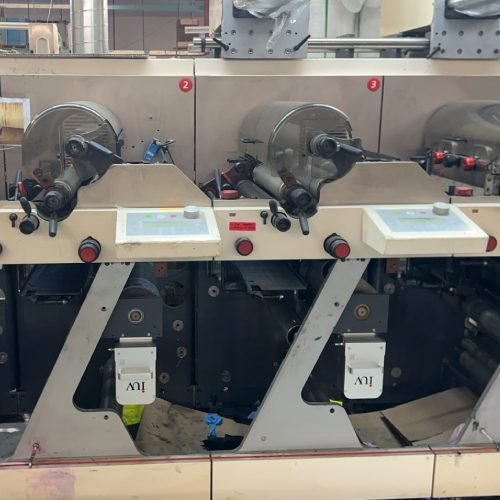
In the narrow web sector, where label and flexible packaging production thrives, UV LED curing is becoming the standard. Flexo printers often deal with a mix of paper and filmic substrates. For films like PET, BOPP, and CPP, achieving reliable adhesion is paramount. UV LED systems, particularly when paired with appropriate inks and primers, provide the necessary cure depth and energy to bond effectively to these low-surface-energy materials. This translates to labels that withstand scuffing, moisture, and chemical exposure.
The low heat output of UV LEDs also benefits flexo printing by preventing substrate distortion, which is especially important for thin films. The instant cure capability allows for faster production speeds, a critical factor in the competitive label market. Furthermore, the environmental benefits of LED technology, such as reduced energy consumption and the absence of mercury, align with industry sustainability goals.
Narrow Web Offset (Sheetfed and Web Offset)
While less common for narrow web than flexography, offset printing also benefits from UV LED curing, especially for specialty labels and short-run packaging. Offset inks traditionally rely on oxidation or heat to dry, which can be slow and energy-intensive. UV LED curing offers a faster, more energy-efficient alternative. For specialty applications requiring high-quality graphics on textured papers or foils, UV LED offset printing provides excellent ink laydown and vibrant color reproduction with superior adhesion. The ability to achieve a full cure on non-absorbent substrates is a significant advantage.
Screen Printing
Screen printing is known for its ability to lay down thick ink films, which is ideal for durable labels, industrial markings, and decorative applications. These applications often involve printing on a wide variety of substrates, including plastics, metals, and glass. UV LED curing is exceptionally well-suited for screen printing on these challenging materials. The precise control over UV output ensures that even thick ink layers cure thoroughly without overheating the substrate. This results in exceptionally durable prints with excellent adhesion, resistance to abrasion, and chemical inertness.
Ink Formulations and Surface Preparation
The success of UV LED curing on specialty substrates hinges on more than just the curing technology itself.
- Ink Chemistry: The ink formulation is critical. It must contain photoinitiators that are sensitive to the specific wavelengths emitted by the UV LEDs. Modern UV LED inks are specifically designed for this purpose, ensuring efficient polymerization and strong adhesion. Printers should work closely with ink manufacturers to select inks optimized for their chosen substrates and LED curing systems.
- Primers and Surface Treatments: For extremely challenging substrates, especially those with very low surface energy like some polyolefins, the use of primers or surface treatment methods can be highly beneficial. Primers can modify the substrate surface, increasing its energy and promoting better ink wettability and adhesion. Surface treatments like corona or plasma discharge can also enhance surface energy, creating a receptive surface for UV-curable inks.
Optimizing the Curing Process
Achieving optimal adhesion involves careful consideration of several factors:
- UV Irradiance and Dose: Irradiance refers to the power of the UV light (measured in W/cm²), while dose is the total energy delivered over time (measured in mJ/cm²). Both are crucial. Insufficient irradiance or dose will result in an incomplete cure, leading to poor adhesion. Conversely, excessive energy can sometimes damage sensitive substrates or cause ink film issues. Printers must work with their equipment and ink suppliers to determine the correct settings for their specific application.
- Wavelength Matching: As mentioned, ensuring the UV LED wavelength precisely matches the absorption spectrum of the photoinitiators in the ink is paramount for efficient curing. Modern LED systems offer a range of wavelengths, allowing for this precise tuning.
- Web Speed: The speed at which the substrate moves through the curing station directly impacts the total UV dose the ink receives. This needs to be synchronized with the UV LED output to achieve the desired cure.
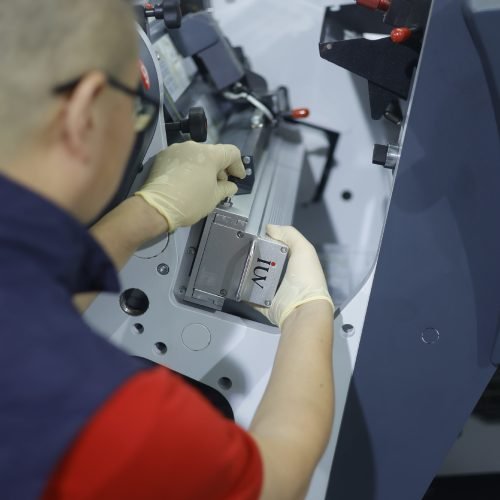
- Distance: The distance between the UV LED unit and the ink surface can affect the UV intensity. Optimal positioning ensures maximum energy transfer.
The Future of UV LED Curing
UV LED curing technology is continuously evolving. Innovations in LED chip design are leading to higher power output, greater energy efficiency, and longer operational lifetimes. Furthermore, advancements in ink formulations are enabling printers to tackle even more demanding substrates and achieve higher levels of performance. The environmental and economic benefits of UV LED curing, coupled with its superior performance on specialty substrates, position it as a leading technology for the future of printing. For printers looking to enhance adhesion, improve durability, and expand their material capabilities, investing in UV LED curing solutions is a strategic move towards greater success.