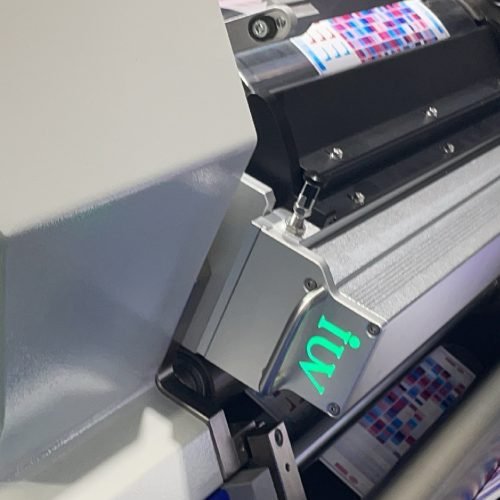
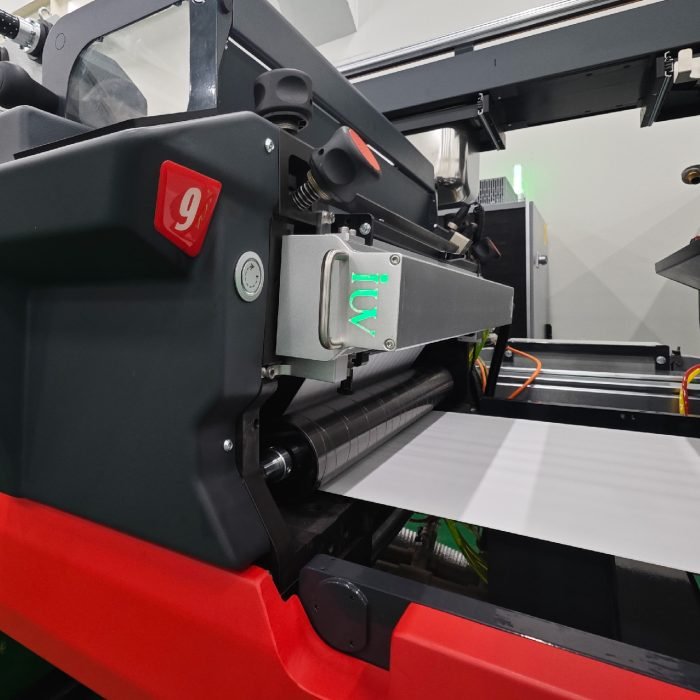
In the competitive world of label printing, the ability to reproduce incredibly fine text and intricate micro-details with exceptional clarity and precision is a significant differentiator. Whether for brand identification, regulatory compliance, or decorative elements, the demand for high-resolution graphics is constantly growing. Achieving this level of detail, especially in narrow web printing applications like those found in flexographic and offset printing, presents unique challenges. Fortunately, advancements in LED UV curing technology offer a powerful solution for printers looking to elevate their fine text and micro-detail printing capabilities.
The Challenge of Fine Detail in Narrow Web Printing
Reproducing small text (often below 4-point font) and subtle micro-details requires a printing process that minimizes ink spread and ensures sharp, well-defined edges. Traditional curing methods, while effective for general printing, can sometimes struggle with these demanding applications.
In flexographic printing, a highly adaptable process for narrow web, ink transfer and substrate interaction are critical. If the ink isn\’t cured rapidly and uniformly, it can bleed, obscuring fine lines and text. The anilox roll, which meters ink, plays a vital role in delivering precise ink volumes. Any inconsistency in curing can negate the benefits of a finely engraved anilox.
Offset printing, while renowned for its sharpness, also faces challenges. Ink viscosity, fountain solution balance, and the drying process must be meticulously controlled. In narrow web offset, particularly with sensitive substrates, achieving perfect dot gain and preventing color bleed in fine details is paramount.
The inherent nature of these processes means that any delay or inefficiency in the curing stage can compromise the final print quality, especially when dealing with the smallest elements of a design.
Understanding LED UV Curing Technology
UV curing involves using ultraviolet light to instantly polymerize (cure) inks, coatings, and adhesives. Traditional mercury vapor lamps have been the workhorse for decades, but LED UV curing systems represent a significant technological leap.
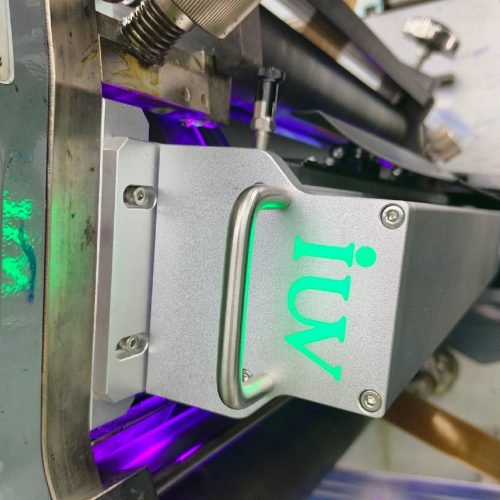
LEDs (Light Emitting Diodes) emit UV light at specific wavelengths, offering several advantages over traditional lamps:
- Instant On/Off: LEDs can be switched on and off instantaneously, allowing for precise control over the curing process. This is crucial for minimizing heat exposure to sensitive substrates and preventing premature curing that can lead to ink spread.
- Energy Efficiency: LEDs are far more energy-efficient, converting a higher percentage of electrical energy into UV light and generating less waste heat. This translates to lower operating costs and a smaller environmental footprint.
- Longer Lifespan: LED lamps have a significantly longer operational lifespan compared to mercury lamps, reducing maintenance and replacement costs.
- Consistent Output: LEDs provide a stable and consistent UV output over their lifespan, ensuring repeatable print quality without the degradation seen in mercury lamps.
- Targeted Wavelengths: LED systems can be designed to emit specific UV wavelengths that are highly efficient for curing particular UV ink formulations. This targeted approach optimizes the curing process for maximum speed and effectiveness.
- Reduced Heat: LEDs generate less infrared heat than mercury lamps, which is a critical advantage when printing on thin, heat-sensitive films commonly used in narrow web label applications. Excessive heat can cause substrate distortion, ink feathering, and affect adhesion.
How LED UV Curing Enhances Fine Text and Micro-Detail Printing
The unique characteristics of LED UV curing systems directly address the challenges associated with reproducing fine text and micro-details:
- Instantaneous Curing and Ink Control: The ability of LEDs to switch on and off instantly means that ink is exposed to UV light only when and where it is needed. This immediate polymerization prevents ink from spreading or \”dot gain\” on the substrate. For fine text, this translates to crisp, clean edges for every character, ensuring legibility even at the smallest point sizes. Micro-details, such as fine lines, halftones, or intricate patterns, retain their sharpness and definition.
- Minimized Heat on Substrate: In narrow web printing, substrates are often thin and delicate, such as polyethylene, polypropylene, or specialized papers. Traditional UV lamps can generate significant heat, leading to substrate shrinkage, warping, or deformation, which degrades the precision of fine details. LED UV systems, with their much lower heat output, preserve the integrity of the substrate, allowing for the faithful reproduction of small features without distortion.
- Optimized Ink Formulations: LED UV curing systems are often paired with specially formulated UV inks. These inks are designed to cure efficiently at the specific wavelengths emitted by the LEDs. This synergy allows for inks with lower viscosity that can be printed at higher speeds, yet still cure instantly without spreading. This is particularly beneficial for fine line work and tiny text where ink control is paramount.
- Precise Wavelength Control: Different UV ink chemistries require specific wavelengths for optimal curing. LED systems offer the flexibility to select specific wavelength outputs (e.g., 365 nm, 395 nm) that perfectly match the ink formulation. This precise targeting ensures complete and rapid polymerization, locking the ink precisely where it is deposited on the substrate, thereby preserving the crispness of fine details.
- High-Speed Printing Capabilities: LED UV curing enables printers to operate at higher press speeds without sacrificing quality. In narrow web printing, speed is directly linked to productivity and profitability. The ability to cure instantly at these elevated speeds means that fine text and micro-details can be reproduced consistently, job after job, at commercial speeds, meeting the demands of modern label production.
- Consistency and Repeatability: For printers relying on the reproduction of intricate designs, consistency is key. LED systems offer a stable and predictable UV output. This means that the curing performance remains constant throughout a print run and from one run to the next. This reliability ensures that fine text and micro-details are rendered identically every time, crucial for brand consistency and regulatory requirements.
Applications in Specific Printing Processes
- Narrow Web Flexographic Printing: LED UV curing is revolutionizing fine detail reproduction in flexo. It allows for the use of finer anilox cells and smaller dot patterns on plates, confident that the ink will cure instantly and prevent unwanted spread. This is invaluable for printing tiny serial numbers, micro-text for security features, and highly detailed graphics on labels for pharmaceuticals, cosmetics, and electronics. The reduced heat also opens up possibilities for printing on a wider range of flexible films.
- Narrow Web Offset Printing: In offset, LED UV curing enhances the already excellent dot reproduction capabilities. It ensures that the sharp edges achieved by the offset process are maintained, even for the smallest fonts and finest graphical elements. This is particularly beneficial for high-end product labels, wine and spirits labels, and packaging where premium aesthetics are critical. The immediate cure also reduces the risk of smudging on impression transfers, preserving intricate designs.
Implementing LED UV Curing for Optimal Results
To fully leverage the benefits of LED UV curing for fine text and micro-detail printing, consider these factors:
- Ink Selection: Work with ink manufacturers to identify UV ink formulations specifically designed for LED curing and optimized for fine detail work. These inks will have excellent viscosity control and cure rapidly at LED-specific wavelengths.
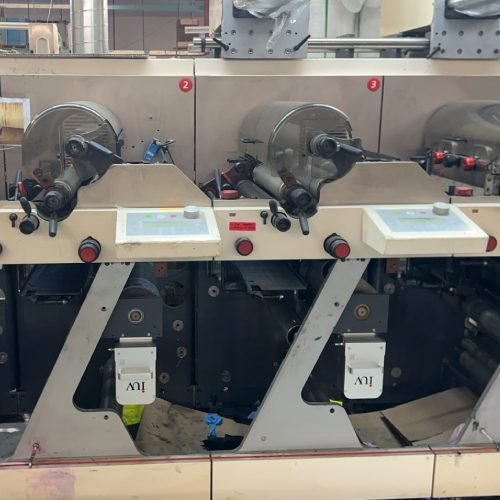
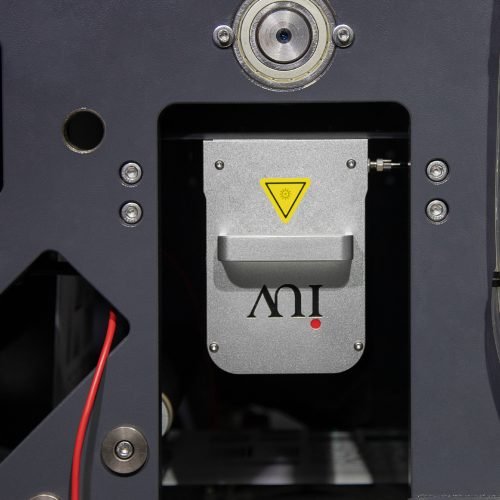
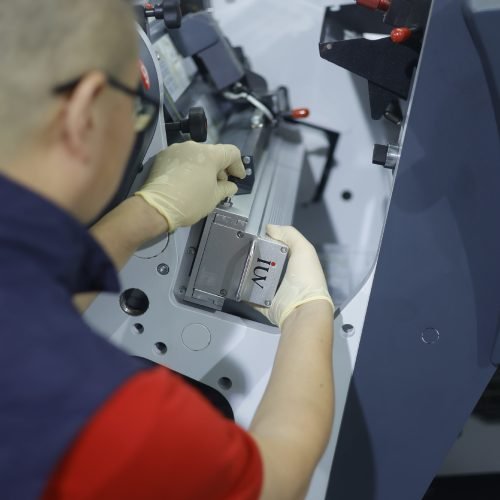
- Press Configuration: Ensure your press is equipped with LED UV curing units that provide sufficient power (irradiance) and the correct wavelength output for your chosen inks and desired speeds. Consider strategic placement of curing units—for instance, between printing stations to prevent ink transfer issues.
- Substrate Compatibility: While LEDs are generally better for heat-sensitive substrates, always test for compatibility. The absence of excessive heat is a major advantage, but understanding how the substrate interacts with the ink and curing process is still important.
- Process Control: Maintain tight control over ink viscosity, impression settings, and anilox selection (for flexo) or plate preparation (for offset). LED UV curing is a powerful tool, but it works best in conjunction with a well-tuned printing process.
- Maintenance: While LEDs have long lifespans, ensure proper cleaning and alignment of the UV units to maintain consistent performance.
The Future of Fine Detail Printing
As the demand for smaller, sharper, and more intricate printed elements continues to grow, LED UV curing systems are becoming indispensable for label and narrow web printers. Their ability to deliver instant, precise, and low-heat curing unlocks new possibilities for reproduction quality, enabling printers to achieve levels of detail previously thought unattainable, all while enhancing efficiency and sustainability. By embracing this technology, printers can confidently tackle the most demanding fine text and micro-detail printing applications, setting themselves apart in a market that values clarity, precision, and visual impact.