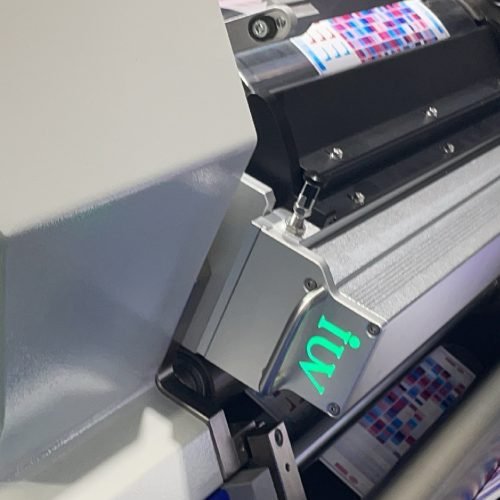
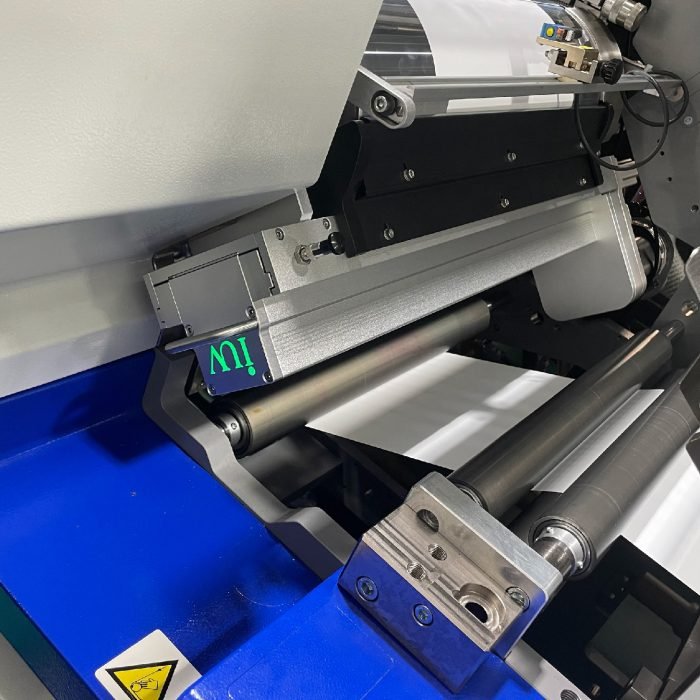
The label printing industry is constantly seeking ways to enhance visual appeal and production efficiency. Extended color gamut (ECG) printing, which utilizes a fixed set of inks (typically CMYK plus orange, green, and violet) to reproduce a wider spectrum of colors than traditional CMYK alone, is a significant development. This approach offers brands greater color fidelity and consistency, while potentially streamlining production by reducing the need for custom spot color inks. However, achieving optimal results with ECG printing, particularly in demanding narrow-web label applications, relies heavily on the curing technology employed. This is where advanced LED UV curing systems come into play.
The Challenge of Curing Extended Color Gamut Inks
Extended color gamut inks are formulated differently from standard process inks. They often contain higher pigment loads and specific chemistries designed to achieve broader spectral coverage. This presents a unique challenge for the curing process. Traditional mercury vapor UV lamps, while effective for many applications, can struggle to provide the precise wavelength and consistent energy output required for thorough curing of these specialized inks, especially at high printing speeds common in narrow-web operations. Incomplete curing can lead to a range of problems, including poor ink adhesion, reduced rub and scratch resistance, color inconsistencies, and potential migration issues, all of which are unacceptable in the competitive label market.
Why LED UV Curing is a Game-Changer for ECG Labels
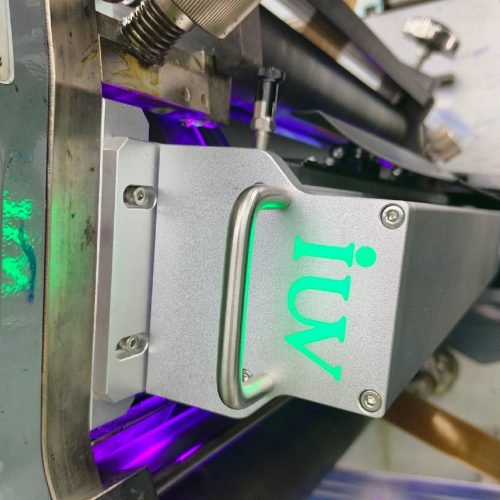
Light Emitting Diode (LED) UV curing technology offers distinct advantages that make it exceptionally well-suited for ECG label printing. Unlike mercury lamps that emit a broad spectrum of UV light, including less useful wavelengths and significant heat, LEDs emit UV light at specific, narrow wavelengths. This targeted emission means more energy is delivered precisely where it\’s needed to initiate the photo-polymerization process.
For ECG inks, this precision is critical. The specific wavelengths emitted by LED systems can be matched to the photoinitiators within the ink formulation. This ensures rapid and complete curing, even with the denser pigmentations found in ECG inks. The result is a robust, fully cured ink film that exhibits excellent adhesion to a variety of label substrates, from paper and film to specialty materials.
Benefits of LED UV for Narrow-Web Label Printing
Narrow-web printing, prevalent in the label industry, demands high speeds and compact equipment. LED UV curing systems excel in this environment due to several key characteristics:
- Instant On/Off Capability: LEDs can be switched on and off instantaneously. This is a significant advantage over mercury lamps, which require warm-up and cool-down periods. For short print runs or when the press stops, LEDs can be turned off, saving energy and reducing heat buildup on the substrate.
- Lower Heat Generation: LEDs produce very little infrared (heat) radiation compared to mercury lamps. This is crucial for heat-sensitive substrates commonly used in label applications, such as thin films or certain types of paper. Reduced heat means less substrate distortion and fewer drying issues.
- Consistent Energy Output: LED systems maintain a stable and consistent UV output over their lifespan. This translates to predictable and repeatable curing performance from job to job, batch to batch. This consistency is vital for maintaining color accuracy and print quality, especially when working with the nuanced color reproduction required by ECG.
- Longer Lamp Life: LED modules have a significantly longer operational lifespan than mercury lamps, often exceeding 20,000 hours. This reduces downtime for lamp replacements and lowers overall operating costs.
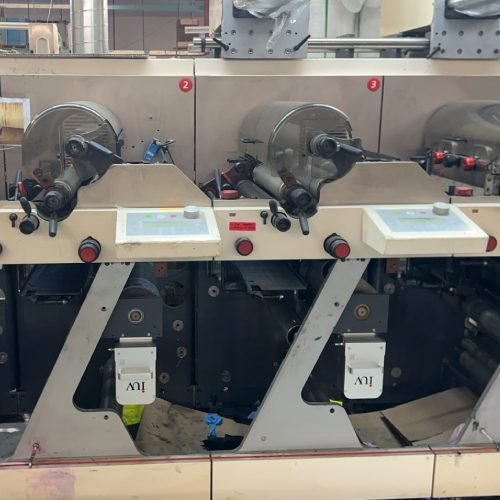
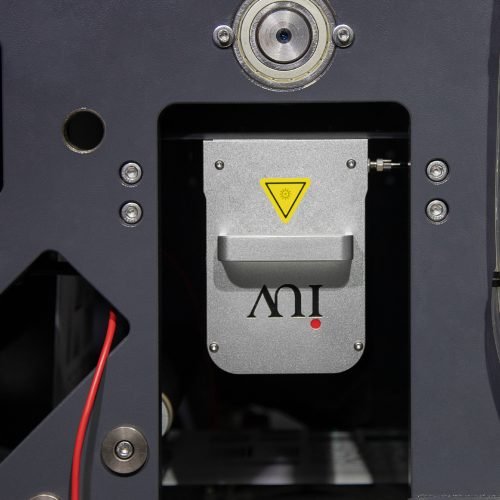
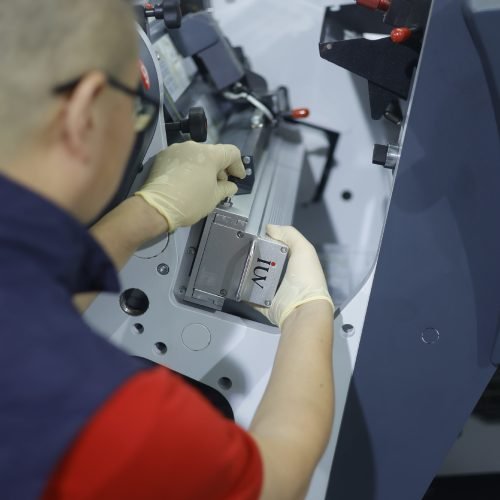
- Compact Design: LED curing systems are typically more compact than traditional UV dryers, making them easier to integrate into existing or new narrow-web presses, including flexographic and offset presses.
Integrating LED UV with Flexographic and Offset Label Printing
Both flexographic and offset printing methods are widely used for label production, and both can benefit immensely from LED UV curing for ECG applications.
Flexographic Printing
In flexography, ink is transferred from a raised image carrier (plate) to the substrate. High printing speeds are common, and precise ink transfer and immediate curing are paramount. LED UV systems, placed after each print station, ensure that each ink layer is fully cured before the next color is applied. This prevents ink trapping issues and maintains the integrity of each printed color in the ECG process. The ability of LED UV to cure densely pigmented inks effectively is particularly beneficial for the vibrant colors achieved with ECG.
Offset Printing
Narrow-web offset printing for labels often utilizes sheet-fed or web-fed configurations. Similar to flexography, LED UV curing after each station is critical. Offset inks, especially those formulated for ECG, require thorough curing to achieve the desired gloss, durability, and color depth. The low heat and consistent energy output of LED systems are ideal for maintaining substrate quality and ensuring that the complex color build-up of ECG printing is accurately and permanently fixed.
Optimizing LED UV Systems for ECG Performance
To maximize the benefits of LED UV curing for Extended Color Gamut printing in label applications, several factors should be considered:
- Wavelength Selection: Choose LED systems with wavelengths precisely matched to the photoinitiators in your ECG ink set. Common wavelengths for UV curing are in the 365nm, 385nm, 395nm, and 405nm ranges. Consult with your ink supplier to determine the optimal wavelength for their ECG inks.
- Irradiance and Dose: Ensure the LED system provides sufficient irradiance (energy intensity) and delivers the correct UV dose (energy density over time) for complete curing at your desired printing speeds. This often involves calculating the required energy based on ink formulation, substrate, and press speed.
- Uniformity: The UV output across the entire web width must be uniform. Uneven curing can lead to inconsistent print quality and performance issues. High-quality LED systems are designed for excellent uniformity.
- Cooling: While LEDs generate less heat than mercury lamps, effective cooling systems are still necessary to maintain optimal LED performance and longevity.
- Integration: Proper integration of the LED UV curing system into the press is crucial. This includes ensuring adequate exhaust ventilation and secure mounting.
The Future of Label Printing with LED UV and ECG
The convergence of Extended Color Gamut printing and advanced LED UV curing technology represents a significant leap forward for the label industry. It empowers converters to offer brands unparalleled color reproduction, improved efficiency, and enhanced print durability. For narrow-web applications, where space, speed, and substrate sensitivity are critical, LED UV provides a robust and reliable curing solution that unlocks the full potential of ECG inks. As ink formulations continue to evolve and printing technologies advance, LED UV curing systems will remain an indispensable component in achieving superior label print quality and performance.