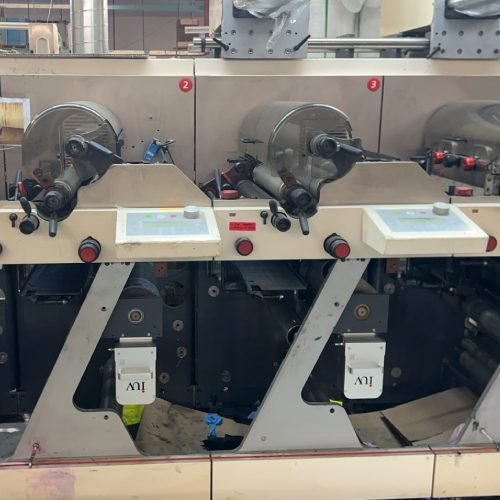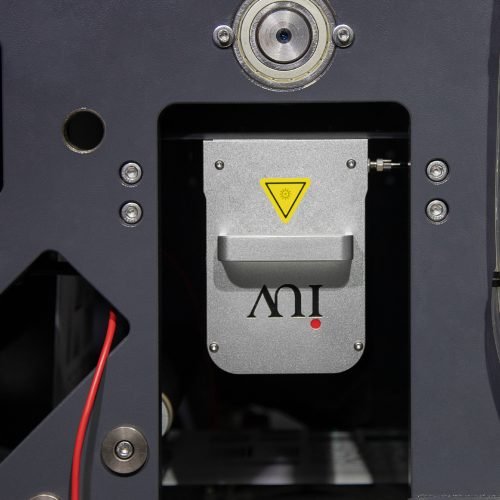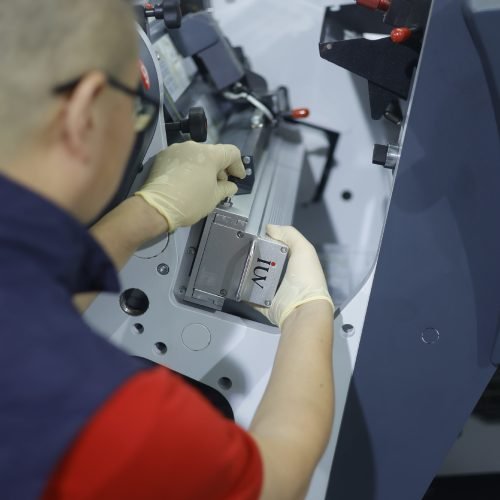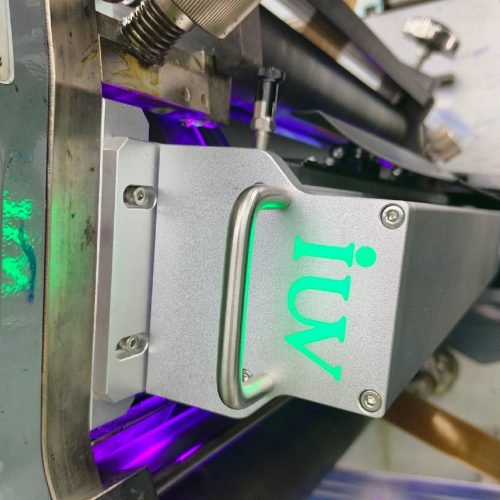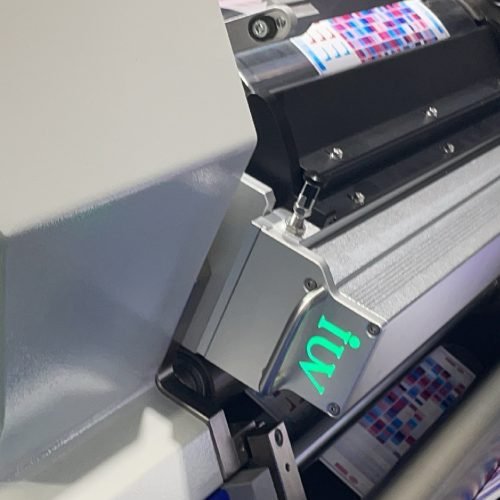
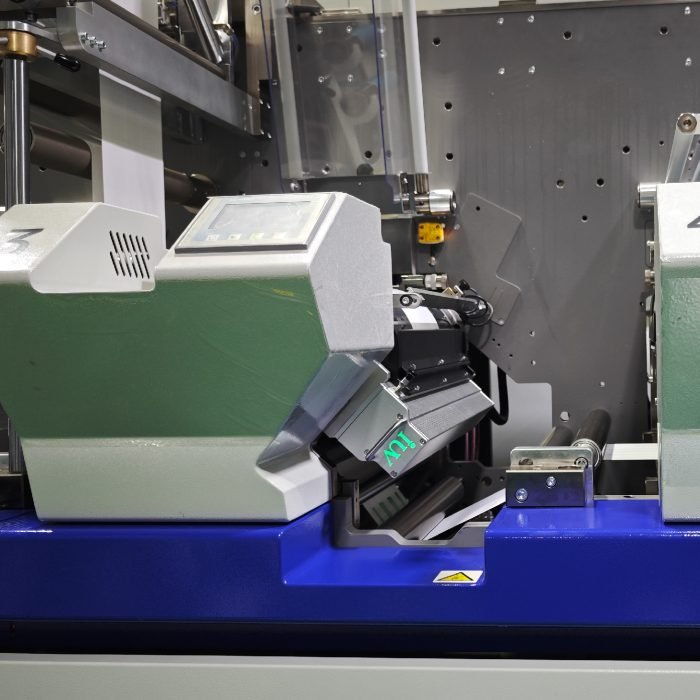
The commercial label printing industry is in constant pursuit of speed and efficiency. Clients demand faster turnaround times, tighter deadlines, and higher quality prints. Meeting these expectations requires innovation at every stage of the production process. One of the most impactful advancements in recent years has been the adoption of LED UV curing systems, particularly for ultra-fast production environments in narrow-web printing. This technology revolutionizes how labels are finished, offering significant advantages over traditional methods.
Understanding UV Curing: The Basics
Before exploring the benefits of LED UV, it\’s helpful to understand UV curing itself. Ultraviolet (UV) curing is a photochemical process. It uses UV light to initiate a rapid reaction that hardens or \”cures\” inks, coatings, and adhesives. This curing happens almost instantaneously when the uncured material is exposed to the specific wavelengths of UV light. The process relies on photoinitiators within the ink or coating. These initiators absorb UV energy and trigger polymerization, transforming the liquid into a solid film.
Traditional UV vs. LED UV Curing: A Shift in Technology
Historically, UV curing in the printing industry has relied on mercury vapor lamps. These lamps have been the workhorse for decades, providing the necessary UV energy. However, mercury lamps come with several drawbacks. They generate significant heat, which can affect sensitive substrates and increase energy consumption. They also have a relatively short lifespan, requiring frequent replacement and contributing to waste. Furthermore, they emit a broad spectrum of UV light, some of which is not essential for curing and can be inefficient.
LED UV curing systems represent a significant technological leap. Instead of mercury vapor, they use Light Emitting Diodes (LEDs) as the UV light source. LEDs offer a highly focused and tunable spectrum of UV light, precisely matched to the absorption peaks of modern UV inks and coatings. This targeted approach maximizes curing efficiency while minimizing wasted energy. The benefits are substantial and directly address the demands of fast-paced commercial label production.
The Advantages of LED UV for Ultra-Fast Turnaround
The primary driver for adopting LED UV curing in label production is its ability to support ultra-fast turnaround times. Here\’s why it excels:
- Instantaneous Curing: Like traditional UV, LED UV cures inks and coatings instantly upon exposure. This means printed webs can be immediately rewound, cut, or further processed without the risk of smudging or transfer. This speed is critical in a high-volume commercial environment.
- Reduced Heat Load: LEDs emit very little infrared radiation (heat) compared to mercury lamps. This is a game-changer for printing on heat-sensitive substrates like thin films, some plastics, and delicate papers. Lower heat means less web distortion, fewer registration issues, and the ability to handle a wider range of materials.
- Energy Efficiency: LEDs consume significantly less energy than mercury lamps. They operate at lower power levels and are highly efficient in converting electrical energy into UV light. This translates to lower operating costs and a reduced environmental footprint, which is increasingly important for businesses.
- Longer Lifespan and Consistency: LED lamps have an exceptionally long operational life, often tens of thousands of hours. This dramatically reduces downtime associated with lamp replacement and associated maintenance. Importantly, their UV output remains consistent throughout their lifespan, ensuring predictable and repeatable curing quality.
- Instant On/Off Capability: LEDs can be switched on and off instantaneously. This is a huge advantage in web-based printing. When the press stops, the LEDs can be turned off, saving energy and preventing unnecessary heat build-up. When the press restarts, they are immediately at full power, ready to cure. This is in contrast to mercury lamps, which require a warm-up period.
- Compact Design and Integration: LED curing units are often more compact than traditional UV systems. This makes them easier to integrate into existing narrow-web flexographic or offset presses, or for new press designs. They can be placed at multiple points in the press, allowing for in-line coating, overprint varnishing, and lamination with immediate curing.
LED UV in Different Printing Processes for Labels
The versatility of LED UV curing makes it applicable across various printing methods commonly used for commercial labels, including flexography and offset printing.
LED UV in Narrow-Web Flexographic Printing:
Flexography is a dominant force in narrow-web label production. The combination of flexo\’s speed and cost-effectiveness with LED UV curing is a powerful synergy.
- High-Speed Production: Flexo presses are designed for speed, and LED UV curing keeps pace. With instant curing at the press speed, there\’s no bottleneck created by the drying process. This allows for maximum productivity.
- Multi-Color and Special Effects: Flexo presses can accommodate multiple print stations. Each station can be equipped with LED UV curing units, enabling the immediate overprinting of different ink colors or the application of specialized coatings and varnishes. This facilitates complex designs and finishes like high-gloss varnishes, matte finishes, or textured effects.
- Adhesive and Liner Applications: LED UV is also used for curing adhesives in pressure-sensitive label applications and for specialty coatings on release liners.
LED UV in Narrow-Web Offset Printing:
While flexography is more prevalent for narrow-web labels, offset printing also finds its place, especially for high-quality graphics and long runs. LED UV offers similar benefits here.
- Superior Print Quality: Offset printing is known for its fine dot reproduction and smooth color gradients. LED UV curing ensures that these detailed images are preserved without any smearing, even at high press speeds.
- In-Line Finishing: Offset presses with LED UV can integrate multiple finishing steps, such as spot varnishing or flood coating, directly into the printing process, streamlining production.
- Expanded Substrate Range: Just as in flexo, the low heat output of LED UV allows offset printers to work with a wider array of substrates, including those that would be damaged by the heat of traditional UV systems.
The Role of Inks, Coatings, and Adhesives
The success of LED UV curing hinges on the formulation of the inks, coatings, and adhesives. These materials are specifically designed to be cured by the wavelengths emitted by LED lamps.
- Formulation is Key: Modern LED UV inks and coatings contain photoinitiators that are highly sensitive to the specific UV spectrum of LED lamps (typically in the 385nm, 395nm, or 405nm range). This precise matching ensures efficient and thorough curing.
- Low Migration Formulations: For food packaging labels, low migration inks and coatings are essential. These formulations are designed to minimize the potential for uncured components to migrate from the printed material to the packaged product. LED UV curing, when properly applied, can achieve excellent cure levels, contributing to compliance with stringent food safety regulations.
- Variety of Effects: The market offers a wide range of LED UV curable inks and coatings, including process colors, spot colors, opaque whites, metallic effects, varnishes (gloss, matte, satin), and tactile coatings. This allows label converters to achieve virtually any desired aesthetic or functional finish.
Challenges and Considerations for Implementation
While the advantages are compelling, adopting LED UV curing systems requires careful planning.
- Initial Investment: The upfront cost of LED UV curing equipment can be higher than traditional UV systems. However, this is often offset by lower operating costs, reduced maintenance, and increased productivity over the equipment\’s lifespan.
- Compatibility with Existing Equipment: Integrating LED UV units into older presses may require modifications. It\’s crucial to assess the press\’s capabilities and the physical space available for the curing units.
- Ink and Coating Sourcing: Printers need to ensure they are sourcing inks and coatings specifically formulated for LED UV curing. While widely available, it\’s important to work with reputable suppliers.
- Operator Training: Proper training for press operators is essential to ensure they understand how to operate and maintain the LED UV systems effectively, optimize curing parameters, and troubleshoot any issues.
- Understanding UV Output and Dosage: Effective curing depends on delivering the correct UV dosage (irradiance x exposure time). Operators need to understand how to set and monitor these parameters for different jobs and substrates.
The Future of Label Production is Fast and Cured
The trend towards faster turnaround times in commercial label production is undeniable. LED UV curing systems are not just a supplementary technology; they are becoming an integral component of modern label presses. Their ability to deliver instant curing, reduce heat, enhance energy efficiency, and offer consistent performance makes them indispensable for achieving the speeds and quality demanded by today\’s market. For label converters looking to stay competitive, embracing LED UV technology for ultra-fast production is no longer an option but a strategic imperative. The efficiency gains, substrate versatility, and improved print quality it enables are transforming what\’s possible in label manufacturing.