How LED UV Curing Optimizes Ink Density in Flexo Applications
Flexographic printing is a versatile and widely used printing method. It is especially popular for packaging and label printing. Achieving vibrant and consistent ink density is key to high-quality results. LED UV curing technology plays a significant role in optimizing this ink density.
Understanding Ink Density in Flexography
Ink density refers to the depth or concentration of ink on a printed substrate. Higher ink density means a richer, more opaque color. Lower density results in lighter, more transparent colors. In flexography, ink density is influenced by several factors. These include the anilox roll cell volume, the ink viscosity, the printing speed, and the drying or curing process.
The Challenge of Traditional Curing Methods
Traditional drying and curing methods in flexography often involve heat or mercury vapor UV lamps. Heat drying can sometimes lead to ink spread or “dot gain.” This is where the ink dots grow larger than intended. This negatively impacts fine details and overall ink density. Mercury vapor UV lamps, while effective, produce a broad spectrum of UV light. This can generate significant heat. The heat can again cause ink spread. It also requires specialized equipment and handling due to mercury’s toxicity.
Introducing LED UV Curing Technology
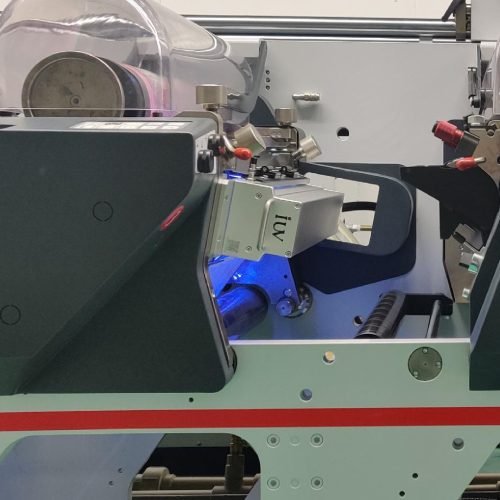
LED UV curing utilizes Light Emitting Diodes to emit UV light. This light is specifically tailored to the wavelength required for ink polymerization. Unlike mercury lamps, LEDs emit a narrow spectrum of UV light. This means they are more energy-efficient and produce far less heat. This is a game-changer for flexographic printing.
How LED UV Curing Enhances Ink Density
The precise nature of LED UV curing offers several advantages that directly improve ink density in flexo applications.
1. Reduced Heat Generation:
The minimal heat output from LED lamps is a primary benefit. This drastically reduces the risk of ink spread and dot gain. When ink doesn’t overheat, it stays precisely where it’s applied. This allows for sharper dots and finer lines. The result is a cleaner print with more consistent and higher ink density. This is particularly noticeable in applications requiring fine text or detailed graphics.
2. Pinpoint Curing:
LEDs emit a specific wavelength of UV light that perfectly matches the photoinitiators in UV-curable inks. This means the ink cures rapidly and efficiently, often in a fraction of a second. This rapid polymerization locks the ink in place almost instantly. It prevents it from flowing or spreading after application. This controlled curing process preserves the intended ink laydown. It ensures the maximum amount of pigment is visible on the substrate, leading to optimal ink density.
3. Consistent Energy Output:
LEDs provide a consistent and stable UV output throughout their lifespan. This reliability ensures that each pass through the curing unit delivers the same curing energy. This consistency is vital for maintaining predictable ink density across long print runs. Unlike mercury lamps, which can degrade over time, LEDs offer a stable performance. This reduces the need for frequent adjustments and ensures uniformity.
4. Ink Formulation Compatibility:
LED UV curing works seamlessly with a wide range of UV-curable inks designed for flexography. These inks are formulated to polymerize efficiently under the specific wavelengths emitted by LEDs. This compatibility ensures that printers can leverage the benefits of LED technology without needing to compromise on their ink choices. The result is vibrant, dense colors that meet brand requirements.
Benefits for Label and Narrow Web Printing
The label and narrow web printing sectors benefit significantly from LED UV curing’s ability to optimize ink density. These applications often demand high-resolution graphics, sharp text, and vibrant colors on various substrates.
- Enhanced Color Vibrancy: LED curing helps achieve brighter and more saturated colors. This is because the ink’s pigments are not disturbed by excessive heat.
- Improved Print Sharpness: The precise curing process ensures that dots remain small and well-defined. This leads to crisper images and text.
- Substrate Versatility: LED UV curing is effective on a wide range of substrates, including heat-sensitive materials like thin films and some plastics. The low heat means these materials are less likely to distort or degrade.
- Faster Production Speeds: While not directly related to density, the efficient curing enabled by LEDs allows for faster press speeds. This maintains consistent ink density even at higher throughputs.
Comparison with Other Printing Methods
While flexography is the focus, it’s useful to briefly contrast LED UV curing’s impact on ink density with other methods.
- Offset Printing: Offset lithography also uses UV curing. However, the ink transfer mechanism differs. In flexo, the inherent properties of the anilox roll and doctor blade system, combined with LED UV, offer precise ink control.
- Gravure Printing: Gravure is known for its excellent ink density. However, it involves engraved cylinders, making it less flexible for short runs compared to flexo. LED UV curing enhances flexo’s ability to rival gravure in ink density and quality.
The Future of Flexo and LED UV
The integration of LED UV curing technology is fundamentally transforming flexographic printing. Its ability to optimize ink density is paramount for achieving superior print quality, especially in demanding applications like label and packaging. As ink manufacturers continue to innovate, we can expect even more advancements in LED-curable ink formulations. This will further unlock the potential for exceptionally dense and vibrant prints.
The shift towards LED UV curing is not just about efficiency; it’s about precision. It allows flexographic printers to achieve a level of ink density and print fidelity that was previously challenging. This makes flexo a more competitive and capable printing process for a broader range of applications. For businesses focused on high-impact visuals and brand consistency, LED UV curing is an indispensable tool for achieving optimal ink density in their flexo printing operations.