Every UV curing system eventually reaches a point where maintenance costs begin to outweigh its value. Press operators may notice that lamps require more frequent replacement, curing performance becomes less consistent, or production speeds must be reduced to maintain acceptable print quality. When this happens, converters typically face two options: continue replacing conventional mercury lamp assemblies or invest in an LED UV curing upgrade.
Although replacing a mercury lamp assembly may appear to be the simplest solution, it often restores only part of the original performance while leaving the underlying system architecture unchanged. By contrast, upgrading to an LED UV curing system modernizes the curing process and addresses several operational limitations that affect label printing, flexographic printing, offset printing, and narrow web production.
Understanding the technical differences between these two approaches helps converters make investment decisions that improve long-term productivity rather than simply extending the life of aging equipment.
Evaluating the Condition of the Existing UV Curing System
Before deciding on any upgrade strategy, the curing system should be evaluated as a complete process rather than as individual components.
Many production issues originate from more than worn lamps. Reflectors gradually lose efficiency because of contamination and surface degradation. Power supplies become less stable after years of operation. Cooling performance may decline because of clogged airflow paths or aging water-cooling components. Mechanical shutters and wiring also experience wear after continuous production cycles.
Replacing only the lamp assembly restores light output temporarily, but it does not improve the condition of these supporting components. If several parts of the curing system have already deteriorated, print quality may remain inconsistent even after installing new mercury lamps.
A complete engineering assessment identifies whether the existing infrastructure is capable of supporting future production requirements or whether a full LED UV retrofit provides greater long-term value.
How Mercury Lamp Replacement Differs from an LED UV Upgrade
Replacing a conventional mercury lamp assembly follows the original equipment design. The electrical configuration, cooling system, reflector geometry, and optical characteristics remain largely unchanged. Production can usually resume quickly because the press requires minimal modification.
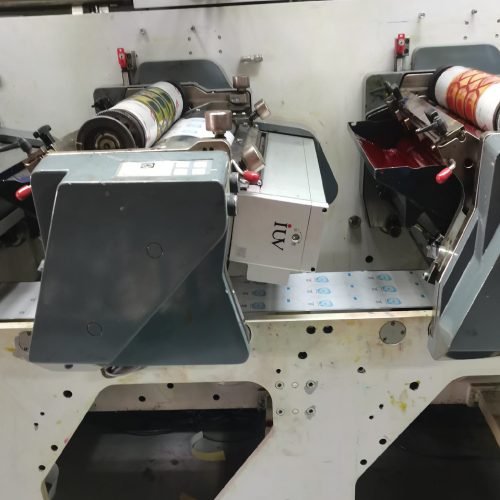
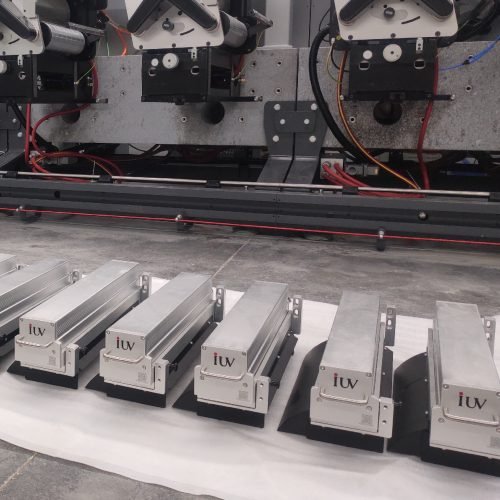
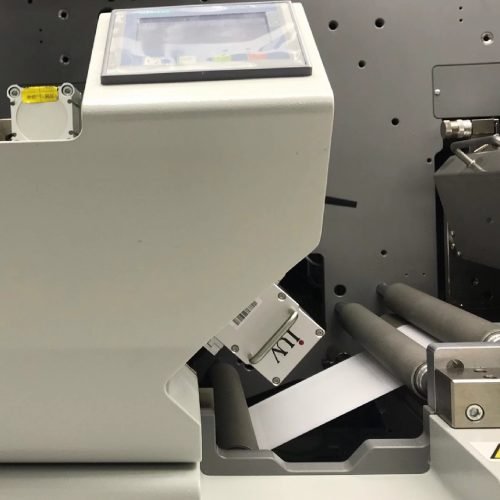
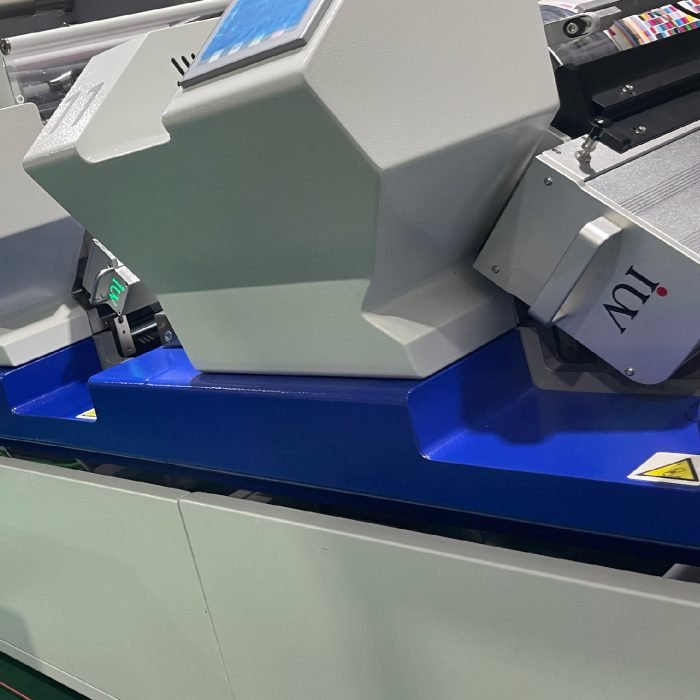
An LED UV upgrade takes a different approach. Instead of replacing only the light source, the curing station is redesigned around semiconductor technology. New curing heads, electronic controls, cooling systems, and power management are integrated into the existing press.
The result is not simply a newer lamp. It is an entirely different curing platform with different thermal characteristics, optical performance, and maintenance requirements.
For converters planning to operate existing presses for many additional years, this distinction is often more important than the initial installation cost.
Optical Performance and Spectral Stability
Conventional mercury lamps emit ultraviolet radiation across a broad wavelength range together with visible light and significant infrared energy. As the lamps age, electrode wear and quartz darkening gradually reduce output while changing the spectral distribution.
These changes make curing performance less predictable over time. Operators often compensate by increasing lamp power or reducing production speed to maintain acceptable curing.
LED UV curing systems emit a narrow wavelength centered around a selected curing spectrum. Because semiconductor devices maintain stable optical characteristics throughout most of their operating life, irradiance remains far more consistent during daily production.
Stable spectral output allows UV inks and coatings to polymerize under repeatable conditions, improving print consistency from the first roll to the last.
Heat Management and Substrate Protection
Thermal performance is one of the most significant differences between the two technologies.
Mercury lamps generate substantial infrared radiation that raises substrate temperature during curing. Heat-sensitive materials such as unsupported PET films, BOPP, thin polypropylene labels, and shrink sleeve materials may experience dimensional changes when exposed to excessive thermal energy.
Common production issues include web stretching, film shrinkage, curl, register variation, and tension instability.
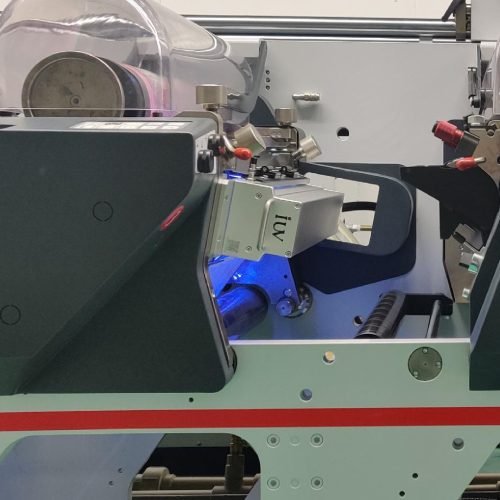
LED UV curing systems produce much less radiant heat because nearly all emitted energy falls within the required ultraviolet wavelength range. Efficient water cooling or air cooling removes heat from the LED modules while minimizing temperature transfer to the substrate.
Lower web temperatures improve dimensional stability and allow converters to process delicate materials with greater confidence, particularly in narrow web flexographic applications.
Energy Consumption During Daily Production
Energy efficiency becomes increasingly important as electricity costs continue to rise.
Traditional mercury systems consume power not only for ultraviolet generation but also for cooling fans, exhaust systems, and warm-up cycles. Even when presses stop briefly during job changes, lamps often remain energized to avoid lengthy restart procedures.
LED UV curing systems operate differently. Instant on/off capability allows the curing head to produce ultraviolet energy only when printing takes place. During press stops or substrate changes, energy consumption drops immediately without affecting production readiness.
This operating principle reduces unnecessary power usage throughout normal production shifts, especially in facilities processing numerous short-run label jobs.
Maintenance Requirements Over the Equipment Lifetime
Maintenance requirements differ considerably between the two options.
Replacing mercury lamp assemblies remains a recurring maintenance task because lamp output gradually decreases throughout its service life. Reflectors require periodic cleaning or replacement, while shutters, cooling components, and power supplies also demand routine inspection.
An LED UV curing system eliminates lamp replacement entirely. Routine maintenance focuses primarily on cleaning protective optical windows, inspecting cooling performance, and verifying irradiance with calibrated measuring equipment.
For many converters, fewer scheduled maintenance procedures translate directly into higher machine availability and reduced production interruptions.
Production Flexibility for Modern Printing Operations
Today’s printing market increasingly favors shorter production runs, faster changeovers, and more frequent substrate changes.
A curing system must respond quickly without requiring lengthy warm-up periods or repeated production adjustments.
LED UV curing systems support rapid job transitions because curing output stabilizes immediately after activation. Operators can switch between substrates, coating weights, and production speeds without waiting for lamp temperature stabilization.
This flexibility is particularly valuable in label printing, where production schedules often include dozens of different jobs within a single shift.
Compatibility with Existing Press Platforms
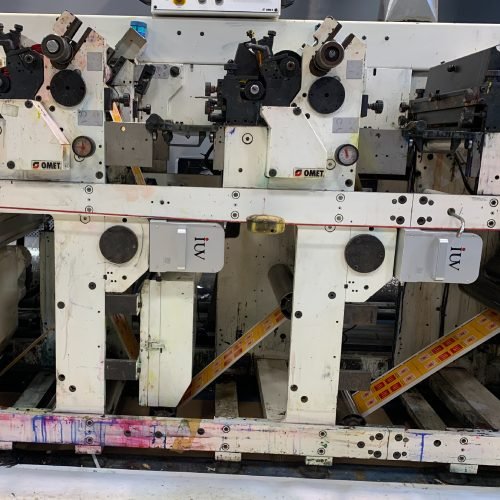
Many converters assume that upgrading to LED UV requires replacing the entire press. In practice, numerous flexographic, offset, and narrow web presses can be successfully retrofitted.
Engineering evaluation typically considers several factors before installation:
- Available mounting space
- Existing electrical infrastructure
- Cooling capacity
- Press speed
- Printing width
- Control system compatibility
- Required curing positions
Proper retrofit engineering allows converters to retain mechanically sound printing equipment while modernizing the curing process to current production standards.
Long-Term Cost Considerations
The purchase price of replacement mercury lamp assemblies is only one part of the overall investment.
Over several years of operation, converters should also evaluate:
- Replacement lamp costs
- Reflector replacement
- Maintenance labor
- Machine downtime
- Electricity consumption
- Cooling system operation
- Production waste caused by inconsistent curing
- Inventory of spare parts
Although LED UV retrofits generally require a larger initial investment, operating expenses often become substantially lower over the equipment lifetime because fewer consumable components require replacement.
The economic advantage becomes increasingly significant for presses operating multiple shifts or running continuously throughout the year.
Selecting the Appropriate Upgrade Strategy
No single solution is appropriate for every production facility.
Replacing a mercury lamp assembly may be reasonable when production volumes remain low, equipment is approaching retirement, or short-term investment budgets are limited.
An LED UV upgrade becomes more attractive when presses continue operating at high utilization, production speeds are increasing, or quality consistency has become a competitive requirement.
Converters producing premium labels, pharmaceutical packaging, cosmetics, food packaging, and industrial products often benefit from the greater process stability offered by LED UV technology.
A detailed engineering assessment should consider current operating conditions together with future production plans rather than focusing only on immediate replacement costs.
Conclusion
Choosing between replacing conventional mercury lamp assemblies and upgrading to LED UV curing systems requires more than comparing equipment prices. The decision affects production stability, curing consistency, maintenance workload, operating costs, and future manufacturing capability.
For label printing, flexographic printing, offset printing, and narrow web applications, LED UV technology provides stable spectral output, lower thermal impact, improved energy efficiency, and simplified maintenance while supporting higher production flexibility. Evaluating the entire curing process rather than only the lamp assembly allows converters to select a solution that delivers reliable performance throughout the remaining life of the printing press.