Abstract
Heat-related film distortion is a frequent production risk when LED-UV curing is applied to pressure-sensitive labels on thin or temperature-sensitive facestocks. LED systems reduce infrared exposure compared with conventional arc curing, but they do not eliminate thermal loading on the web. Heat can still enter the label construction through optical absorption, repeated cure stages, hot press components, and inadequate cooling control. This paper examines how narrow-web flexographic and UV offset label presses can control that heat load while maintaining reliable ink cure. The focus is on defining a practical thermal budget, matching ink chemistry to LED wavelength, managing ink-film thickness, and validating the full label laminate under production conditions.
Introduction
LED UV curing for label printing is often selected to improve energy control, reduce maintenance, and support demanding label materials. For converters running thin BOPP, PE, PP, PET, or shrinkable film facestocks, the central engineering question is more specific: can the press deliver complete cure without changing the web’s shape, tension response, or registration position?
A film label is not a single material. It is a construction that includes a facestock, pressure-sensitive adhesive, release coating, and liner. Each layer responds differently to heat and tension. A temperature rise that seems minor at the lamp position can later appear as curl, web wander, shrinkage, trapped tension, die-cut variation, or poor label dispensing.
The relevant goal is not simply to reduce lamp power. It is to control the total heat absorbed by the moving label construction while preserving the irradiation and energy dose required by the ink. This requires a process view that links curing, print coverage, press geometry, cooling, and material behavior.
Why LED-UV Systems Can Still Heat Sensitive Films
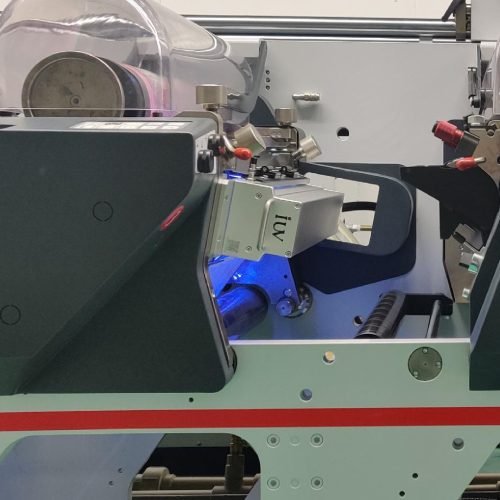
LED curing heads produce narrow-band ultraviolet and visible output, commonly near 365 nm, 385 nm, 395 nm, or 405 nm. They direct less infrared energy toward the web than traditional UV arc lamps. However, the emitted optical energy is still absorbed by ink, coatings, pigments, and portions of the substrate. Absorbed energy ultimately becomes heat.
The lamp is only one contributor. Repeated interstation exposures can add heat as the web passes through the press. Warm idler rolls, enclosed press sections, poor airflow, and high-tension settings can further raise the material temperature. A highly covered label design may absorb more energy than an open design, even when both use the same lamp recipe.
Thin films react quickly because they have little thermal mass. Unsupported films can heat and cool rapidly, which may create local stress differences across the web. A laminated pressure-sensitive construction may hold that stress until rewinding or die cutting. The defect can therefore emerge after printing rather than directly under the LED head.
LED UV Curing for Label Printing Requires a Thermal Budget
A useful thermal budget starts with the material supplier’s recommended processing limits, but the production limit should be established on the press. The acceptable web temperature is not necessarily the published temperature limit of the facestock. It should include a margin for tension, adhesive behavior, chill-roll contact, repeated UV exposure, and downstream converting.
The test should use the thinnest or most heat-sensitive stock that will run commercially. It should also use the heaviest expected ink coverage, the highest planned press speed, and the full number of active LED stations. Testing a lightly printed sample at reduced speed can hide the actual thermal risk.
Web temperature should be measured after the relevant cure stages and before the rewind section. An infrared instrument can be useful, but film emissivity and reflected light can affect readings. Contact sensors, temperature-indicating labels, or carefully validated infrared measurements provide more dependable results. The method should remain consistent so that trends can be compared between jobs and presses.
The thermal budget should be documented with the lamp output setting, wavelength, web speed, press tension, material code, ink system, and cooling settings. This creates a practical process window. It also prevents operators from solving a cure problem by increasing output without checking the material temperature.
Match Wavelength Before Raising Irradiance
When an ink is not matched to the LED wavelength, increasing irradiance may increase web heat without producing reliable cure. The photoinitiator package must absorb the emission band of the selected LED lamp and initiate a reaction through the required ink depth.
Many label inks are formulated for 385 nm or 395 nm LED-UV curing. That does not mean every UV ink is interchangeable at those wavelengths. An ink developed for broad-spectrum mercury UV may require a different response profile. It can show incomplete surface cure, poor adhesion, low scratch resistance, or weak through-cure when exposed to a narrow-band LED source.
The cure requirement must be confirmed with the ink supplier for each major ink category. This includes process colors, opaque white, dense black, metallic inks, overprint varnishes, and tactile coatings. Opaque white often needs separate testing because pigment can limit light penetration. A surface that feels dry may still contain insufficient cure below the surface.
Wavelength selection is therefore a heat-control decision as well as a cure decision. A correctly matched ink can reach the required performance at a lower practical thermal load. A poorly matched ink often encourages operators to use excessive exposure, which creates more risk for sensitive films.
Dose, Exposure Time, and the Moving Web
Irradiance describes the optical power delivered at a specific moment and location. It is commonly expressed in watts per square centimetre. Energy dose describes the total optical energy received during exposure. It is commonly expressed in joules per square centimetre.
On a moving web, exposure time depends on the effective illuminated length and the press speed. A fast web spends less time under the LED head. The system must therefore supply enough dose at production speed, not only during a slow-speed trial.
Peak irradiance alone does not define the process. A narrow, high-intensity exposure zone may produce different results from a wider zone with comparable peak output. Edge-to-edge uniformity also matters. An undercured edge may lead to localized blocking, poor adhesion, or inconsistent rub resistance across a finished roll.
The practical test is to measure lamp output at the web plane with a meter suitable for the LED wavelength. Measurements should be taken across the printable width and repeated at the normal working distance. A change in mounting height, web path, or window cleanliness can change delivered energy even when the lamp controller displays the same power setting.
Ink Film Thickness Is a Major Heat Variable
In narrow-web flexography, anilox volume and ink transfer directly affect cure behavior. A higher-volume anilox generally deposits a thicker ink film. That ink may require more energy for through-cure, particularly when it is highly pigmented. It may also absorb more optical energy and increase the temperature of the label construction.
Anilox selection should balance color strength, opacity, and cure capability. An unnecessarily heavy ink laydown can create a cycle of higher lamp output, higher web temperature, and increased distortion risk. Stable ink transfer often provides a more effective solution than simply adding curing energy.
Chamber pressure, doctor blade condition, anilox cleanliness, ink viscosity, and plate design should be controlled during thermal validation. If a cured sample performs differently from one run to the next, the problem may be variable ink film thickness rather than the LED system itself.
UV offset and hybrid label presses face a similar issue. Heavy solids, dense spot colors, and varnished areas can create uneven thermal absorption. The curing strategy should account for the highest-coverage areas of the repeat, not only the average coverage across the web.
Control Curing Sequence Across Print Stations
Interstation LED exposure can pin ink before the next color station. Controlled pinning may improve dot definition and reduce intercolor mixing. It can also limit ink movement on film substrates that have lower surface energy or limited wetting tolerance.
However, every exposure stage adds energy to the web. Excessive interstation curing can create unnecessary heat and may affect intercoat adhesion. The press should distinguish between the energy required for pinning and the energy required for final cure.
A practical sequence may use lower controlled exposure between selected flexo units, followed by a higher final-cure stage after the last ink or varnish application. The correct sequence depends on the ink stack, color order, coverage, and substrate. It should be validated for both cure quality and web temperature.
Registration stability should be monitored during this work. Film expansion, relaxation, or tension shifts may appear as a registration change after a lamp setting adjustment. The cause may not be optical output alone. Web temperature, cooling-roll performance, dancer response, and tension-zone settings should be checked together.
Use Cooling as Part of the Press Process
A cooling strategy should remove heat from the web without creating condensation, tension instability, or material damage. Chilled rolls can reduce temperature before or after key cure stages when the press layout allows controlled web contact. Their effectiveness depends on roll condition, wrap angle, thermal capacity, and the location of the hot zone.
Airflow also needs attention. Air-cooled LED heads require sufficient clean airflow to protect the modules. Yet uncontrolled air movement near a thin web can affect web tracking and introduce debris. The press design should separate lamp cooling airflow from the web path where possible.
Water-cooled LED systems require stable coolant flow, suitable coolant condition, and active monitoring. Poor heat removal can reduce module output or cause the system to derate. This may lead operators to increase power settings without realizing that the actual energy at the web remains inconsistent.
Cooling should be evaluated at production speed. A chilled roll that performs well during a slow test may not have enough dwell time to control the web temperature at a high-speed commercial run.
Retrofit Requirements for Existing Label Presses
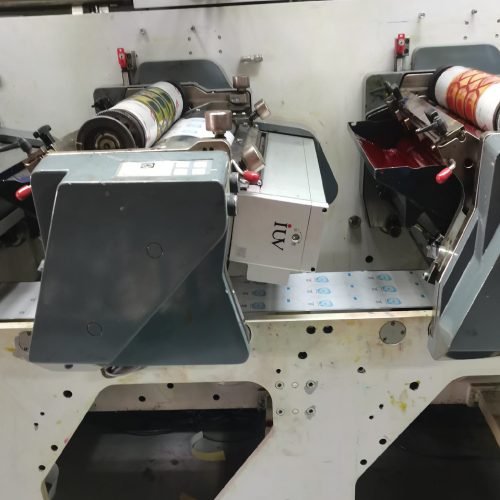
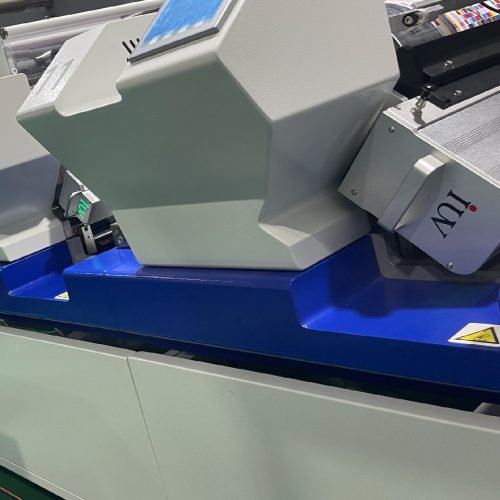
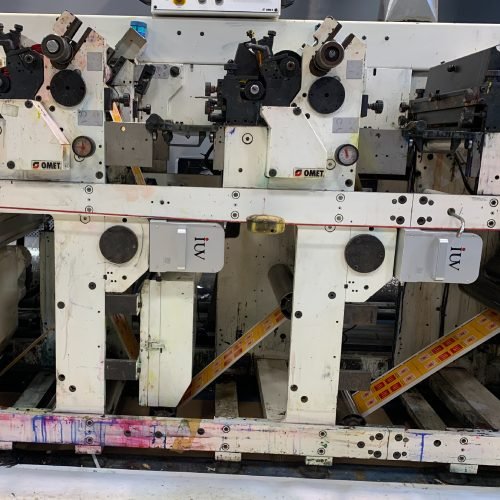
An LED-UV retrofit should begin with a mechanical and thermal survey. The survey should confirm available interstation space, lamp-to-web distance, cable routing, cooling requirements, press guarding, and access for cleaning. It should also assess whether the press has sufficient electrical capacity and suitable interlocks.
The control system should reduce or disable LED output during web stops, breaks, and fault conditions. This protects the film and prevents localized overheating. Recipes should link lamp output to press speed so that cure energy remains within the validated operating window.
The retrofit plan should also review web path changes. Adding a lamp head, guard, or cooling component can alter roller positions and web tension zones. Even small geometry changes can affect sensitive film handling. The final configuration should be tested with the most demanding label construction before full production release.
Low-Migration Work Adds a Cure-Control Requirement
For low-migration label applications, stable cure parameters are essential. A low-migration ink system requires compatible inks, coatings, substrates, adhesives, wash-up procedures, and validated curing conditions. A lamp setting cannot establish low-migration performance by itself.
Heat control remains relevant because material changes can affect the validated process. A distorted film, changed adhesive behavior, or unstable rewind tension can compromise the finished package even when the printed surface appears cured. The job record should identify the approved LED recipe, web temperature range, ink system, and cleaning controls.
Routine quality checks should include rub resistance, adhesion, blocking resistance, and application-specific requirements. These checks should be performed after the material has stabilized, not only at the press exit.
Diagnosing Distortion and Cure Defects
Film curl, telescoping rolls, registration drift, and wrinkling often indicate excessive thermal loading or unstable tension. Begin by comparing web temperature and lamp settings with the approved job record. Then inspect cooling performance, press tension, repeated cure stages, and print coverage.
If the film distortion occurs only in dark or opaque areas, investigate ink-film thickness and wavelength compatibility. If it appears near one edge, check lamp alignment, output uniformity, and the local web path. If the defect develops later in the roll, inspect rewind tension and whether residual heat was trapped during winding.
Tacky ink, poor rub resistance, or blocking should not automatically trigger a higher lamp setting. Confirm lamp-window cleanliness, output at the web plane, working distance, press speed, ink batch, and anilox condition. A measured diagnosis avoids adding heat to a process that already operates near the film’s thermal limit.
Maintenance Preserves the Validated Thermal Window
A validated LED process can drift when lamp windows become contaminated or cooling performance declines. Ink mist, paper dust, coating splash, and adhesive debris can reduce optical transmission. Uneven contamination can create local cure variation that is difficult to see during routine production.
LED windows should be inspected and cleaned according to the equipment supplier’s approved procedure. Cooling fans, filters, coolant flow, hoses, sensors, and safety interlocks also need scheduled checks. Output measurements should be recorded by lamp head and compared over time.
Maintenance is not separate from heat control. A lamp head that loses efficiency may deliver inconsistent cure, while a poorly cooled module may reduce output or run outside its intended operating condition. Trending these values helps protect both label quality and sensitive substrates.
Conclusion
Preventing heat-related film distortion requires LED-UV curing to be managed as part of the full label-printing process. The correct wavelength, stable dose, controlled ink-film thickness, suitable cure sequence, and effective cooling work together to keep the web within an acceptable thermal range.
For pressure-sensitive labels on thin and sensitive films, the decisive metric is not lamp power alone. It is repeatable cure at the web temperature, tension, and registration conditions that the finished label construction can tolerate. A documented thermal budget, supported by measured output and routine maintenance, provides a reliable basis for production and retrofit decisions.