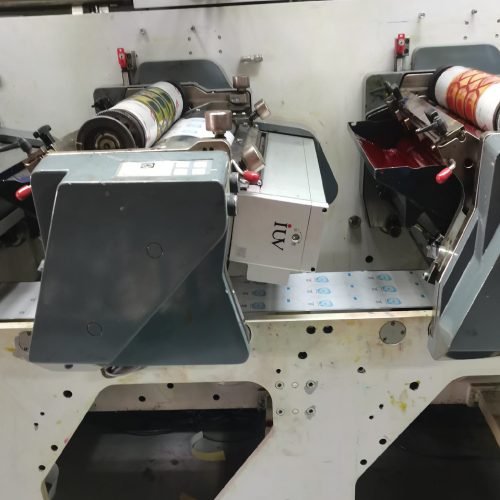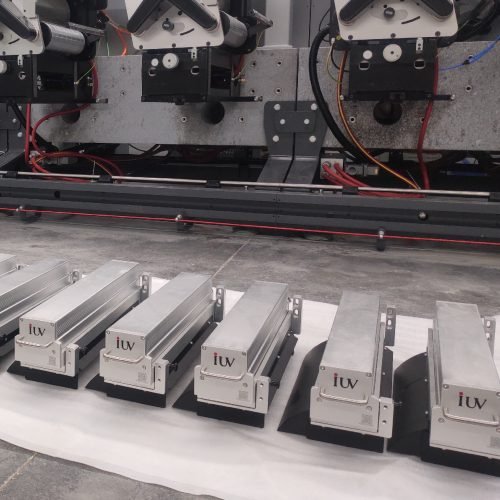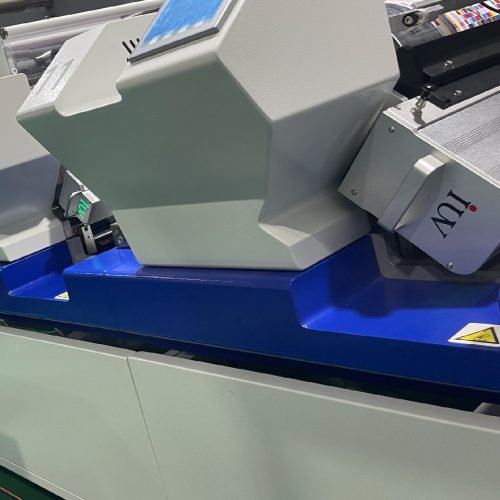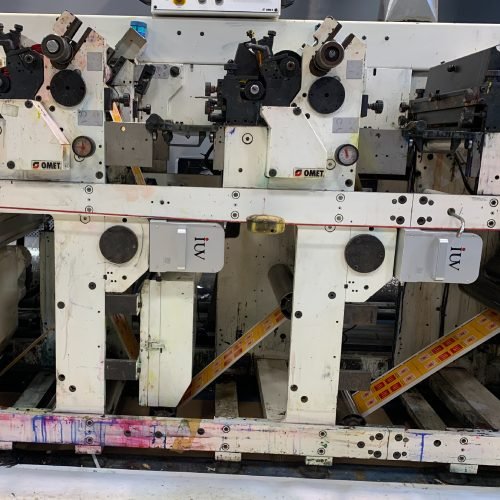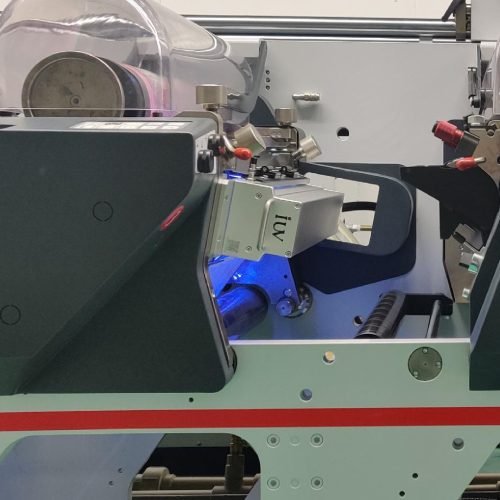
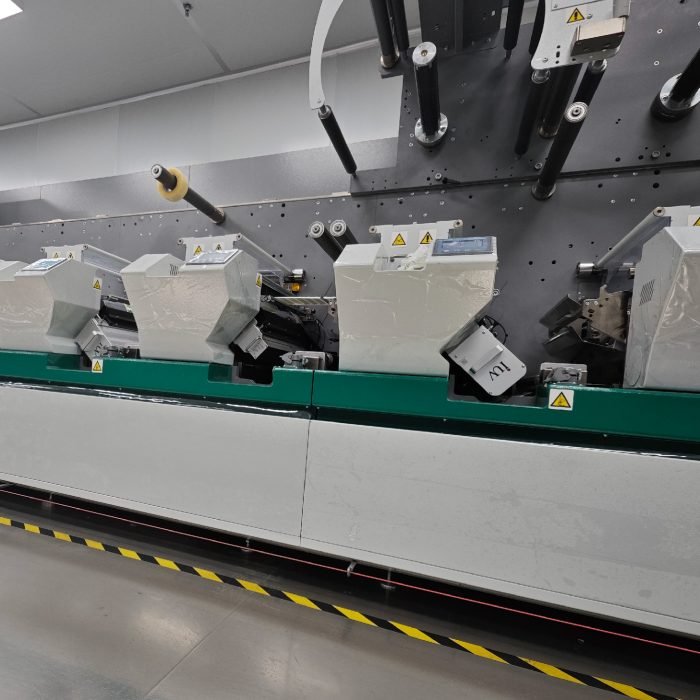
In the fast-paced world of label and packaging printing, achieving exceptional print quality is paramount. Brands demand vibrant colors, sharp details, and durable finishes, while printers constantly seek efficient and effective technologies. At the heart of this pursuit lies an advanced curing method: LED UV curing. This technology leverages the science of polymerization to dramatically enhance print quality across various printing methods, including flexography, offset, and narrow web applications.
The Core Principle: Understanding Polymerization
Before diving into the specifics of LED UV curing, it’s essential to grasp the fundamental concept of polymerization. In the context of inks and coatings, polymerization is a chemical reaction where small molecules, known as monomers, link together to form long chains or a three-dimensional network. This process transforms a liquid ink or coating into a solid, durable film.
Traditional curing methods often rely on heat or electron beams to initiate this process. However, UV curing, and specifically LED UV curing, employs ultraviolet light as the energy source. The UV light interacts with photoinitiators present in the ink formulation. These photoinitiators absorb the UV energy and break down, generating reactive species like free radicals or cations. These reactive species then trigger the polymerization of the monomers, rapidly solidifying the ink.
Why LED UV Curing Stands Out: Precision and Efficiency
LED UV curing systems offer distinct advantages over traditional mercury lamp UV systems. Unlike mercury lamps that emit a broad spectrum of UV light and significant heat, LEDs emit light at specific, narrow wavelengths. This targeted approach offers several benefits:
- Precise Wavelength Control: Different photoinitiators are activated by specific UV wavelengths. LED systems can be precisely tuned to emit the optimal wavelength for a given ink formulation. This ensures maximum efficiency in initiating polymerization, leading to faster and more complete curing.
- Reduced Heat Transfer: LEDs generate far less heat than mercury lamps. This is critical in narrow web printing, where thin substrates can be susceptible to heat damage or distortion. Reduced heat also means less energy is wasted, contributing to a more sustainable printing process.
- Instant On/Off Capability: LEDs can be switched on and off instantaneously. This eliminates warm-up and cool-down times associated with mercury lamps, leading to greater operational flexibility and reduced energy consumption when not actively curing.
- Longer Lifespan and Lower Maintenance: LED lamps have a significantly longer operational lifespan compared to mercury lamps, reducing downtime and replacement costs. They also contain no hazardous materials, making disposal more environmentally friendly.
Transforming Print Quality in Label Printing
For the label printing industry, where intricate designs, vibrant colors, and robust performance are critical, LED UV curing is a game-changer.
- Enhanced Color Brilliance and Sharpness: The rapid, efficient polymerization enabled by LED UV curing results in a dense, solid ink film. This minimizes ink spread and dot gain, allowing for sharper image definition and richer, more saturated colors. Even fine text and intricate graphic elements appear exceptionally clear.
- Superior Durability and Resistance: The tightly cross-linked polymer network formed during LED UV curing creates a highly durable ink film. This translates to excellent resistance to abrasion, chemicals, scratching, and fading. Labels printed with LED UV inks can withstand demanding environments, from the freezer aisle to industrial applications, without compromising their aesthetic appeal or legibility.
- Versatile Substrate Handling: The low heat output of LED UV systems allows printers to work with a wider range of heat-sensitive substrates, including thin films and foils. This expands the creative possibilities for label design and application.
- Increased Production Speeds: The rapid curing speed allows for faster press speeds without sacrificing quality. This directly impacts productivity and throughput, enabling printers to meet tighter deadlines and handle larger order volumes.
Flexographic Printing: Precision in Every Impression
Flexography, with its inherent resilience and adaptability, benefits immensely from LED UV curing.
- Improved Ink Transfer and Ink Laydown: The precise control over polymerization ensures that the ink solidifies almost instantly upon contact with the substrate. This minimizes ink transfer to non-image areas and ensures a consistent, even ink laydown. The result is cleaner prints with reduced ghosting and enhanced fine detail reproduction.
- Brighter Whites and Cleaner Highlights: The efficient curing process prevents ink from migrating into the substrate pores, preserving the opacity of white inks and the clarity of highlight areas. This leads to prints with greater contrast and visual impact.
- Consistent Color Reproduction: By ensuring complete and rapid polymerization, LED UV curing helps maintain color consistency throughout the print run. This is crucial for brand owners who rely on precise color matching across different batches and print jobs.
- Specialty Effects Made Possible: LED UV curing enables the use of specialized inks and varnishes for tactile effects, high-gloss finishes, and metallics. The rapid cure allows for multi-layer printing of these effects without smudging or interference between layers.
Offset Printing: Elevating Lithographic Quality
Even in the realm of sheetfed and web offset printing, LED UV curing is revolutionizing quality and efficiency.
- Elimination of Ink Set-Off and Smudging: The instant curing of LED UV inks means that sheets can be immediately handled, stacked, or sent to finishing processes without the risk of ink set-off or smudging. This eliminates the need for anti-set-off powders, which can detract from print quality and create environmental concerns.
- Enhanced Ink Gloss and Saturation: Offset printing often aims for a smooth, glossy finish. LED UV curing achieves this by creating a uniform, non-porous ink film that reflects light more effectively, resulting in richer, deeper colors and a superior gloss level.
- Faster Turnaround Times: The immediate drying capability dramatically speeds up post-press processes. Printed sheets can move directly to cutting, folding, or laminating, significantly reducing overall job turnaround times.
- Broader Substrate Compatibility: Similar to flexo, offset printers can now confidently print on a wider array of substrates, including plastics and coated papers that might be sensitive to heat from conventional drying methods.
Narrow Web Printing: The Perfect Fit for Efficiency
Narrow web presses, often used for labels and flexible packaging, are particularly well-suited to LED UV curing technology.
- Compact Integration: LED UV curing units are often more compact than traditional UV systems, making them easier to integrate into existing narrow web presses without significant modifications.
- Energy Savings and Reduced Emissions: The energy efficiency of LEDs translates to substantial cost savings on electricity. Furthermore, the absence of mercury and the reduced heat output contribute to a more environmentally friendly operation.
- Consistent Quality at High Speeds: Narrow web presses operate at high speeds. LED UV curing ensures that even at these demanding speeds, the inks and coatings cure effectively, maintaining consistent quality and adhesion across the entire web.
- Versatility in Finishing: The instant cure allows for inline finishing processes such as lamination, die-cutting, and embossing immediately after printing, streamlining production workflows and reducing the need for off-line operations.
The Future is Bright: Embracing LED UV Polymerization
The science of polymerization, powered by the precision and efficiency of LED UV curing systems, is fundamentally transforming the print quality achievable in label, flexo, offset, and narrow web printing. From delivering unparalleled color vibrancy and sharp details to ensuring robust durability and enabling faster production, LED UV technology offers a clear path to superior print outcomes. As the demand for high-quality, efficient, and sustainable printing solutions continues to grow, embracing LED UV curing is not just an upgrade—it’s a strategic imperative for printers looking to stay ahead in a competitive market.