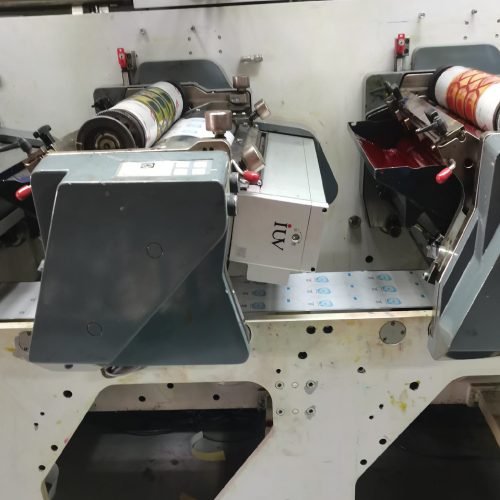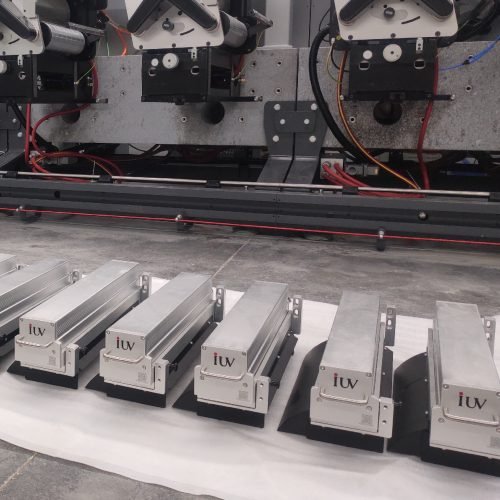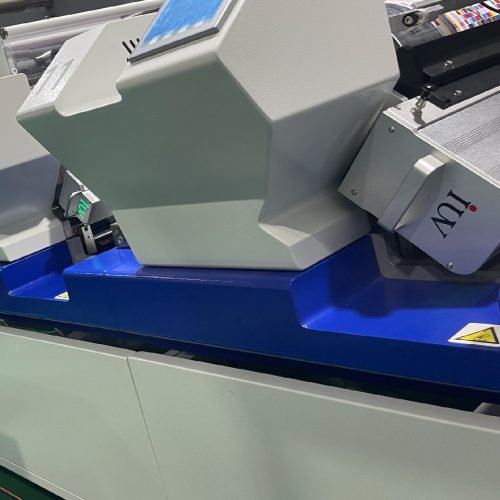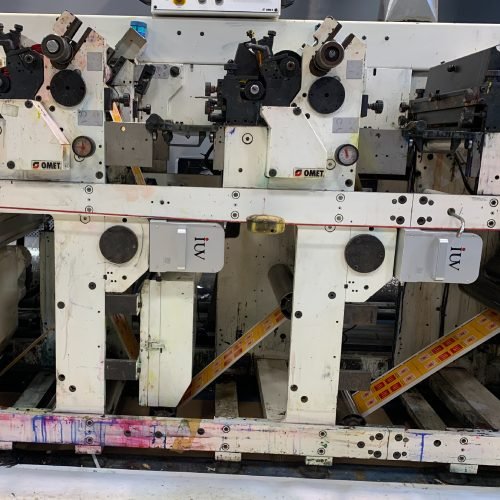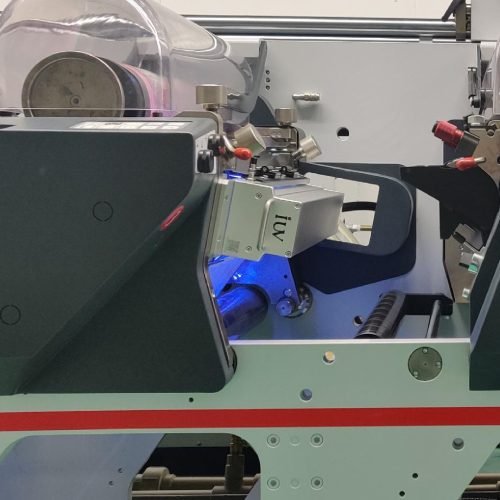
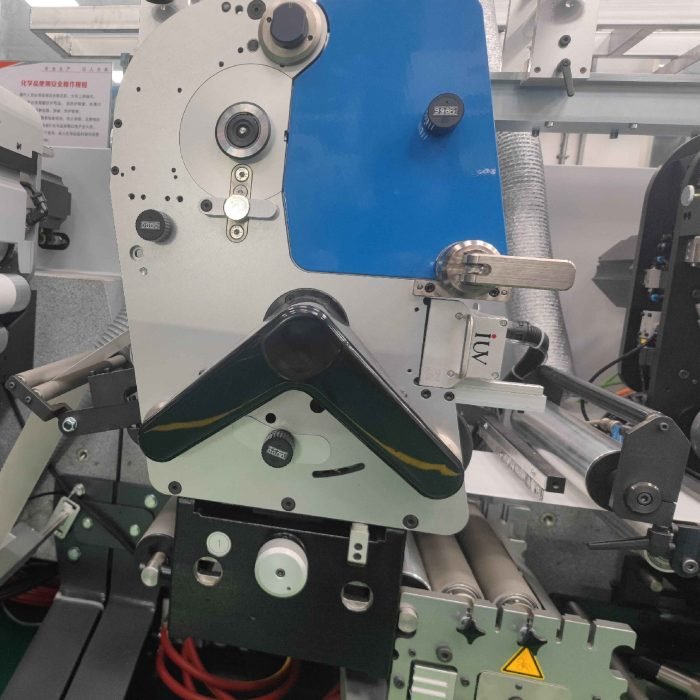
In today’s label printing market, production speed is no longer defined only by mechanical press limits. Converters face shorter runs, tighter delivery windows, and growing pressure to reduce waste while maintaining consistent print quality. For many narrow web operations, the fastest way to unlock higher productivity is not a new press, but a smarter curing system.
Upgrading a label press with LED UV curing has become one of the most effective ways to increase throughput without compromising quality or stability. When implemented correctly, LED UV technology removes several bottlenecks that traditionally limit press speed and overall efficiency.
Why Curing Performance Limits Press Speed
In narrow web label printing, curing is often the silent constraint on productivity. Traditional UV systems depend on mercury arc lamps that require warm-up time and deliver energy across a wide spectrum. As press speeds increase, these systems struggle to deliver consistent curing without raising heat levels or consuming more power.
Excess heat can distort films, soften pressure-sensitive adhesives, and reduce registration accuracy. As a result, operators are forced to slow down the press to protect print quality and substrate integrity. In high-mix production environments, frequent stops and restarts further reduce effective output.
How LED UV Changes the Speed Equation
LED UV curing operates with instant on and off capability, delivering stable output from the first impression to the last. This characteristic alone eliminates warm-up delays and reduces downtime between jobs. Output consistency allows presses to reach target speeds faster and maintain them without constant adjustment.
Because LED UV emits minimal infrared radiation, substrates remain cooler even at higher web speeds. Films and thin facestocks maintain dimensional stability, allowing presses to run faster without introducing registration drift or curl. This thermal control directly translates into higher sustainable press speeds.
Faster Job Changeovers and Reduced Setup Time
Setup time plays a critical role in real-world productivity. Traditional UV systems require warm-up periods and stabilization before production can begin. Each stop or pause introduces additional delays as lamps recover operating temperature.
With LED UV curing, presses can stop and restart instantly without affecting curing performance. Operators can perform color adjustments, plate changes, and inspections without wasting material during lamp stabilization. Over a full shift, these time savings accumulate into significant throughput gains.
Impact on Ink Behavior at High Press Speeds
At higher speeds, ink behavior becomes more sensitive to curing performance. Traditional UV systems may require increased exposure or slower speeds to achieve full cure, especially with thicker ink films or dense solids.
LED UV curing delivers precise, repeatable energy that promotes faster surface fixation and reliable through-cure. In flexographic label printing, this improves dot stability and reduces ink movement during impression. Cleaner dot formation allows presses to run faster without sacrificing tonal control or edge sharpness.
Maintaining Print Quality While Increasing Output
Speed gains are only valuable if print quality remains consistent. One of the advantages of LED UV curing is its ability to stabilize the curing window across a wide speed range. Operators can increase press speed without constantly rebalancing ink, anilox, and exposure settings.
Reduced heat also improves color consistency. Substrate stability minimizes registration variation, while consistent curing output supports stable color density and gloss. These factors help maintain Delta E control even as production speeds increase.
Energy Efficiency and Power Availability at High Speeds
Traditional UV systems often require increased power output to support higher press speeds. This raises energy consumption and may exceed available electrical capacity on older presses.
LED UV systems deliver higher electrical efficiency, converting more input power into usable UV energy. This allows presses to achieve higher speeds without overloading power infrastructure. Lower energy demand also reduces cooling requirements, further supporting continuous high-speed operation.
Press Control and Speed Synchronization Advantages
Modern LED UV systems integrate directly with press controls, allowing curing output to scale with press speed. This synchronization ensures that the delivered UV dose remains consistent during acceleration, deceleration, and steady-state running.
As a result, operators can push speed limits with confidence, knowing that curing performance remains stable. This dynamic response is especially valuable in short-run label production where frequent speed changes are unavoidable.
Reduced Waste During Speed Optimization
Pushing a press to higher speeds traditionally results in increased startup waste as operators dial in curing performance. With LED UV, stable output and instant response reduce the trial-and-error phase during speed optimization.
Faster stabilization means fewer meters of wasted substrate at the beginning of each run. Over time, waste reduction contributes directly to higher effective production capacity without additional capital investment.
Substrate Versatility at Higher Throughput
As label presses run faster, substrate limitations become more apparent. Heat-sensitive materials often restrict speed when using conventional UV systems.
LED UV curing expands the usable substrate range at high speeds. Films, foils, and unsupported materials maintain structural integrity under reduced thermal load. This flexibility allows converters to accept a wider variety of jobs without sacrificing productivity.
Operator Confidence and Workflow Efficiency
Speed increases require operator confidence. LED UV curing simplifies decision-making by removing many variables associated with traditional UV systems. Instant response, predictable behavior, and consistent output allow operators to focus on print quality rather than curing limitations.
Over time, this leads to smoother workflows, fewer interruptions, and more consistent production rates across shifts.
Long-Term Productivity Gains Beyond Speed
While higher press speed is a primary benefit, the long-term productivity impact of LED UV extends further. Reduced maintenance, fewer consumables, and improved uptime contribute to sustained efficiency gains.
Without bulb changes or reflector degradation, presses maintain curing performance over longer periods. Predictable output supports stable production planning and reduces unplanned downtime.
A Practical Path to Faster Label Production
Upgrading a label press with LED UV curing is one of the fastest ways to increase production without replacing core equipment. By removing curing-related constraints, LED UV technology allows presses to operate closer to their mechanical limits while maintaining quality and stability.
For narrow web label printers seeking higher throughput, faster setups, and reduced waste, LED UV curing provides a proven path to sustained production speed improvements.