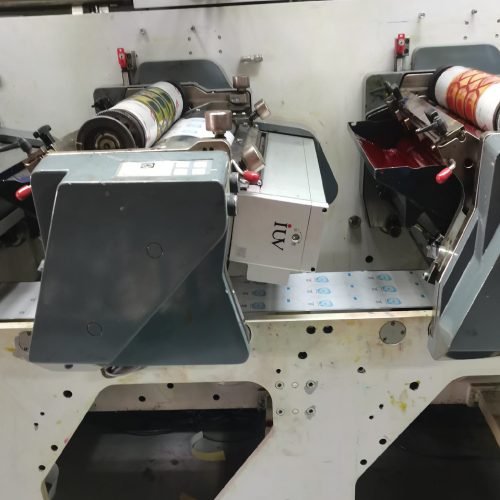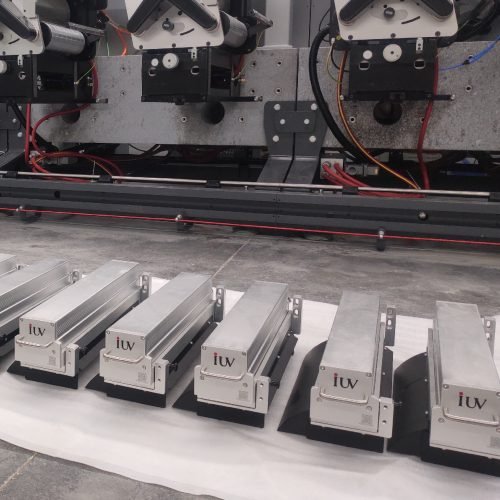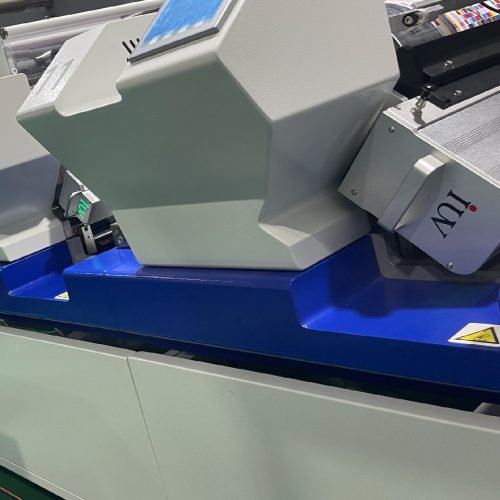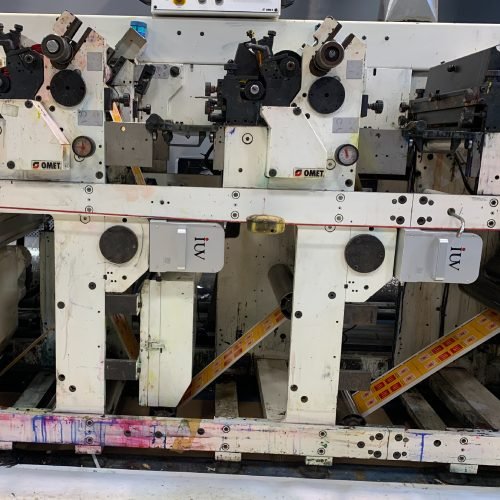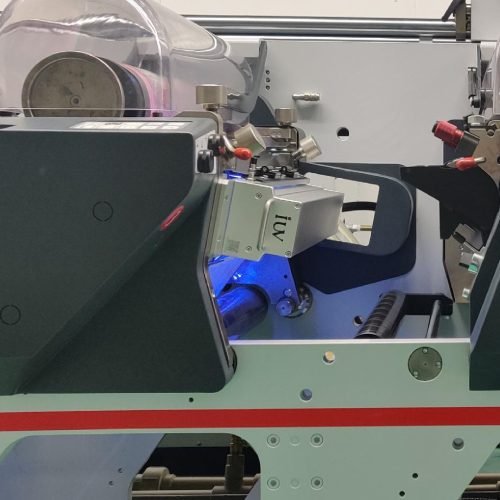
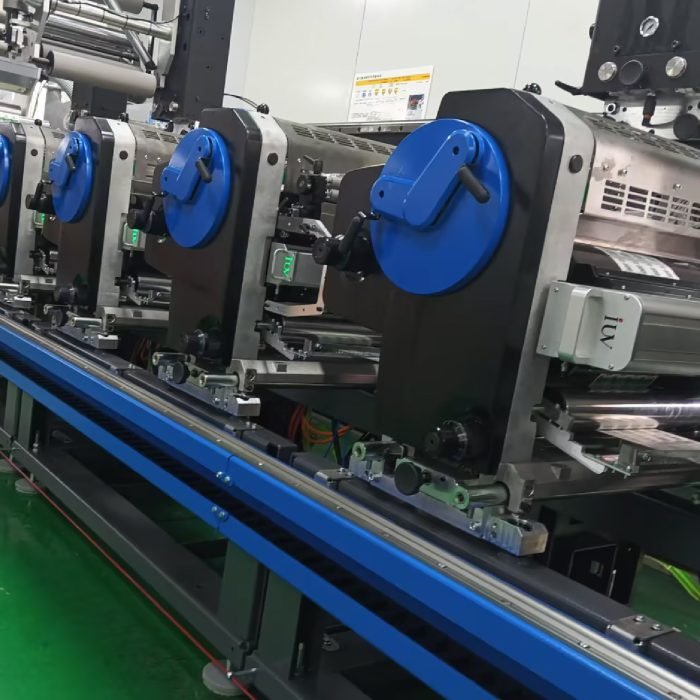
Proper mechanical mounting is essential for LED UV cassettes on narrow web label presses. Accurate positioning ensures consistent irradiance across the printed substrate. Misalignment can create uneven curing, hot spots, and reduced process reliability.
Mounting brackets must be robust and vibration-resistant to maintain alignment during high-speed operation. Adjustable mounts allow fine-tuning of the lamp-to-web distance. Maintaining the recommended working distance ensures optimal curing efficiency and uniform energy delivery.
Thermal expansion must be considered when designing mounting points. LED UV cassettes generate localized heat, and rigid mounting without allowance for expansion can create stress on the cassette or press frame. Using materials with low thermal deformation and providing expansion slots helps maintain stable positioning during extended runs.
Electrical Mounting and Connectivity
Electrical integration of LED UV cassettes requires careful attention to power delivery and control interfaces. Proper grounding, shielding, and cable management prevent electrical noise and maintain consistent lamp performance.
Control wiring should connect directly to the press automation system or dedicated UV controllers. Signal integrity is critical when cassettes are triggered in synchronization with servo-driven press components. Connectors should be rated for the operating environment, considering vibration, temperature, and potential exposure to ink or cleaning fluids.
Overcurrent protection and fusing are necessary to protect both the LED modules and the press electronics. Proper electrical mounting reduces the risk of failure, ensures safe operation, and allows predictable lamp behavior during high-speed production.
Alignment for Optimal Irradiance Distribution
Even energy distribution depends on accurate positioning relative to the web. Narrow web presses often operate with low-tension films, which are sensitive to heat and mechanical stress. Correct alignment prevents overexposure, substrate deformation, and under-cured regions.
Cassettes should be positioned perpendicular to the web, with uniform spacing across the width. Adjustable mounting systems allow technicians to fine-tune the tilt, distance, and lateral alignment. Proper alignment ensures consistent curing, especially for opaque inks, coatings, and multi-layer print applications.
Cooling and Heat Management
LED UV cassettes generate heat that can affect both mechanical stability and curing performance. Integrating proper cooling—whether air-cooled or liquid-cooled—ensures consistent output. Mounting brackets should allow airflow or coolant passage without creating vibration or misalignment.
Excessive heat can degrade LEDs and cause uneven irradiance. Mounting designs that incorporate thermal isolation between the cassette and press frame help maintain long-term system reliability. Cooling considerations must be integrated into both mechanical and electrical mounting strategies.
Vibration Mitigation
High-speed narrow web presses produce mechanical vibrations that can misalign UV cassettes. Shock-absorbing materials or vibration-damping mounts reduce motion transfer and maintain consistent lamp-to-web distance.
Even minor vibrations can create micro-variations in curing, especially at high speeds. Proper mechanical design, combined with secure electrical connections, ensures stable operation and consistent print quality across extended runs.
Integration with Servo-Driven Press Components
LED UV cassettes must operate in synchronization with servo-controlled print units. Mounting strategies should ensure stable attachment to the press frame while allowing precise alignment with servo-driven components.
Signal connections must support real-time triggering based on encoder feedback or press speed. Electrical and mechanical integration together ensures that LED cassettes activate at the correct position relative to the web, achieving consistent curing across the label repeat.
Considerations for Multi-Station Presses
Many narrow web presses use multiple LED UV cassettes for multi-color or multi-layer jobs. Mechanical and electrical mounting should allow independent adjustment of each station.
Uniform spacing between cassettes, correct height, and consistent tilt across stations ensure even energy delivery. Electrical wiring must support individual control of each cassette for process flexibility and optimal curing performance.
Safety and Maintenance Accessibility
Mounting designs must consider operator safety and maintenance accessibility. Cassettes should be easily removable for cleaning, inspection, or replacement without compromising alignment.
Properly designed mounting reduces downtime, supports routine maintenance, and ensures that high-speed narrow web operations remain safe. Electrical and mechanical components should be secured to prevent accidental contact while providing clear access for service tasks.
Substrate and Print Considerations
Narrow web label printing often uses low-tension films. Mechanical mounting must minimize pressure points or heat transfer that could distort substrates.
Cassettes should be mounted to avoid direct contact with the web, preventing mark-offs or deformation. Stable mounting preserves print registration and ensures consistent curing across all substrate types, including PET, polypropylene, and other flexible label materials.
Calibration and Verification
After installation, calibration verifies lamp alignment, distance, and irradiance uniformity. Mechanical adjustments fine-tune cassette position, while electrical systems are tested for correct triggering and power stability.
Routine verification ensures long-term consistency in curing performance. Adjustments should be documented and repeated as necessary after maintenance, cassette replacement, or press modifications.
Achieving Long-Term Reliability
Correct mechanical and electrical mounting supports consistent, repeatable LED UV curing. High-density cassettes maintain uniform irradiance, while stable positioning prevents misalignment over long production runs.
Integrated mounting strategies optimize performance, reduce downtime, and maintain product quality in high-speed narrow web and flexographic label printing environments.
Best Practices Summary
Best practices include using vibration-resistant mounts, maintaining proper working distance, allowing thermal expansion, ensuring electrical integrity, and enabling easy maintenance. Aligning cassettes perpendicular to the web with uniform spacing ensures consistent curing. Cooling, vibration damping, and synchronization with press components are essential for repeatable results.