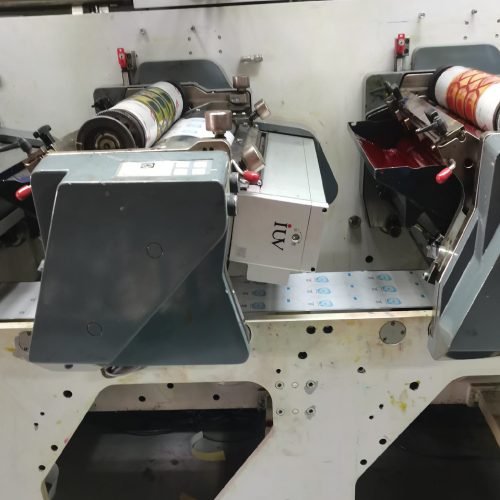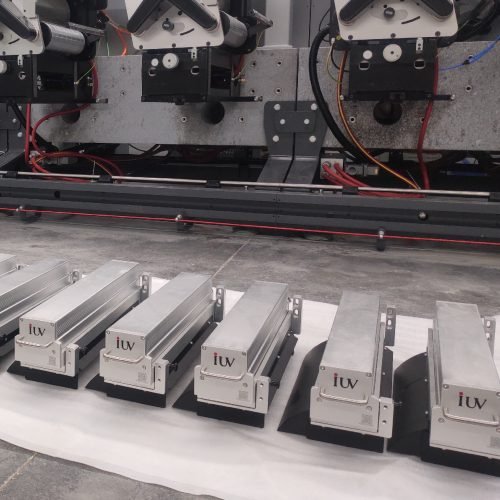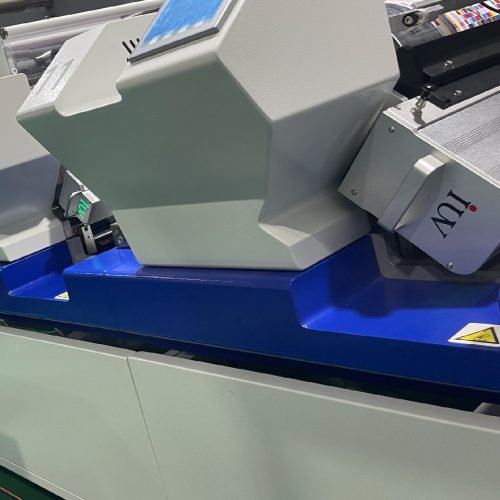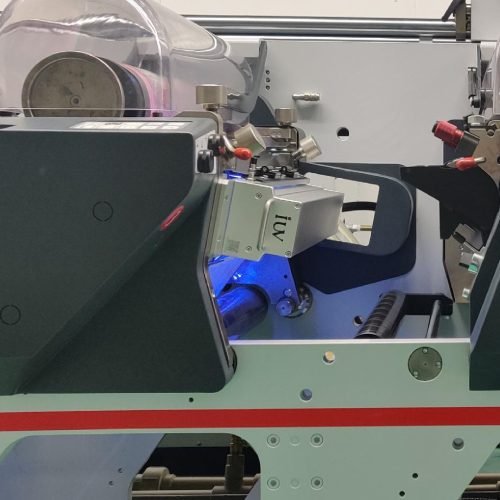
The label printing industry continues to demand higher productivity, shorter lead times, and lower operating costs. As converters increase production capacity, the reliability of curing equipment has become just as important as print quality. While conventional mercury UV lamps have supported flexographic and offset printing for decades, they require frequent maintenance, periodic lamp replacement, reflector cleaning, and ventilation system servicing. These recurring maintenance activities increase production costs and reduce press availability.
UV LED curing systems have fundamentally changed this maintenance model. Instead of relying on consumable lamps and high-temperature operation, LED technology delivers stable ultraviolet output through semiconductor light sources with significantly longer service life. Combined with simplified cooling systems and reduced mechanical wear, UV LED curing systems can reduce routine maintenance requirements by as much as 80% compared with traditional mercury UV equipment.
For label printers operating narrow web flexographic, offset, and hybrid presses, lower maintenance directly translates into increased equipment availability, reduced labor requirements, and lower total cost of ownership.
Why Conventional Mercury UV Systems Require Frequent Maintenance
Mercury UV lamps operate by generating ultraviolet radiation through electrical discharge inside a quartz tube containing mercury vapor. This process exposes the lamp, reflector, and optical components to extremely high temperatures.
As operating hours increase, lamp output gradually declines. Most mercury lamps require replacement after approximately 1,000 to 2,000 operating hours, depending on production conditions and maintenance practices. Reflectors accumulate contamination from ink mist and paper dust, reducing optical efficiency. Cooling fans, shutters, power supplies, and ozone extraction systems also require periodic inspection and servicing.
Each maintenance cycle interrupts production. Even routine lamp replacement requires cooling time, installation, calibration, and verification before the press returns to full production speed.
For high-volume label converters, these interruptions represent both direct labor costs and lost production capacity.
Extended Service Life of UV LED Modules
The most significant maintenance advantage of UV LED curing systems is the exceptional lifespan of the LED modules.
Industrial-grade UV LED arrays commonly operate for 20,000 to 30,000 hours while maintaining stable irradiance. Unlike mercury lamps, LEDs do not experience sudden end-of-life failure caused by electrode degradation or gas depletion.
Output reduction occurs gradually over many years of operation, allowing maintenance planning without unexpected production interruptions.
For label printing facilities operating multiple shifts, the difference in replacement frequency becomes substantial. A converter replacing mercury lamps several times each year may operate a UV LED system for many years without replacing the primary light source.
This dramatically lowers spare parts inventory while simplifying maintenance planning.
Stable Optical Performance Reduces Calibration Work
Mercury UV systems require frequent irradiance verification because lamp intensity continuously changes as components age.
Operators often compensate for declining output by increasing power settings or reducing press speed. These adjustments consume additional energy and may still produce inconsistent curing quality.
UV LED curing systems provide much more stable optical performance throughout their operating life. Once the system is properly calibrated, irradiance remains consistent with minimal variation.
Routine verification is still recommended, but adjustment frequency is greatly reduced.
Stable output also improves process repeatability, allowing converters to reproduce previous jobs with greater consistency.
Simplified Cooling Systems Lower Maintenance Requirements
Heat management is another major contributor to maintenance costs.
Mercury UV lamps generate significant infrared radiation that increases both lamp temperature and pressroom heat load. High-temperature operation requires large cooling systems, ventilation equipment, and ozone extraction.
Each of these subsystems introduces additional maintenance requirements.
UV LED curing systems generate far less infrared heat. Most industrial systems rely on closed-loop water cooling or compact air-cooling systems designed specifically for semiconductor operation.
Because overall thermal stress is lower, cooling equipment experiences less wear. Maintenance generally focuses on coolant quality, airflow inspection, and periodic cleaning rather than major component replacement.
Lower operating temperatures also reduce thermal expansion of surrounding machine components, contributing to improved mechanical reliability.
Fewer Consumable Components
Traditional mercury curing systems rely on several consumable items.
These include UV lamps, reflectors, quartz sleeves, shutters, filters, ignition components, and ventilation accessories. Each component has its own replacement interval and maintenance schedule.
UV LED systems eliminate many of these consumable parts entirely.
Without lamp replacement, shutter maintenance, or reflector refurbishment, routine servicing becomes significantly simpler.
Most scheduled maintenance consists of cleaning the protective optical window, inspecting electrical connections, verifying cooling performance, and monitoring irradiance output.
The reduction in replacement parts contributes directly to lower annual operating expenses.
Improved Press Availability
Maintenance reduction has an immediate effect on production efficiency.
Every hour spent replacing lamps or servicing curing equipment is an hour that cannot be used for printing.
Label production frequently involves multiple short jobs with demanding delivery schedules. Unexpected maintenance delays can affect customer deadlines and reduce equipment utilization.
UV LED curing systems minimize these interruptions by requiring fewer scheduled service events.
Higher press availability increases annual production capacity without requiring additional equipment investment.
For converters operating several narrow web presses, improved uptime often produces greater financial benefits than energy savings alone.
Lower Labor Costs
Maintenance activities require experienced technicians.
Replacing mercury lamps involves cooling procedures, electrical safety precautions, optical alignment, and performance verification.
LED systems significantly reduce technician involvement because fewer components require replacement.
Routine inspections become shorter and easier to schedule during planned maintenance windows.
Lower maintenance complexity also reduces the risk of installation errors that could affect curing performance.
Over the lifetime of the equipment, reduced labor requirements contribute substantially to total cost savings.
Better Process Stability Throughout Equipment Life
Consistent curing performance is essential for maintaining print quality.
Declining mercury lamp output often results in gradual changes in ink adhesion, gloss, abrasion resistance, and chemical resistance.
Operators may not immediately recognize these changes until print defects become visible.
UV LED systems maintain much more consistent irradiance, producing stable polymerization across long production periods.
This consistency reduces process variation and minimizes quality-related waste.
In flexographic label production, stable curing improves repeatability between production runs and simplifies process control.
Environmental Benefits of Reduced Maintenance
Maintenance reduction also improves environmental performance.
Mercury lamp replacement generates hazardous waste that must be handled according to environmental regulations.
Transportation, storage, and disposal increase both operating costs and environmental impact.
UV LED curing systems eliminate mercury entirely.
The absence of hazardous lamp disposal simplifies regulatory compliance and reduces environmental risk.
Longer component life also reduces manufacturing demand for replacement parts, contributing to a lower overall lifecycle footprint.
Lifetime Cost Comparison
Although UV LED curing systems generally require higher initial investment, lifecycle economics strongly favor LED technology.
The total cost of ownership includes:
- Electricity consumption
- Lamp replacement
- Spare parts
- Maintenance labor
- Production downtime
- Cooling system maintenance
- Waste disposal
- Process variability
Over several years of continuous operation, maintenance savings become one of the largest contributors to return on investment.
Many converters recover the higher capital investment through reduced operating expenses while simultaneously improving production efficiency.
Application in Label, Flexographic, Offset, and Narrow Web Printing
The maintenance advantages of UV LED technology apply across multiple printing processes.
In narrow web flexographic printing, reduced downtime supports frequent job changes and shorter production runs.
Offset label printing benefits from improved curing stability and lower thermal influence on substrates.
Hybrid presses combining flexographic, offset, digital, and finishing stations benefit from simplified integration because UV LED systems occupy less space and require less supporting infrastructure.
As production complexity continues to increase, equipment reliability becomes an increasingly important competitive advantage.
Best Maintenance Practices for UV LED Systems
Although maintenance requirements are significantly lower, regular preventive inspection remains essential.
Recommended maintenance practices include cleaning optical windows with approved materials, verifying coolant flow or airflow, inspecting cable connections, monitoring irradiance using calibrated radiometers, and checking cooling temperatures during extended production runs.
Operators should also periodically verify curing performance using adhesion, solvent resistance, and surface cure tests.
These preventive measures help ensure maximum system efficiency throughout the equipment’s operational life.
Conclusion
UV LED curing systems provide far more than energy savings. Their greatest long-term advantage lies in dramatically reducing maintenance requirements while improving production reliability.
Long-life semiconductor light sources eliminate frequent lamp replacement, stable irradiance minimizes recalibration, and simplified cooling systems reduce mechanical wear. Together, these improvements can reduce routine maintenance by approximately 80% compared with conventional mercury UV technology.
For label printing, flexographic printing, offset production, and narrow web converting, lower maintenance directly improves press availability, reduces labor costs, and decreases total operating expenses. Combined with consistent curing quality and lower environmental impact, UV LED technology offers a practical long-term solution for converters seeking higher productivity and more predictable operating costs.