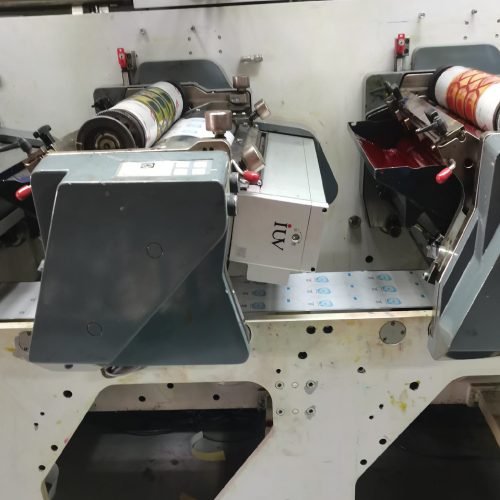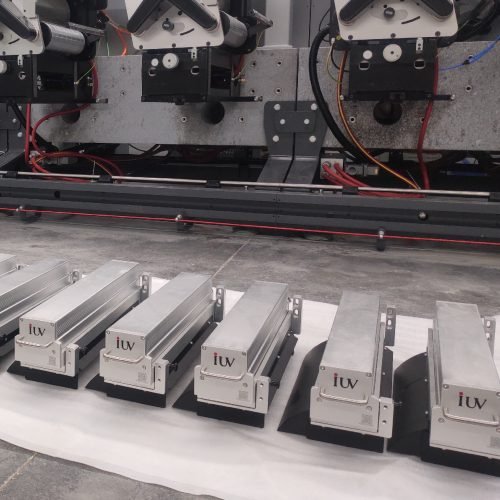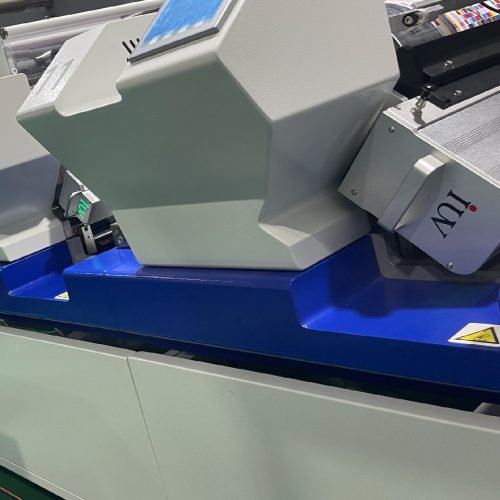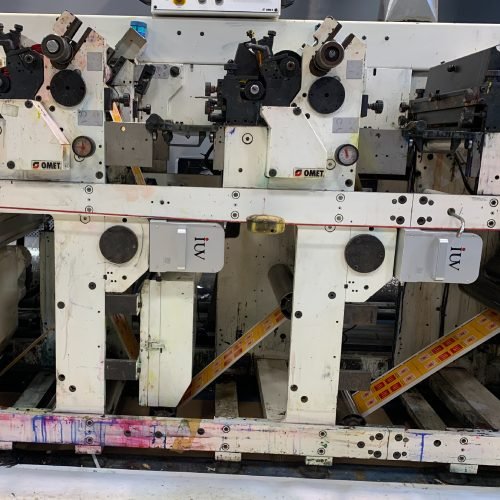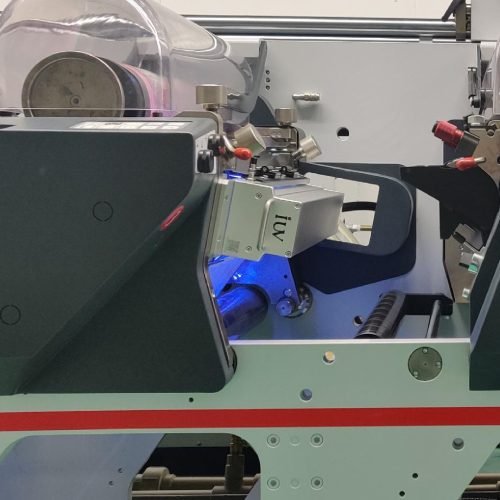
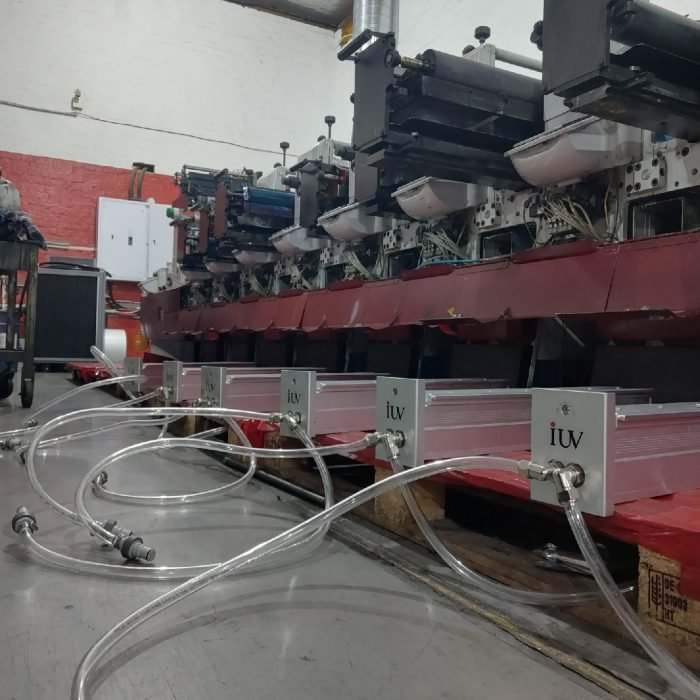
The shift from mercury lamps to LED curing systems in printing isn’t just a trend—it’s a technical revolution reshaping how presses operate. Let’s break down why shops running label, flexo, offset, and narrow web jobs are retrofitting their lines, starting with what happens when the press starts rolling.
In label printing where thin films and sensitive substrates dominate, LED’s instant on/off capability eliminates the warm-up dance required by mercury systems. Operators no longer waste the first hundred labels dialing in cure consistency. The spectral output of LEDs—tuned to 365-405nm wavelengths—hits photoinitiators in UV inks with surgical precision, unlike mercury’s shotgun blast of broad-spectrum energy. This focused delivery means less heat hitting PET films and shrink sleeves, preventing the warping that used to scrap entire batches.
Flexo shops love LEDs for different reasons. Ever tried maintaining registration on a 8-color job while mercury lamps bake the plate cylinder? LED arrays don’t turn print stations into saunas, keeping photopolymer plates dimensionally stable through marathon runs. The lack of infrared radiation also changes ink behavior; viscosity stays consistent from first impression to last, reducing washup frequency. For water-based UV flexo inks? That’s game-changing.
Offset printers care about surface energy. Mercury lamps generate ozone that requires exhaust systems and gradually degrades silicone rollers. LED curing happens in cleaner air, maintaining precise blanket surface tensions for sharp dot reproduction. The real magic happens in hybrid configurations—using LED for coatings while traditional units handle opaque whites. It’s like having separate ovens for baking and broiling.
Narrow web converters working with heat-sensitive tapes or medical substrates can’t risk substrate distortion. LED’s cold cure locks adhesives without altering material memory. The directional nature of LED arrays allows for curing in hard-to-reach zones—think multilayer pouches where only the sealant layer needs UV exposure.
Energy metrics tell part of the story: A typical 40cm mercury lamp draws 240W/cm while comparable LED units sip 80W/cm. But the real savings come from duty cycles. Mercury lamps burning at 100% during downtime? Not with LEDs. Smart controllers now integrate with press PLCs, dimming arrays during web breaks and ramping to full power in microseconds when motion resumes.
Lamp lifetime comparisons get interesting. A mercury bulb rated for 1,000 hours might need replacement at 800 due to electrode degradation. LED’s 20,000-hour rating doesn’t tell the whole story—spectral decay curves show mercury systems lose 30% output by 500 hours, while quality LEDs maintain ±5% intensity past 10k hours. For shops running three shifts, that’s fewer midnight service calls.
The chemistry side evolved in parallel. Early LED adopters struggled with ink suppliers stuck on mercury-optimized formulations. Today’s UV inks use photoinitiators like TPO and ITX tuned to LED peaks. The result? Faster cure speeds (some inks now crosslink at 200 m/min) and better adhesion on polyolefins.
Maintenance crews notice the difference. No more quartz sleeve replacements or reflector cleaning rituals. LED’s solid-state design survives the vibration that rattles mercury lamp ballasts. Dust? A quick wipe with IPA keeps lenses clean, unlike mercury systems where airborne particles get baked onto reflectors.
Regulatory pressures accelerated adoption. California’s Rule 1168 limits VOC emissions from curing units—easier to meet with LEDs that don’t require ozone evacuation. EU RoHS directives pushing mercury phase-outs made LED the only option for exporters.
The retrofit market exploded as manufacturers released drop-in LED modules for legacy equipment. KBA’s Cortina, Heidelberg’s Speedmaster—all now LED-ready. Retrofitting a 10-year-old press isn’t just about energy savings; it’s about future-proofing for substrates that haven’t been invented yet.
Material science breakthroughs keep coming. LED-curable conductive inks for printed electronics. Low-migration inks for food packaging that cure at 395nm. Hybrid systems combining UV and EB curing—all riding on LED’s ability to deliver precise energy doses.
Operators adapted too. No more UV intensity meters—LED systems self-monitor via built-in radiometers. Touchscreen interfaces show real-time irradiance maps across the web width. The techs who once carried IR thermometers now analyze spectral graphs.
It’s not a perfect transition. High-density white inks still challenge LED penetration depth. Some metallic substrates reflect UV energy unpredictably. But as LED power densities climb past 30W/cm² and wavelengths become tunable on-the-fly, even these holdouts are crumbling.
The financial math finally works. Five years ago, the ROI timeline gave CFOs pause. Today, with energy prices volatile and sustainability targets looming, LED systems pay back in 18-24 months. Tax incentives for green manufacturing sweeten the deal.
What’s next? Spectral engineering. Imagine arrays that mix 385nm and 395nm LEDs in one print station, curing multiple ink layers simultaneously. Or UV-A LEDs paired with near-infrared for dual-cure systems. The light source became a variable, not a constant—and that changes everything.
Mercury lamps had their century. Now it’s LED’s turn to redefine print production, one photon at a time.