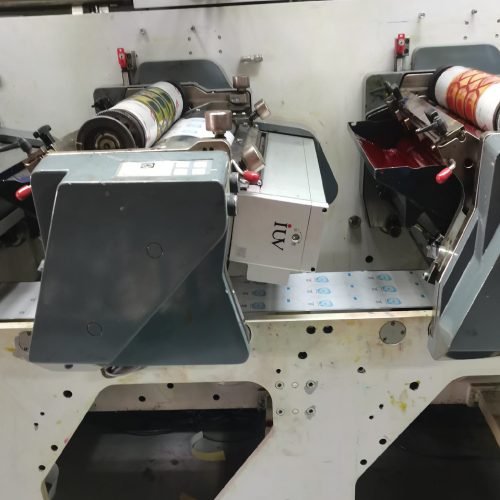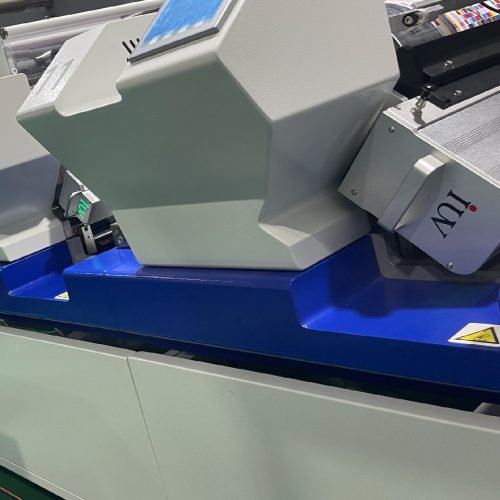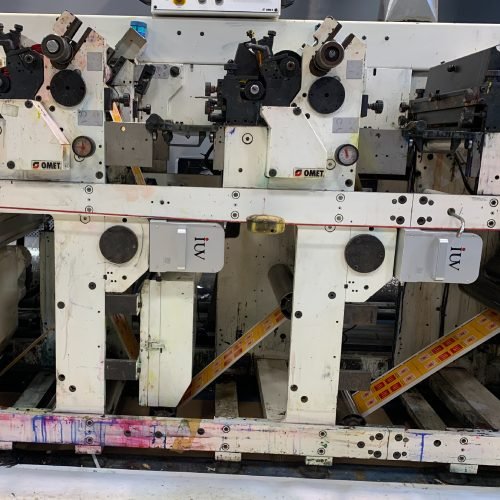
In the fast-paced world of narrow-web flexographic printing for labels and packaging, production agility is paramount. Print runs are getting shorter, and job changeovers are frequent. This often necessitates running presses at variable speeds—slowing down for complex graphics or delicate materials, then speeding up for simpler sections or longer runs. A major challenge that emerges in this dynamic environment is maintaining consistent UV curing uniformity. Uneven curing leads to patchy adhesion, variable gloss, poor chemical resistance, and ultimately, rejected product. This tutorial provides a systematic, practical guide for press technicians and production managers to achieve perfect curing uniformity, regardless of speed fluctuations, by leveraging modern LED-UV technology and intelligent process control.
Understanding the Core Challenge: Speed vs. Energy Dose
The fundamental principle of UV curing is delivering a precise energy dose, measured in joules per square centimeter (J/cm²), to the ink or coating. This dose is the product of irradiance (UV power intensity in W/cm²) and exposure time. In a flexo press, exposure time is inversely proportional to line speed. As speed increases, exposure time decreases. If the UV power output remains static, the delivered dose drops, risking under-cure. Conversely, slowing down without reducing power can lead to over-cure, generating excess heat and potentially damaging sensitive films. The traditional solution with fixed-output mercury lamps was either to compromise on speed or accept quality variance. Modern LED-UV systems, with their instant response and digital controllability, provide the tools to solve this equation perfectly.
Strategy 1: Implement Dynamic, Closed-Loop Power Control
The first and most critical step is moving from a manual, set-and-forget system to an automated, data-driven one. Advanced LED-UV curing systems can integrate directly with the press’s central control. They receive real-time line speed data and automatically adjust the UV power output to maintain a constant, pre-set energy dose.
- Set Your Target Dose: Begin by determining the Minimum Effective Dose (MED) for each ink-substrate combination during process qualification. This is the baseline.
- Enable Speed-Power Linking: Configure the curing system’s software so that UV irradiance scales precisely with the inverse of line speed. If speed doubles, power output doubles to keep the dose constant.
- Utilize Preset Job Recipes: Save optimal curing parameters (target dose, peak wavelength setting) for each recurring job. This allows for one-touch setup, eliminating operator guesswork during changeovers and ensuring repeatable quality.
This intelligent control is a core feature of systems designed for modern flexography, transforming the curing unit from a passive component into an active, stabilizing force in the production line.
Strategy 2: Master Optical Design for Inherent Uniformity
Dynamic control is ineffective if the raw light output across the web width is uneven. Achieving a baseline of exceptional spatial uniformity is non-negotiable. This is where precision optical engineering comes in.
Look for systems that employ secondary optical lenses over the LED arrays. These lenses are designed to homogenize the light, blending the output of individual LEDs into a seamless, consistent “curtain” of UV energy. The industry benchmark for high-quality label printing is a uniformity specification of ±3% or better across the entire working width. This means that whether the substrate is passing under the center or the edges of the lamp, it receives virtually the same energy density. This inherent uniformity provides a solid foundation that intelligent power control can then fine-tune based on speed.
Strategy 3: Integrate Automatic Width Detection & Zoning
Narrow-web presses often run jobs of varying widths on the same roll. Curing energy wasted on unprinted substrate edges is not just inefficient; it can also cause unnecessary heating and edge curl on sensitive materials. The solution is automatic web-width detection coupled with zonal control.
Sensors detect the actual printed width. The curing system then activates only the LED zones directly above the printed image, de-energizing the outer zones. This “on-demand” curing achieves multiple goals: it enhances energy efficiency (reducing power consumption by up to 30% in some cases), minimizes heat impact on the substrate edges, and contributes to more consistent curing by focusing energy precisely where it is needed. This is especially valuable when switching between different label sizes at high speeds.
Strategy 4: Ensure Robust Thermal Management
While LED-UV is a “cold” cure technology, the LED chips themselves generate heat that must be dissipated to ensure stable light output and long life. Inconsistent cooling can lead to thermal drift, where the UV output wavelength or intensity shifts slightly, undermining curing uniformity over a long production run.
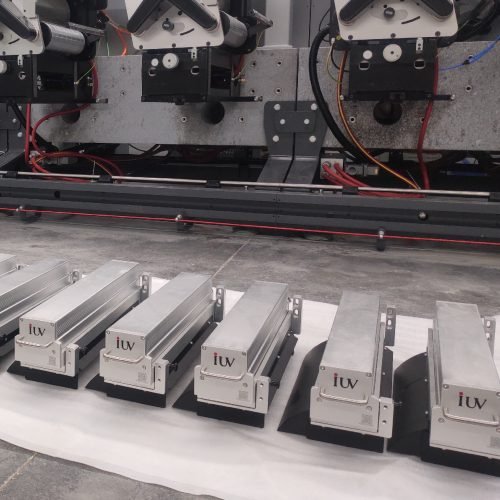
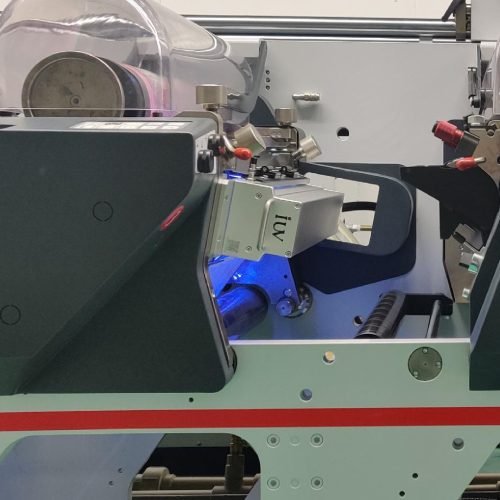
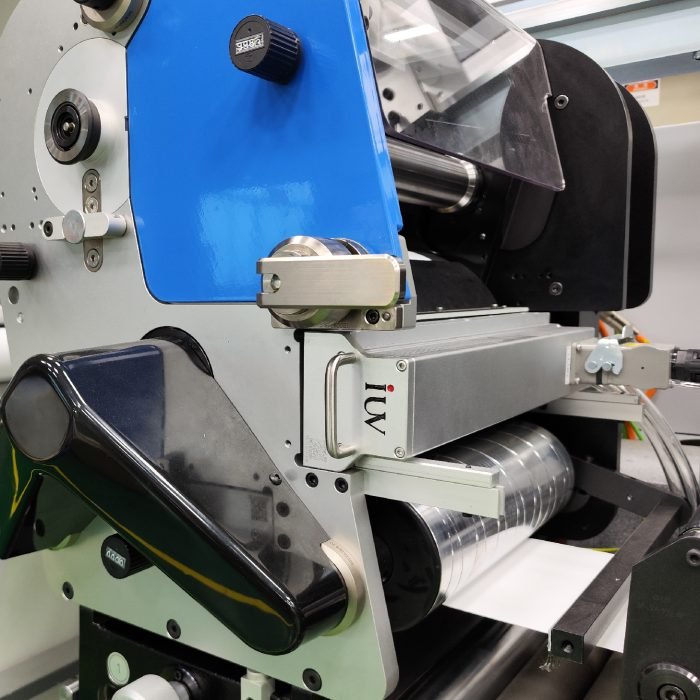
High-performance systems utilize efficient, closed-loop water cooling. This maintains the LED junction at a constant optimal temperature. For installations in the tight confines of a press frame, compact hybrid cooling designs that combine water and targeted air flow are essential to manage heat in restricted spaces without sacrificing performance. Stable thermal management ensures that the calibrated relationship between speed and power control remains accurate for the duration of any job.
Strategy 5: Establish a Rigorous Validation & Monitoring Protocol
Optimization is not a one-time event. It requires ongoing verification.
- Baseline Mapping: Use a calibrated radiometer to create a “map” of irradiance and dose across the web at multiple set speeds. Confirm uniformity meets spec.
- Physical Testing: Regularly perform adhesion (cross-hatch tape test) and rub resistance tests on samples taken from across the web width at both high and low operating speeds.
- Leverage Remote Diagnostics: Utilize systems that offer remote monitoring of key parameters like LED temperature, power output, and operational hours. Proactive alerts can signal maintenance needs before they affect uniformity.
Putting It All Together: The Optimized Workflow
For a new job, follow this workflow: 1) Load the substrate and ink recipe. 2) Select the corresponding curing recipe from the HMI, which loads the target dose and optimal wavelength (e.g., 385nm for broader compatibility). 3) During the press run, the system automatically adjusts UV power in real-time as the press ramps up or slows down. 4) The width detection system ensures energy is only applied to the printed area. 5. The efficient cooling subsystem maintains thermal stability. The result is perfect curing uniformity from the first meter to the last, independent of speed changes, enabling truly agile, high-quality, and cost-effective narrow-web flexo production.
By embracing these strategies centered on intelligent LED-UV technology, printers can transform curing from a bottleneck into a pillar of reliability. They gain the freedom to vary speeds for optimal productivity without sacrificing an ounce of quality, securing a critical competitive edge in the demanding label and packaging market.