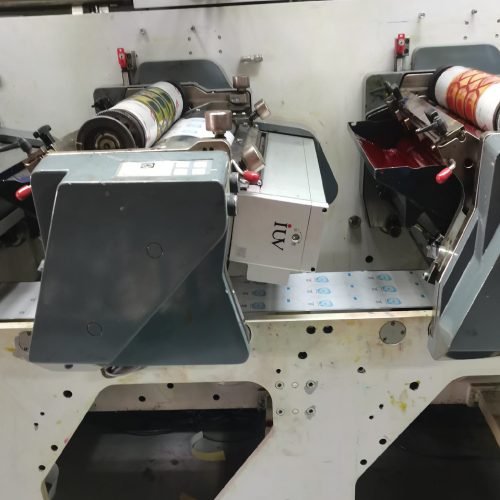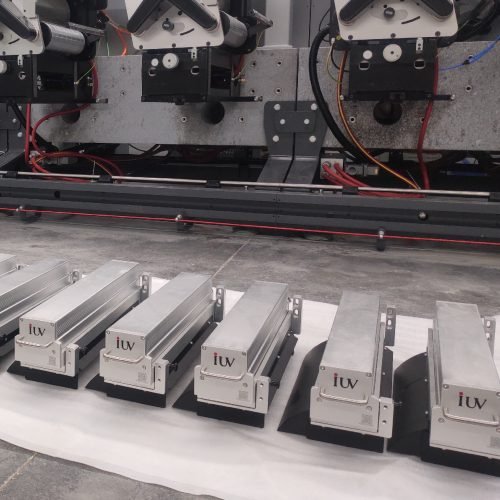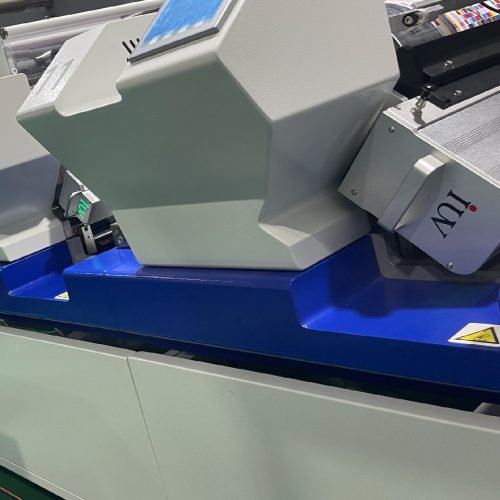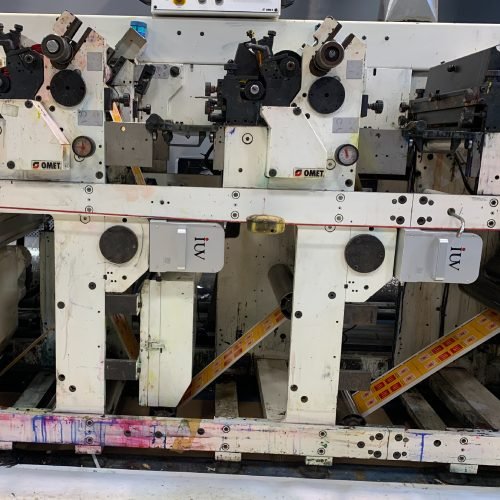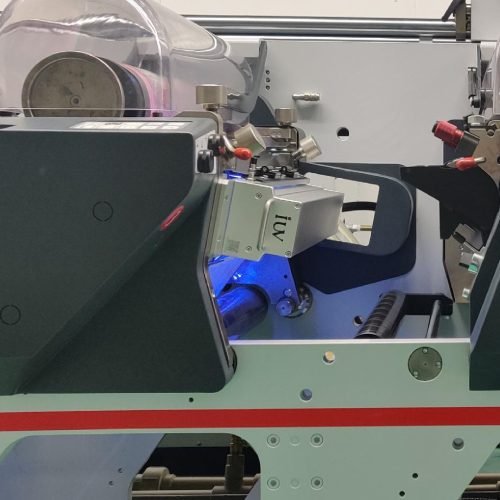
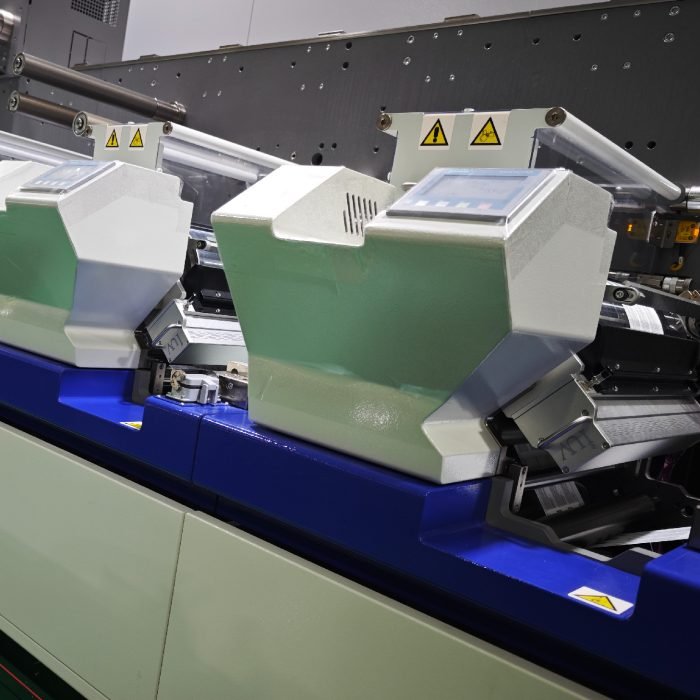
In the field of narrow web printing, LED UV curing systems have become a cornerstone of modern label, flexographic, and hybrid printing processes. Ensuring optimal ink adhesion is critical for maintaining print quality, reducing waste, and achieving consistent downstream converting performance. Adhesion failures can result in delamination, scuffing, or loss of ink coverage, all of which compromise both aesthetic and functional characteristics of printed labels. Understanding the operational, material, and process factors that influence adhesion is therefore essential for converters and press operators.
The Importance of Ink Adhesion in Narrow Web Printing
Ink adhesion is the foundation of quality in narrow web printing applications. Whether producing pressure-sensitive labels, shrink sleeves, or flexible packaging, the bond between ink and substrate must withstand mechanical stress, environmental exposure, and finishing processes. In LED UV cured systems, adhesion is influenced not only by ink formulation but also by curing parameters, substrate characteristics, and press operation. Labels printed on unsupported films, coated papers, or specialty synthetics require particular attention, as these substrates can vary in surface energy and dimensional stability. Poor adhesion often manifests as edge lift, ink transfer during rewinding, or detachment in converting operations, emphasizing the need for precise process control.
LED UV Curing and Its Influence on Ink Adhesion
LED UV curing differs from traditional mercury arc curing in several ways that affect adhesion. LED systems produce a narrow spectral output, typically focused around 365 nm, 385 nm, 395 nm, or 405 nm wavelengths, which interact differently with photoinitiators in UV inks. A properly designed LED system delivers sufficient photon energy to fully polymerize the ink layer while avoiding overexposure, which can cause brittleness or surface micro-cracking. Over-curing can lead to reduced mechanical interlocking between ink and substrate, while under-curing creates tacky surfaces prone to smearing and adhesion failure. This delicate balance requires careful assessment of lamp intensity, exposure time, and web speed, particularly in narrow web presses where line speed can vary with job changes.
Substrate Preparation and Surface Energy Considerations
Substrate surface properties play a critical role in ink adhesion performance. Films such as PET, PP, or PE often have low surface energy and require pre-treatment to promote wetting and bonding. Corona or plasma treatment is commonly used to increase surface energy, allowing UV inks to spread uniformly and form stable contact lines. Paper and coated substrates may present different challenges, including fiber absorbency, sizing agents, or topcoat compatibility. Proper substrate selection and pretreatment help ensure that cured inks form strong chemical and mechanical bonds, which are particularly important when printing multiple layers or heavy opaque whites in flexographic label production.
Ink Rheology and Layer Thickness
Ink formulation and rheological properties directly influence adhesion performance. Viscosity, solids content, pigment dispersion, and thixotropy affect how the ink deposits on the substrate and interacts with the curing system. In multi-color flexographic applications, the ink layer thickness must be balanced to ensure complete polymerization without surface defects. Thick layers can trap residual monomers if not fully cured, while thin layers may not achieve adequate adhesion, especially over textured or coated surfaces. By matching ink rheology with anilox cell volume and press speed, operators can optimize the physical structure of the ink film to promote better crosslinking and substrate bonding.
Press Operation and Environmental Control
Operational factors such as web tension, press speed, and interstation cooling have a direct impact on adhesion uniformity. Variations in tension can cause micro-cracks or uneven pressure distribution during curing. High-speed narrow web presses require consistent exposure times at each station to prevent adhesion variability. Environmental conditions, including ambient temperature, humidity, and ventilation, influence both substrate behavior and ink curing. Controlling these parameters is essential to achieve reproducible adhesion performance across production runs.
Evaluating Adhesion Performance
Technical assessment of adhesion in LED UV cured systems relies on both qualitative and quantitative methods. The Scotch tape test is widely used for rapid evaluation of cured surfaces, providing immediate feedback on ink bonding. More advanced testing, such as crosshatch, peel tests, or scratch resistance measurements, offers detailed insight into the mechanical strength of the ink-substrate interface. Spectroscopic or microscopy methods can be used to verify complete polymerization and assess ink-substrate interaction at a molecular level. Combining these methods allows converters to correlate process parameters with adhesion outcomes and make targeted adjustments.
Multi-Layer and Specialty Printing Considerations
In narrow web label production, multi-layer printing is common. Opaque whites, metallic inks, spot coatings, and varnishes each have unique curing and adhesion requirements. Achieving uniform adhesion across layers requires coordinated control of LED lamp positioning, intensity, and exposure time. Specialty inks may include flexible or adhesive-compatible formulations that require tailored curing strategies to prevent interlayer delamination. Multi-station LED UV setups must be configured to handle these variations without compromising overall print stability or adhesion quality.
Monitoring and Maintaining Long-Term Adhesion Consistency
Consistency in adhesion is vital for commercial label production. Even well-optimized setups can experience drift over time due to lamp aging, substrate variation, or contamination on optical surfaces. Regular monitoring of lamp intensity, spectral output, and adhesion test results ensures that curing performance remains within target specifications. Proactive maintenance, including lamp cleaning and calibration, contributes to repeatable results. Converters using high-quality narrow web platforms, including partners such as Nilpeter presses, benefit from integrated monitoring systems that allow real-time process adjustment and improved adhesion reliability across shifts and production runs.
Conclusion
Achieving and maintaining strong ink adhesion in LED UV cured narrow web applications requires careful management of multiple factors. Substrate properties, ink formulation, curing parameters, press operation, and environmental conditions all interact to determine the final bonding performance. Evaluating adhesion through technical tests, monitoring process variables, and optimizing multi-layer curing strategies ensures consistent, high-quality output. With proper attention to these elements, converters can maximize the benefits of LED UV technology, improving both product durability and production efficiency in label, flexographic, and narrow web printing operations.